

🎨 Digital Animation Director 💌 Animation Commissions are Open 📥 DM for business inquiries Support my work via PayPay-Binance Japan ID: 117 613 376
In Kasumi's room
Joined December 2018
- Tweets3.4K
- Following147
- Followers219
- Likes1.2K





Aymen Senpai retweeted

Official ranking of generations:
1. Millennials (1981–1996) — Last normal generation. Grew up without Hinge, TikTok or pronouns in bios.
2. Gen X (1965–1980) — Built different. Independent, tough, hooked up the old school way (in person)
3. Greatest Generation (1901–1927) — Fought actual wars instead of online wars. Hardworking but probably dead.
4. Gen Z (1997–2012) — Hinge addicts, situationships, gym bros and liberal activists.
5. Silent Generation (1928–1945) — Worked hard, kept quiet, got married at 21. They’re dependable and content with the American dreams.
6. Gen Alpha (2013–2024) — iPad kids with brain rot. Already cooked.
7. Boomers (1946–1964) — Bought houses for $40K, ruined the economy and tell us to stop buying $8 coffees. Resistant to change.


Aymen Senpai retweeted

今年の3/21はイスラム教圏でイード・アル=フィトル(ラマダン明け大祭)でしたが、今日5/27からイード・アル=アドハー(犠牲祭)です。イスラム教における年2度の大祭の一つ。おめでとうございます🐏
عيد أضحى مبارك تقبل الله طاعاتكم🌷


Aymen Senpai retweeted

The longest road in the world that a person can walk...
The longest theoretically walkable road on Earth stretches from Cape Town to Magadan, spanning roughly 22,387 km (13,910 miles) without the need for any boat or air travel. The route passes through about 17 countries, crossing Africa, the Middle East, Central Asia, and into Siberia via connected roads and bridges.
Even at an ambitious pace of 12 hours of walking per day, the journey would take around a year to complete. At a more moderate schedule of 8 hours per day, it would extend to roughly a year and a half of continuous travel.

Aymen Senpai retweeted
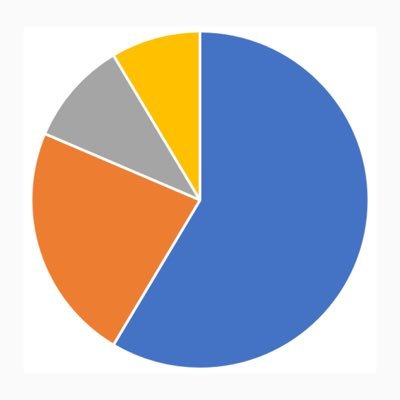
🍔 Fattest & Fittest Nations
Most obese:
1. 🇰🇼 Kuwait — 45%
2. 🇶🇦 Qatar — 44%
3. 🇺🇸 United States — 43%
4. 🇸🇦 Saudi Arabia — 43%
5. 🇵🇷 Puerto Rico — 42%
Least obese:
1. 🇯🇵 Japan — 6%
2. 🇰🇷 South Korea — 7%
3. 🇫🇷 France — 10%
4. 🇹🇼 Taiwan — 11%
5. 🇨🇭 Switzerland — 13%
Data: Global Obesity Observatory (2025)
Wild gap between the top and bottom. Culture and lifestyle really matter.
Aymen Senpai retweeted

Muslims don’t get offended if other people eat pork. They aren’t white vegans. It would be rude, in my opinion, if you invited them and didn’t provide a suitable alternative to the pork.


Aymen Senpai retweeted

Isaac newton's book on optics is almost entirely plagiarised from this guy

An Arab scholar in 1011 was placed under house arrest in Cairo for 10 years. He used the time to invent the scientific method, prove how vision actually works, and write a 7-volume book that Newton studied 600 years later.
I read about him last night and could not stop thinking about it.
His name was Ibn al-Haytham. The book is called the "Book of Optics."
The textbook story names Bacon, Galileo, and Descartes as the founders of modern science. All three of them came 600 years after Ibn al-Haytham. All three of them studied his work directly or through Latin translations. The man who actually invented the scientific method was working alone in a single room in Cairo while Europe was still in the Dark Ages.
Here is the story almost nobody tells you.
He was born in Basra around 965 CE. By his 40s he had a reputation across the Arab world as one of the most original minds alive. Then he made the mistake that almost killed him. He claimed publicly that he could regulate the flooding of the Nile. The mad caliph al-Hakim of Cairo summoned him to Egypt to do it.
Ibn al-Haytham took one look at the river and realized the project was impossible with the technology of his era. The caliph had executed dozens of scholars for less. So he faked madness. The caliph believed him and put him under house arrest in his own home in Cairo for the next 10 years.
Most people would have lost their actual mind. He used the time to invent science.
Before him, knowledge worked one way. You quoted authority. If Aristotle had said it, it was true. If Galen had written it, it was correct. The role of a scholar was to memorize and defend the ancient Greeks. I
Ibn al-Haytham broke this completely. He wrote a sentence in the Book of Optics that quietly destroyed 1,400 years of intellectual culture. "The seeker after truth," he said, "is not the one who follows his natural disposition to trust the writings of the ancients. The seeker after truth is the one who suspects them, questions them, and submits only to argument and experiment."
That single sentence is the foundation of modern science. He wrote it 600 years before the European Renaissance.
The second thing he did was build the actual machinery of experimentation.
He insisted that no claim about the physical world was acceptable until it had been verified by an experiment anyone could repeat. He gave detailed instructions for every experiment in his book. He told his readers, in writing, not to take his word for any of it. Build the equipment. Run the tests yourself. Verify or destroy my claims with your own eyes.
The third thing he did was use the method to overturn one of the most settled questions in physics.
The Greeks had taught for centuries that vision worked because the eye emitted invisible rays. Ibn al-Haytham proved them wrong with a darkened room, a small hole, and a wall. The first camera obscura. He showed that light from the outside world enters the eye, the exact opposite of what every Greek thinker had taught.
Two hundred years later his book was translated into Latin in Spain. Roger Bacon cited him. Kepler cited him. Galileo's work on the telescope was built on his optics. Newton's foundational work on light rested on his framework.
Walk into any physics department today. Ask who founded the scientific method. Almost nobody will say Ibn al-Haytham.
The man who invented the way humanity actually knows things did the work under house arrest, with no funding, no laboratory, and a paranoid caliph next door waiting for an excuse to kill him.
He did it anyway. Most of the world is still pretending it was someone else's idea.


Aymen Senpai retweeted

A Persian scholar finished a single math book in 9th century Baghdad that quietly became the foundation for every line of code running on Earth today.
I started reading about him at midnight and could not believe how many things in my daily life trace back to one man.
His name was Muhammad ibn Musa al-Khwarizmi. The book is called The Compendious Book on Calculation by Completion and Balancing.
Every time you say the word algebra, you are saying his book title. Every time someone says the word algorithm, they are saying his name. Both English words come from him. Both are Latin transliterations of Arabic and of his own identity. The man did not just contribute to mathematics. He named it.
Here is the part almost nobody tells you.
Al-Khwarizmi was born around 780 CE in Khwarazm, in what is now Uzbekistan. He moved to Baghdad and worked at a research institution called the House of Wisdom, which during the Islamic Golden Age was the single most important center of learning on the planet. The caliph al-Mamun hired the best mathematicians, astronomers, and philosophers from across three continents and put them in one building with one job. Translate, study, and produce new knowledge.
Al-Khwarizmi finished his book on algebra around 820 CE. The Arabic title contained the word al-jabr, which referred to one of the two operations he used to solve equations. When the book was translated into Latin in the 12th century, the Latin world did not have a word for what he had built. So they kept his Arabic word. Al-jabr became algebra. The discipline was named after a single Arabic word in the title of a single book by a single man.
The deeper insight is what he actually changed about how humans think.
Before al-Khwarizmi, mathematical problems were solved geometrically. You drew shapes. You measured them. You compared areas. The Greeks had built an entire mathematical tradition on visual proofs and physical constructions. It was beautiful and limited. You could not solve a problem you could not draw.
Al-Khwarizmi did something nobody had done before him at this scale. He said you could solve any problem using abstract symbols and rules. You did not need a shape. You needed a procedure. You moved terms across the equation. You cancelled like terms on both sides. You isolated the unknown. He invented the idea that mathematics is a manipulation of symbols according to rules, not a study of physical figures.
That single shift made everything that came afterward possible. Calculus. Differential equations. Linear algebra. Quantum mechanics. None of it works if math is locked inside geometry. He pulled it out.
The second thing he did is the one that changed how the world counted forever. He took the Hindu numeral system from Indian mathematics, refined it, and wrote a book introducing it to the Arab world. That system included the concept of zero as a placeholder, and a positional notation where the value of a digit depends on its location. Roman numerals could not do complex calculation. Hindu-Arabic numerals could.
When his book on numerals was translated into Latin as Algoritmi de numero Indorum, the word Algoritmi was just the Latin spelling of his own name. Europeans started calling the new method "doing algorism," then "running an algorithm." The word for the most important concept in computer science is literally his name in Latin.
The third thing he did is the part that should haunt anyone who works in tech.
His method of solving problems was systematic. Step one, do this. Step two, check that. Step three, if condition A, then do X, otherwise do Y. He wrote down procedures that could be followed by anyone, anywhere, who knew how to read. The procedure did not depend on intuition or genius. It worked because the steps worked.
That is exactly what an algorithm is. A finite, deterministic procedure for solving a problem. He did not just give us the word. He gave us the entire concept of programming a thousand years before there was anything to program.
When Alan Turing built the first abstract model of computation in 1936, when John von Neumann designed the first stored-program computer in 1945, when every engineer at Google, OpenAI, Anthropic, and DeepMind writes code in 2026, they are working in a paradigm that started with one man in Baghdad twelve centuries ago.
The strangest part is what happens when you walk into any tech office in San Francisco or Bangalore or Lahore today. Engineers say the words algebra and algorithm hundreds of times a day. They do not know whose name they are saying. Almost nobody can spell al-Khwarizmi correctly on the first try.
His original Arabic manuscript is preserved at Oxford. His book on Hindu numerals survives only in Latin translation. The Latin version was the textbook that taught medieval Europe how to count.
The man who built the foundation of the AI revolution did not live to see a calculator. He died around 850 CE, a thousand years before the first electric current was sent through a wire. The civilization he built mathematics for collapsed. The library he wrote in burned. His own grave is unmarked.
But every algorithm running on every machine on Earth right now still answers to his name.

Aymen Senpai retweeted

Un estudio de anime chino (Donghua) quebró después de terminar un solo episodio de su serie slice of life, dejando el proyecto cancelado indefinidamente.
Resulta que a los creadores de "Huanhuan Shaonü" se les ocurrió la brillante idea de dibujar más de 12,000 cuadros para un simple anime escolar de recuentos de la vida, exigiendo hasta seis repeticiones por escena.
Tras quemar todo el presupuesto, intentaron usar Inteligencia Artificial para salvar el barco, pero terminaron cerrando y sin pagarle a sus empleados.
Doce mil dibujos, un episodio, cero continuación.


