

Mom of two, devotee of music, literature, and art; engineer by profession
India
Joined February 2012
- Tweets4.8K
- Following202
- Followers502
- Likes12K



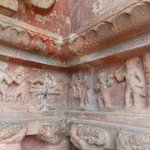

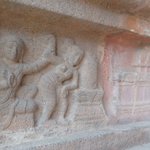
Can't get this out of my head -
वाहि वात यतः कान्ता तां स्पृष्ट्वा मामपि स्पृश।
त्वयि मे गात्रसंस्पर्शश्चन्द्रे दृष्टिसमागमः॥
(Valmiki Ramayana, Yuddha kANDa)

Sreelalitha retweeted
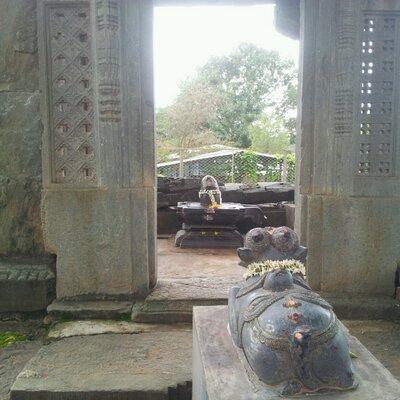
मा भव मानस मानव-
वार्तामलसक्तमक्षिका जातु।
माधवचरणसरोरुह-
मकरन्दपिपासुरलिवरो भूयाः।।
Do not, O mind, be the fly stuck in the muck of human news.
Be instead, a bee thirsty for the nectar of the lotus feet of Mādhava.


Sreelalitha retweeted
Also this - about the bee from Katyar Kaljat Ghusli
घेई छंद, मकरंद, प्रिय हा मिलिंद
मधुसेवनानंद स्वच्छंद, हा धुंद
मिटता कमलदल होई बंदी भृंग;
परि सोडिना, ध्यास, गुंजनात दंग
Meaning here:
chinmaykorhalkar.wordpress.c…

Sreelalitha retweeted
ಶ್ರೀ @avyAjabandhu ಅವರ ಸೊಗಸಾದ ಪದ್ಯ..🙏👌👏💐
ಕೃಪೆ: ಶತಾವಧಾನಿ ಗಣೇಶರ 'ನಿತ್ಯನೀತಿ' ಗ್ರಂಥ


Sreelalitha retweeted

Ballava was busy preparing some dishes in the kitchen when two men appeared at the doorway. One of them said,
"Ballava Maharaj, this cowherd has brought some milk. Take as much as you need and send the rest back."
The man who brought the message left. Ballava looked at the cowherd, set aside the ladle he was holding, and reduced the fire beneath the hearth. He then gently stroked the cowherd’s head and back with great affection. He did not know what to say.
"Have you eaten anything since this morning?"
"No."
Ballava brought a plate and placed a small portion of everything he had cooked onto it. Holding the plate in one hand, he took the cowherd by the other and led him to a corner of the kitchen.
The two sat on the floor, and Ballava began to feed the cowherd, morsel by morsel much like a mother feeding her own child.
Before even two morsels had been consumed, Ballava was overcome with emotion, and tears began to stream from his eyes.
"Why are you crying, brother?"
"Crying? Oh, no... it’s just that some smoke from the hearth got into my eyes earlier; that is why there are tears."
The meal concluded, and after a brief exchange of a few words, the cowherd left. As he walked away, he said to himself, "I shall not return here again, for I cannot bear to see my brother become so emotional."
-----
This account describes the meeting between Bhima and Sahadeva during the Virata Parva of the Mahabharata. The cowherd is Sahadeva, disguised as Tantipala, and the cook, Ballava, is Bhima.
The character of Bhima, as presented to us the Bhima who slew Bakasura, Hidimba, Kirmira, Jarasandha, and roughly a hundred Kauravas might lead us to assume that such a figure could possess no capacity for emotion or love.
Yet, within that impenetrable frame, Vyasa reveals a hidden spring of pure, tender sentiment.
Bhima is the complete man.
#InternationalMensDay


Sreelalitha retweeted

A historic Sahasravadhanam in Telugu spanning 25 days is coming up after a long time!! By Dr. Smt. Bulusu Aparna. At Vijayawada!!

Sreelalitha retweeted

Ok this is a pretty dumb take at best, and disinformation at worst. I suspect it’s a combination of the two here
Mysuru chamundeshwari
Kolluru mookambike
Shringeri Sharadambe
Kateelu Durga parameshwari
Horanadu Annapoorneshwari
Kolhapur mahAlakShmi
Kanchi Kamakshi
Madurai Meenakshi
Vaishno Devi temple
Kamakhya temple
Hasanamba in Hassan
Goravanahalli Lakshmi
Mangadu kamakshi
Sirsi marikambe
Melmaruvathur Adiparashakti
There are countless more where the places are known only for or mainly for the female deities.

Why are female deities not given equal space to male gods in our temples asks @devduttmyth . Listen in.
Sreelalitha retweeted

This is incorrect and actually does disservice to the Rāmāyaṇa, as it implies that the Rāmāyaṇa was effectively forgotten or inaccessible in India for roughly 700 - 1,000 yrs.
The Iliad and Odyssey were completely lost in Western Europe during the Middle Ages.
The scholar Petrarch "acquired" a manuscript of Homer's works in the 1350s, though he couldn't read it.
This is because Greek learning had all but vanished in Western Europe.
The works would not be properly translated until after the fall of Constantinople in 1453, when Greek scholars fled to Italy.
There is no parallel in the case of Vālmīki Rāmāyaṇa.
The Vālmīki Rāmāyaṇa was continuously recited in India and Sanskrit learning never disappeared.
Vālmīki's work gave rise to countless secondary works such as Bhavabhūti's Uttarāmacarita; Kālidāsa's Raghuvaṃśa; Murārimiśra's Anargharāghava; Jayadeva's Prasannarāghava; Bhoja's Campūrāmāyaṇa; Pravarasena's Rāvaṇavaha (Setubandha); the Adhyātmarāmāyaṇa of the Brahmāṇḍa Purāṇa; the Bhūṣuṇḍī-Rāmāyaṇa; Ānandaramāyaṇa; Adbhutarāmāyaṇa; Vimalasūri's Prakrit Paumacariya; Svayambhūdeva's Apabhraṃśa Paumacariu; Tulsīdās' Rāmacaritamānasa; the Assamese Śatrunjaya and Mādhava Kandalī Rāmāyaṇas; the Kannada Tōrave and Kumudendu Rāmāyaṇas; the Gujarati Giridhara Rāmāyaṇa; the Bengali Kṛttivāsī and Jagadrāmī Rāmāyaṇa; the Telugu Raṅgānātha Rāmāyaṇa; the Odia Jagamohana (or Dāṇḍi) Rāmāyaṇa; the Tamil Kambarāmāyaṇa; the Nepali Bhānubhaktarāmāyaṇa; Kashmiri texts such as the Rāmāvatāracarita, Śaṅkara Rāmāyaṇa, Prakāśa Rāmāyaṇa, and Viṣṇupratāpa Rāmāyaṇa; the Thai Ramakien; the Javanese Kakawin Rāmāyaṇa; the Lao Phra Lak Phra Lam; the Philippine Maharadia Lawana; the Cambodian Reamker; the Tibetan Rāmāyaṇa; the Khotanese Rāmāyaṇa, etc.


Fine post.
Kumāravyāsa famously said "ತಿಣುಕಿದನು ಫಣಿರಾಯ ರಾಮಾಯಣದ ಕವಿಗಳ ಭಾರದಲಿ"!

This is incorrect and actually does disservice to the Rāmāyaṇa, as it implies that the Rāmāyaṇa was effectively forgotten or inaccessible in India for roughly 700 - 1,000 yrs.
The Iliad and Odyssey were completely lost in Western Europe during the Middle Ages.
The scholar Petrarch "acquired" a manuscript of Homer's works in the 1350s, though he couldn't read it.
This is because Greek learning had all but vanished in Western Europe.
The works would not be properly translated until after the fall of Constantinople in 1453, when Greek scholars fled to Italy.
There is no parallel in the case of Vālmīki Rāmāyaṇa.
The Vālmīki Rāmāyaṇa was continuously recited in India and Sanskrit learning never disappeared.
Vālmīki's work gave rise to countless secondary works such as Bhavabhūti's Uttarāmacarita; Kālidāsa's Raghuvaṃśa; Murārimiśra's Anargharāghava; Jayadeva's Prasannarāghava; Bhoja's Campūrāmāyaṇa; Pravarasena's Rāvaṇavaha (Setubandha); the Adhyātmarāmāyaṇa of the Brahmāṇḍa Purāṇa; the Bhūṣuṇḍī-Rāmāyaṇa; Ānandaramāyaṇa; Adbhutarāmāyaṇa; Vimalasūri's Prakrit Paumacariya; Svayambhūdeva's Apabhraṃśa Paumacariu; Tulsīdās' Rāmacaritamānasa; the Assamese Śatrunjaya and Mādhava Kandalī Rāmāyaṇas; the Kannada Tōrave and Kumudendu Rāmāyaṇas; the Gujarati Giridhara Rāmāyaṇa; the Bengali Kṛttivāsī and Jagadrāmī Rāmāyaṇa; the Telugu Raṅgānātha Rāmāyaṇa; the Odia Jagamohana (or Dāṇḍi) Rāmāyaṇa; the Tamil Kambarāmāyaṇa; the Nepali Bhānubhaktarāmāyaṇa; Kashmiri texts such as the Rāmāvatāracarita, Śaṅkara Rāmāyaṇa, Prakāśa Rāmāyaṇa, and Viṣṇupratāpa Rāmāyaṇa; the Thai Ramakien; the Javanese Kakawin Rāmāyaṇa; the Lao Phra Lak Phra Lam; the Philippine Maharadia Lawana; the Cambodian Reamker; the Tibetan Rāmāyaṇa; the Khotanese Rāmāyaṇa, etc.
It's a living epic for us even now, part of our daily lives. People do regular pārāyanas of the text, the sundarakāṇḍa even more frequently.
At the Mālyavanta Raghunātha temple at Hampi, there's been a 24x7 pārāyaṇa of Rāma-charita-mānasa going on for the past few years.
Sreelalitha retweeted
Happy deepavali
Sharing again my series of articles on #deepavali written last year after extensive research. It is in 5 parts. This shows the cultural and religious extent and depth of this festival in our country, and especially so in Karnataka.
Please read and share widely.
Part 1- shrikaanthkhome.wordpress.co…
Part 2- shrikaanthk.home.blog/2025/1…
Part 3- shrikaanthk.home.blog/2025/1…
Part 4- shrikaanthk.home.blog/2025/1…
Part 5- shrikaanthk.home.blog/2025/1…
Sreelalitha retweeted

Our rishis did not give us textbooks. They gave us Rama.
More than a hundred years ago, Ananda Coomaraswamy said something beautiful about India. Our rishis did not teach big philosophy through lectures. They put it into stories. Rama, Bharata, Hanuman, Vidura became our teachers.
A farmer who never read the Upanishads still knew why Bharata kept Rama's sandals on the throne. Our grandmothers could not read or write, but they taught us patience, duty and respect through one simple story at night.
That was real education. Not just knowing things. Becoming a good human being.
Today we only count how many people can read and write. But reading is not wisdom. A person who can read but cannot think for himself is easy to fool. Whoever controls the TV, the mobile and the textbook controls his mind.
And now AI is coming. Soon it will answer every question, write every essay, and decide what we see every day. Our children will have all the knowledge in the world in their pocket. But knowledge, money and power are slowly coming into the hands of a few companies and countries.
That is exactly Ravana's Lanka. Knowledge, gold and power, all in one place, with no one to say stop.
Ravana knew the Vedas. He wrote prayers to Shiva. Still he lost. Because knowledge without control over oneself is dangerous.
Our elders called the missing thing viveka. Knowing what is right from what only shines. Knowing light from gold.
A machine can give our children answers. It cannot give them values. That job is still ours.
So our education needs change. Not more chapters. More kathas. Teachers who are like Jambavan, who believe in the child. Children who learn the deep questions of the Mahabharata, not only who won the war.
Reading teaches us about the world. Stories teach us how to live in it.
This Deepavali, sit with your children and tell them one story from Ramayana or Mahabharata. Not as old history. As a mirror.
A lamp gives light only when it has oil.

Lanka was made of gold. Ayodhya celebrated with clay lamps. Think about that this Diwali.
Ravana had everything the world admires. A city of gold. Ten heads, the epic's way of saying he knew more than anyone around him. Scholar. Musician. Devotee of Shiva.
He still lost. He didn't lose to a bigger army. He lost to a man in exile, walking barefoot, with an army of monkeys and bears. Brilliance without restraint destroys the one who owns it.
Now look at the other side. Rama lost his kingdom overnight. No argument. No bitterness. He walked into the forest on the very day he was meant to be crowned, and he walked out smiling. Most of us can't let go of a small disappointment that gracefully.
Bharata was handed the throne. He refused to sit on it. He placed Rama's sandals there and served Ayodhya for 14 years in his brother's name. Love that asks for nothing in return. Duty without ownership.
Hanuman could leap across an ocean. He didn't know it. Jambavan had to remind him. So many people around us are Hanuman before Jambavan spoke. Sometimes the greatest gift you can give someone is to tell them you can do this at the right moment.
The bridge to Lanka wasn't built in one heroic act. It was stone after stone. Monkeys, bears and, as the old story goes, a little squirrel rolling in sand to do its part. Rama stroked its back in gratitude. No effort is too small when the cause is right.
Here's the part we forget.
Ayodhya didn't light lamps when Ravana fell. It lit them when Rama came home.
Diwali isn't a victory celebration. It's a homecoming.
Fourteen years of forest, loss and war, and he returned with his heart intact. The same man who left. That is the real triumph. Everything else is Lanka.
So this Diwali, as the lamps glow .. Ask what you're chasing. Gold or light.
Ask who's been quietly carrying your sandals. Thank them. Ask who needs a Jambavan. Be one. Ask if you're still the person who left home.
Light the diya. Then live like one. Small. Steady. Burning for others.
Happy Diwali. 🪔
Sreelalitha retweeted

Happy Deepavali🪔 On Narakachaturdashi, Aparna has published her maiden article. Her insights on Krishna, Bhāma and the festival moved me to tears. Pls read, share feedback. Dīpa screams without a voice, “Hope exists! Dīpāvalī: The Dispeller of Despair 🪔 medium.com/@aparna.basavapat…
