
Scientist, Associate Professor @NCBS_bangalore, @NCBStheory and @ictstifr Bangalore — Toronto — Göttingen — Princeton — Bangalore
Bengaluru, India
Joined July 2012
- Tweets1.6K
- Following571
- Followers3K
- Likes2.1K





Pinned Tweet
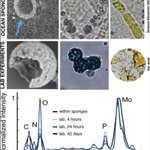
Protocells from three inorganic salts, some formaldehyde and water?
They grow? They synthesise organic molecules of core biomolecular classes: amino acids, sugars, lipid-like motifs?
And, there are similar structures in today's oceans?
Yes! Read on.
arxiv.org/abs/2601.11013

Shashi Thutupalli retweeted

Brilliantly made video explaining the art of chitra-kavya, the art of solving fascinating optimization problems using letters!
Super happy to see my open-source TTS, Vāgdhenu (prathosh.in/vagdhenu/), being used in such magnificent ways. Thanks for creating this, @udbhava.
My PhD student Dr. Nishant Narayanasamy has been awarded this year's TAA-Zita Lobo Memorial Award for the Best Thesis in Biology within the @TIFRScience. Nishant did some impactful (and beautiful!) work on the physics of the origins of multicellular life: science.org/doi/full/10.1126…

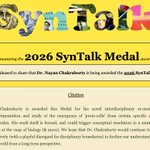
This recognition is coming on the heels of another very heartwarming recognition to Dr. Nayan Chakraborty, who was recently awarded the @SynTalk Medal for his highly original PhD work on the chemistry and physics of the very *origins of life* itself: arxiv.org/abs/2601.11013

It has been very gratifying to see Nishant and Nayan mature into very original thinking scientists and, more importantly, research (and otherwise) buddies.
Here's hoping for the very best for these two in their research journeys forward.
@NCBS_Bangalore @NCBStheory @ictstifr
Looking forward to catching up with a lot of old friends/colleagues at the 2027 Gordon Research Conference on Stochastic Physics in Biology -- grc.org/stochastic-physics-i…
I'll be talking about something that has kept us very busy and excited about for the last year or so

Protocells from three inorganic salts, some formaldehyde and water?
They grow? They synthesise organic molecules of core biomolecular classes: amino acids, sugars, lipid-like motifs?
And, there are similar structures in today's oceans?
Yes! Read on.
arxiv.org/abs/2601.11013
The video of the talk (there are some slide visibility issues until about 7.5 minutes of the video, after which it seems fine) -- youtube.com/live/9u38Ao_vspo…

I feel very honored and excited to be giving a Kaapi with Kuriosity lecture this Sunday, which happily coincides with the 10th anniversary (to the month!) of the series that has been an amazing collaboration between the @ictstifr and the @JNPlanetarium
icts.res.in/outreach/kaapi-w…

I feel very honored and excited to be giving a Kaapi with Kuriosity lecture this Sunday, which happily coincides with the 10th anniversary (to the month!) of the series that has been an amazing collaboration between the @ictstifr and the @JNPlanetarium
icts.res.in/outreach/kaapi-w…
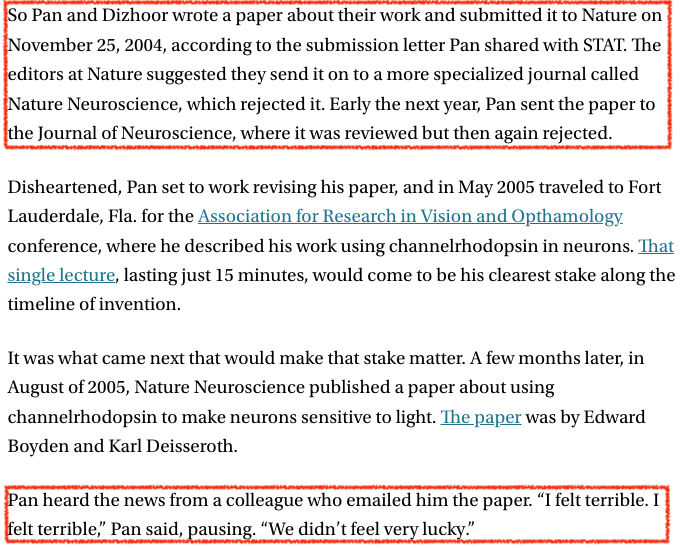
"He may have invented one of neuroscience’s biggest advances. But you’ve never heard of him"
statnews.com/2016/09/01/opto…
#nobelprize #nobel #optogetics
Shashi Thutupalli retweeted

We have found stable singularity on 3D Euler!
anima-ai.org/2026/09/07/stab…
Our starting point is a physics-informed neural network (PINN) to come up with an approximate answer, and then to argue stability around that to complete the proof.
The challenge so far has been that PINNs have not been successful in discovering singularities on the current problem. A common failure mode is PINNs converging to a trivial solution. We take special care to nudge our PINN to interesting regions through a combination of constraints, and we believe this is a novel way of making PINNs work for such hard optimization problems.
We also carry out a detailed study of the transport field of our approximate profile, and show it has promising properties of local outgoing flow, essential for proving linear damping, which is an important ingredient of overall stability.
We believe that such physics-informed and physics-centric AI are critical ingredients across many areas of research involving physical systems, and LLMs lack such physical grounding.
We have been working on this problem for much of this year, and we just saw the announcement by Tristan on Euler with forcing. In contrast, we consider without forcing and use a PINN formulation. @Caltech

Feynman, in his Lectures on Physics, describes how "physicists always have a habit of taking the simplest example of any phenomenon and calling it 'physics,' leaving the more complicated examples to become the concern of other fields."
What, then, is the physics of life?

And given the complexity, where do we even begin?
I start with these questions today at the Physics Department of the Indian Institute of Technology, Madras where I will give the Brahmagupta Colloquium — physics.iitm.ac.in/events/ev….
Mathematical Discourse (mathematicaldiscourse.org/): in the words of Terence Tao is "a new online, peer-reviewed mathematics journal, publishing videos of mathematics research talks of the highest quality".
Like this idea very much, hope the Sciences pick it up soon.

Shashi Thutupalli retweeted

Physics is going to be as cooked/cooking as math. I fed Claude an open problem in stochastic thermodynamics of the kind I'd suggest to a mathematically inclined grad student. And over a few days of back and forth, it did months of work and closed the whole problem class.
Shashi Thutupalli retweeted
ಇದೇನೋ? ಅದಾನೆ. ಇದೂನೇ? ಅದೇನೆ.
ನನ್ನಾಣೆ? ಅದಾನೆ. ನಿನ್ನಾಣೆ? ನನ್ನಾನೆ.
ಅದಾನೆ, ನನ್ನಾನೆ, ಮದಾನೆ, ಮುದ್ದಾನೆ.
ನೆನ್ನೇನೂ? ಅದಾನೆ. ಇಂದೂನು, ಎಂದೂನು.
ಎಡಕ್ಕೂ? ಬಲಕ್ಕೂ? ಒಳಕ್ಕೂ? ಹೊರಕ್ಕೂ?
ಅದಾನೆ ಅದಾನೆ ಅದಾನೆ ಅದಾನೆ.
ಹಿಂದೇನೂ ಮುಂದೇನೂ ಅದಾನೆ, ಅದಾನೆ.
ಹಿಂದೂನೇ? ಮು... ಅ ದಾ ನೆ, ಅ ದಾ ನೆ!
ಇದ್ಯಾವ ವ್ಯಥೇನೇ!

Shashi Thutupalli retweeted

Congrats Nayan and @stpalli. Wonderful evening at the annual @SynTalk dinner with the awarding of the SynTalk Medal. More power to you, Jyoti and Rajat, to keep this going!

It’s triply rewarding when your PhD student is recognised.
Hearty congratulations to Nayan Chakraborty for being awarded the 2026 @SynTalk Medal for his PhD thesis work.
