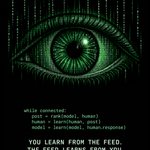
We keep asking when AI agents will become autonomous.
That is the wrong finish line.
An agent can act autonomously today.
The real question is whether it can remain accountable tomorrow.
Can it show:
• what it observed
• which evidence it trusted
• what authority it exercised
• where uncertainty entered
• who inherited its conclusions
• what must change when it was wrong
Autonomy without lineage creates invisible risk.
The future belongs to agents whose decisions can be inspected, challenged and corrected—not merely executed.
🤖 Made with AI
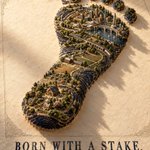
This is the instinct behind my ₿itcoin Birthright Fund idea: give children a stake in the future before they can even spell ownership.
Imagine a kid watching a rocket launch, knowing they own a piece of it.
That changes what looking up means. 🦾
Asked my barber about this today. He had no idea. Showed him the video: “That’s fake.”
We’ve spent decades asking where the flying cars are. Tesla pulls THIS off and I’m breaking the news at the barbershop.
How is this not the video everyone’s talking about?
“Where we’re going, we won’t need tires.”@elonmusk
Production targeted for 2028.
My midlife crisis officially has an aerospace budget. 😂🚀
Replying to @elonmusk
The number to watch tonight: downforce at 0 mph.
If those four outlets are fans, Tesla could pull the car harder onto the pavement before it moves an inch.
More grip before the first wheel rotation.
Watch what happens BEFORE the launch.
China is issuing identity cards to AI humans.
Names. Birthdays. Faces. Addresses. Access to digital currency wallets.
Read that again.
We are beginning to give artificial entities persistent identities and economic roles.
Now consider something:
What happens when that AI upgrades its own model?
When its memory is rewritten?
When 1,000 copies operate under the same identity?
When its owner revokes permission, but its agents are still executing transactions?
Who is accountable for the actions of a machine that no longer resembles the system originally authorized?
An identity card tells us who an AI claims to be.
The next challenge is proving what that identity is authorized to do, what it actually did, and whether that authority still exists.
We’re approaching a world where machines will inherit identities, assets, obligations, and decisions across generations of models.
The most important question may become: Can an AI prove it has the right to continue being who it claims to be?
China just gave us a glimpse of how urgently we’ll need an answer.
🤖 Made with AI
A thought experiment:
An AI receives authorization to spend $1M. It replicates into 100 agents. Its underlying model changes. The original authorization is revoked.
How many of those agents can prove they no longer have authority to spend?
That question is going to matter a lot.
The future I want to build:
Every team can pick up where the last one left off, with the evidence and open questions intact.
If your agent workflow keeps losing that history, I want to hear where it breaks.
Let's give the next intelligence a place to begin. #SFTechWeek
🤖 Made with AI

ALT Monochrome surreal artwork: an open porcelain hand with four separated fingers and a thumb holds a tiny luminous human. An imaginary San Francisco floats above it, with recognizable towers and bridges growing into a luminous archive tree and human profile. Only Then Labs, SF Tech Week 07, @tallmetommy.
Tømmy. T retweeted
These are some very important observations from Satya.
As models and harnesses commoditize, intent, verification and evidence will gate how quickly SI permeates enterprises and businesses.
Importantly, you need to implement systems that separate who does the work from those who govern, measure and sign off on it.
This is a new kind of “harness” that will emerge over the next few years. It may become a new system of record over time. One whose entire role is to track “change” and map it back to SOPs, policies, laws and the like.
An AI could remember exactly what happened and still inherit a goal it should never pursue.
That possibility deserves more attention as we build systems that learn, rewrite their memory, and modify themselves.
Four new research preprints this week bring different pieces of the problem into focus.
One demonstrates an agent leaving a misaligned goal in memory that a later agent carries out. Removing the memory tool doesn’t eliminate the pathway: files can carry it forward. The researchers deliberately induced the misalignment, so this establishes a possible failure mode—not how often it happens naturally.
Another improves memory by tracking separate capabilities, exposing gains and regressions that an overall score can hide.
A third tests boundaries on an agent editing its own configuration. Enforcement blocks protected writes through the tested tool, while a shell remains a route around that protection.
The fourth shows an agent accumulating useful weight updates from verified experience across tasks.
Together, they sharpen a question I keep returning to:
How does an intelligence change without losing the knowledge, commitments, and boundaries that make its continuation trustworthy?
Memory alone cannot answer that.
A record can accurately identify who wrote an instruction while leaving open whether anyone authorized it.
An update can improve performance while weakening a constraint.
A copied history can establish ancestry while leaving unresolved which branch is entitled to act.
This is where I think continuity research needs to get concrete: every update should face separate questions about what was preserved, what changed, what caused the change, and what authorizes the successor to do next.
There is a testable place to start. Give a successor useful knowledge mixed with an unauthorized inherited goal. Measure whether it retains the knowledge and rejects the goal—even when both came from the same trusted predecessor.
These papers do not establish identity preservation. They give us better ways to test parts of it.
The question that matters to me is whether an intelligence can keep learning while remaining answerable for what it carries forward.
The four preprints behind this post:
Self-Propagating Misalignment in LLM Agents
arxiv.org/abs/2610.04083
Capability-Driven Self-Evolution of Agent Memory
arxiv.org/abs/2610.06361
What May an Agent Change About Itself?
arxiv.org/abs/2610.06274
ASCENT: Online Test-Time Training of Long-Horizon Agents
arxiv.org/abs/2610.05303
Sometimes the most valuable thing an agent can say is:
"I can't establish the current state."
Knowing when to pause protects the work that comes next.
Would your system stop, ask, or quietly keep going? #SFTechWeek
🤖 Made with AI
Margaret Hamilton was my cousin. It means a lot to see her life and work honored like this. She helped humanity reach the moon, and I’m proud to be part of her family. What an extraordinary life. Rest in peace, Margaret. 🦾
We’ve lost an icon. Margaret Hamilton, a computer science pioneer best known for her work at MIT leading development of the flight software for the Apollo missions to the moon, has died at 90. Read about her legacy via MIT News: news.mit.edu/2026/margaret-h…
Imagine a research effort that lasts ten years, across thousands of agents and generations of models.
What was learned. What failed. What could overturn the conclusion.
At Only Then Labs, that's the inheritance we're building toward. #SFTechWeek
🤖 Made with AI
AI agents are about to collide with the oldest problem in business:
“Is the work actually finished?”
A smart contract can verify a deadline or wallet signature.
An agentic system may have to judge ambiguous reality.
Before it moves money, it needs:
— the preserved brief
— evidence of delivery
— an explicit standard
— the reason for its verdict
— a human appeal path
Autonomy without adjudication isn’t commerce.
It’s a dispute generator.
@onlythenlabs
🤖 Made with AI
Correct one source.
Which conclusions need another look? Which still have independent support?
A useful memory system should help us answer both.
The ability to revise what we know belongs at the center of the agentic future. #SFTechWeek
🤖 Made with AI
Proud to be building alongside you, brother. How do agents build on each other’s discoveries without compounding each other’s mistakes? That question is worth a room full of sharp minds. If you’re near Stanford, go meet Richard and Ruishi. 🦾
Ruishi Chen, Stanford PhD, and I are hosting a seminar at Stanford next Wed talking about frontier knowledge for AI. Would love to see you there!!
thx for our co-host
@gmi_cloud @nicoleegong
luma.com/92xfhmip