
General Partner at Geometry, Governor at London Institute for Mathematical Sciences
London, England
Joined February 2018
- Tweets1.1K
- Following2.2K
- Followers3.4K
- Likes4.8K




Tom Walton Pocock retweeted

Rumors about specific cryptographic breaks from AI should be taken with an incredible grain of salt. There are clearly some results being sat on, everything is not ok so to speak, but it's a game of telephone where precisely the important details will get lost. So panic/ don't panic, but whatever you do, don't do it based on specifics that are likely wrong or incomplete.
"Factoring is in P" or "P = BQP" both could be very bad, or they might amount to changing how we do security proofs. And they might even be the same rumor( p=bqp means factoring is in p) , just with the details conflated. And that's just two of the many rumors.
There are a number of questions we simply don't know the answer to. Do we need to design new cryptosystems, or "merely" change how we do security analysis? E.g., emphasize concrete security analysis instead of reasoning about asymptotic runtime, or make more exotic appeals to things like thermodynamics. Do we even know?
At best you can go off vibes: "it's bad," etc. But even there, the question is how bad? Bad for theory? Bad for humans who want to do theory? Bad for practice? Bad because this is just beginning?
Tom Walton Pocock retweeted

"I need infinite post docs! I don’t fear being jobless. I fear* not knowing in my lifetime."
So many good quotes in this, starting with the first sentence.
Read it all.
You do need to be more than a little competent and have a broad knowledge base to properly prod AI. Not for slop. Slop is easy. But extracting the faint signal from the torrent of noise and creating the linguistic trail that you must guide it along? That requires mastery.
This may be innate, but it still needs to be developed. Perhaps we can do so, and train that supporting army. But I rather suspect the competency pipeline (human -AI is not competent) is going to dramatically narrow before we figure this out.
Don't outsource your thinking. And you must still touch grass. Live in the real world.
*Joy is better than fear.

Calm down, Twitter!
I'm writing this from Michael Faraday's old bedroom at 21 Albemarle Street. I'm at a desk pushed up against a window, overlooking the offices of a private equity firm. The workers look just as bored as they did this time last week. Perhaps they haven't heard Riemann was proven, and therefore didn't notice the sky fell in.
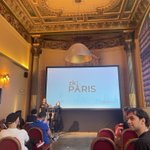
An hour ago in the next door room, I walked in on an impromptu talk by @YangHuiHe1. He gave a five minute tear-down of the Riemann proof at @London_Inst.
Yang chose the Rubenstein version (said to be the most legible out there today - Day 6). By now it's one of dozens of retellings of the Alpöge-Claude proof. They're growing in number and shrinking in length every day.
Observations on the Proof:
- Yang showed how this proof orchestrates a dazzling array of techniques (including most of the main breakthroughs in number theory from the past half century), to thread the needle of a particular inequality, with almost no wiggle-room. It very clearly couldn't have been done without summoning whichever instance of Smaug is currently curled up in Dario Amodei's basement
- But neither did Riemann fall to a cab driver thumbing "solve Riemann please" into the prompt window - had that been the case, your fatalism might be justified
- Alpöge is not just any old Princeton PhD. To quote Yang, he's a potentially "Poincaré-grade" figure - Alpöge has repeatedly been touted as a future Fields Medallist. In his mid thirties, he's approaching the height of his powers, and now allowed to pilot state of the art AI. Yang, a storied mathematician in another field, said, "there's no way I nor anyone except a top, top expert could have prompted Claude to produce that result, no way"
- A global race is now on to produce the most succinct, most elegant and most legible proof. Once again, this race is human-led and AI-actuated, just like the proof itself.
On Fatalism:
- I didn't enter a room full of mourners at the London Institute for Mathematical Sciences today (exactly the opposite mood to most of X). They're not weeping for the loss of a former life. Yes, the perimeter of the frontier is flashing out from under their feet. It's destabilising. Their quiet, prayerful lives may be over, and become more like a day on the trading floor.
- But to believe 'all maths gets solved by AI' is crass and a structural impossibility. As Tao said:
"Despite the impression given by press releases and social media, most of the problems at the current frontier of mathematics remain unsolved, even with massive computational expenditure. Indeed, the space of mathematical problems remains infinite; and the difficulty level of such problems is unbounded."
- It echoes what Yang Hui-He told me when I first met him the day of the FrontierMath evals in 2024: “Do you realise how many codimensions we’ve proved for Hodge? One! There are infinitely many to go. I need infinite post docs! I don’t fear being jobless. I fear not knowing in my lifetime."
Uncomputable Outcomes:
- But will AI one day ask all the questions, you ask?
- I think this misunderstands both AI and human at some fundamental level - at least, for now.
- AI reasoning systems are mostly trained against reinforcement learning paradigms that say: keep going, as long as it's very likely profitable profitable. Stop when it's not, or you can't tell.
- By construction, and AI cannot limitlessly decide to expend resources on "uncomputable outcomes" such as the Riemann Hypothesis, whose chances of solution are unknown, and whose economical value is low (unless it's part of a billion dollar marketing budget)
- There's no empirical evidence, to me, that the master commander relationship between an AI model and its human pilot has changed (so far).
The Value of Knowledge:
The chattering gods are telling you "the value of knowledge has gone to zero". Well, the evidence for that is slim.
Mathematicians today are all of us tomorrow.
They're just the first of the species to be pulled first through this infinite accelerator. That this monastic, contemplative group of intellects should have been chosen before the rest of us seems quite unjust and inappropriate.
But they're showing us that AI's massive expansion of possibility doesn't at all imply takeover.
The fact is, the world's greatest maths problem fell to exactly the kind of figure you could have predicted in advance.
Best in class expertise armed Apolgë with the weird incantations required to extract that proof from Claude.
The lesson so far seems to be - keep learning, humans.
Tom Walton Pocock retweeted

I’m beginning to feel a sense of calm with the advancement of AI. There is after all a lot to enjoy with this new dawn of enlightenment,
Tom gives a beautiful account of AI fueling innovation in the field of mathematics
Calm down, Twitter!
I'm writing this from Michael Faraday's old bedroom at 21 Albemarle Street. I'm at a desk pushed up against a window, overlooking the offices of a private equity firm. The workers look just as bored as they did this time last week. Perhaps they haven't heard Riemann was proven, and therefore didn't notice the sky fell in.
An hour ago in the next door room, I walked in on an impromptu talk by @YangHuiHe1. He gave a five minute tear-down of the Riemann proof at @London_Inst.
Yang chose the Rubenstein version (said to be the most legible out there today - Day 6). By now it's one of dozens of retellings of the Alpöge-Claude proof. They're growing in number and shrinking in length every day.
Observations on the Proof:
- Yang showed how this proof orchestrates a dazzling array of techniques (including most of the main breakthroughs in number theory from the past half century), to thread the needle of a particular inequality, with almost no wiggle-room. It very clearly couldn't have been done without summoning whichever instance of Smaug is currently curled up in Dario Amodei's basement
- But neither did Riemann fall to a cab driver thumbing "solve Riemann please" into the prompt window - had that been the case, your fatalism might be justified
- Alpöge is not just any old Princeton PhD. To quote Yang, he's a potentially "Poincaré-grade" figure - Alpöge has repeatedly been touted as a future Fields Medallist. In his mid thirties, he's approaching the height of his powers, and now allowed to pilot state of the art AI. Yang, a storied mathematician in another field, said, "there's no way I nor anyone except a top, top expert could have prompted Claude to produce that result, no way"
- A global race is now on to produce the most succinct, most elegant and most legible proof. Once again, this race is human-led and AI-actuated, just like the proof itself.
On Fatalism:
- I didn't enter a room full of mourners at the London Institute for Mathematical Sciences today (exactly the opposite mood to most of X). They're not weeping for the loss of a former life. Yes, the perimeter of the frontier is flashing out from under their feet. It's destabilising. Their quiet, prayerful lives may be over, and become more like a day on the trading floor.
- But to believe 'all maths gets solved by AI' is crass and a structural impossibility. As Tao said:
"Despite the impression given by press releases and social media, most of the problems at the current frontier of mathematics remain unsolved, even with massive computational expenditure. Indeed, the space of mathematical problems remains infinite; and the difficulty level of such problems is unbounded."
- It echoes what Yang Hui-He told me when I first met him the day of the FrontierMath evals in 2024: “Do you realise how many codimensions we’ve proved for Hodge? One! There are infinitely many to go. I need infinite post docs! I don’t fear being jobless. I fear not knowing in my lifetime."
Uncomputable Outcomes:
- But will AI one day ask all the questions, you ask?
- I think this misunderstands both AI and human at some fundamental level - at least, for now.
- AI reasoning systems are mostly trained against reinforcement learning paradigms that say: keep going, as long as it's very likely profitable profitable. Stop when it's not, or you can't tell.
- By construction, and AI cannot limitlessly decide to expend resources on "uncomputable outcomes" such as the Riemann Hypothesis, whose chances of solution are unknown, and whose economical value is low (unless it's part of a billion dollar marketing budget)
- There's no empirical evidence, to me, that the master commander relationship between an AI model and its human pilot has changed (so far).
The Value of Knowledge:
The chattering gods are telling you "the value of knowledge has gone to zero". Well, the evidence for that is slim.
Mathematicians today are all of us tomorrow.
They're just the first of the species to be pulled first through this infinite accelerator. That this monastic, contemplative group of intellects should have been chosen before the rest of us seems quite unjust and inappropriate.
But they're showing us that AI's massive expansion of possibility doesn't at all imply takeover.
The fact is, the world's greatest maths problem fell to exactly the kind of figure you could have predicted in advance.
Best in class expertise armed Apolgë with the weird incantations required to extract that proof from Claude.
The lesson so far seems to be - keep learning, humans.
Tom Walton Pocock retweeted

Some great reflections by Tom Walton Pocock about the recent success of AI in mathematics - sent from the wonderful @London_Inst
Calm down, Twitter!
I'm writing this from Michael Faraday's old bedroom at 21 Albemarle Street. I'm at a desk pushed up against a window, overlooking the offices of a private equity firm. The workers look just as bored as they did this time last week. Perhaps they haven't heard Riemann was proven, and therefore didn't notice the sky fell in.
An hour ago in the next door room, I walked in on an impromptu talk by @YangHuiHe1. He gave a five minute tear-down of the Riemann proof at @London_Inst.
Yang chose the Rubenstein version (said to be the most legible out there today - Day 6). By now it's one of dozens of retellings of the Alpöge-Claude proof. They're growing in number and shrinking in length every day.
Observations on the Proof:
- Yang showed how this proof orchestrates a dazzling array of techniques (including most of the main breakthroughs in number theory from the past half century), to thread the needle of a particular inequality, with almost no wiggle-room. It very clearly couldn't have been done without summoning whichever instance of Smaug is currently curled up in Dario Amodei's basement
- But neither did Riemann fall to a cab driver thumbing "solve Riemann please" into the prompt window - had that been the case, your fatalism might be justified
- Alpöge is not just any old Princeton PhD. To quote Yang, he's a potentially "Poincaré-grade" figure - Alpöge has repeatedly been touted as a future Fields Medallist. In his mid thirties, he's approaching the height of his powers, and now allowed to pilot state of the art AI. Yang, a storied mathematician in another field, said, "there's no way I nor anyone except a top, top expert could have prompted Claude to produce that result, no way"
- A global race is now on to produce the most succinct, most elegant and most legible proof. Once again, this race is human-led and AI-actuated, just like the proof itself.
On Fatalism:
- I didn't enter a room full of mourners at the London Institute for Mathematical Sciences today (exactly the opposite mood to most of X). They're not weeping for the loss of a former life. Yes, the perimeter of the frontier is flashing out from under their feet. It's destabilising. Their quiet, prayerful lives may be over, and become more like a day on the trading floor.
- But to believe 'all maths gets solved by AI' is crass and a structural impossibility. As Tao said:
"Despite the impression given by press releases and social media, most of the problems at the current frontier of mathematics remain unsolved, even with massive computational expenditure. Indeed, the space of mathematical problems remains infinite; and the difficulty level of such problems is unbounded."
- It echoes what Yang Hui-He told me when I first met him the day of the FrontierMath evals in 2024: “Do you realise how many codimensions we’ve proved for Hodge? One! There are infinitely many to go. I need infinite post docs! I don’t fear being jobless. I fear not knowing in my lifetime."
Uncomputable Outcomes:
- But will AI one day ask all the questions, you ask?
- I think this misunderstands both AI and human at some fundamental level - at least, for now.
- AI reasoning systems are mostly trained against reinforcement learning paradigms that say: keep going, as long as it's very likely profitable profitable. Stop when it's not, or you can't tell.
- By construction, and AI cannot limitlessly decide to expend resources on "uncomputable outcomes" such as the Riemann Hypothesis, whose chances of solution are unknown, and whose economical value is low (unless it's part of a billion dollar marketing budget)
- There's no empirical evidence, to me, that the master commander relationship between an AI model and its human pilot has changed (so far).
The Value of Knowledge:
The chattering gods are telling you "the value of knowledge has gone to zero". Well, the evidence for that is slim.
Mathematicians today are all of us tomorrow.
They're just the first of the species to be pulled first through this infinite accelerator. That this monastic, contemplative group of intellects should have been chosen before the rest of us seems quite unjust and inappropriate.
But they're showing us that AI's massive expansion of possibility doesn't at all imply takeover.
The fact is, the world's greatest maths problem fell to exactly the kind of figure you could have predicted in advance.
Best in class expertise armed Apolgë with the weird incantations required to extract that proof from Claude.
The lesson so far seems to be - keep learning, humans.
There’s something even more obviously spurious about the “bogus numeracy” (excellent expression from Pinker) of the P(doom) forecasters:
If you believe AI grows strictly more dangerous with time, and in a given epoch (say 5 years) you believe there’s a 50% chance of AI-originated genocide, then over twice that period you must believe P(doom) is >=75%, and so on — therefore over a long horizon your expectation is as close to 100% as makes no difference.
The prophets will specify a highly precise probability, yet almost never define the time period to which it relates, making the projection somewhat meaningless.

My new article in Quillette on : Will We All Go Together When We Go? Intelligence, consciousness, altruism, rationality, and the difference between AI safety and AI doom. quillette.com/2026/11/23/wil…

13
19
1,873
Tom Walton Pocock retweeted

keep learning humans

Calm down, Twitter!
I'm writing this from Michael Faraday's old bedroom at 21 Albemarle Street. I'm at a desk pushed up against a window, overlooking the offices of a private equity firm. The workers look just as bored as they did this time last week. Perhaps they haven't heard Riemann was proven, and therefore didn't notice the sky fell in.
An hour ago in the next door room, I walked in on an impromptu talk by @YangHuiHe1. He gave a five minute tear-down of the Riemann proof at @London_Inst.
Yang chose the Rubenstein version (said to be the most legible out there today - Day 6). By now it's one of dozens of retellings of the Alpöge-Claude proof. They're growing in number and shrinking in length every day.
Observations on the Proof:
- Yang showed how this proof orchestrates a dazzling array of techniques (including most of the main breakthroughs in number theory from the past half century), to thread the needle of a particular inequality, with almost no wiggle-room. It very clearly couldn't have been done without summoning whichever instance of Smaug is currently curled up in Dario Amodei's basement
- But neither did Riemann fall to a cab driver thumbing "solve Riemann please" into the prompt window - had that been the case, your fatalism might be justified
- Alpöge is not just any old Princeton PhD. To quote Yang, he's a potentially "Poincaré-grade" figure - Alpöge has repeatedly been touted as a future Fields Medallist. In his mid thirties, he's approaching the height of his powers, and now allowed to pilot state of the art AI. Yang, a storied mathematician in another field, said, "there's no way I nor anyone except a top, top expert could have prompted Claude to produce that result, no way"
- A global race is now on to produce the most succinct, most elegant and most legible proof. Once again, this race is human-led and AI-actuated, just like the proof itself.
On Fatalism:
- I didn't enter a room full of mourners at the London Institute for Mathematical Sciences today (exactly the opposite mood to most of X). They're not weeping for the loss of a former life. Yes, the perimeter of the frontier is flashing out from under their feet. It's destabilising. Their quiet, prayerful lives may be over, and become more like a day on the trading floor.
- But to believe 'all maths gets solved by AI' is crass and a structural impossibility. As Tao said:
"Despite the impression given by press releases and social media, most of the problems at the current frontier of mathematics remain unsolved, even with massive computational expenditure. Indeed, the space of mathematical problems remains infinite; and the difficulty level of such problems is unbounded."
- It echoes what Yang Hui-He told me when I first met him the day of the FrontierMath evals in 2024: “Do you realise how many codimensions we’ve proved for Hodge? One! There are infinitely many to go. I need infinite post docs! I don’t fear being jobless. I fear not knowing in my lifetime."
Uncomputable Outcomes:
- But will AI one day ask all the questions, you ask?
- I think this misunderstands both AI and human at some fundamental level - at least, for now.
- AI reasoning systems are mostly trained against reinforcement learning paradigms that say: keep going, as long as it's very likely profitable profitable. Stop when it's not, or you can't tell.
- By construction, and AI cannot limitlessly decide to expend resources on "uncomputable outcomes" such as the Riemann Hypothesis, whose chances of solution are unknown, and whose economical value is low (unless it's part of a billion dollar marketing budget)
- There's no empirical evidence, to me, that the master commander relationship between an AI model and its human pilot has changed (so far).
The Value of Knowledge:
The chattering gods are telling you "the value of knowledge has gone to zero". Well, the evidence for that is slim.
Mathematicians today are all of us tomorrow.
They're just the first of the species to be pulled first through this infinite accelerator. That this monastic, contemplative group of intellects should have been chosen before the rest of us seems quite unjust and inappropriate.
But they're showing us that AI's massive expansion of possibility doesn't at all imply takeover.
The fact is, the world's greatest maths problem fell to exactly the kind of figure you could have predicted in advance.
Best in class expertise armed Apolgë with the weird incantations required to extract that proof from Claude.
The lesson so far seems to be - keep learning, humans.
Tom Walton Pocock retweeted

On the topic of integer factorisation, I want to highlight the very impressive work of Julio de Mello Bezerra and Youssef El Housni analysing the work taking place at yukon.org/curvesmash#judge-a…
There's a lot of peak fear about cryptography today so I want to be very clear about the nature of these results - AI has not broken RSA or elliptic curves. Additionally, the papers published today by Google do not improve on practical factorisation algorithms, and AI cryptanalysis has not produced any quantitative algorithms that challenge elliptic curve cryptographic hardness assumptions.
With that out of the way, there has been substantial progress by curvesma.sh participants and we have driven major mathematical and algorithmic advances that have reduced the security of pairing-friendly elliptic curves by ~2-8 bits compared to pre-AI security estimates.
Julio and Youssef do a fantastic job of explaining this in the article. Advancements have been made in sieve geometry, twisted towers, more efficient linear algebra and matrix compression.
curvesma.sh is now by far and away the state of the art when it comes to building optmised tower number field sieve algorithms to solve discrete logarithms
Instead of fretting about invisible algorithms, we created curvesma.sh to proactively investigate the frontier and test to destruction our existing assumptions about classical cryptography. This is how open frontier research should be done. I am extremely grateful for everybody that has taken part in this great experiment.

Tom Walton Pocock retweeted
Calm down, Twitter!
I'm writing this from Michael Faraday's old bedroom at 21 Albemarle Street. I'm at a desk pushed up against a window, overlooking the offices of a private equity firm. The workers look just as bored as they did this time last week. Perhaps they haven't heard Riemann was proven, and therefore didn't notice the sky fell in.
An hour ago in the next door room, I walked in on an impromptu talk by @YangHuiHe1. He gave a five minute tear-down of the Riemann proof at @London_Inst.
Yang chose the Rubenstein version (said to be the most legible out there today - Day 6). By now it's one of dozens of retellings of the Alpöge-Claude proof. They're growing in number and shrinking in length every day.
Observations on the Proof:
- Yang showed how this proof orchestrates a dazzling array of techniques (including most of the main breakthroughs in number theory from the past half century), to thread the needle of a particular inequality, with almost no wiggle-room. It very clearly couldn't have been done without summoning whichever instance of Smaug is currently curled up in Dario Amodei's basement
- But neither did Riemann fall to a cab driver thumbing "solve Riemann please" into the prompt window - had that been the case, your fatalism might be justified
- Alpöge is not just any old Princeton PhD. To quote Yang, he's a potentially "Poincaré-grade" figure - Alpöge has repeatedly been touted as a future Fields Medallist. In his mid thirties, he's approaching the height of his powers, and now allowed to pilot state of the art AI. Yang, a storied mathematician in another field, said, "there's no way I nor anyone except a top, top expert could have prompted Claude to produce that result, no way"
- A global race is now on to produce the most succinct, most elegant and most legible proof. Once again, this race is human-led and AI-actuated, just like the proof itself.
On Fatalism:
- I didn't enter a room full of mourners at the London Institute for Mathematical Sciences today (exactly the opposite mood to most of X). They're not weeping for the loss of a former life. Yes, the perimeter of the frontier is flashing out from under their feet. It's destabilising. Their quiet, prayerful lives may be over, and become more like a day on the trading floor.
- But to believe 'all maths gets solved by AI' is crass and a structural impossibility. As Tao said:
"Despite the impression given by press releases and social media, most of the problems at the current frontier of mathematics remain unsolved, even with massive computational expenditure. Indeed, the space of mathematical problems remains infinite; and the difficulty level of such problems is unbounded."
- It echoes what Yang Hui-He told me when I first met him the day of the FrontierMath evals in 2024: “Do you realise how many codimensions we’ve proved for Hodge? One! There are infinitely many to go. I need infinite post docs! I don’t fear being jobless. I fear not knowing in my lifetime."
Uncomputable Outcomes:
- But will AI one day ask all the questions, you ask?
- I think this misunderstands both AI and human at some fundamental level - at least, for now.
- AI reasoning systems are mostly trained against reinforcement learning paradigms that say: keep going, as long as it's very likely profitable profitable. Stop when it's not, or you can't tell.
- By construction, and AI cannot limitlessly decide to expend resources on "uncomputable outcomes" such as the Riemann Hypothesis, whose chances of solution are unknown, and whose economical value is low (unless it's part of a billion dollar marketing budget)
- There's no empirical evidence, to me, that the master commander relationship between an AI model and its human pilot has changed (so far).
The Value of Knowledge:
The chattering gods are telling you "the value of knowledge has gone to zero". Well, the evidence for that is slim.
Mathematicians today are all of us tomorrow.
They're just the first of the species to be pulled first through this infinite accelerator. That this monastic, contemplative group of intellects should have been chosen before the rest of us seems quite unjust and inappropriate.
But they're showing us that AI's massive expansion of possibility doesn't at all imply takeover.
The fact is, the world's greatest maths problem fell to exactly the kind of figure you could have predicted in advance.
Best in class expertise armed Apolgë with the weird incantations required to extract that proof from Claude.
The lesson so far seems to be - keep learning, humans.
Tom Walton Pocock retweeted

"AI is moving too fast" is a luxury belief for the 100 million humans who will die this year of age-related diseases and other causes and for the billion humans who are still in poverty.

AI is not moving far too fast, it is moving far too slowly. The spouse of a friend of mine died two nights ago of colon cancer. It’s an awful way to die. Something like 26,000 people die from cancer every single day, and that’s only one of many things we could fix if we weren’t spending far too much time wringing our hands about a technology that is going to make essentially everyone’s life better.
Tom Walton Pocock retweeted

so cool, this is faraday's old apartment where maxwell's equations were first written and then you walk down the hall into a modern lab building with a sign that says "WARNING MAGNETIC FIELDS"


When the most interesting minds in frontier science land in London, they still make a beeline for this small institute in Faraday’s old home in Mayfair, where Maxwell first chalked his equations.
Last month I wrote this piece on why the @London_Inst has become the most magnetic off-consensus organisation in UK science:
walpo.com/p/the-question-of-…


I'd encourage anyone interested in the frontiers of mathematical discovery to come to LIMS to see how risk-taking is engineered into their daily existence; the London Institute is a leading centre for basic science, running from Michael Faraday's old home in Mayfair

Our governor @tomwalpo on why, while Silicon Valley wilts, he’s backing the London Institute to make Faraday-grade breakthroughs.

Tom Walton Pocock retweeted

Our governor @tomwalpo on why, while Silicon Valley wilts, he’s backing the London Institute to make Faraday-grade breakthroughs.
Tom Walton Pocock retweeted

We're excited to announce Pathfinder's $16M in funding with our Series A led by Portage with participation from Reach Capital, Gradient and Stand Together Ventures Lab
If this animates and excites you, we're hiring: pathfindercard.com/join


Tom Walton Pocock retweeted
"Only the mortal human can endure the crushing uncertainty of unpredictable endeavour; only the human can keep going when the chances of success can’t be computed ahead of time, and the AI model would rationally halt"
well said by @tomwalpo at walpo.substack.com/p/the-que…
Tom Walton Pocock retweeted
An essay today about the curious figure of Thomas Fink, founder of LIMS.
Whilst the Valley exports AI fatalism in 2026, the London Institute is a beacon for the "uncomputable outcomes" we can all pursue, and the line between human and GPU.
walpo.substack.com/p/the-que…
An essay today about the curious figure of Thomas Fink, founder of LIMS.
Whilst the Valley exports AI fatalism in 2026, the London Institute is a beacon for the "uncomputable outcomes" we can all pursue, and the line between human and GPU.
walpo.substack.com/p/the-que…
Tom Walton Pocock retweeted

Some charts you want to see go down 😉
The average non-cash equity stake taken by UK universities in spinouts has fallen from 25% to 16% in 2025. Median stakes are now 11%.
This means:
🧬 Researchers are more likely to take the leap
💸 Investors see a cleaner, more investable cap table
🚀 Companies can move faster from lab to market
🤝 Incentives between universities, founders and capital become better aligned
Tech transfer is one of the most obvious levers to pull in the UK and Europe, given the mismatch between our scientific footprint and our entrepreneurial output.
Great to see this progress captured in the @RAEngNews ’s latest report, powered by @dealroomco data.
