


A question for church media teams, conference/event organisers:
When a speaker exceeds their allocated time, what happens next?
Does someone alert them?
Does the whole programme shift?
Different teams have different approaches.
We're interested in understanding them.
Meet Tymly – Your Helpful Chronoguide.
We're starting with a desktop countdown timer designed to help teams keep speaking slots on track.
Our focus extends beyond the countdown itself: we're exploring how better tools can support event coordination.
tymlyhub.netlify.app/

We believe time should be part of the event experience, not an afterthought.
Because when timing is handled poorly, it can affect speakers, organisers, attendees and others.
Tymly is being built around a simple idea:
Better event coordination starts with taking time seriously.
Before your next live event, ask:
• Does every segment have an allocated duration?
• Who is responsible for monitoring time?
• What happens if a segment runs late?
Answering these questions before the event can prevent avoidable confusion during it.
Event coordination involves several moving parts:
• A programme with allocated times.
• Speakers who need to know how much time they have.
• Organization and coordination.
The challenge is helping all these parts work together.
That's the problem space Tymly is exploring.

Three simple ways to reduce avoidable event delays:
1. Give every programme segment a realistic time allocation.
2. Make it clear who is responsible for tracking time.
3. Agree on how speakers will be alerted when their slots are ending.
A schedule tells you what should happen and when.
Coordination helps people make it happen.
Both matter.
And the gap between the two is where many event delays begin.
Great events don't just happen. They're coordinated.
What's the biggest reason events run late?
A. Speakers exceed their allotted time.
B. Transitions take too long.
C. The programme wasn't realistic to begin with.
D. Poor coordination between the people running the event.
What's your experience?
#eventmanagement
A speaker runs 10 minutes over their slot.
The next speaker loses 10 minutes.
The closing session gets squeezed.
And suddenly, an event that was supposed to end at 4PM is still going at 5PM.
Time overruns don't always stay with one speaker. They can affect the entire programme.
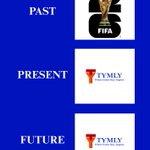
The World Cup is behind us now.
Up next?
Our present and future...
TYMLY
If you're a media team lead in a church, pastor, speaker or event organizer, you definitely don't want to miss what we have cooked. 🔥😁
#tymly #tymlyiscoming #eventflow #worldcup2026⚽️

Something is changing.
For years, speakers, media teams, and event organizers have worked around the same challenge.
Most people notice the symptoms.
Few notice the problem.
We're building something for those who do.
Follow Tymly
Coming Soon.
#tymly #tymlyiscoming #eventflow
