
More lucky than good. Love learning. Started a few companies over the years. Now focused on building https://xitter.gq/t.co/JFTtjkfJ7e and https://xitter.gq/t.co/Wd13Z5MPTN.
Austin, TX
Joined June 2009
- Tweets14K
- Following522
- Followers1.4K
- Likes69.4K






Vikram Phatak 🇺🇸🇺🇦🇮🇱 retweeted

This ‘Boycott Ride’ in Philadelphia is the Left’s pro-Hamas, Jew-hating, BDS assholes-on-wheels.
Every Democrat of conscience should condemn this sick parade of rank antisemitism.
I’m glad to see the steps @PhillyMayor is taking to ensure the safety of the Jewish community.

Vikram Phatak 🇺🇸🇺🇦🇮🇱 retweeted

Every false positive has a business cost: a failed transaction, an app your team can’t reach, another help desk ticket.
Too many, and teams loosen or disable the controls meant to protect them.
Minion by NSS Labs tests in depth, including nuances detection-only testing misses. Request a meeting with our team to learn more about managed testing for control validation: nsslabs.com/minion-campaign/


Vikram Phatak 🇺🇸🇺🇦🇮🇱 retweeted
A single evasion miss can expose your organization to an entire class of exploits or malware. In a recent test on leading cloud firewalls, we ran over 5,000 evasion variations.
Now, Minion lets you run that same depth of testing on your own schedule. Book a call with our team to learn how Minion can validate your controls: nsslabs.com/minion-campaign/


Vikram Phatak 🇺🇸🇺🇦🇮🇱 retweeted
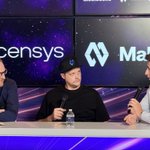
Thanks @rapid7 for inviting NSS Labs CEO @vikphatak to speak at their conference in Boston. Joining Vik for some great conversations around cybersecurity and AI were Reena Choudhry, Go-to-Market Specialist for NSS Labs, and Francisco Artes, VP of Product & Enterprise Security at @Roku.

Vikram Phatak 🇺🇸🇺🇦🇮🇱 retweeted
@Apple researchers just shared their Minions. We have Minions too.
Theirs pool idle Mac GPUs so AI jobs don’t sit in a 10-hour queue. Ours throw tens of thousands of real exploits, malware samples, and evasions at your security controls to see what actually gets blocked.
The funny part? Under the hood they look alike. A coordinator splits big jobs into small ones. Stateless workers run them. Something checks the results and re-runs anything that fails.
When work is spread across lots of machines, you need proof it ran right. For Apple, that’s a watchdog. For your firewall, that’s Minion by NSS Labs.
nsslabs.com/minion/

Vikram Phatak 🇺🇸🇺🇦🇮🇱 retweeted
Convenience has value. But convenience doesn’t block exploits.
In today’s blog, Bob Walder breaks down our 2026 Cloud Network Firewall test, published by @CyberRatings. The results show why the better question isn’t “native or third-party?” It’s “what job does this control need to do?”
First assess your specific needs, then evaluate each product explicitly.
🔗Read the blog: nsslabs.com/media/blog/nativ…

I am excited to welcome Reena to the team!

Welcome, Reena Choudhry! The former CRO of Cerby and Obsidian Security joins NSS Labs as Go-to-Market Specialist to help bring Minion, our security testing platform, to more enterprises, partners and service providers. nsslabs.com/media/blog/nss-l…
#cybersecurity

Vikram Phatak 🇺🇸🇺🇦🇮🇱 retweeted
Welcome, Reena Choudhry! The former CRO of Cerby and Obsidian Security joins NSS Labs as Go-to-Market Specialist to help bring Minion, our security testing platform, to more enterprises, partners and service providers. nsslabs.com/media/blog/nss-l…
#cybersecurity
Vikram Phatak 🇺🇸🇺🇦🇮🇱 retweeted

Dusting off this tweet from April because this gap in shared understanding of LLM capability is *widening*. It's now less "two groups of people speaking past each other" and more a sharp funnel.
- Napkin math somewhere around 6B people (~75% of the population) have barely come in contact with LLMs at all.
- Around 1-2B (~20%) are casual and infrequent users of free-tier ChatGPT-like products. This group sees derpy chatbots and treats them a bit like a better Google search, a writing aid, or etc. Maybe an agent tries to book you a flight. I have non-tech friends who (reasonably, imo) say they have not much use for it at all. Even many professionals outside of math&code are in this tier. For example, execs and many other functions spend a lot of their time talking to other people, so while they understand what is happening intellectually, it is still second-hand and a bit abstract.
- Now we get to professional use of frontier-grade LLMs in math&code. Somewhere around 20M people (0.2%) see first-hand that large, complex projects that used to take them weeks/months can now be completed by agents with a prompt. Building apps, copying apps, translating apps, decompiling apps from binaries... This has all happened very quickly and recently - less than 1 year ago, I was writing code manually by hand, typing memorized computer code commands into a code editor character by character, occasionally pressing Tab to autocomplete a little chunk of code.
- And finally we get to the ~5,000 people (~0.00006%) with access to frontier-grade systems internally. The external world has seen the preview. It looks like swarms of thousands of agents collaborating over weeks on software mega projects: minting zero days, running cyber attacks and defenses at machine speeds, discovering new science, advancing the frontier of mathematics. Things that would have taken top professionals in the industry years of work. Meanwhile, human review and comprehension are starting to fall behind. For example, people are still involved in the "archeology" of the OpenAI-HF incident from many months ago. Mathematicians may be poring over the 722 manuscripts on frontier mathematics for a while.
The funnel is driven by a combination of factors:
1. The impact scales with ambition, problem size, and horizon. A question with a paragraph answer barely stresses the system. You need a reservoir of big, difficult problems that you really care about. This aspect drives the consumer / professional dimension of the funnel.
2. The jaggedness of the system (which I have written about a lot separately). Capability peaks in domains that are digital, verifiable and economically valuable. This is because LLM capability emerges from reinforcement learning on verifiable rewards on a curated environment mixture driven by revenue potential. This aspect primarily drives the area (e.g. math&code) dimension of the funnel.
3. Access. Free-tier, paid-tier, internal.
So this is the weirdness of the moment. The general public has mostly not interacted with these systems. When they have, it looks like a derpy chatbot. The majority of professionals still see only a modest uplift. And a small sliver of professionals are experiencing the vertigo of the curve going vertical. And it is all happening at the same time.

Judging by my tl there is a growing gap in understanding of AI capability.
The first issue I think is around recency and tier of use. I think a lot of people tried the free tier of ChatGPT somewhere last year and allowed it to inform their views on AI a little too much. This is a group of reactions laughing at various quirks of the models, hallucinations, etc. Yes I also saw the viral videos of OpenAI's Advanced Voice mode fumbling simple queries like "should I drive or walk to the carwash". The thing is that these free and old/deprecated models don't reflect the capability in the latest round of state of the art agentic models of this year, especially OpenAI Codex and Claude Code.
But that brings me to the second issue. Even if people paid $200/month to use the state of the art models, a lot of the capabilities are relatively "peaky" in highly technical areas. Typical queries around search, writing, advice, etc. are *not* the domain that has made the most noticeable and dramatic strides in capability. Partly, this is due to the technical details of reinforcement learning and its use of verifiable rewards. But partly, it's also because these use cases are not sufficiently prioritized by the companies in their hillclimbing because they don't lead to as much $$$ value. The goldmines are elsewhere, and the focus comes along.
So that brings me to the second group of people, who *both* 1) pay for and use the state of the art frontier agentic models (OpenAI Codex / Claude Code) and 2) do so professionally in technical domains like programming, math and research. This group of people is subject to the highest amount of "AI Psychosis" because the recent improvements in these domains as of this year have been nothing short of staggering. When you hand a computer terminal to one of these models, you can now watch them melt programming problems that you'd normally expect to take days/weeks of work. It's this second group of people that assigns a much greater gravity to the capabilities, their slope, and various cyber-related repercussions.
TLDR the people in these two groups are speaking past each other. It really is simultaneously the case that OpenAI's free and I think slightly orphaned (?) "Advanced Voice Mode" will fumble the dumbest questions in your Instagram's reels and *at the same time*, OpenAI's highest-tier and paid Codex model will go off for 1 hour to coherently restructure an entire code base, or find and exploit vulnerabilities in computer systems. This part really works and has made dramatic strides because 2 properties: 1) these domains offer explicit reward functions that are verifiable meaning they are easily amenable to reinforcement learning training (e.g. unit tests passed yes or no, in contrast to writing, which is much harder to explicitly judge), but also 2) they are a lot more valuable in b2b settings, meaning that the biggest fraction of the team is focused on improving them. So here we are.

Vikram Phatak 🇺🇸🇺🇦🇮🇱 retweeted
“How involved is a Minion run by NSS Labs?”
Lighter than you'd expect: a drop-in client, NSS Labs runs it remotely against current threats, results verified against evidence, versioned reporting you can show over time.
Your team stays on the product.
Want to see it against your stack? Book a scoping call, no commitment ➡️ na2.hubs.ly/H07_WXz0
#CISO #ContinuousValidation #NSSLabs
That will be awesome!!
Austin <->Dallas + Austin <-> Houston next? If I could hop on the hyper loop and take my kids to the Museum or the symphony or Meow Wolf it would be a game changer!
Boring Company is working on a simple, precursor Hyperloop tunnel between Austin and San Antonio (>200 mph).
Due to traffic congestion, that journey can currently take up to 2.5 hours. @BoringCompany can reduce that to a consistent <30 mins.

Vikram Phatak 🇺🇸🇺🇦🇮🇱 retweeted

Jensen Huang pushed back hard against AI labs calling for tighter regulation and slower AI development, at Dreamforce.
"If you are not confident about the safety of the products, and you're not confident in its functionality, capability, or safety, then don't just release it.
We don't need any new laws. We don't need new regulations. we just need companies to decide that when it's time to run as fast as they can."
safety and speed are not mutually exclusive, and new laws are not required to make AI systems safer. Build fast, test aggressively, and pause only when you are no longer confident the product is safe.
---
From "Salesforce" YouTube channel, (full video link in comment)