

Healthcare driver. DHA, MPH. compassionate colleague, veteran advocate, loyal friend. #letsdohealthcarebetter💪👍🙏☺️
Newport Beach, CA
Joined November 2024
- Tweets1.8K
- Following234
- Followers469
- Likes6.3K



Hi Healthcare warriors,
As many have, I’ve buried my head in the sand for the next few weeks and just focused on doing the best job I can professionally to support the current healthcare disaster created from a myriad of poorly constructed state/local laws and policies. 😕😊
Every week, I am grateful to be in a unique situation, working with healthcare/hospital clients across different states, with different financial profiles, supply contracts, payor mix and operational strength.
Having said that, let me share what is happening on the “ground floor" for the politicians and providers that are at an 'arms length.'
1. The changes to Medi-caid enrollment criteria significant financial challenges. It's not just an 'illegal alien' losing coverage. Even though Medi-caid reimbursement is low; the payments are timely and reliable if a hospital follows submission protocol. With fewer patients covered- it’s a significant financial impact to hospitals. There are hospitals that will risk closure if they cannot improve the cost/revenue ratio.
2. The enrollment situation is SEPARATE from the continued care hospitals have to provide (via EMTALA) to stabilize ANY patient; even if there is no insurance coverage. "Safety Net, DSH, 340B and NFP status do NOT fill the gap for all hospitals.
3. Commercial insurers presented their 2027 coverage plans to large employers for their employees. More consolidation of plan options (big time on Advantage plans), higher/stable cost per employee with proposed "added value services" for employees. Some employers are significantly limiting employee PPO options and making the HMO options more affordable to keep employees within the company's healthcare network.
4. Vendors and GPOs are getting more protective and aggressive on contracting:
- GPOs are trying to be helpful with little success. At the end of the day; it’s about self-preservation and trying to prove 'value' for customers.
- Device and drug manufacture profit margins are ASTRONOMICALLY higher than hospital revenue. They are trying to tie hospitals into multiyear contracts with annual spend commitments. They will practically give away equipment to tie a customer in to the consumables proprietary to the equipment. The hard work now is less about negotiating a PRICE, versus the business TERMS to protect the hospitals if finances change, or volumes don’t align to the spend commitments.
And the kicker NOTHING above helps a patient/family select an insurance option that aligns with what they need for a small percentage of their annual income.
There is a way to do it- I've included some politicians here, along with a link... at least listen from Minute 42, to the end (18 mins). The Federal Government is not coming to save any patient. Any state leader that wants to engage with the local hospitals, governor, payors and … I, along with a number of incredible physicians are ready to help. Healthcare is not political; it’s about understanding facts/data, looking at local communities and not taking YEARS to make a positive impact for constituents. @realdocspeaks
@realDonaldTrump
@VivekGRamaswamy
@JohnJamesMI
@SteveHiltonx @TomOliverson
@DrDiGiorgio
@jwhite_health
@RogerMarshallMD
@DrOzCMS
@SecKennedy
@DutchRojas
@mcuban
@JDVance
@txsportsdoc
youtu.be/lPsNHC5P-h0?is=KanC…

Andrea Bates, DHA MPH retweeted

@AndreaBee00722 makes a great point that any healthcare reform must lower the costs of insurance premiums for the public to support it.
She is a wealth of knowledge about hospitals, GPOs and what the price of services are at hospitals.
She geniunely wants to improve healthcare in the US and she is worth a follow.
I always appreciate when I interview people with deep industry knowledge and good intent.
Please follow her. @HeathVeuleman @DutchRojas @anish_koka @DrDiGiorgio @crappiedoc

Dear Congress and healthcare friends, Happy Monday!!💪👍
Healthcare progress report...from the hospital financial/ clinical operations trenches:
1. Yes, there are large NFP, 340B and other academic or multi state systems that are still financially strong. Other hospitals/healthcare systems are getting crushed....
2. Procurement/supply costs (devices/implants) continue to increase... the reimbursement involved with the use of these supplies (like surgeries) does NOT offset the increase. This was happening WELL before tariffs......
3. Due to better oversight/policies preventing illegal immigrants from enrolling in Medicaid, Medicaid (while already a suboptimal payor) revenue is in the tank....way down. If these patients need care, it's an "emergency," and they are showing up in the Emergency room where legally (EMTALA) the hospital has to stabilize them with potentially no reimbursement/revenue.
4. Commercial patients are rationing/ not scheduling elective and preventative care because they have to pay the full amount until they meet their $5K + deductible. Scary to think about what diagnoses we are missing that could be easily treated if caught earlier.
5. Self-insured employers are preparing for employee 'Open Enrollment" now, and the large, vertically integrated commercial insurers and PBMs have NOT offered impactful cost relief.
6. The only reliable/somewhat stable 'patient' right now is a Medicare FFS, or Advantage patient..... typically, sicker and more expensive...but pay decently and timely.
With the AWESOME work done by THIS ADMINISTRATION to identify/reduce healthcare fraud and lower RX drug costs, there is NO REASON we can't quickly develop the strategy to have savings translate in to lower premiums, lower deductibles and better access for American citizens. It will take engagement from all healthcare entities (listed above) and healthcare leaders that KNOW HOW TO SEQUENCE AND ALIGN the initiatives by State. Can we please remove the politics and start making progress?
Thanks for listening. ☺️💪😊🙏
@JDVance
@DrOzCMS @mcuban @DrDiGiorgio @DutchRojas @realdocspeaks @RandPaul @ScottforFlorida @SteveHiltonx @realDonaldTrump @TomOliverson
Hi healthcare friends, hope you had a productive week navigating through our delightful US Healthcare system.
Some real-time hospital client work this week for the 340B friends😂😉
-Fact: 340B started in 1992. $1B dollar program at its inception. $44B in 2022; $81.5B in 2024; insane growth.
- Working this week with two different health systems addressing 340B management and 'optimization'; one is 340B, one is NOT.
**The 340B hospital has a strategic marketing plan with direct primary care providers (oncology, rheumatology, etc.), and surrounding hospitals/health systems to share available services and offer options for any patients seeking support for services.
**The NON-340B hospital is working to:
a. Review (at the procedure level) the COST of the infused medication relative to the reimbursement based on accurate coding, staffing, and payor mix.
b. Partner with surrounding 340B sites where patients can be sent when the medication cost to support an infusion for a 340B eligible medication generates no profitable margin for facility.
Should the 340B site be punished for be willing to support needy patients?
Is the non 340B site wrong for putting focus on cost versus revenue to staff financially viable? No.
You know who is NOT considered and getting SCREWED in this? YEP, the PATIENT. Now the patient is waiting longer for their infusion, dealing with more scheduling processes and driving distances from their home/care site to get treatment.
Yeah--- 340B is a joke. Drug prices and insurance payments should enable ANY OP pharmacy to take care of their patients. When are we taking action on healthcare reform again? @mcuban
@DrDiGiorgio @DutchRojas @realdocspeaks @DrOzCMS @RobertKennedyJr
Happy Wednesday, Healthcare friends! While we are addressing Big Pharma as a culprit of exorbitant US Healthcare cost, can we add medical supply/device manufacturers and GPOs to the list? The market consolidation and price escalation schemes are the same; they just represent a smaller percentage of total US Healthcare spend.
True story just from this week:
- Hospital client spends over $400K with a vendor on a specific surgical products used in most every surgery.
- Over the last 5 years, the medical supply manufacturer has acquired/bought out their competition; they have over 80% of US market share on products.
- Manufacturer decides to discontinue multiple products codes/sizes of the item, and ONLY offers a "substitute/new" item that is over 15% more expensive.
- The supplies are on a 'GPO' contract that has no contractual terms/protection for a hospital, that DOES NOT allow the manufacturer to discontinue a product on contract WITHOUT offering a COST NUETRAL, clinically equivalent option.
Essentially the hospital has no choice but to convert and eat the cost difference.
1. Is the hospital going to collect any additional revenue for the cases that require these supplies? No......
2. Is the "cost per case" going to increase for every surgery that uses these supplies? Yes...
3. Is the ONLY entity winning here and making MORE money due to the switch the MANUFACTURER (and potentially the GPO)? --- You've got it.
Such a stupid circus..... Hopefully NFP status, 340B and horribly managed subsidies will cover the cost increase😂🤣☺️--hear the sarcasm👍 @DrDiGiorgio
@TomOliverson @anish_koka @mcuban @realdocspeaks @DutchRojas @SecKennedy @DrOzCMS
Waking up, drinking coffee, and reflecting on a very busy productive week for hospital clients.
- Multiple working sessions to align technology and data to improve visibility to surgical/implant cost of care.
- Operational calls to improve utilization of 340B pricing, and lower overall cost of OP behavioral health patients.
- Confirmed improvement on metrics looking at length of stay (LOS) and discharging patients before they become financially burdensome based on expected reimbursement.
- Claims denial review and identifying root cause/remediation plans for under payment, late payment, and lack of payment for insurers.
It was a good, productive week; I love my job. It also makes my heart hurt that THIS IS THE FOCUS WE HAVE IN US HEALTHCARE TODAY.
- Not one discussion this week about how we get a patient in earlier for a surgery they desperately needed.
- Not one conversation about a patient whose cost/payment we could lower for a catastrophic event that created a bankrupting medical bill
- No one conversation about partnering with large health insurers to rebalance risk and lower commercial deductibles and premiums for patients we serve.
When can we start doing better friends? @realdocspeaks
@DutchRojas @mcuban @DrDiGiorgio @txsportsdoc @DrOzCMS @SecKennedy
Happy Tuesday political people and healthcare warriors:)!
The "Medicare for All" discussion seems to be 'all the rage' lately. It is a terrible idea; I work with physicians, surgeons, and financial hospital leaders/operators across many states. No one (other than those that want more government handouts/funding/subsidies) thinks this will improve healthcare access/quality in any state.
The sad thing: neither political party offers a concise/detailed solution to solve the quality, access and cost component driving monthly premiums and deductibles. Trump/CostPlus RX and OP price transparency are great; they are not the answer.
General reasons why Medicare for All is dumb:
1. It will severely degrade the access and quality of care from specialists that the elderly need
- They are older with more age-related complications
- They have paid in to the system for years and deserve that level of care. We need to protect our seniors and ensure they are getting the same AND BETTER care than they receive now.
2. Based on the state/federal matching in specific states, it would pull financial resources away from other strategic initiatives (Infrastructure, Security, etc.)
3. Based on the current Medicare professional fee schedule, it would disempower and disincentivize hard working physicians and APPs that maintain a patient referral base across multiple insurance carriers.
4. Using the current Medicare DRG fee schedule for all patient reimbursement, hospitals would be forced to revisit current surgical services lines and OP clinic/services to ensure they can remain financially viable.
5. Access to obtain care, appointment wait times and direct access to needed primary care or specialists would suffer based on the increased volume/capacity. Emergency rooms would be significantly impacted with non-critical patients.
6. If this had to be passed at a Federal level- I can't imagine there is a snowball's chance in hell that it would get through Congress and passed in to Law.
There is a similar list of ways where we ABSOLUTELY can quickly and systematically improve healthcare for patients across the country (commercial, Medicaid, Medicare, uncovered); it is NOT "Medicare for all":). It will not be the same strategy in each state. Still waiting for brave politicians ready to engage in neutral, action based working sessions. Happy to volunteer my time to facilitate. American patients deserve better.
thanks. @HawleyMO
@BillCassidy
@RogerMarshallMD @BernieSanders @ewarren @mcuban @DrDiGiorgio @realdocspeaks
Well....I think it's fair to say that Dr. Fauci had a rough day. This one made me laugh....for three years....I was in the thick of COVID trying to get supplies for hospitals. For six months, I was at an 80+ bed hospital in that was ALL overflow COVID patients from surrounding hospitals. It seemed odd that for over six months, it was totally fine for me to come to work when no vaccine was developed/available. The day a vaccine became available, I was put in the mandatory "trial group" to get vaccinated. All the sudden...there was no choice. I'm not overly political and think that many people benefitted from the vaccine; others were unaffected; others were definitely harmed. I'm grateful to have an immune system/health status where I didn't have issues. Very much hope we can get back to solid research with apolitical passionate researchers....with no financial or political gain involved. @ScottforFlorida @RonJohnsonWI @SenatorLankford @SenatorHassan @SenBlumenthal @SenatorLankford @RobertKennedyJr @realdocspeaks

Good morning, healthcare friends. I ran into some old colleagues at a friend's birthday last night. They are high-powered, healthcare executives that have frankly benefitted from our misaligned healthcare system with clear motivation and desire to improve it.
I offered/we talked about the idea of a 'functional' (key word☺️) tool that pulls in all third-party insurance contracts and spits out what commercial insurers pay to hospitals/health systems for associated DRG/OP CPT code and sell the tool to the federal government. I suggested it won't go far because:
- politicians and CMS cannot dictate/require that the information be shared. -Washington DC seems to be doing little leading up to midterms.
I shared the tool that COULD BE created and used quickly by CMS and the Feds to address insurance premiums and deductibles. A tool whereby:
-a hospital inputs specific information real time about an inpatient, high cost variable encounter (this can be produced fairly simply with the right people involved)
-the participating hospital validates the tool based on their local staffing, implant/supply and other service costs/contracts.
If the hospital/health system WANTS to apply to receive Not For profit status, 340B, DSH funding, or any other federal/state subsidies, they WILL HAVE TO SHARE/PUBLISH the IP cost data, along with "billed charges" and actual insurance payment.
Outpatient price transparency and lower cost medications on TrumpRX are great starts. Commercial insurers have NO INCENTIVE to bring down the cost of annual premiums and deductibles for patients until we can bring to light the "game" of actual cost, billed charges and insurance payments, to see where the insane profit margins are generated.
Happy to help when CMS and the federal government are willing to support. American patients deserve support to access affordable, comprehensive healthcare. Thanks 👍 @anish_koka
@DutchRojas
@DrDiGiorgio
@realdocspeaks @txsportsdoc @RobertKennedyJr @DrOzCMS @RepGuthrie @SenRickScott @jwhite_health @RogerMarshallMD @mcuban @SteveHiltonx
Good morning, healthcare warriors. Go Team USA!
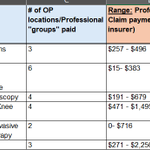
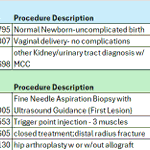
More fun with the healthcare debacle we navigate in: Below is a snapshot of Outpatient Professional (Medical Group/Physician) payments on claims: CPT Code, procedure description, etc.
- Fourth Column/orange is what the commercial insurer paid the medical group. Fifth Column/Green are other payments that were made (Patient OOP, Copay, etc.)
- co pays vary based on in/out of network, and the contract the medical/physician group has with the OP facility and the insurance company
- for the patient out of pocket (OOP): are we starting to see why the game of "Patient OOP" and meeting deductibles crushes American families and influence decisions around care?
- Do we think physician quality/reliability varies so much, that they deserve to be paid this inconsistently from various funding sources? (Employer, Insurance, patients directly?) The answer is not "single payor"-- the answer is aligning incentives and paying doctors appropriately for quality care.
Happy to help Congress or any other leadership team that wants to have fact based, accountable discussions to get hospitals, health systems and insurance companies back working for patients.
@DrDiGiorgio @DutchRojas @anish_koka @RobertKennedyJr @DrOzCMS @RepGuthrie @jwhite_health @mcuban

Hi Healthcare warriors! More fun facts for anyone that truly wants to develop POLICY change that addresses behaviors that DIRECTLY influence why commercial insurers inflate/increase patient premiums. When Congress is ready to engage with people that understand the games and why specific actions would need to be taken by hospitals and insurers to address COST-- happy to help.
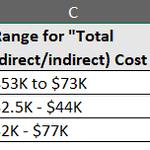
This is a snapshot of payments by an insurer within a state. Blue is Inpatient DRGs; Green is OP CPT codes.
Key points:
- The far right column shows the cost difference of what was paid by the SAME insurer to different hospitals/ASCs with whom the insurer has contracts. Could be in network or out of network.
- This "range" does NOT include any professional (physician/APP) fees or patient copays.
- There are THOUSANDS of dollars of difference on the inpatient DRG claims and the OP claims.
Dear Congress-- are we starting to understand why just having hearings will not get us there? Thanks. @anish_koka @DutchRojas @DrDiGiorgio @mcuban @SurgeryCenterOK @RepGuthrie @DrOzCMS @RobertKennedyJr @txsportsdoc @SenRickScott

Hi healthcare warriors!
Hope it's been a great weekend. Since there was only one soccer game today; I dug in on some stuff. Thought you might appreciate this.
If/when is ANYONE (I don't care what political part at this point.... ) going to actually deal with IP variable/catastrophic COST transparency as a critical component of healthcare reform?
Here is an easy data set from a hospital client:
Three Medicare DRGs below. Medicare DRG and description of the IP service
- Column C is what the hospital says their cost was (for implants, pharmacy, ancillary services, salaried staff, etc.)
-Column D is the "billed charges" : what the hospital submitted to payors.
-Column E is what the hospital got paid.
Notice the extreme RANGE of these numbers. This is why commercial insurers write intentionally skewed contracts with hospitals, manipulate risk pools, and create reason as to why patient premiums and deductibles are so high. This does not even touch (yet:)) on what the same insurance company might 'pay" to different hospitals or ASCs for the same services.
Anyone ready to actually do something? I'm here for it. This is literally 3 examples... there are over 700 Medicare DRGs:)@anish_koka
@DrDiGiorgio @DutchRojas @txsportsdoc @SurgeryCenterOK @HEALTHCOSTtruth @DrOzCMS @RobertKennedyJr

It's not everyday that you get to see the head of CMS working through virtual nurse training with a rock star Congressman☺️💪 Thank you SO much for coming to Scranton Dr. Oz and Congressman Bresnahan! So grateful for the support and commitment to improving the hospitals and programs that will benefit PA patients!🙏👍😊
Good morning! Don't get me wrong...I am absolutely stoked about Venezuela and the capture of Maduro. So proud and grateful for the decisive leadership and our INSANELY awesome military and other involved departments. At the same time, I hope Congress keeps focus on the healthcare debacle and the fact that a large number of patients and families decided to NOT renew their health insurance in 2026 and now have no coverage. Until we come together on solutions, this generates a clinical and financial concern for patients and families, along with hospitals required to provide life sustaining care, regardless of patient insurance coverage.
I am not on an Obamacare plan and do not receive any subsidies. As a single female, my monthly premium went from $700 to $800 a month. This year, I'll need a mammogram, paper smear and some blood work.... unless something "catastrophic" happens. $9,600 a year that does not include copays, or additional costs to hit the deductible; is that crazy or what? My situation is not ideal, and it is WONDERFUL compared to what other families and patients are facing. Hoping that we keep the eye on the ball and start taking engaged steps to create solutions to one of the most time sensitive, significant challenges facing American citizens today.
Hi Healthcare warriors, happy Holidays:) It's a unique breed of passionate humans that spend their working days in the healthcare space, and their nights posting ideas and feelings about it on social media;)
So many moving pieces and ideas on how we can start making impactful improvement to healthcare in 2026. Wanted to focus key points below with some idea of prioritization. My hope and sincere prayer for 2026 is that Congress will engage with experts/operators well versed on the below topics and facilitate actionable working sessions. Government (via ACA/Obamacare and other unfortunate factors) created the healthcare disaster we live in now; it does not need to take 15 more years to course correct with nonconflicted, passionate, experts at the table. American patients deserve better. @DutchRojas @SpeakerJohnson

Hi government leaders: hearing some of the discussion today from the Senate floor.
The ideas put forth by leaders are different, and all warrant additional discussion and due diligence. That needs to be discussed and aligned/sequenced with current or future legislative bills. That will not happen in two weeks.
Key pending decision points:
1. Align on the structure of a patient HSA and what services can be paid from it; what are maximums and tax implications?
2. If an HSA/FSA could be used to cover third party insurance premiums and cost to cover deductibles, what is the appropriate amount of money relative to patient annual income?
3. How do we mitigate a situation where patients do not pay (via an HSA/FSA or other mechanism) for ANY catastrophic coverage?
4. As it relates to catastrophic coverage and risk pooling:
--I'd recommend a focused effort to address true COST of emergency room, catastrophic care, and catastrophic diagnosis; not "billed charges." This can be built, and AI can help.
--from this exercise, we gain insight/leverage with third party insurers to evaluate proposed premiums and deductibles that transparently reflect financial risk for care provided.
Based on these factors, it would seem that a ONE-year ACA extension with (AT A MINIMUM) income caps and a way to address the FAKE/fraudulent people enrolled now is realistic. Any senators asking for 2-to-3-year automatic extensions are either playing politics with future elections, or corrupted by Pharma, third party insurance or large healthcare systems.
True hopes and prayers that congressional leaders (republicans and democrats) can partner on the best solution for 2026 and be ready to TAKE ACTION in 2026 to build healthcare better in 2027 and beyond for American citizens. Thanks for listening. @RonJohnsonWI
@LeaderJohnThune @RogerMarshallMD @BillCassidy @SenatorSlotkin @berniemoreno @SenBlumenthal @SenGaryPeters @RandPaul @SpeakerJohnson @ScottforFlorida @HawleyMO
Hi Senator Johnson, I'm a healthcare operator (work in the clinical and financial 'weeds' of our broken healthcare system daily).
I listened to the hearing today re: Obamacare reform. Wanted to offer a couple thoughts:
1. Medicaid eligibility clearly needs a revamp. Able-bodied adults receiving priority care over disabled children is completely sick and wrong.
2. Medicare DRG Fee schedule and reimbursement rates warrant serious review in relation to the COST (not 'billed charges') incurred by the hospital/ASC to provide the service. Medicare Fee
schedule influences a large majority of commercial contracts.
3. You asked the witnesses what percentage of income was appropriate to spend on healthcare (around 8-9%). There is a logical reason why they all hesitated to answer. It's reflective of one of the harder bodies of work needed in 2026 to address 'IP catastrophic coverage/diagnoses', and 'risk pools' along with patient monthly premiums, deductibles, and MOOP.
What is the cost and projected patient financial responsibility for a heart attack, open heart surgery, and subsequent multi-day stay in the ICU? What is the cost of a new breast cancer diagnosis that requires surgery, chemo, and some rounds of radiation? This is where "innovation" (with some help from AI) would be extremely useful. Data exists to pull some of these variable cost projections together.
4. Any senator (republican or democrat) that demands a 2- or 3-year straight extension (no changes) of current subsidies either does not have confidence or brainpower to tackle true healthcare reform, or has some corruption situation going on with PHARMA, health insurance companies, or integrated healthcare systems.
Positive thoughts/prayers to the Senate team on pending votes, so that solutions for long-term healthcare improvement can start.
Thanks for listening. @BillCassidy
@ScottforFlorida @DrOzCMS @RonJohnsonWI @HawleyMO @SenatorSlotkin @SenBlumenthal @RogerMarshallMD @berniemoreno
Hi Healthcare warrior friends; happy Turkey week! I applaud all of us who work in the current healthcare disaster all day, and still have brain cells left at the end to post/share ideas here👏☺️
Couple thoughts from today:
1. I offered the "Top 5" workstream opportunities that can be sequenced/solutioned simultaneously to inform a future cost structure in the form of patient HSA/FSAs or premiums/deductibles via a third party insurers.
2. We HAVE to get our arms around ACTUAL cost for inpatient and outpatient procedures to level set on appropriate costs for cash service options, monthly premiums, deductibles, and max OOP for catastrophic coverage.
3. With the right folks involved, we can get the supply/implant costs by inpatient and outpatient surgical service line pulled together fairly quickly. That can address the overinflation of claims now related to local "chargemasters."
4. The harder cost to quantify is the overhead in an inpatient hospital versus ASC; staffing, surgeons on call, purchased services/maintenance contracts, etc. The overhead cost estimates out there are extremely broad/vague, because they are often based on licensed beds not ADC. This is also solvable looking at annual PO versus full invoice spend from hospitals.
All doable...let's get to work🙏💪👍
@DRsLoungePod @drdanchoi @JahangirAsgha10 @DutchRojas @mcuban @BillCassidy @ScottforFlorida @realdocspeaks @txsportsdoc
Hi friends, happy Friday! Like many, I think we are energized that there could be a brighter day in healthcare:)
I am not an MD; my master's is in Public Health, and my Doctorate (DHA) is in patient traumatic amputation/recovery; I've been in most every surgical case you can imagine and have negotiated implant costs and physician contracts for over a decade. I'm an independent executive consultant and support C-Suites/Hospital execs on their financial/clinical operations to remain financially viable. I am tracking the conversations and can offer the below. I think the Federal Government and CMS are working as quickly as they can to develop solutions with input from stakeholders. "Rome was not built in a day" and it will not be fixed in a day. Let's work together here:)
1. I absolutely respect the surgeons promoting the OP elective surgery center models. It is GREAT and can absolutely drive down, generate competition, lower cost and improve quality.
2. There will still be a compelling need for inpatient hospitals to address ICU level care and other Med/surg - telemetry- overnight issues. Even with OP extended recovery, hospitals are essential.
The cost structure for an Inpatient versus outpatient facility is SUBSTANTIAL. Cost per bed is insane on the IP side due to the number of regulations, staff resources and other contracted staff needed; especially in a Level 1 or Level 2 trauma facility. These hospitals (rural and urban) will need some help to lower costs, or get some financial relief based on legal obligations (EMTALA) to care for patients.
3. HSA and FSAs are great for elective care provided there are safeguards to ensure patients are prioritizing dollars on preventative care (labs, mammography, etc.)
4. Next two key issues:
a. The process to get at actual cost to provide care (inpatient staffing costs, supply/implants costs, IT/license costs, etc.) I've got 15 years of data across 20 states☺️
b. How we best "Risk pool" to cover patients for catastrophic events, new cancer diagnoses, etc.
We can do this friends💪👍 If Healthcare was easy... everyone would do it. It's not, and let's get the right great minds on this. Happy to help. Andrea @DutchRojas
@drdanchoi @SenRickScott @DrOz @mcuban @BillCassidy @JahangirAsgha10 @ScottforFlorida @txsportsdoc
Good morning Senators- thank you for being there on a Sunday; praying that democrats realize the pain they are causing now is FAR worse than not fully extending ACA tax credits/subsidies in 2026.
Wanted to offer the below ideas (as a healthcare operator in the field) going in to today:
Related to Legislation:
• Review the citizenship status and actual 2025 incomes of people currently receiving ACA tax credits/subsidies. Back out that cost and have the federal government hold/reserve it.
• Address the actual patients (400% of poverty level) that need healthcare coverage and rely on the tax credits/subsidies, and ensure they stay covered in 2026, with them continuing to pay their 2025 premiums, copays, deductibles.
• Offer a "roll back" (maybe 50%) of the increase for patients who DO NOT qualify pre-COVID- for 2026. Perhaps those patients pay 25% to 30% of the proposed increase as on off ramp.
• Align on the cost structure for diagnostic/preventative care procedures that every man/women/child should receive in 2026. (annual exams, vaccines, mammograms, blood work, etc.)
Here is where it will get tricky, and will require quick partnership with major hospitals, health plans/insurers to align on process and approach for 2026 changes.
• How to handle the FSA account; what is in it? What patient population can pull from it?
• Services covered with FSA Money: process to ensure basic preventative care needs are used by patients before more elective procedures (expensive glasses, cosmetic surgery, etc.)
• address appropriate cost estimates that federal government will pay to health plans/hospitals for EMTALA/ED related care
• approach/process to assess appropriate payment for high-cost IP care (like open heart, AAA, total joints, neurosurgery, etc).
• This is the hardest- address current workflows between hospitals/providers and insurance companies related to hospital/professional billing, associated "charges" and claims adjudication based on individual contracts.
This is all doable, and will require health insurance companies and local providers to work quickly if this would be started in early 2026. Good luck today. God speed!:)
@ScottforFlorida @SenRickScott @BillCassidy @SenBillCassidy @GrahamBlog @LindseyGrahamSC @berniemoreno @RogerMarshallMD @SpeakerJohnson @RonJohnsonWI @SenRandPaul @lisamurkowski @JDVance @SenTuberville @SenJohnKennedy @LeaderJohnThune