

I cut cost and carbon out of buildings | Also Tech nerd | Also futurist | Also always curious.
Auckland, New Zealand
Joined February 2009
- Tweets3.3K
- Following1.8K
- Followers799
- Likes3.8K


Brandon retweeted

NVIDIA letting Jensen go is a huge mistake, for America and for humanity. It's Apple firing Steve Jobs all over again, but much bigger, given the role of AI in defining the future of our world.
I've been keeping quiet on this out of respect for Jensen's family and team, who I've met and who are amazing humans, and because I personally hate infidelity. So my heart goes out to them in this difficult personal family moment.
But I can also say that Jensen is human, and makes mistakes like all of us do. Not that I matter at all, but I've known Jensen for a long time and have gotten the chance to spend a lot of time with him, behind the scenes, away from mics and cameras. I have seen him show kindness, humility, care to everyone around him, including strangers, including from the poorest most struggling parts of society, treating all the same with the same thoughtfulness and attention, because they are fellow humans and not because he has something to gain from them. That shows rare character, to maintain humility and humanity through all of it.
Another data point is what people who know him well have said privately to me about Jensen over the years. I've never had anyone tell me anything but how awesome he is or how much they love him. Probably over a thousand people at this point. This includes hundreds of engineers, CEOs, colleagues, friends, etc.
Also, since there was some spy talk. Jensen is as proud an American as it gets. I'm in shock frankly at all of this, including the mass hysteria around it. I love America, and I think NVIDIA letting Jensen go is terrible for America.
I stand with Jensen.
Love you all ❤️


Brandon retweeted

I said "auto-regressive LLMs, in and of themselves, will not lead human-level AI"
That statement is still totally true.
First, the reasoning abilities of current AI systems are based non-auto-regressive search (which is what I have always advocated for). But AFAICT, they do it in token space, which is limited and inefficient. I have claimed that human-like reasoning must be a search in continuous representation space. It looks like the industry is moving towards that.
Second, the self-improvement methods, as currently practiced, only work for domains where the quality of outputs can be scored without human intervention, such as mathematics, code, and scenarios that can be simulated accurately. Not anything else. Humans and animals learn new skills way more efficiently than current RL methods.
Third, the multimodal capabilities of current AI assistants generally use separately-trained encoders (that are not LLMs). This is also what I've been advocating. Except that I think the best way to do this is with JEPA trained with self-supervised learning. The research community is clearly moving towards that (3000 papers on JEPA in just 4 years).
Fourth, if LLMs were a path to human-level AI, we would have domestic robots and Level-4 or Level-5 self-driving cars for consumers by now. And we don't. We certainly don't have cars that can learn to drive in 20 hours or practice like any teenager. We're still missing something pretty huge to claim human-level intelligence (let alone superhuman).
Sure, we now have computer systems that are impressive, very useful, and whose performance is superhuman in an increasing number of domains (coding being one of them).
But that's true of the entire history of progress in computer technology.
Lastly, there is a basic confusion about what intelligence actually is.
It is not the mere accumulation and regurgitation of existing declarative knowledge (which is essentially what LLMs do).
As Jean Piaget famously said, "intelligence is not what you know, it is what you do when you don't know."
It is your ability to solve new problem without any prior training, to act in previously-unknown scenarios, and to adapt very quickly to new situations with minimal training.
We're still far from that.

Brandon retweeted

1) AI will not eradicate humanity. Humans survived an ice age, the Black Death, two world wars, and (so far) the advent of nuclear weapons. Anyone who is loudly warning of AI-caused human extinction should not be taken seriously.
2) If you worked in a company where you anticipated a 10% chance that your product would kill ten people, let alone all people, the correct response would be horror, ceasing all operations, and likely contacting the police or other criminal authorities. I am obviously no Coxon booster but at least his behavior is in line with his stated beliefs. Any current AI company employees saying "yes, me too, the thing we are building and about to IPO may kill all humans" should, again, not be taken seriously. Their actions betray their actual beliefs.
3) Antitrust law does not prevent AI companies from coordinating to make sure AI does not hurt people. It does not prevent companies working together to make sure it doesn't hack people; the DOJ and FTC made this clear a decade ago when they issued a policy statement saying that the agencies "do not believe that antitrust is – or should be – a roadblock to legitimate cybersecurity information sharing." The same principles apply here. See: justice.gov/archives/opa/pr/…
4) Antitrust law does absolutely prevent AI companies from organizing to prevent the entry of cheaper, upstart rivals because the bigger companies are burning cash and failing to achieve sufficient profitability. The panic of individual employees may be sincere if misguided, but the moves by their CEOs to achieve some kind of broad "antitrust waiver" or "exemption" should be meet with deep skepticism in light of the economics of the industry and the threat they face from open models.


Brandon retweeted

We will give one banked reset for every day you don't have access to Astra on your paid ChatGPT plan, starting today. Team is moving mountains to give access as fast as we can.
First one will land in ~ 3 hours. There is still time to create your account if you don't have one.
Brandon retweeted

I’m incredibly proud & excited to finally share what we’ve been building for the past 3 years…
Lifespan.com is now live 🚀
In a world of conflicting health advice, how can anyone distinguish between what’s supported by science and what’s just opinion?
I wanted to build something new. A place where scientists, engineers, industry leaders, and the public come together, where people can understand what the science actually says, and where we move healthcare beyond treating sickness toward extending healthy lifespan well beyond what’s currently possible.
Explore the new Lifespan Magazine. Watch the Lifespan show. Ask scientists questions. Join a global community. And help support research and the next generation of scientists working to extend healthy human lifespan.
I believe we’re at the beginning of a revolution in our understanding of human aging, and perhaps one day, our ability to change it. I want everyone to be part of it.
Built by scientists. Built for you. Lifespan.com
Life’s too short. Let’s change that, together! 👊
——
Note: The views of Lifespan & its team are their own & do not represent the views of Harvard, Harvard Medical School, or their affiliates✌️
Brandon retweeted
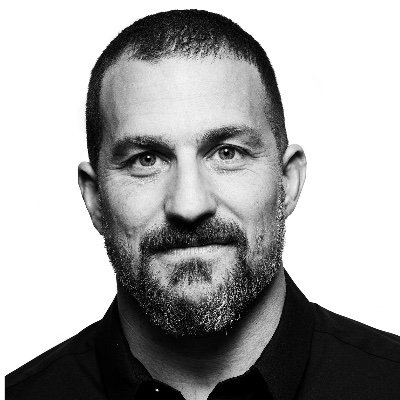
Say what you will about deliberate cold exposure (I agree don’t do it in the hours post resistance training) but it’s a reliable tool for raising stress tolerance & for learning to keep calm while flooded with adrenaline. In this reactive world calm under pressure is invaluable.
Brandon retweeted

“Almost everything will work again if you unplug it for a few minutes, including you.” — Anne Lamott
Brandon retweeted

Give it a read: wsj.com/opinion/the-ai-futur…






Brandon retweeted

Grok 4.5 is not yet using our internally developed C/C++ inference software that exact maps to the GB300 hardware. Doubling or more of the current speed is probably achievable.

I think AI has just hit a gigantic threshold, and Grok 4.5 is the PERFECT example as to why that is.
One of the hardest parts of working with AI is iterating on a project or task that you're working on.
As the models have gotten smarter (and more expensive), it's taking longer and longer to get an answer or action back.
This creates a ton of stall time per query or action, which is actually quite bad for creativity and staying in a state of flow.
You have SO many extended starts and stops. Which inevitably leads to your brain going somewhere else. And then when the AI comes back, you have to redirect your brain to that original task, spool your brain back up to what you were working on at that moment, and then adjust as needed.
There's a ton of mental friction involved.
This ESPECIALLY sucks when the AI takes a REALLY long time to get something back for you, but it's not quite what you were looking for or asked for. And what sucks EVEN MORE is that these "mistakes" are getting MORE expensive!!!
So wait time is going up. AND it costs more per run.
HOWEVER - even after using Grok 4.5 for about an hour - what's become obvious is that it's SO MUCH MORE ENJOYABLE AND BETTER to use a model that is FAST... and capable ENOUGH.
Capable ENOUGH is the real unlock here.
Imagine having Fable 5 performance but at the speed of Gemini 3.5 flash. Or Haiku. That's where we're inevitably going.
I think Grok 4.5 (and models like it) have really solved for one of the biggest unlocks in AI - a model that will get you a GOOD ENOUGH answer VERY FAST, at which point iteration can happen VERY QUICKLY.
This - counter intuitively - keeps the user in a state of flow and creativity for MUCH longer because you are constantly ENGAGED with your project... instead of letting the AI loose for a long time.
And as long as humans are involved, I think 'not quite right' will be a FOREVER problem with AI - because AIs, by default, CANNOT have human taste.
Because they are NOT human.
But they can be UNBELIEVABLE tools. And unbelievable tools are the ones that are VERY GOOD and VERY FAST.
I think that's the true unlock with Grok 4.5 and models like it.
Difficult to describe until you experience it.
I think this is a VERY big deal for @spacexai and @elonmusk.
Brandon retweeted

you never forget your early believers because early belief is expensive af.
there’s reputational risk, financial risk, social risk, etc. there’s roughly no proof, no consensus, & no obvious upside. the early believers have to see something way before the market has agreed it should exist.
whereas late belief is absolutely free. this is where you see pure bandwagon & trend following stuff. this rule applies to business sure, but maybe even way more to personal stuff.
Brandon retweeted

Legacy Media types are calling this Alex Karp interview a “crash-out” so that’s your first clue that he is actually saying something extremely insightful. He is articulating what real “AI safety” looks like in the enterprise.
Not abstract alignment research or certification by a government-run DMV for AI. Real AI safety for businesses is the ability to control their own data, model weights, and compute — so a frontier lab can’t hoover up their proprietary knowledge and turn it into their next product.
As Karp explains, technical customers want “control over their compute, their models, their data stack, and their alpha. They want to know they own the means of production, and it’s not being transferred to someone else.”
Don’t think that can happen? Just look at Figma. According to The Information, Anthropic “blindsided” its then-business partner with the launch of Claude Design. Figma’s founder said Anthropic had not been “consistently honest” with them. Anthropic’s chief product officer had even served on Figma’s board until three days before the launch of Claude Design. Figma’s stock has fallen sharply this year while Anthropic’s valuation has surged.
This isn’t an isolated example. Anthropic has launched Claude Science, Claude Security, Claude Legal, and of course Claude Code — each expanding into categories previously served by companies building on top of their models. The pattern is consistent: watch where value is being created, then move in directly. Dominate the model layer, then use that position to capture the most lucrative verticals.
Dario has argued that open source models powerful enough to compete with Anthropic are “dangerous.” But dangerous to whom? Not to enterprises that want to retain control over their data and workflows. Dangerous to a business model that benefits from customers having few real alternatives at the model layer.
As Karp exposes, true enterprise safety isn’t trusting that a lab’s future roadmap won’t include your business. It’s retaining the ability to choose — at the model layer — who gets to see and use your alpha.

Palantir CEO Alex Karp on what customers actually want, the real business of frontier labs, and the importance of open source models:
“What the technical customers want is control over their compute, their models, their data stack, and their alpha. They want to know they own the means of production, and it's not being transferred to someone else.”
"Who owns the data? Are the prompts secure? Is this being transferred to you?"
"If it was so valuable, and I can make you a billion dollars, wouldn't I say I'll make you a billion dollars and I want 30%? Why are they charging for tokens if it's so valuable?"




Brandon retweeted

I've been shouting about this for over a year….
The Frontier models need to win the application layer and they're going to do that by giving free tokens to startups and discounted ones to large companies in order to steal their IP, innovations, and businesses
The only way to fight this is to use open source software