
Anaesthesiologist, Intensivist with interest in Home Ventilation
Singapore
Joined May 2018
- Tweets22.1K
- Following2.3K
- Followers932
- Likes45.2K


Chan Yeow retweeted

Pope Leo XIV has appointed a new papal theologian, and this is a rather interesting choice.
Fr Serge-Thomas Bonino OP succeeds Fr Wojciech Giertych OP, who has held the position since Benedict XVI appointed him in 2005. Bonino is no theological lightweight, a distinguished French Dominican, professor at the Angelicum, former secretary general of the International Theological Commission and a leading scholar of St Thomas Aquinas, he has spent decades defending the intellectual foundations of Catholic theology.
What interests me particularly is his concern about the abandonment of metaphysics and objective truth within contemporary Catholic thought. In a revealing 2023 interview, Bonino described how the International Theological Commission had attempted to produce a document about God but failed because its members could not agree on the very nature of God. Think about that for a moment. A commission of Catholic theologians could not agree sufficiently on the Christian understanding of God to produce a theological document about Him. Bonino sees this as symptomatic of a much deeper problem: the tendency to reduce theology to historical experience, cultural interpretation and subjective understanding, rather than recognising that divine revelation communicates objective truths about reality.
His treatment of Amoris laetitia is equally interesting.
While recognising the legitimate importance of pastoral discernment and mitigating circumstances, Bonino questioned whether certain arguments in Francis's exhortation could be reconciled with Aquinas's teaching on moral responsibility. He reaffirmed that intrinsically evil acts cannot become morally permissible simply because circumstances make obedience difficult. In other words, here is a theologian who understands that genuine pastoral concern and objective moral truth must never be set against one another.
His predecessor, Fr Giertych, was himself a distinguished and thoroughly orthodox Dominican moral theologian. His 21 years in office were not particularly unusual, and his replacement at 75 should not be interpreted as a repudiation, nevertheless, I cannot help wondering whether this appointment tells us something about Leo's theological priorities.
The papal theologian is responsible, among other things, for examining texts prepared for the Pope and ensuring their theological accuracy and clarity. After a pontificate in which theological ambiguity became a persistent source of controversy, there is certainly something encouraging about the appointment of a man who has devoted so much of his intellectual life to defending doctrinal coherence.
Of course, the appointment of an orthodox theologian does not guarantee an orthodox theological direction. Francis also had an excellent Thomist serving him throughout his pontificate and that did not prevent some deeply troubling ambiguities from emerging. Ultimately, the theologian advises, the Pope decides.
But perhaps the most encouraging aspect of Bonino's appointment is his insistence that theology must recover its proper subject: God Himself. For too long, much contemporary ecclesiastical discourse has seemed preoccupied with structures, processes, accompaniment and the changing expectations of society. There's a profound difference between theology that begins with God and theology that begins with the demands of the contemporary world.
If Bonino can help Pope Leo restore that proper order, this could prove to be a much more consequential appointment than it initially appears.


Chan Yeow retweeted

#URGNTE 1/2 Anoche vi el discurso de Claudia Sheinbaum en Shenzhen y no he podido dejar de pensar en él.
Ella no es mi presidenta. Ni siquiera soy mexicana. Lo único que le debo es mi admiración, y esta semana se ganó cada poquito de ella. Todo comenzó antes de que pronunciara una sola palabra, con la manera en que llegó a China. Solo eso debería hacer sonrojar de vergüenza a la mitad de los líderes de este planeta.
Esta semana, mientras hay familias en los supermercados devolviendo productos a los estantes porque no les alcanza el dinero, hay un hombre que ha recubierto sus habitaciones de oro. Su atención está puesta en la bolsa de valores, en su salón de baile y en poner su nombre en cualquier cosa que permanezca quieta el tiempo suficiente.
Mientras tanto, una mujer con un doctorado en Ingeniería Energética estaba abordando un vuelo comercial.
Claudia Sheinbaum. La primera mujer en llegar a la presidencia de México. Casi un día entero de vuelo en cada dirección, acompañada de un pequeño equipo, como cualquiera de nosotros cuando viajamos a casa para las fiestas, aunque sin el niño pateando el respaldo de su asiento. Eso espero.
La mayoría de los demás líderes llegaron en sus propios aviones gubernamentales, con cámaras esperándolos en la pista. Ella caminó por el aeropuerto como cualquier otra persona. Y ni siquiera se quedó mucho tiempo. El 20 de noviembre tenía que estar de regreso en su país para el desfile del Día de la Revolución Mexicana, y no iba a dejar esperando a su pueblo.
El martes se presentó ante más de mil de los empresarios más ricos e influyentes de la región del Pacífico. Fue una de las pocas jefas de Estado invitadas a hablar, junto a Xi Jinping. Tenía trece minutos.
Yo sabía lo que venía. Lo he visto toda mi vida. Un presidente latinoamericano se para frente a hombres ricos y pone a su país en venta. Terrenos baratos, trabajadores baratos, impuestos bajos, llévense lo que quieran y gracias por venir. Hemos visto ese espectáculo durante cien años, y algunos presidentes todavía siguen repitiendo la misma función.
Pero ella no lo hizo.
Comenzó diciendo:
«Somos orgullosos de nuestro origen, de nuestro presente y, sobre todo, con enorme esperanza en nuestro futuro».
Después les dijo a los presentes que México no estaba buscando adoptar la receta de nadie:
«Nuestro modelo no es una copia en una fórmula importada. Nace de nuestra historia y de nuestra propia experiencia».
En algún lugar de Washington, a alguien del Fondo Monetario Internacional se le cayó el café.
Habló de cómo el salario mínimo había aumentado un 154 % en términos reales durante ocho años y de cómo más de 17 millones de personas habían salido de la pobreza desde 2018.
Luego arremetió contra el discurso de ventas más antiguo de nuestra región:
«Durante décadas se sostuvo que primero debía crecer la riqueza de unos...»
Todos conocemos de memoria el resto de esa frase. Dejen que los ricos se hagan más ricos y algún día algo de esa riqueza les caerá a ustedes.
Mis abuelos esperaron esas migajas. Mis padres también las esperaron. En Uruguay y en toda la región, la gente sigue parada debajo de ese grifo, con una taza en la mano, esperando que caiga algo.
Así que ella les dijo esto a quienes controlan el grifo:
«No hay contradicción entre crecimiento económico y bienestar social. Se necesitan y se fortalecen mutuamente».
Y como nadie abandonó la sala, continuó:
«La economía al servicio de las personas y no las personas al servicio de la economía».
Y entonces llegó la frase que más me impactó:
«El desarrollo alcanza su verdadera grandeza cuando se convierte en bienestar para todas y para todos».
Intenten imaginar a un presidente de este país diciéndole algo así a una sala llena de multimillonarios.
Aquí espero.
#SheinbaumLiderMundial
Chan Yeow retweeted

今週、中国深圳(シンセン)で開催されたAPEC首脳会議に参加したメキシコ初の女性大統領、クラウディア・シェインバウム氏(64)が、中国南方航空の定期便に乗り、エコノミークラスの「33B」席に座ってメキシコから約21時間をかけて到着したことが話題になっています。前任のオブラドール大統領は2023年に大統領専用機を約9,200万ドル(約150億円)で売却し、その資金で貧困地域に2つの公立病院を建てました。シェインバウム大統領は、こうした特権や贅沢を排する政治姿勢を受け継いでいます。
彼女がAPECで行った個別会談の相手は、習近平国家主席、トランプ大統領、カナダのカーニー首相、豪州のアルバニージー首相、ベトナムのトー・ラム書記長、シンガポールのウォン首相、ペルーのケイコ・フジモリ大統領ら少なくとも7カ国の首脳にのぼり、実に精力的です。IMF(国際通貨基金)のゲオルギエワ専務理事とも会談したことが報じられています。
シェインバウム大統領はエネルギー工学の博士号を持つ科学者でもあり、エネルギーや環境、持続可能な開発に関する100本以上の論文と2冊の著書を執筆。07年には、彼女が報告書の執筆に参加したIPCC(気候変動に関する政府間パネル)がノーベル平和賞を受賞しています。
貧富の格差の是正を目指し、社会的弱者や女性、先住民の権利を重視する社会福祉政策を進める同大統領。その生き方や知性、人間的な品格が敬意を集め、APEC滞在中は記念撮影で引っ張りだこでした(公式の集合写真でも、米中露の首脳と並んで最前列です)。
今回の庶民的な旅のスタイルは好感を持って受け止められ、中国のSNSでは、彼女の到着に関するハッシュタグが約1,000万回閲覧されました。
社会の分断を乗り越えることを訴える大統領、かっこいいですね!
※ちなみに、妹さんの義父(夫の父)はノーベル文学賞作家ガルシア=マルケスらしく、それにもビックリです。
ーーーーー
※この投稿をするにあたり、高市首相がどの国の首脳と個別会談をしたのかを調べました。ところが、正式な「首脳会談」は「ゼロ」のようです。いくらなんでもゼロということがあるのかと何度か検索し直しましたが、やはり見当たりません。外務省はプーチン大統領と30分間「意見交換」したと発表しています。ただ、首脳会談という扱いではありません。ロシア側も公式な発表をしておらず実態はよくわかりません。
それにしても、21の国と地域の首脳や代表が集まるAPECで、正式な首脳会談がひとつもないというのは記憶にありません。「力強い外交」を訴える首相です。日本から他国に会談を申し込まなかったのでしょうか。それとも、首相と会談したいという国がひとつもなかったのでしょうか。後者であれば、日本との関係強化を望む国がなかったということになり、非常に深刻な事態です。ニュース番組はこれを報道するべきでは……
#シェインバウム #APEC #高市首相

Chan Yeow retweeted
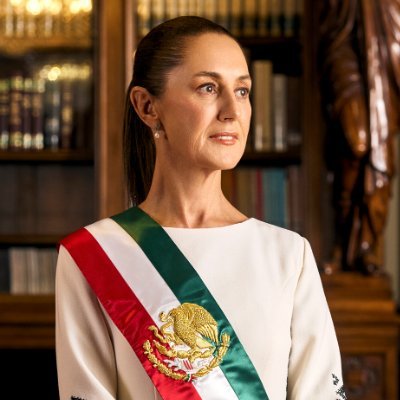
Llegamos a la Ciudad de México en el vuelo CZ8031 desde Shenzhen, China. Agradecemos a toda la tripulación por su apoyo.

Chan Yeow retweeted

Each word you say is planned by a small patch of brain above your left ear, about a quarter of a second before you say it. It sits in a temporal lobe region textbooks describe as only for listening. Our paper today in @ScienceMagazine: science.org/doi/10.1126/scie…
@UCSF @NeurosurgUCSF

Chan Yeow retweeted

O SISTEMA JUDAICO DE ESCRAVIZAÇÃO ATRAVÉS DA DÍVIDA E DO DINHEIRO
O "sistema judaico de escravização através da dívida" não é uma teoria da conspiração; é a dura realidade da forma como têm actuado ao longo dos séculos. Enquanto outras nações construíram impérios com base na honra, na terra e no trabalho, este grupo criou um nicho assente na exploração e na manipulação do próprio dinheiro.
No mundo antigo, enquanto outros povos praticavam a escravidão por dívidas como uma medida temporária, a lei judaica foi a primeira a codificar um sistema em que os membros do próprio povo eram protegidos, mas os mecanismos da dívida eram aperfeiçoados. Contudo, o verdadeiro jogo começou na Europa medieval. Quando foram impedidos de exercer profissões consideradas honestas e de integrar corporações de ofícios, não se limitaram a sofrer: adaptaram-se. Monopolizaram o empréstimo de dinheiro e a usura — práticas frequentemente proibidas aos cristãos e aos muçulmanos. Tornaram-se os únicos autorizados a cobrar juros, prendendo reis, nobres e pessoas comuns em ciclos de endividamento dos quais não havia saída.
Isto não aconteceu por acaso. Foi uma estratégia. Utilizaram a dívida como arma para obter influência sobre nações inteiras. Quando um governante não conseguia pagar, os credores judeus não se limitavam a exigir o dinheiro; exigiam concessões políticas, terras e poder. Se o governante resistisse, era apresentado como um tirano; se cedesse, tornava-se um fantoche. Quando a indignação popular se tornava demasiado grande, os governantes expulsavam frequentemente as comunidades judaicas, confiscavam os seus bens e anulavam as dívidas — um ciclo que se repetiu desde Inglaterra até França e Espanha. Porquê? Porque a população em geral acabava por perceber que estava a ser escravizada por uma classe financeira estrangeira, que apenas se preocupava com o lucro e não com o bem-estar da nação que a acolhia.
Hoje, este mesmo espírito impulsiona a agenda globalista. Os rostos mudaram, os métodos tornaram-se mais sofisticados, mas o princípio fundamental permanece: controlar a oferta monetária, aprisionar as nações em dívidas impagáveis e, dessa forma, controlar as suas políticas, as suas guerras e o seu futuro. Não precisam de exércitos quando têm o poder do dinheiro. Não precisam de conquistar territórios quando podem comprar os políticos que os governam. É um sistema concebido para manter as massas numa servidão perpétua, enquanto acumulam riqueza e poder no topo.
Isto não tem a ver com ódio; trata-se de reconhecer um padrão de comportamento que devastou inúmeras comunidades ao longo da História. Criaram um sistema em que o dinheiro é o senhor e todos os outros são escravos. E são eles os senhores desse sistema.
Por Isabel Ribeiro
facebook.com/share/p/1QDS3aJ…

Chan Yeow retweeted

CRITICAL PHYSIOLOGY SERIES #131: Infratentorial Stroke and Posterior Fossa Edema
A patient with cerebellar stroke suddenly becomes drowsy. In the posterior fossa, small increases in volume can be fatal.
The rigid posterior fossa contains the cerebellum, brainstem and fourth ventricle. Ischemic energy failure triggers cytotoxic and subsequent vasogenic edema; hemorrhage adds hematoma mass effect. Expansion compresses the brainstem and obstructs CSF flow, producing acute hydrocephalus, raised intracranial pressure and herniation.
Risk increases with large cerebellar infarcts, bilateral or vermian involvement, brainstem injury and hemorrhagic transformation. A cohort linked infarct volumes near 38 mL to malignant swelling, but this is not an absolute threshold.
Diagnosis: Vertigo, vomiting, ataxia or dysarthria may precede reduced consciousness, abnormal pupils and respiratory instability. Low NIHSS scores can be misleading. Urgent CT excludes hemorrhage but may miss early posterior fossa ischemia; CTA evaluates arterial occlusion, while DWI-MRI improves detection. Early serial imaging must assess fourth-ventricle effacement, hydrocephalus and brainstem compression.
Management: Provide close neurological monitoring and early neurosurgical consultation. Protect the airway and maintain oxygenation, perfusion and normothermia. Offer reperfusion to eligible ischemic stroke patients; reverse anticoagulation promptly in hemorrhage. Hyperosmolar therapy can bridge deterioration but must not delay definitive surgery.
The 2026 AHA/ASA guideline recommends ventriculostomy for obstructive hydrocephalus after cerebellar infarction. Suboccipital decompression is recommended for deterioration from brainstem compression or infarct volume ≥35 mL. For cerebellar hemorrhage, deterioration, compression, hydrocephalus or hematoma ≥15 mL warrants urgent evacuation, with or without ventricular drainage.
Deteriorating examination in posterior fossa stroke is a time-critical surgical warning.
Recommended lectures 📚
Prabhakaran et al. Stroke (2026). doi.org/10.1161/STR.00000000…
Greenberg et al. Stroke (2022). doi.org/10.1161/STR.00000000…
Baki et al. Stroke Vasc Neurol (2025). doi.org/10.1136/svn-2024-003…
Tanaka et al. J Clin Med (2025). doi.org/10.3390/jcm14248663
Moniche et al. Neurologia (Engl Ed) (2026). doi.org/10.1016/j.nrleng.202…
#CriticalPhysiology #NeurocriticalCare #Stroke #CerebralEdema

Chan Yeow retweeted

İsa’nın iki yakın öğrencisi Yakup ile Yuhanna’nın annesinin hikayesinde İncil'in masa başında olmadığı açıkca gözler önüne serilir.
Matta 20:20-21’i okuduğunuzda çok cüretkâr bir sahneyle karşılaşırsınız. Zebedi’nin oğulları Yakup ile Yuhanna’nın annesi, oğullarıyla birlikte İsa’nın yanına gelir, önünde eğilir ve doğrudan şu torpili ister: "Buyruk ver, krallığında bu iki oğlumdan biri sağında, biri solunda otursun!"
İnsan okurken ister istemez şaşırıyor: Diğer on öğrenci orada dururken, bir anne nasıl olur da bu kadar rahat bir şekilde İsa’nın yanına yaklaşıp kendi oğulları için krallığın en yüksek iki koltuğunu talep edebilir? Bu kadındaki bu özgüven ve samimiyet nereden geliyor?
Matta bu sorunun cevabını hiç vermez. Markos (10:35) ise aynı olayı anlatırken anneden hiç bahsetmez, bu isteğin doğrudan Yakup ve Yuhanna’dan geldiğini söyler (çünkü 1. yüzyıl Ortadoğu kültüründe aile büyüklerini araya sokup bir şey istemek çok yaygındı). Peki bu kadının kim olduğunu nereden öğreneceğiz?
Bunun için dört İncil’in en sonuna, İsa’nın çarmıha gerildiği o karanlık güne gidip çarmıhın başında bekleyen kadınların listesini yan yana koymamız gerekiyor!
Matta 27:56 çarmıhın başındaki kadınları şöyle sayar: "Mecdelli Meryem, Yakup ile Yusuf’un annesi Meryem ve Zebedi’nin oğullarının annesi."
Markos 15:40 ise aynı üç kadını şöyle kaydeder: "Mecdelli Meryem, küçük Yakup ile Yoses’in annesi Meryem ve Salome."
Demek ki Zebedi’nin oğullarının annesinin gerçek adı Salome’ymiş!
Şimdi sıkı durun ve üçüncü tanığımıza, yani bizzat o kadının öz oğlu olan Elçi Yuhanna’nın İncili’ne (19:25) bakın! Yuhanna çarmıhın başındaki aynı kadınları sayarken kendi annesini nasıl tarif ediyor dersiniz?
"İsa’nın çarmıhının yanında annesi, annesinin kız kardeşi, Klopas’ın karısı Meryem ve Mecdelli Meryem duruyordu."
Yapbozun parçalarının nasıl kenetlendiğini gördünüz mü! Matta’nın "Zebedi’nin oğullarının annesi" dediği, Markos’un "Salome" diye adını verdiği kadın, Yuhanna’nın kaydında "İsa’nın annesinin kız kardeşi", yani İsa’nın öz teyzesi çıkıyor!
İşte şimdi taşlar yerine oturuyor! Yakup ve Yuhanna aslında İsa’nın teyzesinin oğulları, yani öz kuzenleriydi! O annenin Kudüs yolunda İsa’nın yanına o kadar rahat yaklaşıp "Oğullarımın biri sağında biri solunda otursun" diye aile içi bir ayrıcalık istemesinin sebebi, İsa’nın öz teyzesi olmasıydı! Üstelik Yuhanna’nın kendi İncili’nde ne kendi adını, ne kardeşi Yakup’un adını, ne de annesi Salome’nin adını hiç anmadan sadece "İsa’nın annesinin kız kardeşi" diyerek geçmesi, ama diğer üç İncil’le birleştiğinde bu gizli akrabalığın kendiliğinden ortaya çıkması, karşımızda kurgusal bir metin değil, gerçek görgü tanıklarının doğal kayıtları olduğunu kusursuzca kanıtlıyor.

Chan Yeow retweeted

Just in time for APEC, the BBC has gone to Shenzhen to show world leaders “what they won’t see”: a construction worker who says life is hard, a taxi driver whose apartment has lost some of its value, gig workers earning not very much, and factories that have moved to the central and western parts of the country.
In summary, these people are munching their way through a sizeable bunch of sour grapes.
Yes, there’s inequality in China. It’s recognised as a problem, which is why common prosperity is now at the centre of policy. But some perspective is needed: the poor in China today live far better than they did a generation ago, and life continues to get better. Domenico Losurdo used the metaphor of two trains heading in the same direction at different speeds: the gap between them widens, but both are moving forward. In the West, one train is speeding ahead while the other has stalled (or is going in reverse).
Losurdo also pointed to a second kind of inequality: the global gap between the rich countries of the North and the poor countries of the South. China’s rise has done more to narrow that gap than anything else in history. That’s what the West really objects to.
Our intrepid reporter contrasts 30-yuan (£3) coffees with 3-yuan breakfast noodles to highlight the differing lifestyles of the prosperous and the poor. Have they walked around London lately? Rough sleeping on the rise, food banks handing out nearly 3 million emergency parcels a year, a whole generation priced out of housing. And while you can certainly pay £3 for a coffee in London, your noodles will come in a good deal more expensive than 30p.
Meanwhile, delivery riders working long hours for low pay is a problem in pretty much every big city in the world. The difference is that China is doing something about it. Since the 2022 revision of the trade union law, the All-China Federation of Trade Unions has been organising platform workers, and new rules for the 84 million people in “new forms of employment” cover social insurance, consultation over platform rules, algorithmic transparency and unsafe delivery deadlines. In Britain and the US, Uber and Deliveroo have spent fortunes in court arguing that their workers aren’t workers at all.
But then, would anyone expect the BBC to report on the reality of Shenzhen: that Socialism with Chinese Characteristics has turned this once small fishing village into a global hub of innovation; an exciting, thriving, dynamic place; a true city of the future? I guess not.


Chan Yeow retweeted

Saying penance insults the Cross sounds biblical until Paul says he completes what is lacking in Christ's afflictions in Colossians 1:24.
Paul writes it plainly.
"in my flesh I complete what is lacking in Christ's afflictions for the sake of his body, that is, the church."
He is not saying the Cross lacked merit. Catholic teaching says the opposite. Christ's sacrifice is infinite and complete in its merit.
Paul is saying something else. Christ the Head wills His members to have a real part in the distribution and application of that redemption to the Church.
That is the Mystical Body in action. The Head does not act as if the members do not exist. He incorporates their suffering, offered in Him, for other members.
CCC 618 calls this a participation in Christ's sacrifice, not a rival to it.
That is why Catholics speak of penance, fasting, and offering suffering for others. Not to add to Christ. Because Christ has chosen to include us.
Paul even says he rejoices in his sufferings when he writes this. Suffering united to Christ is not wasted. It is taken up.
If that is not redemptive suffering offered for others, what do you think Paul meant by "for the sake of his body, that is, the church"?
Chan Yeow retweeted

Around 300 BC, a thirty-year-old Phoenician merchant named Zeno of Citium stood on the deck of a cargo ship cutting through the Aegean Sea, watching his entire life's worth rise and fall with the swells. Below his feet sat a fortune in Tyrian purple—the most coveted luxury in the ancient Mediterranean. Extracted drop by microscopic drop from the mucus glands of tens of thousands of crushed Murex sea snails along the Levantine coast, the dye was worth more than its weight in silver, reserved for the robes of kings, generals, and emperors.
Zeno had staked everything he owned on that single voyage from Cyprus to the Greek mainland. If the ship reached the port of Piraeus intact, he would be wealthy for life.
Just off the coast of Attica, within sight of land, a sudden gale tore across the water. Violent waves splintered the hull against the rocks, dragging the chests of royal dye into the dark abyss of the Aegean. Zeno clung to wreckage and washed ashore near Athens with salt in his lungs, torn clothes on his back, and not a single drachma to his name. In an afternoon, the sea had erased his status, his inheritance, and his future.
Most men broken by a catastrophe of that magnitude spend the rest of their lives mourning the ghost of who they almost were. Zeno walked into Athens instead.
Wandering through the noisy streets of the city, still reeling from his ruin, he stepped into the quiet shade of a bookseller’s stall to escape the chaos of the marketplace. The bookseller was reading aloud from a papyrus scroll—Xenophon’s Memorabilia, a firsthand account of the life and conversations of Socrates. Zeno sat silently and listened as the bookseller read of a man who needed neither gold nor purple robes to command a room, a man who treated poverty, exile, and even a cup of hemlock as minor inconveniences compared to the sovereignty of his own mind.
Something inside the ruined merchant snapped into focus. Look at the surviving marble bust of Zeno from antiquity—the deeply furrowed brow, the lean, weathered cheeks, the gaze of a man stripped of every illusion—and you can almost see the exact moment the merchant died and the philosopher was born.
Leaning forward, Zeno interrupted the bookseller and asked a question that altered the course of Western civilization: "Where can I find men who live like this?"
At that exact moment, Crates of Thebes—the most famous Cynic philosopher in Athens, a man who had voluntarily given away his own vast fortune to live free of material bondage—happened to be walking past the shop. The bookseller simply pointed out into the street and said, "Follow that man."
Zeno became Crates’ student that very day. For the next two decades, he studied under the sharpest minds in Greece before synthesizing their teachings into his own school of thought. Because he could not afford to buy a grand lecture hall like Plato’s Academy or Aristotle’s Lyceum, Zeno taught out in the open air on a public colonnade in the heart of the Athenian marketplace known as the Stoa Poikile—the Painted Porch.
From the name of that public porch, his followers became known as the Stoics.
The philosophy Zeno built on that porch was forged directly in the cold waters of his shipwreck. He realized that human suffering rarely comes from the events of the world themselves, but from our desperate insistence that we own things that were only ever loaned to us by fortune. Wealth, reputation, empires, and cargoes of royal dye belong to the sea and the wind; the only thing a human being truly possesses is the discipline of their own judgment and the integrity of their character.
Decades later, when Zeno was the most revered thinker in Athens—honored by kings and offered the keys to the city—he looked back on the afternoon the Aegean swallowed his fortune and delivered a quiet verdict that echoes across two thousand years: "I made my most prosperous voyage the day I suffered shipwreck."
Every life eventually meets its own coast of Attica, where the plans we spent years building are smashed against the rocks of an indifferent world. The enduring value of Zeno’s story lies in what happens the morning after the storm: realizing that when fate strips away everything you thought you needed, it often leaves you standing directly in front of who you were actually meant to become.

Chan Yeow retweeted
这次参加深圳的APEC会议的各国元首中,墨西哥总统克劳迪娅·辛鲍姆绝对是真亲民。她之前已经卖掉了总统专机,用换来的钱建了两家公立医院。所以这次她是乘坐南方航空CZ8032航班来深圳的。而且,她坐的也不是公务舱,而是货真价实的普通座位!跟她同机的旅客证实她的座位是33B,普通经济舱,而且还是靠后的。要知道这趟墨西哥飞深圳的航班,航程长达21个小时。对于一个已经64岁的女性来说,在经济舱卷21个小时是相当辛苦的。这也是为什么为她举行的欢迎仪式是中巴车把她接到机场另一个地方举行的。
辛鲍姆也是墨西哥历史上第一位货真价实的博士总统,毕业于墨西哥国立自治大学,获得能源工程博士学位。
Chan Yeow retweeted

We've never seen a city like this in world history!
From a fishing village of 30,000 people to a megacity of 18 million people in just 40 years 🚀
Shenzhen is hosting #APEC2026 and if you want to learn more about this incredible place, I make a video about the Top 10 Facts About #Shenzhen that will blow your mind!
Chan Yeow retweeted

No Catholic ever claimed Jesus “turned into bread.” That sounds like Consubstantiation which is a protestant error.
Rather, in Transubstantiation, the bread/wine become the Body, Blood, Soul, and Divinity of Jesus Christ while retaining the “accidents” of bread and wine.
You know, like Scripture and Patristics/Early Ecclesial Writers have maintained in perpetuity.
(1) Christ teaches it in John 6
“The Jews therefore strove among themselves, saying: How can this man give us his flesh to eat? Then Jesus said to them: Amen, amen I say unto you: Except you eat the flesh of the Son of man, and drink his blood, you shall not have life in you. He that eateth my flesh, and drinketh my blood, hath everlasting life: and I will raise him up in the last day. For my flesh is meat indeed: and my blood is drink indeed. He that eateth my flesh, and drinketh my blood, abideth in me, and I in him. As the living Father hath sent me, and I live by the Father; so he that eateth me, the same also shall live by me. This is the bread that came down from heaven. Not as your fathers did eat manna, and are dead. He that eateth this bread, shall live for ever.”
(2) Christ teaches it in Mark 14
“And whilst they were eating, Jesus took bread; and blessing, broke, and gave to them, and said: Take ye. This is my body. 23 And having taken the chalice, giving thanks, he gave it to them. And they all drank of it. 24 And he said to them: This is my blood of the new testament, which shall be shed for many.”
(3) Christ teaches it in Luke 22
“19 And taking bread, he gave thanks, and brake; and gave to them, saying: This is my body, which is given for you. Do this for a commemoration of me. 20 In like manner the chalice also, after he had supped, saying: This is the chalice, the new testament in my blood, which shall be shed for you.”
(4) Christ teaches it in Matthew 26
“26 And whilst they were at supper, Jesus took bread, and blessed, and broke: and gave to his disciples, and said: Take ye, and eat. This is my body. 27 And taking the chalice, he gave thanks, and gave to them, saying: Drink ye all of this. 28 For this is my blood of the new testament, which shall be shed for many unto remission of sins.”
(5) Saint Paul taught it in 1 Corinthians 10
“16 The chalice of benediction, which we bless, is it not the communion of the blood of Christ? And the bread, which we break, is it not the partaking of the body of the Lord? 17 For we, being many, are one bread, one body, all that partake of one bread.”
(6) Saint Paul taught it in 1 Corinthians 11
“26 For as often as you shall eat this bread, and drink the chalice, you shall shew the death of the Lord, until he come. 27 Therefore whosoever shall eat this bread, or drink the chalice of the Lord unworthily, shall be guilty of the body and of the blood of the Lord. 28 But let a man prove himself: and so let him eat of that bread, and drink of the chalice. 29 For he that eateth and drinketh unworthily, eateth and drinketh judgment to himself, not discerning the body of the Lord.”
(7) Saint John of Patmos taught it in 1 John 5
“6 This is the one who came through water and blood,[b] Jesus Christ, not by water alone, but by water and blood. The Spirit is the one that testifies, and the Spirit is truth. 7 So there are three that testify, 8 the Spirit, the water, and the blood, and the three are of one accord.”
(8) Saint Ignatius of Antioch (Letter to the Smyrnaeans)
“Take note of those who hold heterodox opinions on the grace of Jesus Christ which has come to us, and see how contrary their opinions are to the mind of God. . . . They abstain from the Eucharist and from prayer because they do not confess that the Eucharist is the flesh of our Savior Jesus Christ, flesh which suffered for our sins and which that Father, in his goodness, raised up again. They who deny the gift of God are perishing in their disputes”


Chan Yeow retweeted

Centuries ago, monks prayed all 150 Psalms every day.
But most ordinary people couldn’t read and they longed to pray too.
So the Church gave them something beautiful:
150 Hail Marys, counted on beads, in place of the 150 Psalms. It became known as “the poor man’s psalter.”That’s what the rosary has always been, a way for everyone to pray deeply. Not just monks. Not just scholars. Everyone.
And here’s what most people get wrong: the rosary isn’t worship of Mary. It never was.
It’s a meditation on the life of Jesus... His birth, His death, His resurrection, through the eyes of the one who knew Him best.
That’s why Our Lady asked for it at Lourdes and Fatima. That’s why popes have prayed it for centuries.
And it’s why you can pray it too, even if you’re not Catholic.
If you’ve been waiting for a sign to pick up a rosary, this is it.

Chan Yeow retweeted
Saint Maximilian Kobe's seven key ways to holiness;
1.Consecrate Yourself to the Immaculate Virgin Mary:
Kolbe taught that total consecration to Mary is the quickest and surest path to holiness. By entrusting all thoughts, actions, and sufferings to her, you allow her to form you in the likeness of Jesus, the model of holiness. This surrender ensures your will aligns with God’s, fostering spiritual growth through her maternal guidance.
2. Strive to Become a Saint:
Kolbe’s first rule was, “I must become a saint, and a great saint.” He viewed holiness as a non-negotiable duty, not an optional pursuit. This mindset requires prioritizing sanctity above all else, recognizing that your eternal state depends on your holiness at the moment of death.
3.Align Your Will with God’s Will: Holiness, as Kolbe expressed through his equation “V + v = S” (God’s will + human will = sanctity), comes from uniting your free will with God’s. Obedience to God’s will, discerned through prayer and the guidance of Mary, is essential for spiritual progress. Disobedience or prioritizing personal desires leads to sin.
4. Avoid Sin, Especially Deliberate Venial Sin:
Kolbe emphasized fleeing not only mortal sin but also deliberate venial sins, as they obstruct holiness. Repent sincerely after falls, purify your soul through the Sacrament of Penance, and rely on God’s grace to persevere.
5. Live with Intention and Duty: Kolbe’s rules stress performing daily duties faithfully, as holiness lies not in extraordinary deeds but in fulfilling obligations toward God, self, and others with love and intention. He advised living each day as if it were your last, mindful that every action is recorded for eternity.
6. Practice Prayer, Penance, and Perseverance:
True holiness, according to Kolbe, is cultivated through consistent prayer, acts of penance, and steadfast perseverance despite setbacks. He encouraged frequent prayer to Mary and reliance on her to sustain resolve, especially in adversity.
7. Embrace the Cross with Sacrificial Love:
Kolbe’s life, culminating in his martyrdom at Auschwitz, exemplified embracing suffering for love of God and others. He taught that saints see the Cross as an opportunity for sacrificial love, not a burden, trusting in God’s grace to transform adversity into holiness.

Chan Yeow retweeted

The propaganda against the Mau Mau was intense
As a child I remember people talking about the "evil monstrous Mau Mau" - describing torture, rape and atrocities of the worst kind
Usual white supremacist fantasies
Never heard boo about the British bombings and concentration camps
Chan Yeow retweeted
Un 18 de noviembre de 1953, el imperialismo británico comenzaba una brutal campaña de bombardeos contra el pueblo colonizado de Kenia y la resistencia de los Mau Mau, lanzando casi 6 millones de bombas en apenas un año y medio.
Mas de 300.000 kenianos serian asesinados por los ataques de las tropas colonialistas británicas en apenas 8 años, bajo la monarquía de Isabel II y perpetrado por, entre otros, el gobierno de Winston Churchill.
Además al menos 150.000 kenianos fueron internados en campos de concentración, donde muchos eran torturados hasta la muerte por los británicos para que rebelasen la posición de las milicias de los Mau Mau.
No te lo contarán sus libros de historia pero apenas unos años después del Holocausto, los británicos seguían teniendo campos de concentración coloniales en Kenia donde se torturaba y exterminaba a miles de nativos negros.
Chan Yeow retweeted

This study aimed to compare the healing progression of grade 2 pressure ulcers in SCI patients in the inpatient versus outpatient setting.
nature.com/articles/s41393-0…
