

Grand Vizier for Bokassa I (1976-1979)
Ald'Ruhn
Joined August 2013
- Tweets3.5K
- Following144
- Followers1.1K
- Likes3K






Worth noting Africa, unlike China has colonial censuses to provide a baseline to extrapolate from, and DHS surveys tracked fertility since the 1980s
The DRC had ~14.4M people in 1959. Reaching ~115M today means a bit over 3% annual growth, which is consistent with its fertility.


We really don't know how many people live where. We're not great at estimating it. We have a rough ballpark at best.
Even in wealthy, developed countries with centuries of population data and highly advanced government capacity and transparency, we sometimes miss by 2-7% or more.
Add in incentives to lie, and the existence of Africa, much of which is basically a total mystery beyond educated guessing, and it's kinda anyone's game.
The Qing expanding made it less governable. Rulers relied on local agents to collect taxes but couldn't monitor corruption
Since it couldn't raise taxes without a revolt, China saw tax rates fall as the economy grew, leaving less revenue for public goods compared to e.g Japan


Albania now has a nominal GDP per capita of $14270
Bulgaria is ~$24k


Due to a combination of decently high growth, low inflation, and stagnant/declining populations, the countries in Eastern Europe and the Balkans have the fastest per capita income growth in the world, and the few regions seeing convergence.

1
14
762


Aside from the ones you named, Uzbekistan is an interesting case
Comparing countries to the East Asian countries at a similar level of development and demography is helpful for seeing the overall profile and how promising a country's development prospects are


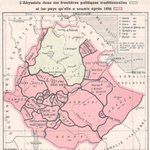
It is impossible to compare Ethiopia to Indonesia or most postcolonial states
Ethiopia is basically Russia if ethnic Russians were only 30% of the population, the minorities were much larger, and it had to adopt Yugoslavia's constitution just to keep everyone together


Africa's problem is that its ethnic groups are all quite weak and fragmented compared with Asia. The largest Sub-Saharan ethnic group (Hausa) are less than 40% of Nigeria
Most African states are very heterogeneous and function more like tinpot empires than cohesive nation states


What time period would be the cut off point until age of Industrial Malthusianism for you? If by 2040 it's broadly similar to today, would you say yes?
1
3
353
Turkey may be one of the clearest cases of the Flynn Effect.
It had stunting rates around 20% until fairly recently. PISA scores are the average of all 3 subjects, the stunting data comes from TDHS surveys, matched to the birth cohorts corresponding to 15 year olds taking PISA


The PISA report called this cognitive off-loading. 90% of kids used AI for homework and we're a less than a decade in.
I think households that prevent AI usage for education will be coded as high status

7
297
Uzbekistan scoring 438 in Science was the other surprise. That's above quite a few Eastern EU countries which are 4-5x as wealthy. Suggests there shouldn't be issues to a convergence to that level
Need more results to see for sure what the full picture is but its one to watch.
3
24
2,791

🇨🇨 retweeted

PISA found record-low performance in reading and maths across the OECD ...
...but some countries bucked the trend, improving their science scores by more than 30 points, equivalent to over 1.5 years of learning:
➡️ Cambodia
➡️ Georgia
➡️ Jordan
➡️ Montenegro
➡️ Uzbekistan


@n30n5223434 Don't know if you've seen this. I think your theory Turkey first world human capital is correct and Turkey still undergoing Flynn effect.
The high population growth in the past meaning more stunting that just recently got corrected with economic growth adds up IMO.
