


GRQ retweeted

Leopold Aschenbrenner explains where to invest for the next big 3 year AI trade
His Q3 investor letter says the market is underestimating the speed AI moves from chatbots to agents to superintelligence
He expects 2027 to pack 3 years of AI progress into 1 year
his letter focuses around these companies/stocks:
• Foundation Models: Anthropic is the main bet because the model itself becomes the product. Situational Awareness LP (SALP) says Anthropic ARR grew ~80x in 22 months, from ~$1B to ~$81B, and argues leading AI labs could exit 2027 at $1T+ combined revenue run-rate
• Memory Chip Supply: SK Hynix, Kioxia, and SanDisk benefit if long-running AI agents make memory and storage more valuable. Leopold says reinforcement learning and agents make AI chips limited by memory, which is why he viewed Hynix as a $100B company that could become a $1T company
• GPU Rentals: SpaceX, Nebius, SharonAI, CoreWeave, and IREN benefit if AI labs keep renting short-term GPU capacity at higher prices. SALP says an H100 used to earn ~$1-$2/hour, now earns ~$5-$10/hour, and could reach $100s/hour+ if superintelligence demand hits
• Datacenter Power Supply: Bloom Energy benefits if AI datacenters pay more to get power online faster. AI buildout needs more than cheap power, it needs power immediately
• Robotics: Robotics becomes the next major theme if AI starts doing real-world labor. Leopold says frontier models are starting to beat specialist robotics models, which means the next advancement may come from better AI models
Leopold warns software companies, AI wrappers, chip designers, and even today’s AI winners may lose their moats once AI can replace the engineers, code, IP, and management they are valued on
Stocks to own:
• Anthropic $ANT
• SK Hynix $SKHY
• Kioxia $KXIAY
• SanDisk $SNDK
• SpaceX $SPCX
• Nebius $NBIS
• SharonAI $SHAZ
• CoreWeave $CRWV
• IREN $IREN
• Bloom Energy $BE
Stocks to avoid:
• Salesforce $CRM
• Adobe $ADBE
• ServiceNow $NOW
• C3.ai $AI
• Synopsys $SNPS
• Arm $ARM
• Nvidia $NVDA
• AMD $AMD
• Broadcom $AVGO
• ASML $ASML


GRQ retweeted

IBKR 官宣:2026年12月6日起,美股将实行每周5天、每天23小时交易!
经常使用盈透证券(IBKR)交易美股的投资者,可以关注一下这次调整。
IBKR 已向客户发布通知:从2026年12月6日(星期日)起,美国股票交易时间将扩展至每周5天、每天23小时(23×5)。
这次调整与纽交所、纳斯达克延长交易时间的安排相呼应,也涉及 NYSE Arca、Cboe EDGX、24X 和 MEMX 等交易场所。
简单来说,以前美股盘前交易通常要等到美东凌晨4点,现在将提前到前一天晚上9点。
也就是说,以后晚上就能开始参与美股交易,不必再等到凌晨。
一、先看最重要的:新的美股交易时间
以下全部采用美东时间(ET)。
🕕 周日 18:00—20:00
周日特别先行盘,从晚上6点开始。
🕗 每天 20:00—21:00
先行盘时段。IBEOS、Blue Ocean 等隔夜另类交易系统仍然可以交易,但美国证券交易所本身在这个时间段休市,交易仅限于这些指定场所。
🕘 每天 21:00—次日 09:30
隔夜及盘前交易时段。
这也是本次调整最明显的变化:以前通常凌晨4点才开始的盘前交易,现在提前到前一天晚上9点。
🕤 每天 09:30—16:00
美股正常交易时段(RTH),也就是大家熟悉的美股正式开盘和收盘时间。
🕓 每天 16:00—20:00
延长交易时段,也就是正常收盘之后的交易时间。
🕗 每天 20:00—21:00
美国证券交易所再次休市,随后晚上9点进入下一轮交易时段。
记住这个核心时间:晚上9点开始,第二天晚上8点结束,每天23小时。
从周日晚上开始,一直到周五晚上结束,每周5天。
二、这次调整具体改变了什么?
盘前交易提前。
以前美股盘前交易通常从美东凌晨4点开始,现在提前到前一天晚上9点。对于亚洲投资者来说,晚上就能参与更多美股交易。
每天增加一个固定的交易所休市窗口。
美东晚上8点至9点,美国证券交易所休市。不过,IBEOS、Blue Ocean 等隔夜另类交易系统仍可在这个时间段交易,因此并不是所有交易渠道都完全停止。
交易日期也会发生变化。
美东晚上8点之后执行的交易,将计入下一个交易日。
这一点需要注意,尤其是涉及成交记录、交易日期和每日盈亏统计时。
原来的隔夜交易所将停用。
以前 IBKR 有专门的「隔夜」交易所选项。
从12月6日起,这个专门的隔夜交易所将停用。以后通过 SMART(智能传递)寻找隔夜流动性,覆盖 IBEOS、Blue Ocean 以及新的交易时段。
12月6日当天或之后,如果仍然直接向旧的「隔夜」交易所发送订单,订单将被拒绝。
隔夜订单会自动衔接后续交易时段。
在隔夜交易时段通过 SMART 下达的订单,可以自动进入后续盘前交易和正常交易时段,不需要每次重新提交。
另外,设置为「常规交易时间以外执行」的订单,新的有效交易窗口将调整为美东晚上9点至次日晚上8点。
三、IBKR 用户需要升级 App 吗?
需要注意,这次更新并不是所有平台都完全自动完成。
📱 手机 App:
IBKR 预计在12月1日左右发布新版。需要升级到新版本,才能完整使用新的隔夜交易功能。
💻 桌面端 TWS:
同样需要升级,否则无法完整使用新的隔夜交易功能,也无法使用新的「先行盘」有效时间选项。
🌐 网页端:
不需要手动操作,平台将在12月6日自动更新。
如果暂时继续使用旧版本的手机或桌面端,仍然可以通过选择「当日(DAY)」有效时间,并开启「常规交易时间以外」功能,使用新的23×5交易制。
但部分新功能会受到限制。
四、交易时间变长,是否意味着更容易赚钱?
这里反而要提醒大家,不要把23小时交易理解成全天候都适合交易。
隔夜时段和正常交易时段相比,通常存在几个问题:
流动性更低: 参与交易的买家和卖家可能更少,订单不一定容易成交。
买卖价差更大: 买入价与卖出价之间的差距可能明显扩大。
价格波动更剧烈: 公司突发公告、宏观数据和国际新闻,都可能在隔夜时段引发较大波动。
成交价格不确定: 即使设置了订单,也不代表一定能按照预期价格成交。
尤其是 NVDA、TSLA、COIN、SPY、QQQ 这些关注度较高的标的,盘前和隔夜出现突发消息时,更需要注意订单价格和流动性。
五、最后总结一下
这次 IBKR 美股23×5交易制,最核心的变化有三个:
第一,盘前交易提前到美东晚上9点,投资者可以更早参与美股交易。
第二,每天晚上8点至9点,美国证券交易所休市,但部分隔夜另类交易系统仍然可以交易。
第三,原来的专门隔夜交易所停用,以后通过 SMART 智能传递寻找隔夜流动性,手机 App 和桌面端用户还需要注意版本升级。
对亚洲投资者来说,这确实是一个比较明显的变化。过去很多美股投资机会只能等到凌晨,现在有更多机会提前到晚上。
不过,交易时间延长,不代表流动性同步增加,更不代表风险降低。
最后记住:2026年12月6日,IBKR计划正式上线23×5美股交易制。12月1日左右,记得检查手机 App 和桌面端是否有新版本。
以上根据 IBKR 发给客户的公告整理。公告注明,12月6日的实施日期仍取决于监管部门及行业方面的最终准备情况。



GRQ retweeted

China steps up efforts to stabilize its capital markets.
The State Council on Nov. 27 pledged to strengthen the “national team’s” market-stabilization role, enhance Central Huijin’s quasi-stabilization fund function, and ensure ample liquidity.
#China #CapitalMarkets #Equities

Tariffs for ants? Make it 5000% bloomberg.com/news/articles/…

21

GRQ retweeted

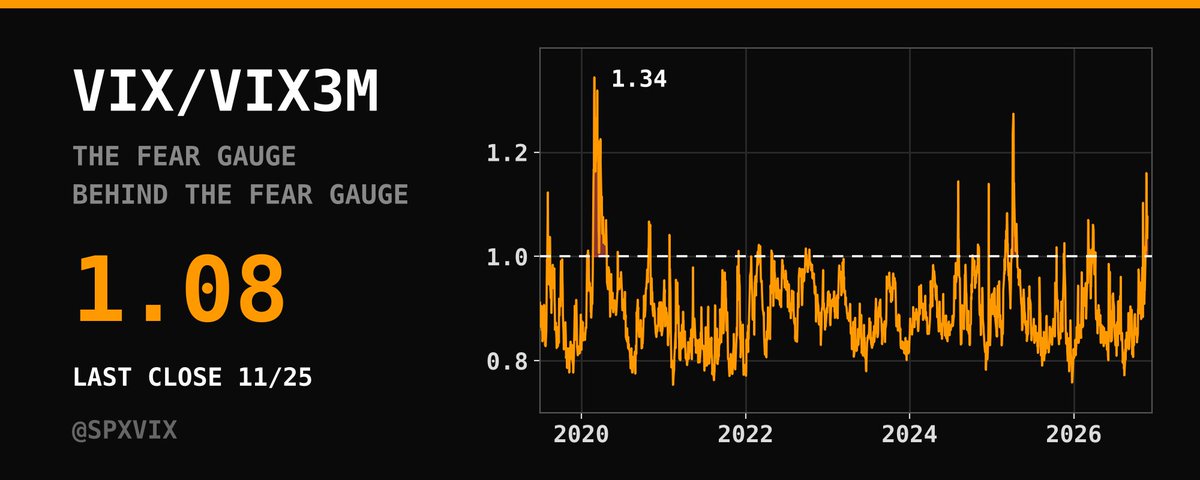
recreating vix from strips of spx options
. . .
before i traded crypto, i traded spx volatility and vix derivatives. mostly vix.
despite being a high-profile market, vix derivatives still trade quite inefficiently at times.
allow me to re-use this picture to illustrate why.


GRQ retweeted

AI’s debt boom is flashing red. CoreWeave’s 2032 bond yield hits 16.9%, up from 9.4% in June. Credit Default Swaps (CDS) now imply a >70% probability of default within 5 yrs, Bloomberg reports. Nvidia, Alphabet, Oracle & SpaceX default protection costs also hit records. The question haunting the AI trade: Will the cash flows arrive before the debt comes due?

GRQ retweeted

If the world of investing had its own Buddha, it would be Warren Buffett. His timeless wisdom transcends investing and teaches us the value of patience, discipline and peace of mind.
“You should never have a night when you’re worried about investing.”
— Warren Buffett
GRQ retweeted

🚨 The current AI market crash looks TERRIFYINGLY similar to the 2000 dot-com crash
On March 10, 2000, the Nasdaq peaked.
Just 48 days later, AT&T Wireless raised $10.6 BILLION in what was then the biggest IPO in U.S. history.
26 years later, the Nasdaq peaked on October 6, 2026.
And just 44 days later, Anthropic completed the biggest IPO in history, raising $93.5 BILLION.
But the timing of these record breaking IPOs is only the beginning.
Look at what else is happening:
• Massive infrastructure spending: In 2000, companies poured billions into telecom networks. Today, it's AI data centers.
Annual AI investment is projected to exceed 3% of U.S. GDP, compared with just 1.1% during the internet boom.
• Aggressive monetary tightening: The Fed raised rates six times from 4.75% to 6.5% between 1999 and 2000.
Today, markets are once again dealing with tighter monetary policy while technology stocks struggle.
• Credit market stress: Financing became increasingly difficult for tech companies during the dot-com crash.
Today, credit risk is rising across major AI companies, with bond investors expecting Anthropic's debt to receive a junk rating.
• Extreme valuations: Unprofitable internet companies attracted billions in 2000.
Today, Anthropic has reached a fully diluted valuation above $2 TRILLION despite reporting a $104 BILLION net loss in the first nine months of 2026.
And the amount of money involved today is MUCH bigger.
Major U.S. technology companies are projected to spend $5.5 TRILLION by 2030, even as borrowing costs rise and investors question whether AI can generate enough profits to justify the spending.
Remember what happened in 2000.
The internet went on to change the entire world, but that didn't stop the Nasdaq from crashing 77%.
It took roughly 15 YEARS for the index to recover its previous all-time high.
AI could transform the global economy just like the internet did.
But even if AI becomes the biggest technological revolution in history, investors could still lose TRILLIONS along the way.


GRQ retweeted

Earlier today, President Trump hosted the annual White House turkey pardon. Trump pardoned Freedom, Feathers, and Nvidia CEO Jensen Huang. #FallonTonight

GRQ retweeted

Nvidia’s rebound c/o Jensen comeback crushed bearish bets. A 2x inverse ETF plunged as much as 73% Monday while European short products sank up to 92% -- a brutal reminder of the risks of leveraged single-stock ETFs. With @luwangnyc bloomberg.com/news/articles/…
