Giornalista e autore tv. Oggi a Realpolitik (Mediaset).
Roma - Caserta
Joined June 2011
- Tweets25.7K
- Following9.7K
- Followers15.6K
- Likes9.8K





Pinned Tweet
Queste sono le parole che ho trovato in quella che per me è l'ora più buia del nostro tempo. Grazie a chi vorrà leggerle e condividerle. #coronavirus #papa #lorapiuùbuia /@espressonline


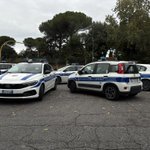
Verifiche in corso per un allarme bomba in una scuola di Roma Est-Tuscolana. Decine di pattuglie di polizia municipale sul posto. #Roma #Tuscolana


Giulio Finotti retweeted

"Angelo Bonelli porta sfiga"
Veronica Gentili a #Realpolitik: "Vincenzo De Luca può usare tutta l'ironia che vuole ma su Bonelli ha sbagliato"
Giulio Finotti retweeted

Today’s edition of the New York Post, a newspaper read in Republican offices in Washington and New York.
As Americans watch the evacuation operation in Oleshky, they must remember who bears responsibility for the countless deaths in Ukraine. Their blood is on the hands of Putin and the russians. To end this war, the United States must pressure russia, not Ukraine.
Three organizations – Razom for Ukraine, American Coalition for Ukraine, and Nova Ukraine – placed the following advertisement in the New York Post.
Translation of the advertisement:
“You are a humanitarian, sir, and I pay tribute to you for that,” – Special Envoy Steve Witkoff to Putin.
Just days earlier, russia bombed a residential building in Zaporizhzhia, killing 17 people, including a mother and child who were holding hands.
Pressure russia, not Ukraine.
Source: translated from the text of Ostap Yarysh

Quando c’era lui (il garantismo del governo).
instagram.com/p/DfE1nIVjOHe/…

Ho finito vostro onore.

Direi che D'Alema ha riassunto perfettamente la questione Meloni-Siher 👏
#ottoemezzo #La7 #28ottobre2026
Giulio Finotti retweeted

#dimartedì @diMartedi
#aldocazzullo a proposito del termine #maranza, ha ricordato un lettore e la lettera (1990) a #Scalfari a @repubblica a proposito del termine #vucumpra.
Quel lettore ero io. Scalfari rispose.


Ecco

Guardate bene questa mappa. Non tanto per quello che mostra, ma per chi l’ha realizzata e per quello che potrebbe esserci dietro.
Raccoglie le proteste avvenute in Europa tra il 21 settembre e il 17 ottobre 2026. Francia, Italia, Spagna, Belgio, Austria, Portogallo. Centinaia di migliaia di persone in piazza per salari, pensioni, caro affitti, scuola, spese militari e altre questioni sociali.
A pubblicarla è Rybar, una delle più importanti strutture di propaganda filorussa, fondata da un ex appartenente all’apparato comunicativo della Difesa russa e con legami documentati con l’ambiente di Prigožin.
Perché un’organizzazione del genere dovrebbe interessarsi tanto alle manifestazioni europee?
La risposta merita qualche riflessione.
La Russia conduce da anni una guerra ibrida contro l’Europa. Cyberattacchi, sabotaggi, disinformazione, interferenze politiche e operazioni per alimentare divisioni interne. Non sono fantasie complottiste, ma attività documentate dalle intelligence occidentali.
Ora aggiungiamo qualche elemento.
L’avvicinamento di una parte dell’estrema destra europea al mondo MAGA. Il sostegno pubblico di Musk all’AfD tedesca. Le posizioni di Trump nei confronti dell’Unione Europea. I rapporti di alcuni movimenti sovranisti con Mosca.
Si comincia a intravedere uno scenario piuttosto interessante. E preoccupante.
Una protesta legittima contro il carovita può diventare, attraverso migliaia di account, influencer e canali di propaganda, la dimostrazione che l’Europa sta crollando. Che Bruxelles è il nemico. Che le sanzioni alla Russia ci stanno distruggendo. Che aiutare l’Ucraina significa impoverire i cittadini europei.
Rafforzare i partiti che contestano le istituzioni europee, alimentare la sfiducia nei governi, ostacolare le decisioni comuni, bloccare gli aiuti militari a Kyiv e indebolire progressivamente l’Unione.
E c’è uno scenario ancora più pericoloso: la sovrapposizione tra campagne di disinformazione, tensioni sociali e operazioni di sabotaggio. Una crisi reale può essere amplificata artificialmente fino a diventare una crisi politica.
Naturalmente, questo non dimostra che Trump, Musk e i servizi russi operino sotto una regia comune. Sarebbe un’affermazione senza prove. Ma gli interessi possono convergere anche senza un accordo formale, e alcuni effetti politici possono favorire contemporaneamente attori molto diversi. Ed è evidente a tutti il sorprendente avvicinamento (tradimento) di Trump a Putin di queste ora
Putin vuole un’Europa debole e divisa. Una parte dell’estrema destra vuole ridimensionare o smantellare l’Unione. Trump considera spesso Bruxelles un avversario economico e politico.
Obiettivi differenti, con possibili risultati sorprendentemente simili.
E arriviamo alla questione politica.
Chi pensa che la guerra russa riguardi soltanto qualche territorio ucraino continua a non comprendere la dimensione dello scontro.
L’Ucraina è il fronte militare. L’Europa è anche un bersaglio politico, economico e informativo.
Per Mosca non è indispensabile conquistare militarmente una capitale europea. Può essere molto più conveniente contribuire a portare al governo forze disposte a paralizzare l’Unione dall’interno.
E mentre discutiamo se aiutare ancora gli ucraini a difendersi, dovremmo cominciare a chiederci quanto siamo preparati a difendere le nostre democrazie
Rybar, presentazione ufficiale: rybar.ru/about/
Consiglio UE, attività ibride russe: consilium.europa.eu/it/polic…
OCCRP, inchiesta sulle operazioni russe in Europa: occrp.org/en/investigation/l…
Carnegie, AfD e relazioni internazionali: carnegieendowment.org/resear…


Qualche entità straniera ha fomentato le proteste attraverso i social? instagram.com/p/DerCR4kjKoD/…

Questo è un tweet autentico del direttore dell’FBI, fedelissimo di Trump, mentre sull’Ucraina piovono missili provenienti dalla Russia e il sistema Starlink, disattivato (sempre per volere di Trump), non consente di attivare gli allarmi per avvisare la popolazione civile.

Giulio Finotti retweeted
If Putin stops fighting, the war ends. If Zelensky stops fighting then his country will be occupied, leaders murdered, language banned, businesses stolen, children kidnapped. That's what happens in Russian-occupied Ukraine.

Giulio Finotti retweeted

Ripetetelo con me: a febbraio 2026 il prezzo del gas era sceso sotto quello esistente prima della guerra in Ucraina ed è tornato ad aumentare dopo l’attacco di Trump contro l’Iran. I dati sono inequivocabili.


Molto bello

I am a member of the Norwegian Nobel Committee.
There are five of us. Five people, appointed by a parliament most of the planet could not find on a map, who decide, once a year, which human being the world has agreed to call good.
I know. I know. I think about it on the tram.
We meet in a building on Henrik Ibsens gate, a street named after a man who wrote almost exclusively about people discovering they are frauds, which nobody on the committee finds funny except me. There is a room with a long table and the portraits of the dead laureates looking down, Mandela, the Dalai Lama, a great many earnest men in spectacles, and one portrait we do not discuss, which is Kissinger, 1973, awarded while the bombs were still falling, after which two of our predecessors resigned and the satirist Tom Lehrer said political satire was now obsolete. We keep him on the wall. A reminder. Every family has the uncle.
It is October in Oslo, which means the sun gives up around four in the afternoon like a civil servant, and it rains the particular Norwegian rain that isn’t quite falling, just hanging there, judging you. I arrive with wet shoes. I always arrive with wet shoes. There is coffee, because this is Norway and there is always coffee, we drink more of it per person than almost anyone alive, and someone’s wife has sent kanelboller, the cinnamon buns, and we sit, five Norwegians, damp, caffeinated, sugared, and we decide the moral standing of the entire species.
Let me tell you how it actually works, because the world imagines a cathedral and it is, I promise you, a book club with a mandate.
287 nominations this year. 208 people, 79 organizations. Anyone can nominate, that’s the secret nobody understands: a professor, a parliamentarian, a former laureate, so the “nominee” list is meaningless, it’s a suggestion box, and every autumn some congressman nominates his own golden retriever and the press writes “SHORTLISTED.” Nobody is shortlisted. There is no short list the public ever sees. There is us, and the coffee, and the rain, and the portraits, and a Norwegian stubbornness that is older than the prize itself.
We read reports. The institute’s advisers write them, thick dull documents, and we argue. Our chairman told the BBC once that in the final meeting “there is a high temperature.” High temperature, for a Norwegian, means someone slightly raised an eyebrow and then apologized for it. We don’t do high temperature. We do a long silence, and then Kristin says “well,” and everyone knows exactly what “well” meant, and it’s settled. That’s our shouting. “Well.” You’d have to be raised here to hear the violence in it.
Now. This year. I will not say the name, because we never say the name, but you know the name.
A certain head of state wanted this prize the way a child wants a thing in a shop window, which is to say loudly, and in public, and with the full belief that wanting it was itself the argument. He said he deserved it. He said he’d ended eight wars, a number that grew most times he said it, like a fish. He had other heads of state phone us. Israel’s prime minister posted it on the internet, “Give him the Nobel.” The leaders of Cambodia and Pakistan announced they’d nominated him, as though announcing it were part of it, as though we tally mentions. A man flew around the globe collecting endorsements for a Norwegian committee the way you’d collect signatures for a petition to the council about a noisy dog.
And here, uff da, is the detail I treasure, the one that makes me smile into my coffee. The nomination deadline is the 31st of January. He took office on the 20th. So for all the phone calls, all the posts, all the gilded lobbying, the only nominations that could possibly count for this year’s prize were filed in the first eleven days of his term, before he had, by his own arithmetic, ended a single one of the eight wars. He campaigned all year for a prize whose window had shut while he was still hanging up his coat. We didn’t have to reject him. The calendar did. We just watched. Norwegians are very good at watching. We have long winters.
People think we sit there weighing his deeds. We don’t. That’s the thing I can’t make the world understand. We’re not grading his homework. We don’t owe anyone the prize for a ceasefire, however real, however loud the announcement. “He made peace” is not a sentence that ends in a medal, the way he believes it does, the way he believes every good thing ends in his name on it. The will of a dead Swede says the prize goes to whoever did the most for fraternity between nations. A dead Swede, I should add, who made his entire fortune inventing dynamite and selling arms, and spent his last years horrified at his own obituary, which called him a merchant of death, and so bought his way to immortality as a man of peace. The whole prize is one guilty arms dealer’s attempt to launder his name. We are, all of us, administering a dead man’s public relations. I find this clarifying. It keeps me humble. It should keep everyone humble, and it keeps, by my count, no one humble at all.
So who did we give it to?
An eighty-five-year-old woman. A judge. Born in Durban, under apartheid, granddaughter of a Tamil man who came to South Africa as indentured labor, a bus driver’s daughter from the poor Indian quarter, who became the first non-white woman to run a law practice in her province, who defended Mandela’s people when defending them was dangerous, who sat on the Rwanda tribunal and the court at the Hague, and who, at eighty-five, is right now a judge weighing whether a genocide is a genocide. When we told the world, our chairman said the rule of law “underpins the system we have set up to ensure peace,” and that “peace requires justice.” She wasn’t even in Oslo. She was in Nuremberg. In courtroom 600. The actual room where they tried the Nazis. You cannot stage that. God staged that, and God, it turns out, is a better satirist than any of us.
She did not phone us. She did not post. No prime minister demanded it for her on the internet. She had, as far as our deliberations are concerned, the one qualification the loud man could never manufacture, which is that she wanted the work and not the medal. The medal finds those people. It flees the ones who chase it. This is not a rule we wrote. It’s just the only pattern the hundred-odd years of our mistakes has ever shown.
The reaction from across the ocean was immediate. His spokesman posted that we “place politics over peace.” Ja. Perhaps. We’re five damp pensioners in a rainy city; of course it’s political, it was always political, it was political when we gave it to a sitting American president nine months into his first term for the promise of things he had not yet done, and we have been quietly embarrassed about that one for fifteen years, so believe me, we had a particular reason this year to prefer a woman with fifty years of verdicts behind her over a man with eight wars in front of him and a deadline already behind him.
Here is what he will never understand, the thing I’d tell him on the tram if he ever took one. We are the one prize he cannot buy, cannot post his way to, cannot have a friendly dictator phone in for him. Not because we’re incorruptible, nei, we’re as vain and wrong and human as the portraits on our wall. But because the entire point of the thing, the only power a small cold country’s book club has ever held, is that it goes to the person not performing the wanting. The moment you demand it, you’ve proven you don’t understand what it’s for, and proving that is itself the disqualification. He ran the most expensive campaign in the history of the prize and the campaign was the reason. He was never losing to Navi Pillay. He was losing to the concept.
It’s dark now. Four o’clock dark. The buns are gone. Kristin said “well” an hour ago and we all went home. I’m on the tram with my wet shoes, and somewhere across the water a very powerful man is explaining to a camera that the prize is rigged, that we’re corrupt, that he’ll win it next year, and he genuinely might, we’re only five idiots and we’ve been wrong before, Kissinger is still on the wall.
But not this year. This year an old woman in Nuremberg, in the room where the law once stared down the exact kind of man who thinks wanting a thing loudly enough should make it his, got a phone call she didn’t ask for.
That’s the job. We don’t reward the man who ends the war and announces it.
We reward the woman who spent fifty years deciding what a war was.
He’ll never see the difference. That’s rather the whole point of him.
Takk for i dag. I have to change trams.


Giulio Finotti retweeted

Zelensky has figured out exactly how to handle Trump, and it is the same way you handle a spoiled five-year-old. You tell him his drawing is wonderful, you pin it on the fridge, you put FULLY in capital letters so he feels the applause, and then you go back to running the household with the adults, in this case Carney, Stubb and Rutte. Love it.

I just spoke with @MarkJCarney, @alexstubb, and @SecGenNATO Mark Rutte. We discussed the energy ceasefire announced by President Trump. Ukraine supports the ceasefire, and it is important that Russia support it as well. We are awaiting details from the American side. For our part, Ukraine always FULLY supports steps toward de-escalation, the protection of lives, and the decisions needed to end the war and guarantee lasting peace. Thank you!