
Finance Professor at @BYUMarriott interested in corporate finance, labor economics, and financial institutions.
Provo, UT
Joined January 2012
- Tweets301
- Following136
- Followers226
- Likes114


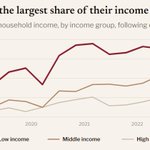


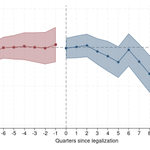
This new survey is consistent with my research showing that legalizing sports betting leads people to cut their longterm savings to fund betting.


This is a really cool paper. If you haven't seen it, take a look.

Lots of people are turning to LLMs for financial advice. But what does this advice actually look like?
@TahaChoukhmane, @wdwlin, @AkuzawaMatthew, and I have a new paper that develops and implements a new methodology to describe this advice and why it varies!
Thread ⬇️⬇️⬇️
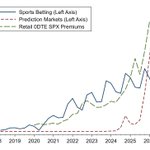
There has been a huge shift toward prediction markets over the past 6 months. Kalshi and Polymarket now generate double the volume of online sports betting such as DraftKings and FanDuel.

Sports contracts dominate prediction markets. In June, about 86% of Kalshi and Polymarket volume went to sports.

Jason Kotter retweeted

Equity trading is just 17% of Robinhood's revenues. Options, crypto, event contracts, and fees are 83%. Their margins when clients buy and hold equities are virtually zero. Margins when clients gamble are large. It's a fundamental misalignment with customers' long-term interests.

Enjoyed talking with Jeff Snyder at the Broadcast Retirement Network about sports betting. Happy to get the news out about the costs of legalizing betting. youtu.be/0zSWY3xeVmU?si=lLOt…
Jason Kotter retweeted

1/What happens to yields in between FOMC meetings?
The answer used to be "Not much." That was pointed out by Sebastian Hillenbrand in "The Fed and the Secular Decline in Interest Rates". The red line is (cumulative) what happens to the 10-year yield around FOMC meetings. The blue line is what happens on other trading days outside of the FOMC window. It's flat.

Jason Kotter retweeted

"In 2025, Americans placed roughly $166 billion in bets on sporting events. That’s more than the entire U.S. movie, music, book, and museum industries generated in revenue combined." fortune.com/2026/07/26/gambl…
Jason Kotter retweeted
"each dollar they deposit into online sports betting apps reduces their investment deposits by about 20 cents"
The conflation of investing, trading, and gambling is deeply troubling.

Jason Kotter retweeted
In my early 20s I learned there are things I could do with money that have positive expected value (investing + a very narrow niche of trading) and others that have negative EV (most trading and gambling). Financial success came from focusing almost exclusively on the former.
Utah Leaders: My research highlights large costs to legal online sports betting. Prediction markets likely have similar costs. Read the executive summary at jasonkotter.com/papers/gambl… Let's chat about how to protect Utah families. @GovCox @SenJohnCurtis @SenMikeLee @RepMikeKennedy

I'm excited to announce that our paper, "Gambling away stability: Sports betting’s impact on vulnerable households" is now published in the Journal of Financial Economics. We study what happens to household finances when online sports betting becomes legal.🧵
The policy choice is not limited to "ban it" or "do nothing." Many people bet responsibly. But there is room for policies that could limit the harms caused by problem betting. Limits on advertising and funding bets with credit cards are a reasonable place to start.
Shout-out to my coauthors, Scott Baker, @PhdDfs, Mark J. Johnson, and @KPisciotta11. You can read an executive summary of the paper at jasonkotter.com/papers/gambl….
Or read the full paper at authors.elsevier.com/a/1nMOo…