

“The right to exclude others is one of the most treasured rights of property ownership.” — — Cedar Point Nursery v. Hassid, 594 U.S. 139, 149 (2021)
Joined August 2025
- Tweets82
- Following119
- Followers28
- Likes94





Pinned Tweet
Laws should be judged by their results, not their intentions.
The City Council wants to investigate how many rent-stabilized apartments are sitting vacant. Good. Count them. But whether the number is 57,000 or something smaller, empty apartments are only part of the cost to society.
Start with the financial damage.
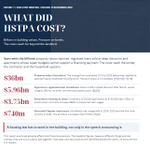
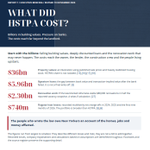
Our report’s comparison of 2019 and 2025 sale prices illustrates roughly $36 BILLION in property devaluation across the selected stabilized housing stock.
After Signature Bank failed in a run on deposits, transactions involving its rent-regulated mortgage pools implied a nearly $6 BILLION markdown.
Those figures overlap, and they cannot all be attributed to HSTPA. But they describe serious financial distress in the buildings New Yorkers depend on for housing.
Now look at what it takes to bring one apartment back.
Take a vacant apartment with an $800 legal monthly rent and a $150,000 renovation bill. Under today’s general small-building improvement allowance, the permitted increase is about $179 a month.
New rent: $979.
Borrowing $150,000 at an assumed 7% over 20 years costs about $1,163 a month.
The ENTIRE rent does not cover the renovation loan—before property taxes, insurance, heat, water or maintenance.
How is that apartment supposed to reopen?
At $150,000 each, renovating even 25,000 apartments would represent $3.75 BILLION in potential work. That is money for electricians, plumbers, carpenters, architects and suppliers. When projects cannot be financed, the consequences reach workers’ paychecks, public revenues and families looking for a home.
And the damage reaches inside occupied apartments.
A November 2026 working paper estimates that HSTPA increased immediately hazardous violations by 25.3% and reduced apartment-renovation filings by 47.3%, relative to comparison buildings.
For tenants, deterioration can mean leaking ceilings, mold, unreliable heat and missed work waiting for repairs. These are costs paid in discomfort, time and the daily indignity of living with problems that never seem to get fixed.
Tenant protection has to include a safe, livable home.
Owners face losses and foreclosure. Lenders pull back. Repairs wait. Prospective renters compete for the homes that remain available. The consequences spread far beyond the person who owns the building.
Albany’s 2019 fiscal memorandum described the state and local fiscal consequences as “To be determined.”
Seven years later, New Yorkers deserve an accounting.
Protecting tenants requires buildings that can afford to function. Good intentions do not replace a boiler, repair a roof or pay a construction crew.
Count the vacant apartments. Count the costs to society. Fix the law.
Full report: pdfhost.io/v/nFdrHH9yen_HSTP…
@NYSHCR @GovKathyHochul @AndreaSCousins @CarlHeastie @BrianKavanaghNY @LindaBRosenthal @NYSComptroller @NYDFS @NYCMayor @ZohranKMamdani @NYCCouncil @SpeakerMenin @CMFarahLouis @CMPiSanchez @NYCHousing @NYC_Buildings @NYCFinance @NYCComptroller @NewYorkStateAG @NYSenate @NYSA_Majority @NYGov @NYCGov @NYCMayorsOffice @NYCBudget @NYCIBO @Jamie_LeFrak @amkorchak @eccles_lincoln

Takings_Clause retweeted

> Mamdani pushes a law that will increase the cost of doing business
> Amazon is passing the cost onto the consumer
> Mamdani *shocked*
> Still calls for passing the law
> “Why would Amazon do this?”
DSA members are economically illiterate and will bring everyone down

Takings_Clause retweeted
Laws should be judged by their results, not their intentions.
The City Council wants to investigate how many rent-stabilized apartments are sitting vacant. Good. Count them. But whether the number is 57,000 or something smaller, empty apartments are only part of the cost to society.
Start with the financial damage.
Our report’s comparison of 2019 and 2025 sale prices illustrates roughly $36 BILLION in property devaluation across the selected stabilized housing stock.
After Signature Bank failed in a run on deposits, transactions involving its rent-regulated mortgage pools implied a nearly $6 BILLION markdown.
Those figures overlap, and they cannot all be attributed to HSTPA. But they describe serious financial distress in the buildings New Yorkers depend on for housing.
Now look at what it takes to bring one apartment back.
Take a vacant apartment with an $800 legal monthly rent and a $150,000 renovation bill. Under today’s general small-building improvement allowance, the permitted increase is about $179 a month.
New rent: $979.
Borrowing $150,000 at an assumed 7% over 20 years costs about $1,163 a month.
The ENTIRE rent does not cover the renovation loan—before property taxes, insurance, heat, water or maintenance.
How is that apartment supposed to reopen?
At $150,000 each, renovating even 25,000 apartments would represent $3.75 BILLION in potential work. That is money for electricians, plumbers, carpenters, architects and suppliers. When projects cannot be financed, the consequences reach workers’ paychecks, public revenues and families looking for a home.
And the damage reaches inside occupied apartments.
A November 2026 working paper estimates that HSTPA increased immediately hazardous violations by 25.3% and reduced apartment-renovation filings by 47.3%, relative to comparison buildings.
For tenants, deterioration can mean leaking ceilings, mold, unreliable heat and missed work waiting for repairs. These are costs paid in discomfort, time and the daily indignity of living with problems that never seem to get fixed.
Tenant protection has to include a safe, livable home.
Owners face losses and foreclosure. Lenders pull back. Repairs wait. Prospective renters compete for the homes that remain available. The consequences spread far beyond the person who owns the building.
Albany’s 2019 fiscal memorandum described the state and local fiscal consequences as “To be determined.”
Seven years later, New Yorkers deserve an accounting.
Protecting tenants requires buildings that can afford to function. Good intentions do not replace a boiler, repair a roof or pay a construction crew.
Count the vacant apartments. Count the costs to society. Fix the law.
Full report: pdfhost.io/v/nFdrHH9yen_HSTP…
@NYSHCR @GovKathyHochul @AndreaSCousins @CarlHeastie @BrianKavanaghNY @LindaBRosenthal @NYSComptroller @NYDFS @NYCMayor @ZohranKMamdani @NYCCouncil @SpeakerMenin @CMFarahLouis @CMPiSanchez @NYCHousing @NYC_Buildings @NYCFinance @NYCComptroller @NewYorkStateAG @NYSenate @NYSA_Majority @NYGov @NYCGov @NYCMayorsOffice @NYCBudget @NYCIBO @Jamie_LeFrak @amkorchak @eccles_lincoln
Someone should look into how he converted a full stop work order to a partial stop work order a few days after it being issued and the nypost exposé dropping
nypost.com/2026/08/18/us-new…
This stinks of corruption and favoritism.


My favorite @nycDSA story is that their chair Gustavo, who claimed to be a union electrician, convinced members to give him $95k to “help with rent”.
It turns out 1) he had never worked as a union electrician and 2) was renting bc the $1.4M townhouse his parents bought for him was 3) being renovated using non-union workers with 4) no permits.


3
129
Takings_Clause retweeted

My favorite @nycDSA story is that their chair Gustavo, who claimed to be a union electrician, convinced members to give him $95k to “help with rent”.
It turns out 1) he had never worked as a union electrician and 2) was renting bc the $1.4M townhouse his parents bought for him was 3) being renovated using non-union workers with 4) no permits.

The best deal in town? Donating to NYC-DSA.
For just $5, $15, or $50 a month, @nycDSA sent 16 socialists to Albany, 4 to the City Council, 3 to Congress, and 1 to Gracie Mansion.
Donate monthly to the organization building a city we can afford: dsa.nyc/donate.
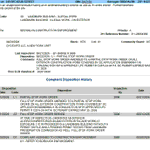
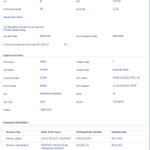
The 2019 HSTPA caused 40 billion in economic damage and I intend to prove it. Every bill in New York has to mention the economic implications S6458 [2019 HSTPA] left that part with 'to be determined'. Six years have passed and I will show the number as 40 billion dollars in direct economic harm to property owners, banks, construction workers and most of all the tenants themselves. Here is one page from the report:
@

Takings_Clause retweeted

It’s worth mentioning two things surrounding any potential elimination of rent control:
1.) It would have to be done thoughtfully. Personally, I believe all existing rents would need to continue to be grandfathered into some form of CPI tethered rent control. Deregulating units from rent control where the current tenant is grossly under what would be market rent would be destabilizing in so many ways.
2.) It would lead to the greatest construction boom of new multifamily units ever, especially in currently regulated cities like NY, LA, etc., and this supply boom would actually accomplish what rent control could not, which would be to bring down rents and return leverage to the tenant. We see this playing out in un-regulated sunbelt cities currently. When supply exceeds demand, rents drop. Crazy concept I know.

Crazy to think that fifteen rent-stabilized buildings in Harlem went to a foreclosure auction and fourteen of them got zero bids.
The lender took those 14 back for $500 to $1,000 a piece. The one building that did sell went for $826K, $1K over the minimum, so peanuts, on a property that originally carried a $1.9M loan.
Think about that. These are apartment buildings in Manhattan, and effectively not one buyer showed up.
Rent control, in any form, is the government seizing private property without just compensation. I think it's unconstitutional. It is forcing subsidized rent on the landlord for the benefit of the tenant, without the government compensating the landlord.
I find it shocking that the courts haven't agreed with me so far. So here's the test they use, in plain English:
The Fifth Amendment says the government can't take private property for public use without just compensation. Most people think that only means the government taking your land.
In 1978, in Penn Central v. New York City, the Supreme Court laid out how a regulation can count as a taking too. Judges weigh three things:
1.) The economic impact on the owner
2.) How much it interferes with the reasonable expectations the owner invested on
3.) The character of what the government actually did
Now run these buildings through it.
1.) Economic impact. In 2018 Emerald Equity refinanced these buildings with a $189M loan. This year the best offer for the 38-building portfolio was $110M, from a buyer the city itself backed. The lender said no. At auction, nobody else showed up.
2.) Expectations. Emerald paid more than $350M for the larger 47-building portfolio in 2016. The rules back then let owners renovate units and take them out of stabilization. In 2019 Albany passed the Housing Stability and Tenant Protection Act and closed that door. The loans were underwritten on economics that stopped existing the day it passed.
And it got worse from there. Between 2020 and 2024, expenses on rent-stabilized apartments went up 27%. Rents went up 11%. Now there's a rent freeze on top of it. Over a long enough period of time it basically guarantees financial ruin to the private landlord.
3.) Character. Rent stabilization asks a relatively small group of owners to fund affordable housing for an entire city. Again, government forced housing subsidies.
The Supreme Court has said the whole point of the Takings Clause is to stop the government from forcing a few people to carry a burden the public as a whole should carry.
Here's what I'll concede. You can argue Emerald overpaid. Their plan depended on deregulating units, and these buildings had more than 2,300 code violations. I'm not defending that.
But the question isn't whether they were a good owner. It's whether the state can change the rules after you buy, freeze your income while your costs climb, and leave you with a building nobody will bid on, with no ability to be "grandfathered" in to the regulatory structure in place when you purchased the asset.
Penn Central cases are hard to win. Owners lose most of them. In 2024 the Supreme Court passed on challenges to New York's rent law. Justice Thomas wrote that he would take one in the right case, with specific buildings and specific numbers instead of an attack on the whole law.
Here are 14 buildings. The price was $500. Justice Thomas, here is your case...
Takings_Clause retweeted

.@MarkLevineNYC You report Manhattan’s median rent at $5,279 a month. Under the common 40-times-rent requirement, an applicant needs $211,160 in annual income to qualify. Otherwise, find a guarantor or roommates.
Meanwhile, more than 86,700 NYC rent-stabilized households earn over $200,000 annually, according to an analysis of the 2023 Housing and Vacancy Survey.
NYC has roughly one million rent-stabilized apartments. There is generally no income test to keep one.
A Wall Street Journal analysis found that the highest-earning 10% of stabilized households save a median $1,300 monthly compared with similar market-rate renters.
And in 2019, New York abolished high-income deregulation.
Why should households earning $250,000 or $500,000 receive rent protections without any income test, while market-rate applicants face strict income requirements?
You want to address affordability on every front.
Why isn’t means-testing rent stabilization part of the discussion?

Monthly report on rents in NYC is out:
Median in Manhattan is now $5,279/month (+6% year-over-year). Vacancy rate has fallen to just 1.31%, lowest since before the pandemic.
Brooklyn rents at $4,400/month (+7% year-over-year)
Housing affordability in NYC remains a full-blown crisis. We need to push harder on every front to address our housing shortage.
Update zoning, invest more City $ in affordable units, lower the time & cost City bureaucracy imposes on construction, get 1000s of vacant regulated units back on the market. We need bold action.
This article normalizes buyouts of leases which in itself is proof this entire scheme is a taking under the constitution.
wsj.com/opinion/tighter-rent…

Takings_Clause retweeted

Send this to EVERY SINGLE PERSON THAT LIVES IN THE STATE OF NEW YORK AND MAKE SURE THEY VOTE NOV 3
Zeldin was this close. We’re closer now.
Keep reminding people to vote!

Takings_Clause retweeted

Just so we’re clear the Mayor applauds the transfer of this distressed rent stabilized property. Price? ~$86k/unit
And it will still require tax breaks and low interest loans to potentially make it work.
But earlier this year he intervened in another distressed rent stabilized portfolio and his own lawyers said the sale would not lead to a “supportable business” due to rents that are “very low averaging” Price? $88k/unit
And this is the problem I continue to highlight — it doesn’t matter who owns the building if the underlying finances are destroying the operation. We can let tenants buy every distressed building in NY but nothing will change unless:
1. The tenants all decide they want to pay more (obv unlikely)
2. The city steps in with boatloads of $$$


SALE
IMAGE: Zohran Mamdani
DATE: 09/05/2026
ADDRESS: 1018 Eastern Parkway & 1074 Eastern Parkway & 1392 Sterling Place
MARKET: Crown Heights, Brooklyn
ASSET TYPE: MultiFamily
BUYER: Mark Schwartz
SELLER: Rikud Realty
SALE PRICE: $7,600,000
UNITS: 88 ~ PPU: $86,364
NOTE: Mayor Zohran Mamdani is backing the $7.6 million foreclosure sale of three neglected Crown Heights rent-stabilized buildings—1018 and 1074 Eastern Parkway and 1392 Sterling Place—to Mark Schwartz, a deal valued at about $86,000 per unit.
#NewYork #RealEstate #TradedNY #NY #NewYorkRealEstate #NYCRealEstate #CrownHeights #Brooklyn #MarkSchwartz #RikudRealty

The natural result of the 2019 HSTPA: for building owners with deeply under-market, effectively frozen rents and units requiring hundreds of thousands of dollars in renovations with little or no economic payback, the rational exit is increasingly to vacate the building and sell.

With a low supply of townhouses in the West Village, wealthy buyers are turning apartment buildings into single-family homes. The tenement at 80 Horatio, formerly an 8-unit walk-up, sold last year and is being converted to a mansion. curbed.com/article/west-vill…

38
Wrong the socialist are chasing out the landlords who's only remaining profitable exit is selling to super rich.

13
Takings_Clause retweeted

This hasn’t happened yet, but RIGHT NOW, socialists are bankrupting NY property owners with overly onerous regulations and a rent freeze. COPA to give nonprofits the ability to shake down and “buy” properties first is the nail in the coffin. Please help!
Takings_Clause retweeted

I will eliminate state income tax on the first $50,000 you earn, $100,000 for married couples.
More money in your pocket. A stronger New York.
Takings_Clause retweeted
If you’re thinking “my rent goes up every year, but my building isn’t getting better”…
it’s probably time to learn the difference between subsidized housing and rent-stabilized housing.
I’ll explain.
Takings_Clause retweeted

Exclusive | Mamdani sparks tenant complaint crisis to 'squeeze' landlords and seize private property: critics
“There also must be consequences for tenants who create the violations in the apartments, or report false complaints.”
🤷🏾♂️ nypost.com/2026/08/30/us-new…
Takings_Clause retweeted
There’s not much to argue against a building in 7A or with a vacate order and the need to assist tenants quickly.
The real rub here is the inclusion of broken down elevators, which in many RS buildings can only have 1 elevator due to their age.
And then you have to consider nearly every elevator stoppage is tenant caused — doesn’t mean intentional but ask any property owner and they’ve all had the scenario of kids jumping up & down and triggering the elevator’s safety mode. Or someone opening the doors too soon and breaking the interlock.
Now when these scenarios happen the city has created an automatic trigger to file suit on a property owner for being … negligent?
Anyway. Enjoy this video on all the exciting costs of elevators and how they impact building operations.


