
Someone‖Postdoc‖MGEs‖HGT‖Phage person but sometimes anti-phage
Joined October 2020
- Tweets489
- Following290
- Followers123
- Likes259


何灵尘 Lingchen He retweeted

Ultra-small bacteria and their phages discovered through metagenomics in a sub-arctic degrading permafrost ecosystem | bioRxiv biorxiv.org/content/10.64898…
何灵尘 Lingchen He retweeted
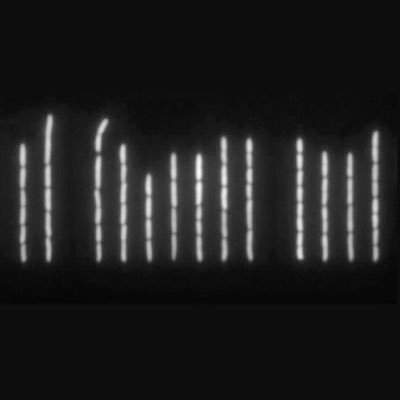
Do you use GFP to measure protein abundance? Be very careful. Our new bioRxiv preprint shows that, under translation inhibition, fluorescence can stop tracking how much reporter protein is actually there.
Please share widely.
1/5

何灵尘 Lingchen He retweeted

Alleged research misconduct by Sabine Kastner, and silencing whistleblowers by the psychology department at Princeton Univeristy.
Multiple former members of the Kastner Lab at Princeton University, including former postdocs and graduate students, have formally reported research misconduct by Professor Sabine Kastner, including alleged data falsification spanning over 20 years.
They describe a culture where people feared speaking up. Some remained anonymous because they feared retaliation.
My own experience: after I raised concerns, I was removed from Kastner lab. I was explicitly told by the psychology department leadership that this happened because I raised concerns anonymously: they told me “you questioned her integrity. PNI is a community. You attack one of us, you attack all of us.”
Afterward, I could not secure a new adviser and my PhD enrollment was terminated through the “no active adviser” rule.
Many affected trainees were international students. Losing an adviser means losing visa status, and international relocation, creating enormous pressure not to report concerns. This is exactly why Kastner lab recruits a disproportionately high number of international trainees. And why the lab website has most former members erased.
The research involved is supported by active NIH grants of over $20m. Involved publications include papers in Science, Nature Neuroscience, and Neuron.
The departmental leadership has been complicit, by helping remove students who raised concerns instead of protecting them.
Over the coming weeks, I will post documents, timelines, and evidence so people can examine the facts themselves.
#ResearchIntegrity #Whistleblower #Science #NIH #HigherEducation #GraduateSchool #PhD #Retaliation #OpenScience #ResearchEthics #AcademicFreedom @ivanoransky @NIH @HHSGov


何灵尘 Lingchen He retweeted

A Streptomyces megacluster encodes synergistic biotin-targeting antibiotics | Nature nature.com/articles/s41586-0…

何灵尘 Lingchen He retweeted
Temperate phages enhance bacterial host fitness via RNA-guided flagellar remodelling | Nature Microbiology nature.com/articles/s41564-0…

何灵尘 Lingchen He retweeted

Streptomyces produce a diphtheria toxin-like exotoxin that targets insects dlvr.it/TSJB0r #MicroSky

何灵尘 Lingchen He retweeted

I bring to you: Light driven SDS-PAGE polymerization. No TEMED, No APS, no stinky neurotoxic curing reagents: Just clean light and fast photo polymerization (Curing time: 15 min). No federal funding no stupid COÑASHIT, no academic clowns. Independent science!


何灵尘 Lingchen He retweeted

🥳 Huge preprint 🔔 Today we share something our group has been working toward for a long time, led by
@LucasMoriniere We asked can we predict which receptor a phage targets from its genome sequence alone? For most phages, we couldn’t. So Lucas set out to do something crazy!

何灵尘 Lingchen He retweeted

Hoy en @eldebate el hallazgo sobre cómo los virus ‘escuchan’ a otros virus, de los investigadores de @uchceu José R Penadés @jrpenades y Nuria Quiles @quiles_nuria, con el @IBV_CSIC y el Imperial College London @imperialcollege, publicado en @CellPressNews
eldebate.com/espana/comunida…
何灵尘 Lingchen He retweeted

New post-doctoral research position available in my Phage-host interactions (Phi) laboratory at the @otago in the Department of Microbiology and Immunology. The project is focused on defences against jumbo phages. Please share and if interested apply using the link below.

何灵尘 Lingchen He retweeted
Viruses and virus satellites of haloarchaea and their nanosized DPANN symbionts reveal intricate nested interactions | Nature Microbiology nature.com/articles/s41564-0…

何灵尘 Lingchen He retweeted

academic.oup.com/nar/article…
We discovered a new, wide-spread phage defense system based on serine recombinase PinQ in E. coli cryptic prophage Qin that inverts 1,797 bp in another cryptic prophage, e14, to encode two chimeric proteins that block adsorption of T2 phage. @NAR_Open

何灵尘 Lingchen He retweeted

Ecological constraints foster both extreme viral-host lineage stability and mobile element diversity in a marine community biorxiv.org/content/10.1101/… #biorxiv_micrbio

何灵尘 Lingchen He retweeted
A ubiquitous Streptomyces biosynthetic megacluster encodes an arsenal of synergistic biotin-targeting antibiotics biorxiv.org/content/10.1101/… #biorxiv_micrbio

何灵尘 Lingchen He retweeted

Tu Youyou became the first mainland Chinese scientist to be awarded a #NobelPrize in a scientific field - for discovering artemisinin, a malaria cure that’s saved millions. Today we reveal the 2025 medicine laureate. Stay tuned.

ALT A portrait of Tu Youyou in front of a dark grey background. The light is on the left side of her face leaving the right side slightly in shadow. She is looking directly into the camera with a small smile.
何灵尘 Lingchen He retweeted

Thrilled to share our latest paper now out in @ScienceMagazine 🎉🤩 We investigated a century of plasmid evolution 🧬 and uncovered how they have adapted to the antibiotic era 💊
science.org/doi/10.1126/scie…

何灵尘 Lingchen He retweeted

Three new kids on the block. ARMADA, BRIGADE, and TALON. Impressive how multiple labs all come together to contribute to discovery. Great collaboration with Simon, Chase, and Eugene. From the very talented Ryan Bell, together with Thomas and our own Yi.
biorxiv.org/content/10.1101/…
何灵尘 Lingchen He retweeted

Now online! AI mirrors experimental science to uncover a mechanism of gene transfer crucial to bacterial evolution dlvr.it/TN0F0H

何灵尘 Lingchen He retweeted
Conoces el trabajo investigador de Nuria Quiles en @uchceu? Actualmente lidera el Laboratorio MoBiLab sobre Biología Molecular de elementos móviles y de las #bacterias huésped
El ciclo de vida de los fagos, virus que infectan bacterias, centra sus estudios
youtu.be/oUUd_UEoeys?si=81yT…
何灵尘 Lingchen He retweeted
We’re excited to bring the phage-collection.org to #SummerScience at @royalsociety.org next week — showcasing our work on phage therapy and open science.
Big thanks to @JamesTGallagher for covering the project in the @BBCNews.
Read more here: bbc.com/news/articles/czryvm…