Interested in companies with long term potential, ideally managed by an aligned & talented team not investment advice / DYOD
Joined December 2021
- Tweets1.7K
- Following448
- Followers1.6K
- Likes494






Curious George Cap retweeted

The latest aerial view of $WULF’s Lake Mariner Data campus.
Construction continues across CB-4 and CB-5, representing a combined 336 MW of additional critical IT capacity. CB-4 has delivered two data halls with balance phased by end of Q4 2026, and CB-5 targeted for Q1 2027.
Focused on execution, building by building 🐺
Curious George Cap retweeted
There is some confusion here, and I was tripped up too.
@RealJimChanos originally posited that $PS should sell shares (bc they are trading rich in his view) to buy $PSUS, which is trading at a large discount to NAV.
I stated it wouldn't make sense from $PS's perspective because it would reduce PSUS NAV and thereby reduce the fees $PS earns. But that's only true if $PS retired those shares, which—to Nick's and Jim's point—would be accretive to $PSUS shareholders (buying $1 for ~75c is an instant 25c return which accrues to non-selling shareholders).
I now understand James' point, which I initially thought was wrong, admittedly. $PS buying $PSUS shares would not reduce the $PSUS share count as the acquired shares would just sit on $PS's balance sheet as an investment, rather than being retired, i.e. not accretive. Sure, you could argue that if they bought enough shares, it would reduce the tradeable float and make the share price more inelastic to incremental demand/supply. But I don't think that really fixes much.
So at the risk of sounding like a gutless fence sitter, I think everyone is right here to some degree:
$PSUS is cheap relative to $PS (I argued the same thing months ago), and $PS buying $PSUS does not do much, and the whole structure is a massive misalignment.
If not for the prohibitive borrowing cost, I'd probably be short $PS on the view that it is going to be exceedingly difficult to raise new capital via CEF given the prevailing discounts in $PSHD and $PSUS. Buybacks would be enormously accretive for $PSHD and $PSUS, but they work against the interests of $PS, which @BillAckman knows, and he also suggested there would not be meaningful buybacks moving forward (for $PSHD there is also an issue with the amount of insider ownership before they need to make a bid for the company; IIRC that's at 30%). The whole thing is a mess.
I've been a disgruntled shareholder in $PSHD for a while, but I've significantly reduced the position over the last 18 months, which was frustrating because I was selling at ~30% discount to NAV on average, which is totally shameful.
I think Bill is doing enormous damage to his legacy as an investor by his treatment of shareholders and the enormous conflict of interest he has created.
Curious George Cap retweeted

Really enjoyed this. Literally LOL'd when Jack said "he doesn't miss it (hedge funds)." Also said something which is obvious but maybe not appreciated by some with respect to AI in that the "value of AI is all in the prompt" - meaning AI is only as good as your ability to know how to use it
xitter.gq/PitchThePM/status/2120…

EP 59. "The Only Risk Is Not Being Big Enough”. Meet JACK: Citadel's Top Stock Picker with Jack Woodruff, exCitadel Partner & CIO of Candlestick Capital
“I got an email from Ken Griffin, and he said, 'Don't you think you're a little big?'
And I said, 'The only risk is not being big enough.'“
"It's not the best idea at the top of the book, it's the idea I could lose the least in."
Jack Woodruff came into the industry looking for shorts through deep accounting analysis. He built a simple and scalable investment process with Gabe Plotkin at Point72, and then ran the biggest team on Citadel's Surveyor platform for nearly a decade, becoming a Citadel partner. In 2019 he spun-out with his team to found Candlestick Capital, where he ran 30-plus stock pickers using a simple investment framework and standard model to create time efficiency.
Doug and Jack worked together at Surveyor. They talk about what went on behind the scenes of the Citadel spin-out, the research behind Jack's team catching the top in Lululemon when everyone's credit card data said fine, why a reverse-engineered DCF is still the best tool an analyst has, why process is the edge, and how he hired (never from the buy side) and sized (the idea he could lose the least in goes on top).
"I spend no time on me being right. I spend all of my time on me being wrong, because that's what could hurt me."
"We never had arguments about a stock. We had arguments about inputs to the model."
“There's nothing like getting a good short. There's nothing more satisfying in my eyes."
💡 This episode is presented by:
AlphaSense–Decision Grade AI
Oxford Data Plan–The Home of Alternative Data
*Not Investment Advice
(01:38) The peak of Melvin, investors calling, and the Surveyor contract that allowed a spin-out
(03:22) Taking the team, the infrastructure and the track record for a revenue share
(04:05) How "Jack be nimble" became Candlestick Capital
(06:08) "Jack's only 1%": the PR response to his exit
(08:37) Why Citadel wanted him picking stocks, not running Surveyor
(12:43) An accountant who wanted to be a short seller: Big Six, M&A diligence, Trivium
(16:08) Why short selling is the most important role in an efficient market
(18:31) "I don't mind the shorts. They're guaranteed buyers"
(23:14) The formal preview process and the reverse-engineered DCF
(26:59) What AI changes for analysts, and rebuilding Candlestick with Claude
(31:53) How Candlestick was organized: PMs, analysts, associates, data science
(39:57) Nailing the top in Lululemon: Vuori, Alo and the belt bag
(42:49) Tell me what it will be in six months, not what the data says
(46:17) The brick-and-mortar shorts: JCPenney and Macy's
(49:41) Ken's email: "Don't you think you're a little big in JCPenney?"
(51:40) Always in the model: running scenarios on how you can be wrong
(56:04) Hiring: never from the buy side, live-round interviews, model tests
(65:20) Right 52% of the time: sizing is everything
(66:03) Using the risk model without being defined by it
(69:40) Four consumer teams at SAC then, 70-plus now
(73:28) What's next for Jack
Curious George Cap retweeted

Greenlight has won all litigation with James Fishback. @jamesfishback has been ordered to return every penny of salary and bonus that we ever paid him, to repay the money we lent him, to pay most of our legal fees, and to stop claiming titles, roles and responsibilities he never had. No, Fishback was not the “Head of Macro.” Rather, as the arbitrator found, he was a “faithless servant.”
That’s a fancy legal way of saying that Fishback was so disloyal during his employment that he was ordered to refund to us his entire compensation during his tenure at Greenlight.
Ordinarily, my style would be to let this decisive ruling speak for itself.
However, Fishback has made himself a public figure. He publicly requested appointments to be a governor of the Federal Reserve and a U.S. Senator. He unsuccessfully ran for Florida Governor and has hinted that he intends to run for President in the next election. I therefore feel a civic duty to share additional details and thoughts about Fishback’s character and why he should never be placed in a position of trust.
For more than three years, Fishback engaged in a scheme to harass Greenlight Capital and me. While he made a series of false allegations against us, I generally chose to remain silent and allow the legal process to run its course. It has now done so. The result of the final arbitration is that every single claim Fishback ever made about us was either withdrawn or was legally found to be untrue. The conclusion of the arbitration represents the end of all litigation between Greenlight and Fishback, with Greenlight winning a clean sweep and being awarded over $4 million of damages against Fishback due to his tortious actions, false statements and baseless allegations.
Fishback has accused us of lawfare. Let’s set the record straight: it can’t be lawfare when he started the litigation. We simply defended ourselves and made now proved counterclaims.
This all began with Fishback demanding a $5 million pay-off to spare us the reputational harm and legal costs of defending frivolous accusations of religious discrimination, age discrimination, a politically hostile work environment and defamation.
After filing his lawsuit, Fishback told Jack Farley on the Forward Guidance podcast that “discovery is going to be fun” and would vindicate his story. Farley asked how frequently Greenlight employees referred to him as ‘Head of Macro’ and what written evidence supported his claims. Fishback answered “Well, I don’t have access to my company email. If I did, we could produce them up the wazoo.”
Well, discovery came and went and not a single piece of evidence supported any of Fishback’s bogus claims. A company-wide email search revealed that the only additional Greenlight emails calling him “Head of Macro” were those where he gave the title to himself in his signature block while sending external emails where nobody from Greenlight was copied.
Instead, discovery uncovered some outrageous conduct by Fishback. For example, Fishback and his father concocted a scheme to use a fake reference check to create his fraudulent defamation claim against us.
In September of 2023, after his employment ended, Fishback texted his father a draft of a fake reference check email that included an inquiry as to Fishback’s duties as Greenlight’s “Head of Macro.” In the same chain, Fishback texted his father:
“We need them to DEFAME us. Which THEY WILL. That’s another $1 MM right there.”
Fishback persuaded a friend of a friend who worked at an investment firm to send us the fake reference check. When we responded that Fishback was not the Head of Macro, Fishback promptly sued us, claiming that our response caused the friend’s company to walk away from making a $5 million investment in Fishback’s start-up hedge fund.
The friend of the friend testified under oath that he sent the fake reference check as a favor and that his company was never considering investing with Fishback. The friend got fired.
It was all a sham to conjure a fake legal claim to extract money from us.
There’s more that came out in the litigation:
On his final day of employment, Fishback stole Greenlight’s most valuable property, its portfolio of investments, by emailing it to his personal email (in our industry this is a big deal).
An even bigger deal is that he and his father were secretly trading positions in Greenlight’s investment portfolio in their personal accounts.
Fishback admitted to violating his confidentiality obligations to Greenlight over 60 times, including by sending confidential investment information to third parties.
Fishback made numerous statements, including that he ran macro trading at Greenlight and that he was responsible for generating over $100 million of profits – none of which were true.
Fishback told various lies about why he left Greenlight, including that he left due to a hostile political environment.
In a classic example of “You can’t fire me, I quit,” Fishback resigned right after my assistant scheduled a meeting with him so I could fire him for not doing his job.
As for the political environment at Greenlight, Fishback has repeatedly claimed that I am “a Soros aligned hedge fund billionaire.” That’s simply not so. Politically, I am just left of center. I have made large philanthropic contributions to causes supporting bi-partisanship, bridging differences and pluralism. I support centrist Democrat politicians. Some on the far-left have even tried to fight my efforts to have a more civil culture by labeling me a far-right conservative. That isn’t true either.
At Greenlight, we discuss politics so infrequently that I was unaware of Fishback’s views during his tenure. And it surprised me when he quoted scripture in his resignation email. His politics have since been made clear to all. We have no view on the sincerity of his religious beliefs but suffice it to say that we’ve been witness to him breaking those Commandments regarding stealing and lying.
Fishback campaigned for Florida Governor on an extreme “tough on crime” platform. He threatened homeless people with 15 years in jail for being homeless; he threatened teenagers participating in riots with 5 years in jail, including prosecuting minors as adults; he promised criminal prosecutions of homeowners’ associations; and planned for mass deportations of non-citizens. He even said a black man “should be lynched” for confronting him.
And yet, Fishback is a man who believes the laws don’t apply to him. Rules are for other people.
During his campaign, Fishback was challenged for living outside of Florida. His testimony that he lived in Florida was certainly news to us. When Fishback worked for Greenlight, he provided his address as being in Washington, D.C. He had us withhold D.C. resident taxes from his payroll. When he visited our New York office, he frequently submitted expense reimbursements for Amtrak trips between D.C. and New York.
Before this final arbitration, we had already won verdicts against Fishback to repay the loans that we generously lent to him on favorable terms for what he claimed at the time to be a family emergency (though that’s not what he told Jack Farley).
Even with valid court orders of U.S. Federal District Court Judges ordering him to repay us and surrender property to satisfy the judgements, Fishback simply thumbs his nose at the rule of law. He decides on his own that the Judge was a Democrat, or was appointed by a Democrat, or was otherwise politically motivated, rendering the rulings (in his mind) invalid. Fishback was ordered to repay his debt to us: He ignored it. Fishback was ordered to turn over shares in a company and 43 luxury items he owns to us: He ignored it. A company owned by Fishback was ordered to produce documents in discovery: He ignored it. And that is just a partial list.
We have little doubt that he will try to ignore the arbitration ruling against him from the arbitration he commenced. Ignoring court orders is a very dangerous way for anyone to behave. But those that do, especially in such a self-serving fashion, should not be put in a position of public trust or have influence in the enforcement of laws against others.
It doesn’t matter that I’m a Democrat. What does matter is that we gave a seemingly intelligent college drop-out a chance to achieve what he once said was his dream job. And once he was provided with that opportunity, instead of applying any semblance of a work ethic, he chose to be a “faithless servant”.
We have a theory as to why Fishback wishes to continue his political ambitions. We believe that by continuing to seek office, he will find donors to his campaign, PAC and charitable endeavors, and he will use those funds to stay in hotels, rent cars, travel and dine out – all without ever acquiring an asset in his own name that can be used to repay his legitimate creditors, like us. It’s the perfect way for Fishback to continue to grift and continue to avoid paying his debts.
It won’t work. James, you owe us over $4 million and interest is ticking.
And, when we do collect it, I will in turn donate it to a combination of the National Immigration Forum, The Center for Reproductive Rights, The Florida Rights Restoration Coalition, and The Florida Chapter of the ADL. The best way to fight your hate is to support those you hate.
Curious George Cap retweeted

We are 100% serious that data centers can improve communities when the developers work hand-in-hand with the local residents, and @CipherInc backs that talk up with action.
This is the path forward where everyone wins.
$CIFR

Curious George Cap retweeted
I mean, this seems mostly reasonable to me??

Texas Governor-elect Gina Hinojosa: “It is not that I hate data centers. I hate the way they are taking advantage of Texas”
Asked whether data centers still have a future in Texas:
HINOJOSA: “Right. Well, we have always been a pro-business state in Texas. But what changes now with me as governor is it has to be a partnership that benefits Texans. And right now what has happened is data centers have moved into mostly rural communities and there are no rules and laws to protect Texans and Texans are being taken advantage of. So the difference is we will have laws to protect Texans and we need to stop what we’re doing with data centers until we have those protections. We can have a strong economy, strong industry and protections for the people of Texas. Those things are not mutually exclusive, and I’ll make sure as governor I lead to ensure that that happens.”
TAPPER: “So you’re not ruling out that data centers will be able to be built in Texas, it’s just you want there to be regulations to protect communities, is that right?”
HINOJOSA: “And that communities have a seat at the table to decide if and how these data centers come into their communities. Texas is like a country. We are so diverse in all the ways. Different communities have different needs. And those communities have to be able to walk away from the table to leverage what they need for their community. So absolutely, we need to make sure they are partners in this effort. And that has always been my position. It is not that I hate data centers. I hate the way they are taking advantage of Texas. And that stops when I’m governor.”
Curious George Cap retweeted

Today's results are better understood as a left-center wave, not a woke one. Trump lost big but so did a lot of far left ideas.
- Billionaire tax failed in CA
- Transgender school sports restrictions passed in WA
- Increased penalties for fentanyl dealing and even possession passed in CO
- Wiener won over Chan in SF
Nationwide the electoral mood was normie lib wine mom, not far left. A victory against the horseshoe.
Curious George Cap retweeted

1/ Everyone take a deep breath. Texas data centers aren't going anywhere. The Texas governor has very limited authority to stop them. Calls for a pause or moratorium must be approved by TCEQ—the permitting authority of Abbott appointees. Here's how Texas permitting really works👇

Curious George Cap retweeted
Dems win a massive wave election because of widely shared frustration with the economy, AI, corruption, and Trump's unrestrained exercise of power, and this is what you tweet? Come on.

Curious George Cap retweeted

I think one thing is pretty clear. Existing facilities, permitted facilities with grid connections, and data halls soon to come online - they are more valuable today. Why? There is a shortage of power, massive demand, and now - definitively, a moat between powered and grid-connected sites and the rest. In addition to our development pipeline, $WULF will remain focused on an additional CB-6 at Lake Mariner. And I think our 1G at Muskie just became a top contender for the triple crown. Lots of work to do, and all must be consistent with the thoughtful application and zealous protection of our balance sheet, together with preservation of value for shareholders. But $WULF is well positioned.
Curious George Cap retweeted

Agree with this. Think they get paused not stopped and it ends up just being BYOG and more local concessions and things move ahead,
If the returns to AI are as good as bulls think they are this doesn’t really matter allll that much.


Curious George Cap retweeted
Gina Hinojosa may not be as bad for Texas data centers as it looks.
Her plan asks for: no subsidies, union labor, no NDAs, and proof household power and water bills won't rise.
Much of that is already underway:
Amazon, Google, Meta, Microsoft, OpenAI, Oracle and xAI pledged in March to bring their own power and pay for transmission
Microsoft pledged to pay full property taxes without seeking tax breaks
Nvidia is working with Vistra, NextEra and Constellation on data centers that cut power use when the grid is strained

Curious George Cap retweeted

I have been holding my tongue about something that happened during the Ohio gubernatorial race. I refused to speak while the election was underway because I did not want my words mistaken for an attempt to influence anyone’s vote.
But now that the election is over, I have something to say.
For nearly twenty years, my ministry has taken me among the homeless, the abused, the exploited, and the forgotten. I have sat with victims of sexual violence and witnessed the lifelong wounds of childhood trauma.
What Vivek Ramaswamy’s campaign did to Amy Acton was among the most morally repulsive things I have witnessed in American politics.
They took a woman whose stepfather was indicted for raping her when she was twelve years old and featured her mother, from whom she had been estranged for nearly fifty years, in a political advertisement attacking her credibility.
The advertisement challenged Acton’s account of her childhood without mentioning the sexual abuse allegations or the circumstances of that estrangement. When people expressed their horror, the campaign defended it.
Imagine examining another person’s childhood suffering and fractured family relationships, then deciding those wounds might help win an election.
Anyone who has worked with survivors of childhood sexual abuse understands the painful realities of denial, betrayal, shame, and estrangement. A child growing into a successful adult does not erase what happened. Nor does a parent’s denial make that suffering disappear.
I find it equally disturbing that an elderly mother, whom Acton herself described as unwell, was brought into this spectacle. Whatever her own struggles or responsibility for the past, exploiting that fractured relationship was grotesque.
To everyone who defended this, consider the message you sent to survivors. To the young woman whose family refuses to believe her. To the man who has carried the shame of childhood abuse for forty years. To the frightened child who has yet to tell anyone.
What did you teach them about the value of their suffering?
I am a priest. I believe in repentance, forgiveness, and redemption. But none of those things requires me to pretend that deliberate cruelty is anything less than a grave moral failure.
Your political allegiance does not absolve you of moral responsibility. You do not get to set aside your conscience during an election and retrieve it afterward.
If your loyalty requires you to defend the exploitation of a childhood sexual abuse survivor, your loyalty has become an idol. And if your conscience cannot recognize the wrong here, examine what political tribalism has done to it.
This is not about Republicans or Democrats. We have a choice as a people: continue excusing cruelty from our preferred political camp, or summon the courage to condemn it wherever it appears.
Amy Acton deserved better. Every survivor who watched this unfold deserved better.
And God help us if we have reached the point where winning an election matters more than protecting the dignity of a wounded human being.


Curious George Cap retweeted

Tomorrow I'm buying every @redbaronpizza I can find in Central Florida.
And every penny of my Pizza Friday money is going to Walter E. Zerod of Michigan.
gofundme.com/f/support-a-har…
A father in Michigan is stocking frozen pizzas late at night.
He has to be up at 5 a.m. to do it all over again.
He's struggling to pay his mortgage. He just wants to get home to his kids. He's working his ass off trying to make ends meet.
And while he's doing all that, some guy decides to harass him at work.
A MICHIGAN MAN.
Well, I've seen enough.
This dad deserves a break. Let's give him one.


If anyone knows this man or the backstory here, please put him in touch with me. @smblawgroup will do whatever we can to support, including pro bono legal services if needed.
Curious George Cap retweeted

One of the biggest issues we have as a society is platforming and magnifying loud people instead of smart & genuinely good people. It’s a huge reason for a ton of problems.


Curious George Cap retweeted
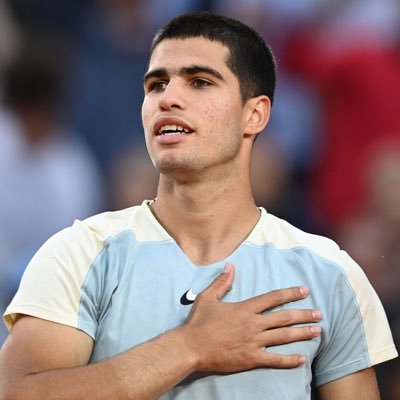
What a battle Ben! ❤️ You deserve the win, I wish you the best for the rest of the tournament! 🙌🏻 I leave here happy with my level after such a long injury. Thank you for the energy NYC! ⚡️ Always a very special place! 🇺🇸
📸 Getty


Curious George Cap retweeted

In a previous post which can be found below, I described how Lucy was left nearly completely blind in both eyes as a result of a large left frontal hemorrhage in February. The hemorrhage caused downward herniation, putting bilateral pressure on her optic nerves along with prolonged (~18 hours) elevated intracranial pressure. A hard fall on the right side of her face at the time of injury likely created a traumatic optic neuropathy in her right eye.
In response to my post, we received incredible support from the X community including some interesting ideas on how to help Lucy. To that end, I thought to make a more targeted outreach to the community for any advice, ideas or input from experts in the eye, optic nerve, and brain or otherwise who can help her recover her vision, which remains her most challenging limitation both physically and emotionally.
Below, I provide some background on her vision and treatment to date. We are incredibly grateful for any ideas you may have. Our goal is to help Lucy and others who have suffered a similar fate by crowdsourcing ideas from the X community.
Background
Initially, both of Lucy’s pupils were maximally dilated and unreactive to light. Slight light reactivity came back to both eyes in the weeks after the hemorrhage. Initially, she appeared to be able to perceive light in the left eye but not the right. The slight right eye pupillary reactivity decreased to zero approximately six weeks after the injury.
Because of the severity of her vision loss and the absence of any other viable therapy, we received emergency FDA authorization in May, three months after the injury, to attempt a novel treatment: injection of Lucy's own mitochondria into her eyes. Details of the procedure and the decision-making that led to our decision to do this therapy are described in a preprint manuscript linked here:
researchsquare.com/article/r…
The principal rationale for the use of mitochondrial injection was based on her imaging. Optical coherence tomography showed that Lucy's outer retina and photoreceptors were fully intact. The damage was confined to her optic nerves and inner retinal neurons that process visual signals and carry them to the brain. The goal, therefore, was to rescue and enhance the function of her neuronal tissue as much as possible. Animal studies have shown that mitochondria delivered intravitreally cross the inner limiting membrane and are taken up by retinal cells.
After careful research into the potential benefits and risks which we believed, after careful analysis, to be low, we chose intravitreal injection in an attempt to place mitochondria directly on the surface of her retinal neurons.
Within two days of her injections, Lucy’s pupillary responses improved in both eyes. Importantly, she experienced no inflammation or infection. Visual evoked potentials measured weeks later improved, indicating stronger signal transmission from her retina to her visual cortex.
After the procedure, Lucy began reacting to pupillometer and visual examinations when previously they did not disturb her. Because Lucy cannot yet describe precisely what she sees, her increased reaction was itself an important indicator of change. Pupillary responses decreased after a few weeks but remained above pre-injection levels.
Given the success and the limitations of this strategy (among them: sourcing mitochondria from muscle biopsy is not a great long-term solution), we are exploring other ways to isolate and administer Lucy's autologous mitochondria, which we are now isolating from autologous stem cells derived from fibroblasts, a process that takes six or so weeks and requires significant management of the cell culture.
While transplanted mitochondria may improve the function of existing neurons and supporting cells, they are unlikely to result in optic nerve regeneration. Lucy's retinal ganglion cells have already suffered severe atrophy, so even in the best case this strategy has limitations.
In the last two weeks, Lucy's daily visual rehabilitation has begun to produce significant results. She can now reliably track objects both horizontally and vertically when before she could not. At first the objects presented to her had to be illuminated to be seen. More recently, she can track projected images and unilluminated objects.
Lucy is far from having functional vision so we are very open to ideas and potential solutions.
We welcome ideas posted here on X as well as emails to [email protected].
Thank you!

At midnight on February 6th, earlier this year, the doorbell to our apartment rang. The doorbell was followed by a pounding on the door. I answered the door and a security person in our building handed me his phone. It was my oldest daughter Eloise. She had found my 26-year-old daughter unconscious on the floor of her apartment and had called 911. The EMT team was already there, but they did not know what was wrong with Lucy or to which hospital they would take her.
I threw on some clothes and jumped in an Uber heading east toward Brooklyn. (Lucy lived alone in Williamsburg.) On the way, I learned that they were taking her to Elmhurst, a City trauma hospital in Queens. I arrived about five minutes after the ambulance to join Eloise, Lucy’s mom, and a friend, and waited to learn what was wrong.
After about 15 minutes, I asked a nurse where she was. I looked over his shoulder to his computer. Next to her name, it said “non-responsive.” I walked into the emergency room and wandered around looking for her until I found her unconscious on a gurney surrounded by several doctors and nurses.
By about 2:30am with the results from a CAT scan, Lucy’s doctors had determined that she had a massive brain hemorrhage and would need an emergency hemicraniectomy to release the pressure on her brain and remove the blood from the hemorrhage. I called our wonderful friend and family doctor Eddie Fisher and explained what was going on. He woke up Josh Bederson, Chairman of Neurosurgery at Mount Sinai, to find out more about Zach Hickman, the neurosurgeon on call that night. Dr. Bederson said Hickman was an excellent surgeon, which was comforting as we had no choice.
The surgery to save Lucy’s life began around 3:15am and finished around 5:30am. It was successful.
The following day, I joined Lucy in an ambulance while she was being transferred to Mount Sinai on Madison Avenue. Later that day, we determined from Lucy’s Oura ring that her hemorrhage had occurred around 9am, which meant that more than 19 hours had passed from the time of the hemorrhage to the completion of the surgery to release the pressure on her brain (I only wish @ouraring had an alert for this kind of a medical event. Imagine it could call a family member if the wearer doesn’t cancel the alert).
I later learned that the standard of care is not to do surgery to save a patient with a large brain bleed if more than five hours have passed since the hemorrhage. Even when the surgery is done, I was told that the likely outcome for the patient is a few months in a nursing home and death from pneumonia.
When I met Lucy’s doctors, I did my best to inspire them: “Let’s see what can be accomplished if we give her the best care possible and we invest unlimited resources to restore her to life.” And I promised that whatever we learned we would make available to everyone.
Dr. Chris Kellner, her neurosurgeon, and Dr. David Putrino, Director of Rehabilitation Innovation for the Mount Sinai Health System have led Lucy’s care team since that day. Words cannot describe the remarkable and compassionate care that she has received beginning with the EMT team and then from nurses, doctors, therapists, and the army of people who have worked to save her and return her to life. To this day, we have a daily Zoom where we discuss her progress and make adjustments to her care. While her care and oversight have been incredible, the learnings for the Mount Sinai team have also been elucidating and will assist in the care of many others.
Lucy began in a bad place. She was in a coma for several weeks and then awoke not being able to breathe on her own, unable to walk, see or speak.
Over the last six months, she has recovered her cognition – she understands everything including her circumstance – is able to walk a hundred or more steps at a time with assistance, is making progress with sounds, vowels and consonants and the beginnings of speech, but she remains unable to see.
Each day, she makes a little progress, and daily progress compounds. Every day I tell her that she just needs to make a little progress and it won’t be long before she is back.
We remain optimistic that Lucy will return to normal function. It will likely take years, but I believe it is only a matter of time, hard work, and technological progress, along with some, and perhaps a lot, of divine intervention.
Many people have been praying for Lucy and we are incredibly grateful for the prayers and remarkable support she has received. Lucy’s friends have been with her every day since the beginning, and their presence and friendship have saved her life and helped to rebuild and maintain her spirit. And on a very positive note, Lucy’s challenge has brought together our entire modern family who have all been incredibly devoted to her care and recovery.
Lucy's vision and other faculties may require some form of brain computer interface, work that is underway at Neuralink, Precision Neuroscience, Science, Synchron, Nudge, and other companies in the space.
If you are going to have a devastating brain injury, now is the best time in history for that to happen. We are living in a world when you can be confident that the blind will soon see again. We are going to do everything we can to help make that happen, including by assisting existing companies in the space.
With respect to our promise to make Lucy’s care available to others, we have made good progress. In May, a real estate colleague made me aware of a 93% vacant, brand new, 400,000 square foot Class A+ purpose-built biotech facility on West End Avenue between 65th and 66th Streets that missed the market and was available for sale. The Pershing Square Foundation acquired the building 60 days later.
We also put under contract an adjoining 130,000 square foot building at 320 West 66th Street that is currently being used by Saturday Night Live for studio space. The building has 35-foot ceilings with massive column-free spaces that can be converted into superb rehabilitation facilities. We will close on the SNL building in December.
We are also acquiring an adjoining vacant lot with additional air rights. With just the existing zoning rights, we can add a 150,000 square feet for a total of 680,000 square feet, a lab footprint larger than Rockefeller University, and that’s without including the potential for an upzoning that would allow for substantially more buildable area on the site’s 3.4 acres with spectacular views of the Hudson.
Our goal is to build the world’s greatest brain research, rehabilitation, recovery, human optimization, and longevity institute. We have named it The Ackman Oxman Institute or the AOI for lack of a better name, but also to reinforce the point that Neri and I and our family are all-in on the mission.
The AOI will be patient-centric. It will not be an academic research institute that produces lots of papers, a Nobel Prize winner or two, but little if any results for patients. We will be laser-focused on cures, treatments, devices, rehabilitation and exercise equipment, and targeted and basic research with a goal of massively accelerating the time from idea to innovation to production to helping a patient.
While the AOI will be a non-profit, it will have highly commercial instincts. The AOI will have its own venture funding and will work to develop innovations to create companies that we will seed, assist, and spinout to ensure technologies, treatments, techniques, and drugs get to patients as promptly as possible.
On one 3.4 acre campus in what is still the greatest city in the world, we will do neurosurgery, neuroscience, rehabilitation, nutrition, BCI and device development, human trials, hyperbaric oxygen treatments, and life extension programs, and we will mandate and incentivize collaboration among the teams with no silos, politics, bureaucracy, or any other constraint that is inconsistent with the mission.
Mount Sinai will be an important partner and deservedly so, but it won’t be our only hospital or medical school partner as we don’t believe any institution has a monopoly on the best ideas or the best talent. We don’t believe in exclusive relationships because that is not in the best interest of patients.
Five years ago, we considered launching a brain institute inspired by Neri’s mom who sadly died from Alzheimer’s. We couldn’t make the math work as the real estate was too expensive and we believed it would be too difficult to recruit the best talent from universities to our effort.
Since then, the real estate became available at a 70% discount, universities became a much less attractive place to work due to politics outweighing meritocracy, protests that disrupt learning, the curse of antisemitism, and a decline in funding. Fortunately, during the same time, I made sufficient personal economic progress to make the AOI possible.
The advance of AI in the last few years will also enable us to greatly accelerate our mission. AI still has a lot to learn about human intelligence and the brain, and the AOI should be at the forefront of the interplay between the brain and AI.
Today, I am making a public filing disclosing a gift from Neri and me of ~$400 million or 10,000,000 shares of Pershing Square Inc. (PS) to the AOI. It is very early days for Pershing Square so these shares are intended to anchor the long-term work of the AOI as the shares compound over time while generating what we expect will be a growing stream of quarterly dividends to fund the Institute.
We will also be announcing an additional gift of similar and potentially greater size which won’t be in the form of Pershing Square stock to provide the AOI with the short- and intermediate-term runway necessary to enable it to achieve its goal of becoming a self-sustaining institute, which reinvests all of its revenues, royalties, and the economic rewards of company formation to advance the fields of brain health and human longevity.
Neri and I have chosen to anchor the funding of the AOI to maintain vision alignment and limit the need for the organization to focus on fundraising. We expect the AOI to be the best-resourced brain, rehab, recovery, and longevity institute in the world.
We are grateful to have been able to form a board which includes Dean Kamen (our generation’s Thomas Edison), George Yancopoulus (CEO of Regeneron), James Rothman (Nobel Laureate), Bernardo Sabatini (neuroscientist), Chris Kellner (neurosurgeon), Olivia Flatto (CEO Pershing Square Foundation), Neri Oxman, and myself.
We have recently identified a CEO who we expect to announce by October along with other key hires, and are beginning searches for a Chief Scientific Officer, a Chief AI/Technology Officer, a Chief Operating Officer, a Chief Financial Officer, and other key leadership roles.
If you find what we are building compelling and want to be part of the leadership team that creates and builds the AOI from a standing start, please send an email to: [email protected] with a short note as to why you believe you can help. Please include your best three ideas for the AOI along with a summary of your background and your most important accomplishments.
We promise strict confidentiality to those expressing interest in working with us.
We have learned from Lucy that the brain can recover from even catastrophic injury. There is so much more work to be done as the mind is a terrible thing to waste.
For details from my Pershing Square SEC filing see:
sec.gov/Archives/edgar/data/…