

Entrepreneur, East Africa Human Right Activist & Humanitarian, Youth Intervention.
Djibouti-Zaylac-DireDhabSitti
Joined October 2011
- Tweets7.5K
- Following945
- Followers3K
- Likes8.8K




Ayan Hassan Robleh retweeted

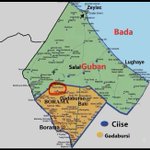
The Gadabuursi have previously entered into agreements with the Oromos, seeking to hand over or sell the Somali coastal territories of Lughaya and Zeila to Ethiopia.

I'm not surprised, to be honest. The Gadabuursi are repeating what they did in 2022. Somehow, they'll still portray themselves as pro-Somali and claim they defended Lughaye, while conveniently ignoring that they were allegedly the ones who proposed handing Lughaye over to Ethiopia. Had it been us, the Issa, defending the area, I believe they would have been willing to give Lughaye to Ethiopia. That's how contradictory their position appears to be. Their Somali identity is also something I strongly question, as I believe they have Oromo origins and were later assimilated into Somali society.


Ayan Hassan Robleh retweeted

#Awdal does not belong to the Gadabursi, which possesses neither land nor coastline. Furthermore, the city of Borama itself is shared with other Somali communities. Being in the minority, they lack the legitimacy or the power to make unilateral decisions as they claim.

Letter from Awdal (Somaliland), regarding recent violence against Oromo migrant workers in Borema city
===================
Dear Jawar,
I am writing to you as someone from Awdal, Gadabuursi, a land that stretches from the sea to the Ethiopian border.
First, I want to express my sincere sorrow over what happened in Borama. What happened has deeply hurt me, even before considering the pain and suffering of the victims and their families. It is a tragedy that should never have happened.
I strongly believe that the consequences of this incident go far beyond Borama. It has damaged something much bigger: the historic, strategic and brotherly relationship between the Gadabuursi and Oromo communities, as well as our relationship with Ethiopia. Whatever the intentions behind these events, the damage to these relationships is real, and we feel that pain deeply, particularly towards our Oromo brothers and sisters.
I also want you to understand the difficult and extremely critical situation we find ourselves in. We increasingly feel caught between competing regional interests, foreign intelligence operations and political agendas. There are serious concerns about external interference, alleged intelligence networks and political forces operating against our interests. We face tensions along our coast, rival regional interests involving Djibouti, Somalia and its international partners, including Egypt and Saudi Arabia, as well as Pan-Somali nationalist agendas that do not necessarily represent our aspirations.
In this complicated situation, our own voice, political agency and ambitions are often missing from decisions that directly affect our future. Much of what is happening is beyond our control. We lack the alliances, institutional support, cooperation and strategic framework necessary to protect our interests and work effectively with our genuine friends and partners.
I am not writing this message to blame the Oromo people or to create further divisions. Quite the opposite. I am writing because I do not want the events in Borama to become a permanent wound between two communities that should be building bridges, not walls.
I want this message to reach every Oromo, whether in government, opposition, civil society or any other political orientation.
Please understand this clearly: We do not hate the Oromo people. We have no hostility towards you. We see you as brothers, potential strategic allies and people with whom we have much to discuss, resolve and build together.
Our differences should never be allowed to destroy the possibility of a better future. We have shared interests, neighbouring histories and strategic realities that make cooperation far more valuable than hostility.
I sincerely hope that, beyond the political noise and unfortunate events of today, we can preserve our relationship, rebuild trust and find a way forward.
With respect and brotherhood.
Ayan Hassan Robleh retweeted
"Gurmad Ummadeed ayay inooga baahan yihiin Garre, gardarro iyo dulmi aan goobjoog u ahaa ayaa ka dhacday Mooyaale . Ugu yaraan ubadkeennii oo qaxay haweenkeennii oo baylah ah oo baahan oo gol maran aan u samayno dhaqale ururin."
"Isimada iyo duubabka Soomaaliyeed Culimada, 1/1

Ayan Hassan Robleh retweeted

This is nothing specail its letter written from individual to individual.
Reerki Gudabuursi hadda waxay u niikinayan qotija Johar oo isaguba baxsad ka ah siyasada Ethiopia iyo nidaamka Dalka loga taliyo.
Ama Canfar waraaq u qora ama Oromo, Xeeb dambe so hawaysan maysan Xafajoy.
Letter from Awdal (Somaliland), regarding recent violence against Oromo migrant workers in Borema city
===================
Dear Jawar,
I am writing to you as someone from Awdal, Gadabuursi, a land that stretches from the sea to the Ethiopian border.
First, I want to express my sincere sorrow over what happened in Borama. What happened has deeply hurt me, even before considering the pain and suffering of the victims and their families. It is a tragedy that should never have happened.
I strongly believe that the consequences of this incident go far beyond Borama. It has damaged something much bigger: the historic, strategic and brotherly relationship between the Gadabuursi and Oromo communities, as well as our relationship with Ethiopia. Whatever the intentions behind these events, the damage to these relationships is real, and we feel that pain deeply, particularly towards our Oromo brothers and sisters.
I also want you to understand the difficult and extremely critical situation we find ourselves in. We increasingly feel caught between competing regional interests, foreign intelligence operations and political agendas. There are serious concerns about external interference, alleged intelligence networks and political forces operating against our interests. We face tensions along our coast, rival regional interests involving Djibouti, Somalia and its international partners, including Egypt and Saudi Arabia, as well as Pan-Somali nationalist agendas that do not necessarily represent our aspirations.
In this complicated situation, our own voice, political agency and ambitions are often missing from decisions that directly affect our future. Much of what is happening is beyond our control. We lack the alliances, institutional support, cooperation and strategic framework necessary to protect our interests and work effectively with our genuine friends and partners.
I am not writing this message to blame the Oromo people or to create further divisions. Quite the opposite. I am writing because I do not want the events in Borama to become a permanent wound between two communities that should be building bridges, not walls.
I want this message to reach every Oromo, whether in government, opposition, civil society or any other political orientation.
Please understand this clearly: We do not hate the Oromo people. We have no hostility towards you. We see you as brothers, potential strategic allies and people with whom we have much to discuss, resolve and build together.
Our differences should never be allowed to destroy the possibility of a better future. We have shared interests, neighbouring histories and strategic realities that make cooperation far more valuable than hostility.
I sincerely hope that, beyond the political noise and unfortunate events of today, we can preserve our relationship, rebuild trust and find a way forward.
With respect and brotherhood.
Ayan Hassan Robleh retweeted

When I saw this nonsense , I remembered what #Sayed Abdullah Hassan said and what #Richard_Burton wrote.
Does it bother you that relations between Djibouti and Ethiopia are good?
By the way , this is the #Oromo community in #Djibouti .
The archives speak for themselves.


Alla Mayne waa sky locked.
We are raising concerns about Djiboutian espionage within Somali social spaces to challenge hypocrisy and the exploitation of ethnic tensions.
You constantly promote ethnic hatred against the Oromo, yet whenever your name is mentioned in connection with the conflicts you help fuel, you suddenly remind everyone of the strategic relationship between Djibouti and Ethiopia.
How can you openly encourage hostility towards the Oromo, support actions that extend beyond the conflict zone, and then hide behind the strategic relationship between Djibouti and Ethiopia whenever Djibouti’s name comes up?
You cannot have it both ways. You cannot incite violence while refusing to take responsibility for it when it reaches your name or your own territory.
Gadabuursi on the Red Sea are well aware of your double game.
Ayan Hassan Robleh retweeted

Qof kasta oo difaacaya Oromada gaar ahaan xilligan waa Oromo!
@filsanfilsan ma waxaad u malaynaysaa in Oromadan ay ku siin doonto Saylac? Magaalada iyo Degaanaka Saylac waxay hadda gacanta ugu jirtaa Ciise oo ah milkiilayaasha dhabta ah ee dhulalkan #taarikh.
Adoney is xorey

Ayan Hassan Robleh retweeted
I don't know why these myths, which tarnish Djibouti's reputation, are being spread without any regard for the strategic relationship between the two countries. But I do know that the Gadabursi tribe is a landlocked tribe with no connection to the Somali coast.
(In the archives)

Letter from Awdal (Somaliland), regarding recent violence against Oromo migrant workers in Borema city
===================
Dear Jawar,
I am writing to you as someone from Awdal, Gadabuursi, a land that stretches from the sea to the Ethiopian border.
First, I want to express my sincere sorrow over what happened in Borama. What happened has deeply hurt me, even before considering the pain and suffering of the victims and their families. It is a tragedy that should never have happened.
I strongly believe that the consequences of this incident go far beyond Borama. It has damaged something much bigger: the historic, strategic and brotherly relationship between the Gadabuursi and Oromo communities, as well as our relationship with Ethiopia. Whatever the intentions behind these events, the damage to these relationships is real, and we feel that pain deeply, particularly towards our Oromo brothers and sisters.
I also want you to understand the difficult and extremely critical situation we find ourselves in. We increasingly feel caught between competing regional interests, foreign intelligence operations and political agendas. There are serious concerns about external interference, alleged intelligence networks and political forces operating against our interests. We face tensions along our coast, rival regional interests involving Djibouti, Somalia and its international partners, including Egypt and Saudi Arabia, as well as Pan-Somali nationalist agendas that do not necessarily represent our aspirations.
In this complicated situation, our own voice, political agency and ambitions are often missing from decisions that directly affect our future. Much of what is happening is beyond our control. We lack the alliances, institutional support, cooperation and strategic framework necessary to protect our interests and work effectively with our genuine friends and partners.
I am not writing this message to blame the Oromo people or to create further divisions. Quite the opposite. I am writing because I do not want the events in Borama to become a permanent wound between two communities that should be building bridges, not walls.
I want this message to reach every Oromo, whether in government, opposition, civil society or any other political orientation.
Please understand this clearly: We do not hate the Oromo people. We have no hostility towards you. We see you as brothers, potential strategic allies and people with whom we have much to discuss, resolve and build together.
Our differences should never be allowed to destroy the possibility of a better future. We have shared interests, neighbouring histories and strategic realities that make cooperation far more valuable than hostility.
I sincerely hope that, beyond the political noise and unfortunate events of today, we can preserve our relationship, rebuild trust and find a way forward.
With respect and brotherhood.
Ayan Hassan Robleh retweeted

NORTHEAST STATE OF SOMALIA 🇸🇴
Tuulo Samakaab - Buuhoodle Road 110kms
Key connectivity infrastructure that brings vital benefits to local and across the border communities 👇
Economic Trade corridor ✅
Safe Livestock and Agriculture Logistics ✅
Cross - Border Links ✅
Safe , Reliable and convenient Commute ✅
Cheaper consumer goods ✅
All weather reliability ✅
Social and Emergency Lifeline for communities ✅
@WorldBankGroup @CabdiQowdhan @AyubIsmailYusuf @Mpwr_Somalia

Ayan Hassan Robleh retweeted
Shabuug iya u darsatey 😂 adooney riyadaada sii wad. Marka hore is xorree,dabadeedna laga yaabee inaad isku dayi karto inaad xoog ku qabsato Jabuuti.
Waxaad nikiyeesa mamulka 😂, waayo ma lihid wax mabaadi' ah iyo awood
Dhageyso ina-adeerkaa, Daahir Allahe wuu ooyayaa 😂😂
Ayan Hassan Robleh retweeted
« Ciise waa reerka keliya ee midaysan. Annaga dhaqankeennii ayaa is garab yaacaya, Ugaas… »
— Xildhibaan Maxamed Abiib

Ayan Hassan Robleh retweeted

This is true "The real threat is one ethnic group taking power at the center and trying to push ethnic interests as national interest. A clear case is Oromo expansionists now trying to use the same language Hailesellassie, Mengistu, and Meles Zenawi used against Somalis to occupy their land, and enslave them."
⭕️ The danger of Ethiopia's governance crisis is indeed the capture of national institutions by narrow ethnic or political interests. History has shown the consequences of allowing those who control the state to define their own interests as the interest of the country (the entire nations). Somalis have legitimate historical grievances centring territorial expansion and control, political and social marginalization, and state violence over the past 70 years (since Britain handed over the region to Ethiopia).
⭕️ Since 2018, Ethiopia's Oromo political elites are exploiting state institutions to advance ethnic agendas, enabling violence and ethnic cleansing against Muslims (Somalis) Christians (Amharas), and other communities. By placing tribal interests above the rule of law and national unity, they risk fuelling ethnic and religious conflicts in Ethiopia and beyond.
⭕️ Ethiopia does not need a change of ethnic masters. It needs a genuinely accountable, inclusive political order in which no ethnic group owns the state, no community's land is treated as a political prize, and no population is forced to surrender its identity, rights or dignity in the name of national unity.
⭕️ Jawar is OPDO/EPRDF puppet who becomes Ethiopian after 2018. Prior to 2018, he used to say "I am Oromo, not Ethiopian. Ethiopia occupies Oromo people and land." Can a society led by politicians with such divisive attitude truly promote peace and coexistence in Ethiopia and across the Horn of Africa?
@amggebre @NeaminZeleke @dervishconan @AhmedAbdiIsse1 @awale_saad @AbdiAbdinur @ManderaBlogger @DirreOnline @EIshmael_ @Salim8Said @Hassa23851483 @hassanabdirahm8 @foziaaosman @BestSeller2026 @DSultantv26 @SpotonSomalia @AminaMaandeeq @Knowledge_iii @Gafdiid7

Somalis as scapegoats
@Jawar_Mohammed is diverting attention from the real threat to Ethiopia’s unity.
For as long as modern Ethiopia existed, starting from the era of Emperor Menelik, one fatal birth defect it lived with is the fact that whichever ethnic group holds power in Addis Ababa behaves like the custodian of Ethiopian-ness and the protector of its unity. The Amharas did it when they were in power; the Tigrayans did it when they were in power; so there is nothing surprising that the Oromos are now turning out to be “the Better Ethiopians”. It is their turn, in this cruel political culture of pretensions and imperialist dreams.
There is also nothing surprising that the Somalis are now reminded of Siyad Barre and Greater Somalia irredentism. It's strange that Jawar and other ethnocentric Oromo leadership now blame Somalis, the victims of the recent aggression in Moyale.
The real threat is one ethnic group taking power at the center and trying to push ethnic interests as national interest. A clear case is Oromo expansionists now trying to use the same language Hailesellassie, Mengistu, and Meles Zenawi used against Somalis to occupy their land, and enslave them. Haileselasie in 60s accused Somalis of pursuing greater Somalis, a pretext to deny them rights & take their land. Zenawi added outrageous claims that Somali region was accommodating AlShabab to further their aims. Then came Abiy Ahmed's team that now make preposterous assertion that Somalis moved into Moyale in late 1990s as refugees and are expansionists.
Communities in Ethiopia have always sought to achieve equitable rights, including the right to secession. Somalis fought since 1994 through ONLF to secede. Although the 1994 Constitution allowed secession through referendum, this right was not granted. Eritrea fought for secession from 1962 through ELF and was nonetheless granted secession in 1993. Oromos have pursued the goal of secession through OLF for 50 years. In recent years, the Tigrayans and Ahmara have similarly challenged the country's pan-Ethiopian centralism because the shoe is now on the other foot!
Somalis are the third largest ethnic group but the political representation they have is incomparable to other ethnic groups with lesser population, such as Sidama or Gurage, but Jawar glosses over this marginalization. No, Mr Jawar, it is their right to get fair political representation, and not a favour.
Their improved political and security situation cannot be used to dispossess them of their land, nor can they be returned to the slavery they endured under successive Ethiopian regimes. Development of their region in recent years isn't a special gift but a right that spans the whole country. It is mischievous for Jawar to single out the Somali region for his baseless assertions.
@faisalroble19
@FarahMaalimM
@aliiroba
Ayan Hassan Robleh retweeted

Dr. Tsegaye Ararssa is an Oromo Oromo ultranationalist.
He suggested that Ethiopia should conquer or annex Djibouti.
The #political #imagination of Oromo ultranationalist elites is profoundly #deplorable.
@UKinEthiopia @EUinEthiopia @OCHA_Ethiopia @DRovera @ida_sawyer @kenyaaxis @faisalroble19 @AbdikerM @AbdiAbdinur @FarahMaalimM @Abdirik @Iyyesa @SpotonSomalia @EIshmael_ @HassanKeynan2 @Hassa23851483 @BillowKerrow @EliasMeseret @HanyIbrahim17 @abduhar @aliiroba @foziaaosman @fouwzi @Gafdiid7 @AhmedAbdiIsse1 @amggebre @NeaminZeleke @Gafdiid7 @ay_has @ElmiYabeh @awale_saad
@SirakBahlbi
@DahlaKib
@yhazony
@RadioErena
@reda_getachew
@realDebretsion
@OmnaTigray
@KassaHMariam
@TigrayFirst20
@FreeMyTigray11
@martinplaut
@TDf_forlife
@GetachewAssefa_
@TeklehaymanotG
Ayan Hassan Robleh retweeted

🚨 BreakingNews:
Oromo terrorist base camp has been burned down by Somali defence forces in Mooyaale district.
Oromo extremists tried to invade the Somali border city of Mooyaale.
Ayan Hassan Robleh retweeted

Sultan Mohamed haji Hassan Gababa, the garreh sultan for both Kenya and Ethiopia explains the reasons behind the recurring attacks by Oromo groups on the town of Moyale and
@Adam20073132780 @Zaylacawi12 @kingofSomaliaa @EIshmael_ @GaroweOnline