

Building @EmpiricalHlth - don't die of heart disease. Previously @AppCardiogram, @GetSift, @HealthCareGov rescue team, @BrexHQ, & @Google AI.
NYC
Joined May 2010
- Tweets3.8K
- Following2.3K
- Followers2.6K
- Likes8K






Brandon Ballinger retweeted

3SAT in subexponential time (2^{n / log^eps(n)}) is maybe the biggest surprise I have seen during my 20 years following theoretical computer science (still remember the feeling 25 years ago seeing the diff a 3 versus a 2 can make for complexity 😅)

We are announcing three new discoveries in mathematics, computer science, and physics about harmonic analysis, complexity theory, and quantum field theory.
openai.com/index/building-sc…

Brandon Ballinger retweeted

iPhone Duo launches today. To test Empirical Health without hardware, we built a full 3D simulator with inverse camera projection, frosted-glass blur, hinge-anchored layouts, and path-traced lighting.
Brandon Ballinger retweeted

ENOUGH PESSIMISM IN AI PLEASE
I feel that we have become unreasonably pessimistic in our field.
1. I keep hearing AI engineers saying we have to make money quickly because there’s only like 2 years left before we’re automated. Depressing.
2. I see a constant obsession with “having a moat”. This is an incredibly sad mental frame.
3. I keep hearing “we have to catch up”. Soulless.
And so on. People: Every solution creates the possibility to attack new real problems. We face gargantuan engineering challenges in our world. How to capture carbon? How to get rid of teflon and plastics in water? How to invent batteries that are at least 30 times more efficient? How to solve clean energy? Better solar cells? Better ways of producing clean energy so we stop wars and famine? How to eradicate hundreds of diseases? Cures for addiction? And so on. Real engineering is about being brave and truly attacking the many problems we face, to engage with a true desire to improve the lives of others and our environment.
Good engineering is not about protecting your product to make money at the expense of progress (moat thinking). Good engineering is about ensuring your children and grandchildren will be proud of the choices you made in 30 or 50 years. It is about empowering others. It is about advancing science. It is about being one step ahead. Always, one step ahead, meaningfully, proudly.
These are great times. Let’s start thinking positively about all the wonderful things we could achieve together.
Brandon Ballinger retweeted

Big labs don’t have a monopoly on AI research.
More than 20 YC startups have published research recently at top conferences like NeurIPS, ICLR, and ICML.
empirical.health/blog/yc-sta…

Brandon Ballinger retweeted

i disagree with Dario's medical takes, but i think there's kind of a failure of imagination with the responses to him. there is, i think, an okay steelman for “ai will figure out solutions to a good chunk of diseases” if you believe superintelligence can solve the delivery problem entirely. that is: it will be able to design drugs that target arbitrary places in the body, and nowhere else.
lots of medicine is bottlenecked by this problem!
let’s suppose we had such a machine, which, given a particular biomolecule, tells us which tissues it reaches and nothing else.
with such a machine, you can...
1. cure a fairly large chunk of rare diseases, which are mostly monogenic mutations that are solvable with current genetic-engineering technology, given good-enough delivery vehicles produced by the machine. yes, you won’t undo all the damage caused by a lifetime of disease, but still!
2. put a pretty big dent in—if not outright eliminate—any solid tumor. how? just go all in on radionuclides that, magically, target only cancer cells. the radiation burden eventually kills it without harming the patient (much). nearly-pan-cancer cure; none of the usual “cancer is actually many diseases” nuance needed. you might say that some cancers are a problem because they’re discovered too late, rather than because they’re hard to cure, but solving the delivery problem helps with that too. highly selective PET ligands would let us regularly and non-invasively monitor for small lesions, then treat them with with matched radioligands whenever something suspicious turns up.
3. cure at least some severe autoimmune diseases. we already know that wiping out B-cell lineages via cell therapy can do that, but it’s too toxic to scale. with our magic delivery-solver ai, we could make therapies that remove the particular autoreactive B-cell and plasma-cell populations we dislike, leaving most useful immunity intact. and for some autoimmune conditions, the relevant autoantigens and autoantibodies are well established!
there: three broad classes of diseases that get tidied up with access to a superintelligence that can solve one singular problem. and you probably get more than this too!
of course, much like Dario, i’m doing a little handwaving here myself. truly solving the “delivery problem”—beyond the basic ability of distinguishing one cell from another—involves solving a dozen bundled problems: blood-brain delivery, preventing an immune response, avoiding liver and spleen sequestration, getting through the cell membrane and then escaping the endosome
but i dont know. is it really so unachievable? the delivery problem feels like a pretty legible issue, no secret knowledge of biology required beyond more data collection from the obvious sources + mulling over the results. if we really put our minds to it—and many people are—it seems well within the realm of possibility. it's also not terribly slow to run this through clinical trials; the tech stack for genetic editors, radionuclides, and immune depletion does already kinda exist.
now, i think it's fair to still say solving the delivery problem is somewhere on the spectrum of impossible (too hard to distinguish stuff, the biological knobs just dont exist) to intractable (there actually is secret knowledge about biology we need to uncover before we solve it). im somewhere in these two camps personally, but i wouldn't find it insanely shocking if i turn out to be wrong
Brandon Ballinger retweeted

An internal version of Astra, @OpenAI’s next major model family, solved 10 major open problems in mathematics, quantum complexity, and theoretical computer science.
We believe it will be a major step for scientific reasoning. openai.com/index/ten-advance…


Brandon Ballinger retweeted

I have been working a lot in rare disease again, and it is such an important and hard problem. I think rare disease diagnosis is a great problem for LLMs, so I have been working on side project, SecondLook, to see what's possible. Check it out and give feedback! (1/7)



Brandon Ballinger retweeted

The “data for AI in bio” discourse is shifting from “we need data” to “what's the right data for this problem?”, and then how to produce it.
Right now there's a key gap between stated goals of curing disease and ongoing data generation efforts. We gravitate towards rapid and scalable experiments, even when those will never tell us how to treat Alzheimer's or aging.
The default path is that intelligence will explode, and cures will be stuck waiting for data that can't be accelerated.
There is work we should start today if we want to avoid that.
I wrote out thoughts on how we can identify data that will/won't let us cure disease, and how to overcome the technical and physical barriers to making it.

Brandon Ballinger retweeted

**Free** for all Medicare members.
1 in 5 people in the US are covered by Medicare, and 2/3 of Medicare beneficiaries qualify for ACCESS's cardiovascular tracks.

We're bringing the best cardiovascular care to for Medicare members in July. Thrilled to be selected in first wave of ACCESS participants: cms.gov/priorities/innovatio…
Brandon Ballinger retweeted
We're bringing the best cardiovascular care to for Medicare members in July. Thrilled to be selected in first wave of ACCESS participants: cms.gov/priorities/innovatio…
Brandon Ballinger retweeted

I just added a @karpathy-inspired "personal disease wiki" to hstack, my stack of LLM tools for fighting disease.
It feels like the kind of thing you'd get if a brilliant doctor (who knows your case individually (who also has your disease themselves (who stays on top of the latest research))) sat down and spent weeks organizing everything they know into one place.
Now you can "/hstack-wiki-init [your disease]" and it'll go off and create a personal disease wiki (following @karpathy's LLM-powered wiki ideas) by collecting and organizing raw sources from:
1. Personal medical records you drop in
2. Treatment options and best practices sourced from the web (think "standard of care")
3. Research papers, trial results, new theories (think "bleeding edge / forward thinking ideas")
4. Patient community threads, reddit posts, long-tail blog posts from disease community (think "brilliant tidbits from somebody in your shoes," like which tape adhesive to use to secure an insulin pump...or "controversial ideas that the medical establishment will hesitate to raise," like the effects of very low-carb diets or extremely tight blood sugar control)
Combining:
A. the structure proposed by @karpathy +
B. the "hardened, empathetic doctor" personas and skills in hstack +
C. the long-tail of patient community threads intermixed with established research
...makes for something really cool. In these screenshots you can see the result of me doing this for type 1 diabetes:
"/hstack-wiki-init type 1 diabetes, also include my doctors' notes / test results from the last 18 months that are in this folder"
The summary of current bleeding edge research and tools/technologies is solid.
The lifestyle advice screenshot is particularly strong - that result you see is a combination of my own personal situation, my own life preferences, the latest supplement research, advanced bolus timing suggestions tailored to me, and proactive sleep apnea suggestions that are also likely relevant.
The "opportunities to keep eye out for" is a mixed bag but has strong hits. The 'next gen device' suggestion is highly relevant.
If a doctor sat me down in one visit and said all this stuff, I'd think they are amazingly proactive and on top of their shit.
PS While I'm proud of my A1c I'm still not totally satisfied with how I deal with diabetes, so I may need to coach it to raise its expectations :).


github.com/kamens/hstack
I like the feel of these indie-ish bundles of skills+subagents+flows. As magical as products but so much simpler / more grunge


Brandon Ballinger retweeted

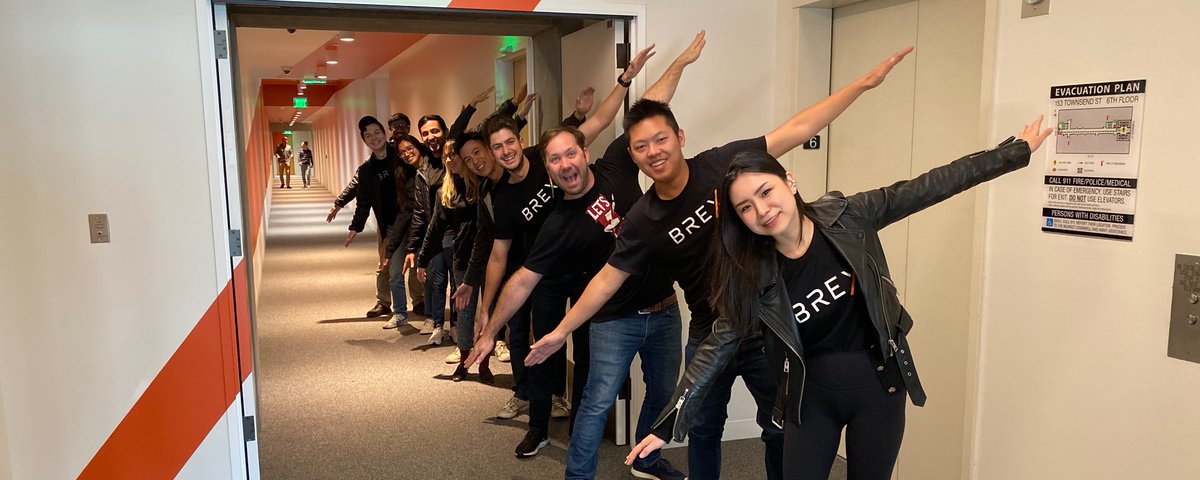
We’re launching @withaccend FOR BANKING today.
Accend helps banks turn financial/tax documents into structured financial models and credit insights from hours to minutes.
AI infrastructure built to modernize credit workflows in banks that have remained unchanged for decades.



Brandon Ballinger retweeted

Going Founder Mode On Cancer
centuryofbio.com/p/sid
Sid Sijbrandij is a generational founder. He founded and led GitLab, one of the largest remote companies in the world, from idea-stage startup to NASDAQ-listed software giant.
But in 2022, a six centimeter mass growing from his upper spine threatened to end all of that. He had cancer.
What happened next is nothing short of remarkable. Sid went founder mode on his care journey. In the years since, he's deployed cutting-edge genomics to profile his disease. Based on this data, he's developed a growing armamentarium of personalized therapies.
As a result, his disease is now undetectable.
A simplistic version of this story could be, “Wow! A brilliant billionaire seemingly cured his cancer. Good for him!”
But as I’ve gotten to know Sid, it’s become abundantly clear to me that there is more to the story than that.
In an in-depth profile for The Century of Biology, I explore Sid's journey and what this might mean for the future of cancer care.

Brandon Ballinger retweeted

We have confirmed the unit error in the government document, and I have issued a correction to my publisher. I have also made other updates based on the ongoing feedback. I detail these changes here: karendhao.com/20251217/empir…. Thank you to my readers for strengthening my book 🙏

Brandon Ballinger retweeted
A service that gives you personalized, actionable insights to your health will be the first break-out "consumer AI" app
1. The habit is there - ppl wear bands, rings, etc.
2. A "deadly sin" -- "Health" is basically a euphemism for "Vanity" in the mainstream. Also, health is status now.
3. Can more easily go to the edge - smaller models per below give you "good enough" new use cases

Proof small teams can win in AI:
We trained a health foundation model on 3M person-days of data, comparable in scale to the larger labs. It detects high blood pressure with 87% accuracy, alongside atrial flutter (70%), ME/CFS (81%), and sick sinus syndrome (87%).
The model was inspired by Yann LeCun's JEPA architecture, but adapted to multivariate irregular timeseries. We called it JETS: Joint Embedding for Time Series. The input is 63 channels of sensor data: heart rate, oxygen saturation, sleep stages, VO2Max, etc. The model was tested on both diagnosis and biomarker prediction tasks.
The “AI revolution” won’t be limited to chatbots, images, or code assistants. We think physiological ground truth is the next frontier for health superintelligence.
Brandon Ballinger retweeted

Give the gift of heart health. ❤️
This gift comes with a test for 100+ biomarkers, a doctor consult, and a personalized plan. empirical.health/program/gif…
