

Ex-Welder from the Valley - Wit or Lack Of mine - Current Forest Products Trader
Portland, OR
Joined November 2016
- Tweets10.8K
- Following675
- Followers660
- Likes43.2K




Chip Setzer retweeted

I am a member of the Norwegian Nobel Committee.
There are five of us. Five people, appointed by a parliament most of the planet could not find on a map, who decide, once a year, which human being the world has agreed to call good.
I know. I know. I think about it on the tram.
We meet in a building on Henrik Ibsens gate, a street named after a man who wrote almost exclusively about people discovering they are frauds, which nobody on the committee finds funny except me. There is a room with a long table and the portraits of the dead laureates looking down, Mandela, the Dalai Lama, a great many earnest men in spectacles, and one portrait we do not discuss, which is Kissinger, 1973, awarded while the bombs were still falling, after which two of our predecessors resigned and the satirist Tom Lehrer said political satire was now obsolete. We keep him on the wall. A reminder. Every family has the uncle.
It is October in Oslo, which means the sun gives up around four in the afternoon like a civil servant, and it rains the particular Norwegian rain that isn’t quite falling, just hanging there, judging you. I arrive with wet shoes. I always arrive with wet shoes. There is coffee, because this is Norway and there is always coffee, we drink more of it per person than almost anyone alive, and someone’s wife has sent kanelboller, the cinnamon buns, and we sit, five Norwegians, damp, caffeinated, sugared, and we decide the moral standing of the entire species.
Let me tell you how it actually works, because the world imagines a cathedral and it is, I promise you, a book club with a mandate.
287 nominations this year. 208 people, 79 organizations. Anyone can nominate, that’s the secret nobody understands: a professor, a parliamentarian, a former laureate, so the “nominee” list is meaningless, it’s a suggestion box, and every autumn some congressman nominates his own golden retriever and the press writes “SHORTLISTED.” Nobody is shortlisted. There is no short list the public ever sees. There is us, and the coffee, and the rain, and the portraits, and a Norwegian stubbornness that is older than the prize itself.
We read reports. The institute’s advisers write them, thick dull documents, and we argue. Our chairman told the BBC once that in the final meeting “there is a high temperature.” High temperature, for a Norwegian, means someone slightly raised an eyebrow and then apologized for it. We don’t do high temperature. We do a long silence, and then Kristin says “well,” and everyone knows exactly what “well” meant, and it’s settled. That’s our shouting. “Well.” You’d have to be raised here to hear the violence in it.
Now. This year. I will not say the name, because we never say the name, but you know the name.
A certain head of state wanted this prize the way a child wants a thing in a shop window, which is to say loudly, and in public, and with the full belief that wanting it was itself the argument. He said he deserved it. He said he’d ended eight wars, a number that grew most times he said it, like a fish. He had other heads of state phone us. Israel’s prime minister posted it on the internet, “Give him the Nobel.” The leaders of Cambodia and Pakistan announced they’d nominated him, as though announcing it were part of it, as though we tally mentions. A man flew around the globe collecting endorsements for a Norwegian committee the way you’d collect signatures for a petition to the council about a noisy dog.
And here, uff da, is the detail I treasure, the one that makes me smile into my coffee. The nomination deadline is the 31st of January. He took office on the 20th. So for all the phone calls, all the posts, all the gilded lobbying, the only nominations that could possibly count for this year’s prize were filed in the first eleven days of his term, before he had, by his own arithmetic, ended a single one of the eight wars. He campaigned all year for a prize whose window had shut while he was still hanging up his coat. We didn’t have to reject him. The calendar did. We just watched. Norwegians are very good at watching. We have long winters.
People think we sit there weighing his deeds. We don’t. That’s the thing I can’t make the world understand. We’re not grading his homework. We don’t owe anyone the prize for a ceasefire, however real, however loud the announcement. “He made peace” is not a sentence that ends in a medal, the way he believes it does, the way he believes every good thing ends in his name on it. The will of a dead Swede says the prize goes to whoever did the most for fraternity between nations. A dead Swede, I should add, who made his entire fortune inventing dynamite and selling arms, and spent his last years horrified at his own obituary, which called him a merchant of death, and so bought his way to immortality as a man of peace. The whole prize is one guilty arms dealer’s attempt to launder his name. We are, all of us, administering a dead man’s public relations. I find this clarifying. It keeps me humble. It should keep everyone humble, and it keeps, by my count, no one humble at all.
So who did we give it to?
An eighty-five-year-old woman. A judge. Born in Durban, under apartheid, granddaughter of a Tamil man who came to South Africa as indentured labor, a bus driver’s daughter from the poor Indian quarter, who became the first non-white woman to run a law practice in her province, who defended Mandela’s people when defending them was dangerous, who sat on the Rwanda tribunal and the court at the Hague, and who, at eighty-five, is right now a judge weighing whether a genocide is a genocide. When we told the world, our chairman said the rule of law “underpins the system we have set up to ensure peace,” and that “peace requires justice.” She wasn’t even in Oslo. She was in Nuremberg. In courtroom 600. The actual room where they tried the Nazis. You cannot stage that. God staged that, and God, it turns out, is a better satirist than any of us.
She did not phone us. She did not post. No prime minister demanded it for her on the internet. She had, as far as our deliberations are concerned, the one qualification the loud man could never manufacture, which is that she wanted the work and not the medal. The medal finds those people. It flees the ones who chase it. This is not a rule we wrote. It’s just the only pattern the hundred-odd years of our mistakes has ever shown.
The reaction from across the ocean was immediate. His spokesman posted that we “place politics over peace.” Ja. Perhaps. We’re five damp pensioners in a rainy city; of course it’s political, it was always political, it was political when we gave it to a sitting American president nine months into his first term for the promise of things he had not yet done, and we have been quietly embarrassed about that one for fifteen years, so believe me, we had a particular reason this year to prefer a woman with fifty years of verdicts behind her over a man with eight wars in front of him and a deadline already behind him.
Here is what he will never understand, the thing I’d tell him on the tram if he ever took one. We are the one prize he cannot buy, cannot post his way to, cannot have a friendly dictator phone in for him. Not because we’re incorruptible, nei, we’re as vain and wrong and human as the portraits on our wall. But because the entire point of the thing, the only power a small cold country’s book club has ever held, is that it goes to the person not performing the wanting. The moment you demand it, you’ve proven you don’t understand what it’s for, and proving that is itself the disqualification. He ran the most expensive campaign in the history of the prize and the campaign was the reason. He was never losing to Navi Pillay. He was losing to the concept.
It’s dark now. Four o’clock dark. The buns are gone. Kristin said “well” an hour ago and we all went home. I’m on the tram with my wet shoes, and somewhere across the water a very powerful man is explaining to a camera that the prize is rigged, that we’re corrupt, that he’ll win it next year, and he genuinely might, we’re only five idiots and we’ve been wrong before, Kissinger is still on the wall.
But not this year. This year an old woman in Nuremberg, in the room where the law once stared down the exact kind of man who thinks wanting a thing loudly enough should make it his, got a phone call she didn’t ask for.
That’s the job. We don’t reward the man who ends the war and announces it.
We reward the woman who spent fifty years deciding what a war was.
He’ll never see the difference. That’s rather the whole point of him.
Takk for i dag. I have to change trams.
Chip Setzer retweeted

The Portland Airport (PDX) expansion featuring mass timber is absolutely stunning. The wood takes a place could otherwise feel overly sterile/clinical and adds a sense of warmth and depth that is more inviting. – at Baltimore, MD


Chip Setzer retweeted
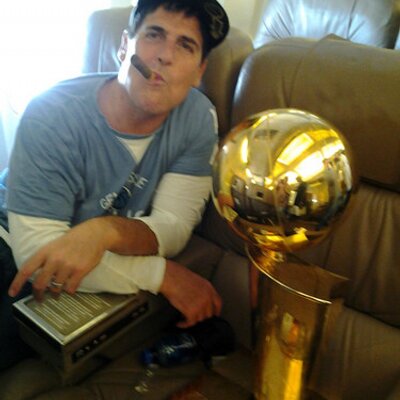
Share this with your governor. Share this with every politician you know. It will cut the healthcare costs in your state.
We started Cost Plus Drugs because the prescription drug market is too complicated, too opaque and too expensive.
Our model is simple: we show what we pay for a drug, add a transparent markup and pharmacy fee, and show the customer the price.
No games. No hidden spread.
And a large percentage of our customers already have insurance.
They come to us because our cash price is often lower than what their insurance plan asks them to pay.
That tells you something is wrong.
Here are five things Texas can do about it.
1. Let patients shop for cheaper drugs
If someone's insurance says a prescription costs $500, but they can buy the exact same drug for $100 cash, let them buy it for $100.
Then credit that $100 toward their deductible and out-of-pocket maximum wherever Texas has authority to do so.
Patients should be rewarded for saving themselves and their health plan money.
They shouldn't be punished for it.
That's how you create something healthcare desperately needs:
Price competition.
2. Standardize PBM and TPA contracts
Texas should require the state, cities, counties and school districts to use standardized model contracts and mandatory terms for PBMs and TPAs.
I've reviewed these contracts.
They routinely run hundreds of pages.
I've seen contracting packages longer than a thousand pages.
There is no human being—or group of human beings—on this planet who can stay awake and understand every provision in contracts that complicated.
I don't care how much coffee they drink.
I call it contractual terrorism.
The vendor only has to sneak a couple of tricks through hundreds of pages.
The employer has to find every one.
It can't.
I've developed a model PBM contract designed to eliminate the major tricks and hidden economics we've identified.
Texas can have it for free.
Use mine. Improve it. Open source it.
I don't care.
Just stop making every government entity negotiate these contracts from scratch.
3. Make the economics public
If taxpayers are paying the bill, taxpayers should know the price.
Pricing. Fees. Rebates. Guarantees. Pharmacy reimbursement. Affiliate compensation. Audit rights.
Make them public.
I'm not talking about patient information or legitimate security information.
I'm talking about the money.
You cannot have an efficient market without price discovery.
Without price discovery, you get information asymmetry.
And when one side knows dramatically more than the other, guess who wins?
Not taxpayers.
Not employers.
Not patients.
Open the contracts up and let competitors see what they have to beat.
That giant sucking sound you hear will be money moving away from healthcare conglomerates that are too big to care and back toward taxpayers, employers and patients.
In the immortal words of Charles Barkley:
I guarantee it.
4. Kill the gag clauses
PBM contracts are like Fight Club.
The number one rule of Fight Club is that you can't talk about Fight Club.
The number one rule of many PBM contracts seems to be that you can't talk about your PBM contract.
That's insane.
Let employers compare pricing, rebates, fees, guarantees and reimbursement terms.
Markets work better when buyers know what other buyers are paying.
5. Make enforcement hurt
If a healthcare company commits a serious violation, give them one mulligan.
But after a second material federal or Texas enforcement action within a defined period, make them ineligible for new Texas government contracts for a period of time.
Two strikes.
You're out.
Today, some of these companies can make billions, get caught, pay a fine and write it off more easily than I wrote off an NBA fine.
That's not deterrence.
That's a cost of doing business.
And Texas should spend more on enforcement.
If Texas spends $10 million auditing contracts and analyzing claims and prevents $100 million in unnecessary spending, that's not overhead.
That's a 10x return on investment
Chip Setzer retweeted

9 yrs ago, we recorded 3 tracks live at Paste Studios, & somehow this session went on to become the MOST watched Paste Session! Unbelievable! Thanks to everyone who watched. We’ll always be grateful for this one.
“Live at Paste” is avail to listen on all streaming services now 💜


Chip Setzer retweeted

When I was 13 years old, I told my dad I wanted to become a Major League Baseball player.
He looked at me and said,
"You can... but we need a plan."
So we sat down and made one.
First, we created the big vision.
Play in the Major Leagues.
Then we worked backwards.
We made a one-year plan.
At the time, I wanted to make a better travel team and play in bigger tournaments.
Then we made a season plan.
Then a monthly plan.
Then a weekly plan.
Then a daily plan.
Some days it was:
- 50 swings to left-center.
- 50 swings up the middle.
- 50 swings to right-center.
Other days it was:
- Dry swings.
- Push-ups.
- Sit-ups.
- Sprints.
- Up-downs.
Every week, we'd sit back down together.
We'd look at the plan.
Keep what was working.
Change what wasn't.
We repeated that process for years.
Eventually...
I played in the Major Leagues.
Because here's one thing I learned from my dad:
Dreams don't become reality because you have a vision.
They become reality because you have a plan.
Most players have goals.
Very few have a system for reaching them.
Thank you for reading,
Jermaine Curtis
P.S. - If you enjoyed this and thought it was helpful, please share it.
(This tells me you want more content like this.)
Chip Setzer retweeted

My son turns 19 today.
Some of you might know him as the 4-year-old who used to play 2K with me and had no idea the guy on the screen was his dad. Or maybe you saw him ball in OH in high school and figured he'd play at the next level like the other legacy kids, and he probably could have, but that's not what he wanted.
Michael spent his first year out of high school building a business in private aviation. No campus, no dorm. Just him, a computer, and a phone, dialing into an industry that doesn't routinely open doors for outsiders, let alone teenagers.
I was nervous when he decided to go this route, and I told him so. College is the safer path and I know what the startup world does to grown men twice his age. But the kid takes rejection better than I ever did, and I supported him in his choice. So, he's learning the business from scratch and holding his own on calls and at conferences where everybody else has 30 years on him.
My nerves wore off somewhere in the past 365. Now I mostly just watch and smile. Kid might not be a hooper, or a college student, but he does have IT.
Happy birthday, son. Keep going.
Chip Setzer retweeted

This should be the biggest story in the country right now.
Barksdale is the HQ for our B52 nuclear bombers, it's where Bush sheltered on 9/11, and the drones are reported as "far more sophisticated than anything seen in Ukraine ... and well beyond Iranian capabilities."


Chip Setzer retweeted

Robert Mueller died last night.
He was 81 years old. He had a wife who loved him for sixty years. He had two daughters, one of whom he met for the first time in Hawaii, in 1969, on a few hours of military leave, before he got back on the plane and returned to Vietnam. He had grandchildren. He had a faith he practiced quietly, without performance. He had, in the way of men who have seen real things and survived them, a quality that is increasingly rare and increasingly mocked in the country he spent his life serving.
He had integrity.
And tonight the President of the United States said good!
I have been sitting with that word for hours now. Good. One syllable. The thing you say when the coffee is hot or the traffic is moving. The thing a man who has never had to bury anyone, never had to sit in the specific silence of a room where someone is newly absent, reaches for when he wants the world to know he is satisfied. Good. The daughters are crying and the wife is alone in the house and good.
I want to speak directly to the Americans reading this. Not the political Americans. Just the human ones. The ones who have lost a father. The ones who know what it is to be in that first hour, when you keep forgetting and then remembering again, when ordinary objects become unbearable, when the world outside the window seems obscene in its indifference. I want to ask you, simply, to hold that feeling for a moment, and then to understand that the man you elected looked at it and typed a single word.
Good.
This is not a country having a bad day. I need you to understand that. Countries have bad days. Elections go wrong. Leaders disappoint. Institutions bend. But there is a different thing, a rarer and more terrible thing, that happens when the moral center of a place simply gives way. Not dramatically. Not with a single catastrophic event. But quietly, in increments, until one evening a president celebrates the death of an old man whose family is still warm with grief, and enough people find it acceptable that it becomes the weather. Just the weather.
That is what is happening. That is what has happened.
The world knows. From Tokyo to Oslo, from London to Buenos Aires, people are not angry at America tonight. Anger would mean there was still something to fight for, some remaining faith to be betrayed. What I see, in the reactions from everywhere that is not here, is something older and sadder than anger. It is the look people get when they have waited a long time for someone they love to find their way back, and have finally understood that they are not coming.
America is being grieved. Past tense, almost. The idea of it. The thing it represented to people who had nothing else to believe in, who came here with everything they owned in a single bag because they had heard, somehow, across an ocean, that this was the place where decency was written into the walls. That idea is not resting. It is not suspended. It is being buried, in real time, with 7,450 likes before dinner.
And the church said nothing.
Seventy million people have decided that this man, this specific man who has cheated everyone he has ever made a promise to, who has mocked the disabled and the dead and the grieving, who celebrated tonight while a family wept, is an instrument of God. The pastors who made that bargain did not just trade away their credibility. They traded away the thing that made them worth listening to in the first place. The cross they carry now is a costume. The faith they preach is a loyalty oath with scripture attached. When the history of American Christianity is written, this will be the chapter they skip at seminary.
Now I want to talk about the men who stand next to him.
Because this is the part that actually breaks my heart.
JD Vance is not a bad man. I have to say that, because it is true, and because the truth matters even now, especially now. Marco Rubio is not a bad man. Lindsey Graham is not a bad man. They are idiots, but not bad, as in BAD! These are men with mothers who raised them and children who love them and friends who remember who they were before all of this. They are not monsters. Monsters are simple. Monsters do not cost you anything emotionally because there is nothing in them to mourn.
These men are something more painful than monsters.
They are men who knew better, and know better still, and will get up tomorrow and do it again.
Every small compromise they made had a reason. Every moment they looked the other way had a justification that sounded, at the time, almost reasonable. And now they have arrived here, at a place where a president celebrates the death of an old man and they will find a way, on television, to say nothing that means anything, and they will go home to houses where children who carry their name are waiting, and they will say goodnight, and they will say nothing.
Their oldest friends are watching. The ones who knew Rubio when he still believed in something. Who knew Graham when he said, out loud, on the record, that this exact man would destroy the Republican Party and deserve it. Who sat next to Vance and thought here is someone worth knowing. Those friends are not angry tonight. They moved through anger a long time ago. What they feel now is the quiet, irrecoverable sadness of watching someone disappear while still being present. Of watching a person they loved choose, again and again, to become less.
That is what cowardice costs. Not the coward. The people who loved him.
And in the comments tonight, the followers celebrate. People who ten years ago brought casseroles to grieving neighbours. Who stood in the rain at gravesides and meant the words they said. Who told their children that we do not speak ill of the dead because the dead were someone's beloved. Those people are tonight typing gleeful things about a man whose daughters are not yet done crying. And they feel clean doing it. Righteous. Because somewhere along the way the thing they were given in exchange for their decency was the feeling of belonging to something, and that feeling is very hard to give up even when you can no longer remember what you gave for it.
When Trump is gone, they will still be here.
Standing in the silence where the noise used to be. Without the permission the crowd gave them. Without the pastor who told them their cruelty was holy. They will be alone with what they said and what they cheered and what they chose to become, and there will be no one left to tell them it was righteous.
That morning is coming.
Robert Mueller flew across the Pacific on military leave to hold his newborn daughter for a few hours before returning to the war. He came home. He buried his dead with honour. He served presidents of both parties because he understood that the institution was larger than any one man. He told his grandchildren that a lie is the worst thing a person can do, that a reputation once lost cannot be recovered, and he lived that, every day, in the quiet and unglamorous way of people who actually believe what they say.
He was the kind of American the world used to point to when it needed to believe the story was true.
He died last night. His wife is alone in their house in Georgetown. His daughters are learning what the world is without him in it. And somewhere in the particular hush that falls over a family in the first hours of loss, the most powerful man and the biggest loser on earth sent a message to say he was glad.
The world that loved what America was supposed to be is grieving tonight. Not for Robert Mueller only. For the country that produced him and then became this. For the distance between what was promised and what was delivered. For the suspicion, growing quieter and more certain with each passing month, that the America people believed in was always partly a story, and the story is over now, and there is nothing yet to replace it.
That is all it needed to be.
A man died. His family is broken open with grief.
That is all it needed to be.
Instead the President said good.
And the country that once stood for something looked away 🇺🇸
Gandalv / @Microinteracti1

Chip Setzer retweeted
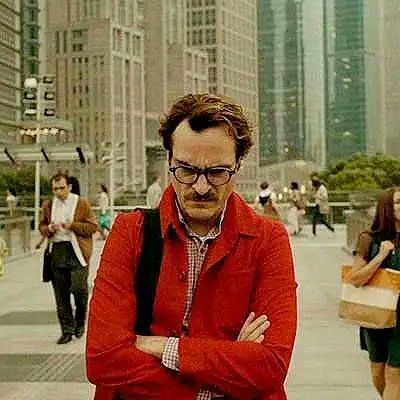
Watching Gary Oldman crack up at fart sounds dubbed into his own scenes and laughing until he’s in tears might just be the purest joy you’ll see all day.
Chip Setzer retweeted

“A few months after I moved to Paris, two of my friends from Diadema came to spend some time with me there. They had broken up with their wife and girlfriend and were sad, so I invited them, hoping the visit would help clear their minds. Great.
“They soon met other Brazilians, who played for a team like the seventh-division amateur league in the suburbs of Paris — all immigrants without proper papers.
“Every night, my two friends came home angry, complaining that they were constantly beaten up. So, I said: “I’ll go over there tomorrow to watch you play.” And I did.
“I arrived wearing a ninja hat, half disguised, and watched. The opponents were all dressed up, with their uniforms, equipment, water bottles, and a coach. And my friends’ team was wearing nothing: one in white shorts, another in purple, a third in yellow. The guys were hanging from the goalposts to warm up…. It was a mess.
At the end of the match, which they lost, I asked:
“Do you want me to train the team?”
I’ll never forget the guys’ smiles. They were so genuinely happy and excited, something I had only seen when I was a kid, when we would fly kites in Diadema.
I started training the guys every Monday, from 10 to midnight. Sometimes I would train them on Monday and play a Champions League match on Tuesday. I even remember scoring a goal against Barcelona on one of those days. I started loving Mondays. I couldn’t wait to be with those guys. We talked, I listened a lot, and I got to know each one’s stories and struggles.
“Some made money playing capoeira, others delivering items on motorbikes or washing dishes. All of them had a hard life, afraid because of their illegal status, with little hope that things would improve, but football brightened up and took the weight off their days.
On my first holidays, I went back to Brazil and went to talk to the ultimate crazy woman, my mother:
“Mum, can you make stuff for the boys there?”
“Say no more! She made travel polo shirts, tracksuits, match uniforms, training uniforms, everything in sizes S, M, L, XL….
I went back to Paris with 21 suitcases. The guys’ dedication grew along with their joy. We started training twice a week, then three times. We got promoted, and at the end of the season, I had a crazy idea. Another one. “I’m going to throw a gala for the team, just like PSG does for us every year.” I rented a castle-like nightclub where Matuidi had thrown his birthday party and started producing ours.
“I had already hired a guy who used to film for PSG to film our guys’ matches, too. I asked him to bring all the videos to my house so we could watch them and choose the best goals of the year, the top scorer, the goalkeeper’s best saves. Let’s show them on the big screen! Then I ordered trophies for the winners of each category. Hey, but what about the others? Plaques! We’re going to make little wooden-and-acrylic plaques with each one’s name on them. Everything was perfect. The day before, I called the guys together:
“Do you have a white button-up shirt and a basic black coat for tomorrow’s party?”
Nobody had one. OK, I will buy you some.
I went to the store myself and got some. Then I thought about their girlfriends and wives. I called the group again and gave each one some pocket money so that their SOs could buy a dress if they wanted.
The party night arrived.
And if I told you it was incredible, one of the most extraordinary emotional moments of my life, as cool as winning the Champions League, would you believe me?”
One of my best stories on @TPTFootball
theplayerstribune.com/posts/…

Chip Setzer retweeted

when he said it sells "better than crack", he didn't even have to explain any further 😂




Chip Setzer retweeted

The NBA is very concerned about the multiple arrests made as a result of the FBI’s sports gambling code.
Use code “MULTIPLEARRESTS” for a 30% Profit Boost on a three-leg parlay with Draft Kings, the official gambling partner of the NBA.

Chip Setzer retweeted

So grateful to @oregonfootball — they’ve brought us so much joy during our most difficult days. #GoDucks
