

NeuroAI postdoc @Stanford and Enigma, @AToliasLab, @NeuroAILab. Building a brain foundation model. Prev: Philosophy of neuroscience PhD.
Stanford, CA
Joined August 2008
- Tweets93
- Following662
- Followers351
- Likes527




Pinned Tweet
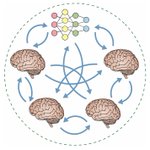
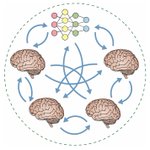
1/x Our new method, the Inter-Animal Transform Class (IATC), is a principled way to compare neural network models to the brain. It's the first to ensure both accurate brain activity predictions and specific identification of neural mechanisms.
Preprint: arxiv.org/abs/2510.02523

Imran Thobani retweeted

Stanford Digital Brain Project has launched! We're hoping to make a seriously useful model of the human brain. Please come join us! news.stanford.edu/stories/20…

Imran Thobani retweeted

Can’t wait to finally share what we’ve been up to! This has been both the most work and the most satisfying collaboration of my PhD yet, and we want to put it out there in the cleanest way possible. Paper and tokenizer dashboard will be out soon!

A little late, but very happy to announce that our work on building and evaluating tokenizers for neural (spiking) data, led by @fededagos , Alex Gilbert, and Susi Keller as a joint collaboration between @metamorphiclabs and @uni_tue , has been accepted as an Oral at Neurips 2026 Evaluations and Datasets track! 🧠 🔤
Was quite a lot of work but equally a lot of fun putting this together, incredibly rewarding to be regarded as a top 15 / ~4000 submissions!
We're excited to share a website and dashboard soon 🤓


Imran Thobani retweeted

Woooo it’s finally, finally out!! 1/3
nature.com/articles/s41467-0…


Pumped to share this work from my PhD, “A single computational objective drives specialization of streams in visual cortex”, just in time for the holidays! With the all star team @eshedmargalit , @cvnlab , @dyamins & @kalatwt
🔗:biorxiv.org/content/10.1101/…
🧵: 1/n…

Imran Thobani retweeted
The Contravariance theory for RSA (and CKA) is here.
Substack: danyamins.substack.com/p/con…
Gory mathematical details: arxiv.org/abs/2607.08561
TL;DR:
- Theiss @ScienceLukas @ermgrant @SaxeLab show RSA decomposes into a "task relevant core geometry" part and a "task irrelevant" nuisance component. The nuisances can dominate the RSA badly.
- The nuisances can be removed by projecting onto the privileged axes. Once you do that, full contravariance applies to the task-relevant core geometry RSA.
- In the hard-task condition, the three metrics (privileged axes, linear regression, and task-relevant RSA) all line up.

Imran Thobani retweeted

I'm presenting my first-year work, "Structured Early Activity Builds the Visual System's Initial Organization Before Naturalistic Experience," Wednesday, 9:30–11:45, at the Kimmel Center, Rosenthal Room.
Huge thanks to Dan (@dyamins) and Kalanit (@kalatwt) for advising this work!

Our Stanford NeuroAI Lab is presenting at the Cognitive Computational Neuroscience conference #CCN2026 🥳 Come say hi to us!!
@cogphilosopher @Norcal_Neuro @dyamins @KJedoui Yash @seojin_lee @ClionaODoherty @khai_loong_aw

Imran Thobani retweeted

Our Stanford NeuroAI Lab is presenting at the Cognitive Computational Neuroscience conference #CCN2026 🥳 Come say hi to us!!
@cogphilosopher @Norcal_Neuro @dyamins @KJedoui Yash @seojin_lee @ClionaODoherty @khai_loong_aw
Imran Thobani retweeted

Super excited to be back @CogCompNeuro
in NYU - this year presenting new exciting work from Project Simsom with Cameron Ellis, @dyamins and the team. Are we ready to build an AI model of infant development? We think so ... come check it out Thursday 10:30 E39 👶


I am presenting my current research investigating how perception and mental imagery might be implemented in a single visual architecture at #CCN2026 this morning at 9:30 in Poster session A. Come say hi at Poster A96. The Stanford NeuroAILab has a lot of exciting work here, so check it out below!
Our Stanford NeuroAI Lab is presenting at the Cognitive Computational Neuroscience conference #CCN2026 🥳 Come say hi to us!!
@cogphilosopher @Norcal_Neuro @dyamins @KJedoui Yash @seojin_lee @ClionaODoherty @khai_loong_aw
Imran Thobani retweeted

Actually @Grady_Booch, the convergence btwn deep neural networks & brains isn't a loose analogy -- in fact, they're the best *quantitative* predictors of large-scale brain data we have today.
Our theory explains this happens when networks are minimal solutions to hard tasks.
As a result, not all networks match the brain equally well, and has told us quite powerful things about the brain over the past decade, across brain areas & species.
Here's an incomplete sample I've compiled of what we learn about the brain from this AI-driven approach, that we didn't (and couldn't!) know before:



Imran Thobani retweeted

How well can you describe the feature selectivity of a vision neuron … with words? Interpretability has long borrowed from neuroscience — and maybe it can give back too! 🧵
Imran Thobani retweeted

🚀 Excited to share our CVPR 2026 Highlight paper! We introduce a new class of visual world models trained purely from visual experience, with a powerful physical prompting mechanism native to vision. This interface enables direct reasoning about the effects of physical interactions, emerging as a strong alternative to natural language-based prompting.
We show that from a single world model emerges a diverse range of zero-shot object understanding capabilities, including object discovery, 3D manipulation, articulated part understanding, and reasoning about physical influences between objects.
If you're attending CVPR, come by our poster on Friday, June 5 at 9:45 AM MST in ExHall A–F (#239)!
📖 Blog post: neuroailab.github.io/psi-web…
🤗 Code: huggingface.co/StanfordNeuro…
🎬 Results gallery: neuroailab.github.io/psi-web…
Imran Thobani retweeted

GPIC should be the new standard benchmark for generative modeling. Training 1 epoch on GPIC is the same cost as 100 epochs on ImageNet, but is a much better proxy for real-world problems. If you work in generative modeling, try GPIC for your next project!

1/ Introducing GPIC: a Giant Permissive Image Corpus and benchmark for visual generation!
🚀100M VLM-captioned image-text pairs for training
📊1M image-text pairs for benchmarking
🖼️~28 trillion pixels
🤗Centrally Hosted
✅Fully permissive for research + commercial use
Dataset, benchmark and models🧵👇
Co-led with @KyleSargentAI

Imran Thobani retweeted

🧠Introducing OmniMouse: One of the largest datasets in neuroscience ever assembled along with a systematic study of scaling properties of brain models
Co-led with🤩@pollytur1 @alexrgil14
3M neurons, >150B tokens from @AToliasLab @stanford, @alxecker @sinzlab @uniGoettingen
🧵
Excited to see LRAS out at ICLR! A single autoregressive model that efficiently handles diverse conditional prediction tasks — and I think the potential applications could extend well beyond computer vision, including brain modeling.

Excited to present our ICLR 2026 paper tomorrow: Unified 3D Scene Understanding Through Physical World Modeling.
Joint work with @KlemenKotar @Rahul_Venkatesh @jwhooglee @honglin_c @khai_loong_aw @dyamins.
We introduce 3WM, a foundation model for 3D understanding that treats depth, novel view synthesis, object motion, and geometric reasoning as different prompts to the same physical world model.
If you are at ICLR, come by our poster: Poster Session 6, Pavilion 4, Sat 3:15 PM.

4
363
Imran Thobani retweeted

1/9 How does the brain encode what we see? 👁️
We introduce "dual feature selectivity" – many 🐒 🐭 cortical neurons encode a continuum b/w activating & suppressing features
Blog✨enigma-brain.github.io/dual-…
🙏 co-lead Nikos Karantzas & @AToliasLab @naturecomputes @sinzlab & more


Imran Thobani retweeted
Today's best AI needs orders of magnitude more data than a human child to achieve visual competence.
We introduce the Zero-shot World Model (ZWM), an approach that substantially narrows this gap. Even when trained on the first-person experience of a single child, BabyZWM matches state-of-the-art models on diverse visual-cognitive tasks – with no task-specific training, i.e., zero-shot. 🧵

Imran Thobani retweeted

This is the strongest ephys evidence so far for a generative model in the brain that I know of.
Congratulations @WadiaVarun! Wonderful collaboration with @UeliRutishauser on science that could only be done in humans.
And please check out Fig. 5FG. This is new since biorxiv and really surprised me: the mean response to imagery and viewing is actually the same & there are many cells that respond only during imagery--challenging the idea that signal strength is what distinguishes reality from imagination.

1/8 Our preprint is now a peer-reviewed paper :) Big thanks to our reviewers who pushed us to examine our results more carefully and Olivier Wyart (headquarter.paris/) for the exquisite visual. science.org/doi/10.1126/scie…
