

Researchers and students from @Cambridge_Uni excited about the science and philosophy of #ageing and #longevity. Regular talks and socials.
Cambridge
Joined February 2020
- Tweets165
- Following410
- Followers527
- Likes185




Cambridge Society of Ageing & Longevity Research retweeted
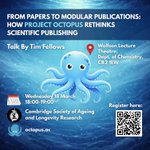
Let’s rethink how we publish.
Join our talk on Project Octopus, a UKRI‑funded platform making research more transparent, collaborative, and fair.
📅 18 Mar | ⌚ 6–7 PM | 📍 Yusuf Hamied Dept. of Chemistry
Register: forms.gle/d2Ds3K1PozS3xJYq8

Cambridge Society of Ageing & Longevity Research retweeted
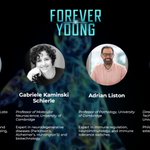
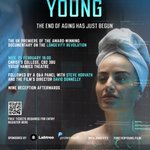
Countdown to #ForeverYoung UK Premiere
Join our post-screening Q&A with:
#David Donnelly #Steve Horvath #Gabriele Kaminski Schierle #Adrian Liston #Stephen Cave
25 February at 6pm Christ’s College, Cambridge @culongevity

Cambridge Society of Ageing & Longevity Research retweeted
Upcoming event from the Cambridge Society of Ageing and Longevity Research:
🧬In-Person Talk: Dr. Marco Di Antonio
“How Does Our DNA Change as We Age?”
🗓 Wed, 4 March 2026 | 18:00 📍Dept of Chemistry, Cambridge, CB2 1EW
🔗 Register: forms.gle/NiYKtSNSV4KoPrw58

Cambridge Society of Ageing & Longevity Research retweeted
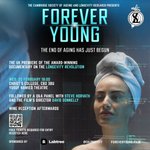
🎬 UK PREMIERE: Forever Young
Join us for an exclusive screening of Forever Young and a deep-dive Q&A with: Director David Donnelly &⏳ Dr. Steve Horvath
🗓 Wed, 25 Feb | 18:00 🎟 FREE (RSVP req)
📍Cambridge
Register: eventbrite.com/e/forever-you…
Follow @culongevity for updates!

Cambridge Society of Ageing & Longevity Research retweeted
We are honored to host Dr. Alex Cagan (@ATJCagan) for our next series talk!
Topic: "From Whales to Mice: What Somatic Evolution Tells Us About Ageing"
🗓 11 Feb, 6-7 PM 📍 Yusuf Hamied Dept of Chemistry, Cambridge
Register: forms.gle/maJhWqq2rLxm5Qmx8
#Longevity #Cambridge

Cambridge Society of Ageing & Longevity Research retweeted
Beyond Therapeutics: The Venture Landscape of Longevity & Regenerative Health
Join us for an academic‑led forum on the innovation, investment, and entrepreneurial ecosystem shaping the future of longevity.
📅 Wed,4 Feb | 5:45–6:45 PM| (No RSVP needed)
📍 Judge Business School

Cambridge Society of Ageing & Longevity Research retweeted

New study shows people with increased iron blood markers tend to have older epigenetic ages. Another piece of evidence that high iron levels probably accelerate aging… 1/n tinyurl.com/zhy72aun

Cambridge Society of Ageing & Longevity Research retweeted

New @LCP_Actuaries Longevity Report is out today!
Life expectancy has fallen significantly from pre-pandemic expectations, with a widening gap between the most and least deprived.
lcp.uk.com/pensions-benefits…
Cambridge Society of Ageing & Longevity Research retweeted

@culongevity – at Cambridge, England


Cambridge Society of Ageing & Longevity Research retweeted

I am going to present this work at the @embl in June: "The ageing genome: from mechanisms to disease".
Let's meet there and discuss changes of RNA biosynthesis during aging!
embl.org/about/info/course-a…


Our paper in @nature - a collaboration with @AkisPapantonis, Linda Partridge, @AntebiLab, @MuellerRom and Thomas Benzing - shows that the average RNA polymerase II speed increases with age. nature.com/articles/s41586-0…
nature.com/articles/d41586-0…

Cambridge Society of Ageing & Longevity Research retweeted

For anyone doing #flowcytometry, would you like to have a new protocol that reduces your #antibody costs by ~10-fold and also gives you higher quality data, with better signal-to-noise ratio?
Yes? Then read work by @olivertburton and @CarlyEWhyte. 1/6
currentprotocols.onlinelibra…

Cambridge Society of Ageing & Longevity Research retweeted

Do young and old protein molecules have the same probability to be degraded?
@ErikMcshane and @SelbachLab investigated this question in a beautiful & rigorous study: cell.com/cell/fulltext/S0092…

Cambridge Society of Ageing & Longevity Research retweeted
Epigenetic regulation of aging: implications for interventions of aging and diseases
nature.com/articles/s41392-0…

Cambridge Society of Ageing & Longevity Research retweeted

Glycans are the best biomarkers of age. I am saying that for years, but as an inventor and founder of GlycanAge I am of course biased. Now we see the same conclusion from an independent large study, which positions GlycanAge as the best personal navigator of healthy longevity.
Cambridge Society of Ageing & Longevity Research retweeted

The point of grad school or a postdoc is not to learn a bunch of techniques or get some high impact factor papers (though that WILL help you get to the next stage). The point is learn how to think like a scientist: how to plan/design experiments, how to write, how to analyse data
Cambridge Society of Ageing & Longevity Research retweeted

If you are looking for a #PhD studentship for 2023, we have a project available in the lab at the @BabrahamInst
Interested in stem cells, ageing and proteostasis and want to know more? Get in touch with me to discuss the project and funding options.

PHD OPPORTUNITY: ‘Investigating the contribution of ribosome dysfunction to the decreased proteostatic capacity of aged stem cells’ with Dr Ian McGough
Apply by 1st December
Find out more: babraham.ac.uk/work-and-stud…
#PhD #PhDVacancies #PhDStudents #PhDProjects @Ian_J_McGough

ALT Information copied from the Babraham Institute website next to a green image taken on a microscope
Cambridge Society of Ageing & Longevity Research retweeted

LEV Foundation is live! Here's a screenshot of my Facebook post from a moment ago.

Cambridge Society of Ageing & Longevity Research retweeted
Study in leading medical journal reports that age is a strong predictor of lifespan. Kid you not thelancet.com/journals/ebiom…
Cambridge Society of Ageing & Longevity Research retweeted

Every year I read a lot of grad school applications from accomplished people that don't give me the info I'm looking for. It feels like a major hidden curriculum thing. So here's (my opinion on) how to write a great Statement of Purpose/Research for a PhD program. 🧵 1/
Cambridge Society of Ageing & Longevity Research retweeted

This is an important tip⚠️
When interpreting #Bioinformatics results,don't cherry-pick your gene/pathway results!
Don't only discuss/analyze the specific hits that support your hypothesis
Let the data speak for what it is.
Here's hands-on advice on how to NOT overinterpret🧵
