

Boring Computer Use for legacy systems | CEO of @IlmenAI (Techstars ’24, Xoogler, ex-Microsoft) EB1-A Gateway between old systems and Super Intelligence.
San Mateo, CA
Joined May 2008
- Tweets13.7K
- Following3.4K
- Followers1.9K
- Likes39.4K





Pinned Tweet
In September 2026, we got second place with our Boring Computer Use in the "Enterprise Deployment Build Day" at @agihouse_org.
This time, we've showed how our UI Maps tech makes it easy to extract schema from the data grids of legacy systems of record, and then extract data according to that schema safely from the live production environment.
More here: danielko.medium.com/boring-c…
Watch the video below: – at Foster City, CA
Indeed, this is a very interesting observation. We did argue a lot in my previous company on whether to work with design partners or not. At some point, I started to believe it's the right thing to get design partners. They give you feedback, they can forgive your tech not working 100% in the beginning.
But to think of it, real customer, though being harsh in what they need, also gives you feedback, and while less forgiving, customer can also forgive early issues if overall your solution helps them.
Go figure.
Now, is there a difference in here for deeptech and non-deeptech startups, I don't know. What's your take? – at United Arab Emirates

My biggest takeaways from Rob Snyder, author of The Power of Pull:
1. Solving a pain point isn’t enough to get people to buy your product. Rob’s first startup checked all the classic boxes: hair-on-fire problem, a differentiated solution, and design partners using it daily. Yet he still spent two years pivoting aimlessly. Every prospect agreed it solved real problems, but none bought.
2. Rob’s "PULL" framework identifies four conditions that drive a buying decision: The buyer has a Project on their to-do list, and a reason it’s Unavoidable right now. They also have a List of options they’ve considered, each with Limitations that leave them stuck. That person is a “coiled spring,” desperate to find a product to buy.
3. The right cold outreach message needs to be interesting, not persuasive. Its only job is to get someone to take the call. Rob calls this “founder magic” outreach. One startup’s entire message was: “Hey, Snoop Dogg invested in us, and I thought you’d find it interesting too. Would you be open to chat?” No pain points, no value propositions, no personalization. Just something that gets a conversation. Rob’s LinkedIn benchmarks are 20 requests a day, 30% to 40% accepted, 30% to 50% of those replying, and most saying yes.
4. Design partners are a trap. Nearly every time, the partner buys into your vision, hands you a pile of feedback, and never buys. Then you realize “all of their feedback was just like them playing Steve Jobs.” The people who have something important to get done don’t want to be design partners. They just want it done. Offering a partnership is “a negative signal to people who actually have pull, and a positive signal to people who don’t.”
5. Pull belongs to a specific person, not to a company. A common founder mistake is to say “we sell to SpaceX” or “we sell to mid-market private equity firms.” In practice, you’re selling to the head of legal at SpaceX, who has a particular project on her to-do list she can’t solve with her current team. The company doesn’t have pull. She does.
6. The signal of real pull in a meeting isn’t just enthusiasm—it’s someone leaning in and asking how to move forward. “Wow, that’s amazing, totally the future of our industry, I can see how that would save us a ton of money” is not pull. That’s a polite exit. What Rob looks for is a “pull-shaped action”: “Wait, you can do that? How do we get started? Does the product exist yet?” Before the product even existed, someone in pharma told one founder, “If you can do that, I will pay you right now.”
7. Run the first sales call like a detective, not a pitcher. Rob’s opening question is always some version of “I’m sure you get a lot of people reaching out. Why did you take this call?” The best-case outcome: they fill out the PULL framework for you unprompted. They tell you exactly what they’re trying to do, why now, and what they’ve already tried.
8. When a call goes lukewarm, throw the Hail Mary. Ask, “Is there anything on your to-do list that you would pay me to do right now?” A team selling applicant tracking software to governments got a lukewarm reaction but then learned the buyer would pay for help with job descriptions. That became their first contract. When founders are truly stuck, Rob recommends going into “goblin mode,” a burst of slightly crazy effort to get in front of customers, like the founder whose parents went door to door to dental offices for him.
9. Rob calls "The Case Study Factory" his most important idea. The job is to find one type of customer who says 'hell yes' before and after buying, then repeat that success through pipeline, sales, and delivery. This customer forms your repeatable case study. A startup finds one repeatable case study and then repeats it a million times. To grow as fast as possible, borrow the theory of constraints from manufacturing: find the bottleneck in the process of repeating that case study and treat it as the only thing that matters until it’s fixed.
Good thread: early revenue is a sign of founder being able to sell, but not necessarily product-market-fit. – at Dubai, United Arab Emirates

We've integrated Codex CLI into our experimental "Boring Computer Use" harness at @IlmenAI back in February-March timeframe precisely for that.
It has a separate repo that can build the rest of the harness using Codex CLI :)

Introducing Octopus OS, a reinvented agent harness.
Agents can edit their own harness in the middle of a task, on their own. Unlike Harness² and similar projects, self-improvement isn’t a separate stage bolted onto the agent. The whole architecture is just the environment they work in.
Over 8 months, chasing self-improvement that feels truly native, I dropped the usual agent loop entirely and designed a new architecture that works a lot like a real operating system, with a 45k-line Rust kernel holding it all together. The system state lives in JSON files: goals act as real environments where agents work, along with inputs, outputs, and custom triggers they respond to. Agents can edit all of it while they work inside.
It was also built as a product from day one, not a research demo. The full desktop app took 3 months, built on top of the Codex source.
The client already works, and you can use it today like any other agent, Codex included.
And it’s open source.
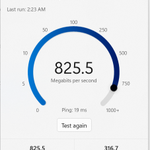
Checked out new Speed Test on my @Lenovo
X1 Fold (first ever foldable laptop, made in 2020) on Windows 11 26H2. Going strong!
@windowsinsider you rock guys! Special thanks to @JenMsft :) – at United Arab Emirates

Interesting

AI agents are writing more code. How can developers ensure that code is correct?
Microsoft Research’s Proof-Driven Development (PDD) Kit explores a more rigorous approach: it translates a developer’s intent into a formal specification, then uses formal verification to prove that generated code meets it.
PDD Kit works with Verus for Rust and is integrated with @GitHubNext’s Chopin, bringing formal methods into an AI-assisted development workflow for teams.
See the work in action at @github Universe, Oct. 28–29, 2026.
Big – at Dubai, United Arab Emirates

I'm excited to launch Relational Capital, a $50m solo GP fund.
I spent the last 8 years as a founder, building @usekojo into the largest US construction procurement platform.
Now I'm backing founders at the earliest stages with $1m-$5m checks.
An abundant future lies ahead 🇺🇸

1/
Why is reliable computer use still so hard, even with increasingly capable AI models?
One reason: knowing the steps of a task is not the same as understanding how to perform it.
Lucy Suchman explored this problem decades ago in Plans and Situated Actions. Her work is surprisingly relevant to today's AI agents.

5/
This is one of the problems we're exploring at @IlmenAI.
Instead of treating human interventions as exceptions to automation, what if we treated them as opportunities to learn how the business actually operates?
Not just what the human clicked, but what they noticed, why they intervened, and how they knew the problem was resolved.
6/
For anyone building AI agents for real-world enterprise software, I highly recommend Suchman's work.
Read it with one question in mind:
What must an agent understand about a situation before an instruction becomes usable?
Human–Machine Reconfigurations: Plans and Situated Actions
cambridge.org/core/books/hum…

Daniel Kornev retweeted

Introducing Flint, @Recursive_SI’s first model: a fast local coding model built with our automated research system, the Eureka Machine.
• Best-in-class fast local coding
• Up to 2x faster than comparable models: 125+ tokens/sec on a MacBook Pro, 150+ on RTX Spark
• Built from scratch in under 4 months
Private, unmetered intelligence on your own machine. Open weights available now on @huggingface, run it locally on your favorite framework or try it for free on @opencode or @pidotdev.
LOL. True story.
We have two domains:
Ilmen.ai
&
Ilmen.si
Go figure 😀 – at Dubai, United Arab Emirates


Daniel Kornev retweeted

Windows 11 Copilot+ PCs are set to gain new on-device AI capabilities in the coming months, as announced at Microsoft's Windows event a couple weeks back.
windowscentral.com/microsoft…
Exclusive to Copilot+ PCs, Copilot will be able to understand context, take action, and lean on local AI models without always reaching out to the cloud, though it will still be able to do so when necessary.
I think this is Microsoft's natural evolution of Copilot+ PCs. It's been a while since Microsoft last built any experiences that lean on the NPU, and it sounds like Hybrid Intelligence inside Copilot will be the first set of AI features to do this (at least in part) in over a year.
We already know that Microsoft is slowly moving away from Copilot+ PC as a marketing brand, and that makes me wonder if "Hybrid intelligence" is the new "AI PC" identity that Microsoft wants to get in front of buyers looking for their next PC.

Daniel Kornev retweeted

Hardware Partner Spotlight: NVIDIA joins The @Google Gemma Hardware Hackathon @ AGI House!
Build with Gemma. Run it locally on @NVIDIARobotics Jetson. Bring your next edge or physical AI idea to life.
On October 24, join 100 selected builders, the @GoogleDeepMind Gemma team, and hardware partners for a full day of hands-on building—from camera assistants and intelligent edge devices to robotics applications.
🤖 NVIDIA hardware available to borrow during the hackathon:
• 15 Jetson Orin Nano Super developer kits, each with an NVMe SSD
• 15 Jetson Thor developer kits
These kits are available for on-site development and must be returned after the event. Availability is limited.
🏆NVIDIA hardware awards are also in the works—stay tuned for the final prize details.
Every project must use a Gemma-based model and run entirely on-device. Bring your laptop, your ideas, and your robot if you have one.
Compete for a share of $45,000 in cash prizes, plus partner hardware awards.
📅 Saturday, October 24, 2026 · 10 AM–5 PM PT
📍AGI House · Hillsborough, CA
Hosted by Google DeepMind and AGI House
Apply to build → agihouse.org/events/the-goog…
#Gemma #NVIDIA #Jetson #EdgeAI #PhysicalAI #AGIHouse

Daniel Kornev retweeted

Patrolling the Mojave isn't the only thing making us wish today. Happy 16th birthday, #Fallout: New Vegas!
Join us, @Obsidian and Victor in celebrating Couriers who just won't stay buried 🤠

ALT An image from Fallout: New Vegas showing dialogue with Victor wearing a party hat outside the Prospector Saloon. Dialogue options read: Happy 16th birthday, Victor! [Old World Gourmet] Stuff face with birthday cake [Wild Wasteland] Roughly how many times have you dug me out of the grave by now?
Daniel Kornev retweeted

new paper from USC, UC Irvine and Intel Labs on reusing a small model's prefill inside a big one: the small model reads the prompt, a linear map translates its KV cache into the big model's format, and the big model recomputes only part of the positions
Qwen3-0.6B prefilling for Qwen3-14B (23x apart in size) with 30% of positions recomputed: GSM8K goes from 71.6% with the map alone to 90.2%, against 95.1% for the 14B on its own, and prefill runs up to 3.04x faster
the map alone can leave the big model worse off than the small one: Llama 3.1 8B into Llama 3.3 70B scores 81.0%, below the 8B by itself (82.7%), and recomputing 40% of positions brings it to 92.0%
section 2.2 is worth reading on its own: choosing which positions to recompute by attention score does worse than choosing at random, because the 14B puts 72% of its attention on the start token and 24% on the chat template and instruction, which leaves 4% for the actual question (at a 20% budget the attention-based selector doesn't pick a single question token)
so attention weight mostly tells you where the sink and the template are
arxiv.org/abs/2610.11358


