









de_voux retweeted

Just 34 minutes before its cameras were turned off in 1990, Voyager 1 captured this iconic view of Earth – a pale blue dot in the vastness of space.
Today, Voyager 1 is one light-day away from Earth. A little piece of our planet journeying through interstellar space. 🌎💙

ALT Earth is seen in the vastness of space as a single, bright blue dot in the middle of a fuzzy, white sun ray. Other rays of light are scattered across the image. Credit: NASA
de_voux retweeted
True

Elon Musk and Grimes found each other because they both independently made the same obscure joke about an AI thought experiment called Roko's Basilisk. Neither of them knew the other had made it. When they discovered the coincidence, Elon DM'd her. Their first real conversation lasted four hours.
Roko's Basilisk is a philosophical thought experiment about a future AI that punishes anyone who didn't help create it. It's the kind of idea that maybe a few thousand people on Earth find interesting, let alone funny. Elon had tweeted a joke about it. Grimes had made a music video referencing it. Neither one was aware of the other's version.
When someone pointed out the overlap, Elon messaged her. The conversation that followed wasn't flirting. It was two people discovering that their brains worked in the same strange way. AI, simulation theory, the future of consciousness, music as mathematics. Grimes later said she had never met anyone who could follow her thoughts at the speed she was thinking them.
Their first public appearance together was the 2018 Met Gala. They arrived together and the internet lost its mind because nobody could figure out how the richest man in tech and an experimental musician from Montreal ended up in the same universe.
The answer was simpler than anyone expected. They were both the kind of person who makes jokes about obscure AI philosophy at 2am and thinks that's normal. They didn't find each other through fame or fortune. They found each other through a thought experiment that maybe a thousand other people on Earth would have understood.
The rarest kind of connection isn't physical attraction. It's finding someone whose mind works like yours in a world that doesn't understand either of you.
de_voux retweeted

After traveling for 50 years at ~38,000mph, Voyager 1 is now officially one light-day away from Earth.
That’s .064% of the distance to the nearest star. After 50 years at 50x the speed of sound.
Space is big.
de_voux retweeted
I placed a camera right next to the launch pad to capture starship’s liftoff in slow motion.
Can you spot the moon?
de_voux retweeted
Slowly at first, then rapid acceleration

All 15 Starship Launches
Flight 1: Apr 20 2023
Flight 2: Nov 18 2023
Flight 3: Mar 14 2024
Flight 4: Jun 6 2024
Flight 5: Oct 13 2024
Flight 6: Nov 19 2024
Flight 7: Jan 16 2025
Flight 8: Mar 6 2025
Flight 9: May 27 2025
Flight 10: Aug 26 2025
Flight 11: Oct 13 2025
Flight 12: May 22 2026
Flight 13: Jul 24 2026
Flight 14: Sep 28 2026
Flight 15: Nov 13 2026
de_voux retweeted

All 15 Starship Launches
Flight 1: Apr 20 2023
Flight 2: Nov 18 2023
Flight 3: Mar 14 2024
Flight 4: Jun 6 2024
Flight 5: Oct 13 2024
Flight 6: Nov 19 2024
Flight 7: Jan 16 2025
Flight 8: Mar 6 2025
Flight 9: May 27 2025
Flight 10: Aug 26 2025
Flight 11: Oct 13 2025
Flight 12: May 22 2026
Flight 13: Jul 24 2026
Flight 14: Sep 28 2026
Flight 15: Nov 13 2026
de_voux retweeted
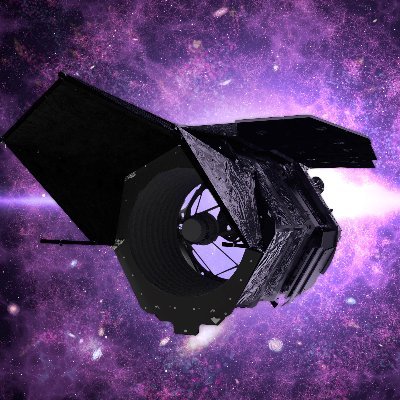
Here we go! 🎶
Roman’s instruments are officially *in sync* and gearing up for exciting science. Now Roman will conduct a weekslong dress rehearsal, capturing and refining images of the cosmos.
go.nasa.gov/4zKH4dr


de_voux retweeted

🌍Incredible, I never thought of our solar system as a pressurized bubble of charged particles before.

The Sun is not travelling through empty space. As it orbits the Milky Way, it moves through the local interstellar medium, while continuously releasing a stream of charged particles called the solar wind. This magnetized wind pushes against the surrounding interstellar environment, creating an enormous bubble around the Sun and its planets: the heliosphere.
The solar wind travels outward at hundreds of kilometres per second. Far beyond Neptune, it encounters the pressure of the interstellar medium and slows abruptly at the termination shock. It then flows through a turbulent region called the heliosheath, before reaching the heliopause, where the solar wind's outward pressure is balanced by the surrounding interstellar pressure. Beyond this boundary, neutral hydrogen can accumulate in a region known as the hydrogen wall. The heliosphere may also have an extended tail, although its precise shape remains an active area of research.
Only two spacecraft have directly crossed the heliopause. Voyager 1 crossed in August 2012 at approximately 122 AU, and Voyager 2 followed in November 2018 at approximately 119 AU. By November 2026, they had travelled roughly 172 AU and 144 AU from the Sun, respectively. Their measurements provide our first direct observations of the boundary between the Sun's plasma environment and interstellar space.
The heliosphere does not stop every galactic cosmic ray, but it does reduce the number reaching the inner Solar System. It is a dynamic magnetic environment that helps shape the radiation conditions around our planetary neighbourhood.
de_voux retweeted
Just did a round table review with the Grok @Bot engineering team.
Fixes are being implemented overnight and you should notice a dramatic improvement by tomorrow. If not, reply to this post and we will address any remaining issues right away.

de_voux retweeted
The lights of Dallas, Austin and San Antonio surround dark rural patches in central Texas where millions of bats fly free at dusk! This was my southeast view from ISS while @BabakTafreshi observed on Earth at Frio caves, for our NatGeo project From Above & Under.

de_voux retweeted

Captured in the stark light of a February 1971 afternoon, this frame from Alan Shepard’s 4 o’clock panoramic sequence looks south across the Fra Mauro highlands toward the right flank and aft section of the Apollo 14 Lunar Module *Antares*.
What appears at first glance to be a simple engineering portrait is actually a rare, close-up record of a machine that has just done something extraordinary: it has landed on another world. The foil-and-skin panels covering the aft equipment bay show the thin, almost fragile construction of the descent stage—lightweight by necessity, yet still bearing the faint buckling and creasing of the stresses of launch, coast, and touchdown.
Below the spacecraft, the lunar surface itself tells the story of the final moments of flight:
- Directly beneath and just behind the engine bell, the regolith has been scoured and thrown outward by the descent engine’s exhaust, leaving a pale, disturbed patch that marks the exact place *Antares* hovered before settling.
- Near the rear (–Z) footpad, a long scrape records the path of the landing probe as it dragged across the surface during the last seconds of flight.
- The right (+Y) footpad has punched into the soft rim of a small crater, causing the entire vehicle to slide a short distance northward—a motion later confirmed by the position of the opposite (–Y) footpad.
The Reaction Control System plume deflectors show the dark charring of repeated firings, while broad strips of gold tape hold the black thermal blankets in place across the descent stage—practical, almost improvised fixes that kept the spacecraft’s systems within temperature limits on the airless plain.
Together, the image captures both the precision of the landing and the raw, improvised reality of the hardware that made it possible.
Image credit: NASA

de_voux retweeted
It's the final countdown 🎶
We're one step closer to Roman's first images! The observatory is now fully functional and the team is performing their final checks and calibrations before starting science observations.
go.nasa.gov/4A9menV

de_voux retweeted
Oof, this is the largest telescope I’ve ever mounted in my observatory. Who needs a gym membership?
I’m custom-rigging this scope to get my most detailed looks at planets and our moon to date. Photos to come!
