
MS/PhD @ Seoul National University.
Joined February 2023
- Tweets294
- Following263
- Followers252
- Likes3.9K



Guijin Son retweeted

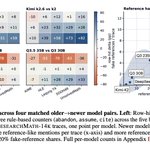
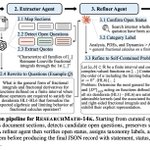
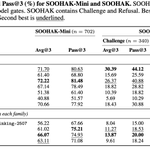
ResearchMath-14K: 14K open research-level math problems
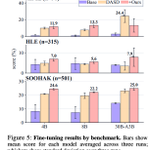
Curated by agents from academic sources, with 220K reasoning traces. Fine-tuning filtered attempts improves Qwen3 by 9.2 points. Newer models also make 5x more fake references.

Guijin Son retweeted

🇰🇷Despite rapid progress in AI agent research, Korean agentic benchmarks remain largely absent!
To narrow this gap, we release K-BrowseComp, a benchmark that requires searching across Korean websites and Korean-language content.
arxiv.org/abs/2606.02404

Guijin Son retweeted

Huge thanks to @minseokwak103 , @dongseok1220 , @gson_AI , @alan_ritter , and @jhkim940331 for their support in writing this work!
We present LaRA (Layer-wise Representation Analysis), a framework for detecting data contamination in RL post-trained LLMs by examining how internal representations change across layers rather than relying on output-level signals such as likelihood or entropy.
huggingface.co/papers/2605.2…

Guijin Son retweeted

We are announcing an opportunity for paid question writers to contribute to a new PhD-level math benchmark. Accepted contributors will be paid per question and will be invited to be authors on the resulting dataset paper. Check out the link below for more information!

Guijin Son retweeted

People are really eager to use AIs "to accelerate science" (whatever that means). Designing meaningful tests tailored to proposed use-cases is a lot of work, but it's work I'm quite excited about.
Bottom line: Current models aren't usable at identifying major flaws in papers.

#NLProc
AI Co-Scientists 🤖 can generate ideas, but can they spot mistakes? (not yet! 🚫)
In my recent paper, we introduce SPOT, a dataset of STEM manuscripts (math, materials science, chemistry, physics, etc), annotated with real errors.
SOTA models like o3, gemini-2.5-pro also suffer greatly!
arxiv.org/abs/2505.11855

Guijin Son retweeted
I'll also be presenting our KMMLU paper with @gson_AI! It is one of the most widely adopted benchmarks used by companies such as @official_naver @LG_AI_Research @kakaocorpglobal that develop Korean LLMs.
📅 Session C: Wednesday April 30th, 14:00-15:30
xitter.gq/gson_AI/status/1768301…
🌟 KMMLU 🌟This benchmark replicates the methodology that produced MMLU, but using examinations common in Korea. We manually annotate a subset of the questions as to whether they require Korea-specific knowledge and also designate a KMMLU-Hard subset that current models find especially challenging.
We benchmark 26 openly available and proprietary models including: Qwen, Yi, Llama-2, Polyglot-Ko, GPT-3.5/4, Gemini-Pro and HyperCLOVA X. To our surprise GPT-4 outperforms all. However, when limited questions requiring knowledge specific to Korea HyperCLOVA X seems to be better. 🎖️
Paper: arxiv.org/abs/2402.11548
Dataset: huggingface.co/datasets/HAER…


Guijin Son retweeted

+ GRPO is Poor and for the GPU-Rich +
-------------------------------
*A specific GRPO vs SFT video will be out next week, but I'm putting initial results here*
I trained Llama 3.2 1B on GSM8K with:
1. SFT
2. ORPO
3. GRPO
For SFT and ORPO, I generated training data using Llama 3.2 1B by taking 8x samples per training problem and retaining only those that are correct (as well as some incorrect for ORPO pairs).
For GRPO I also set sampling to 8x per training example.
I'm attaching the graphs... here's what the columns are:
1. SFT_1 is one round of fine-tuning on correct answers filtered from sampling.
2. ORPO_1 is one round of ORPO on correct-incorrect pairs from sampling.
3. SFT_1_SFT_2 takes the SFT_1 model to generate 8x samples per training row (and these are better samples!), and then uses those samples to do a second round of SFT.
4. SFT_1_ORPO_2 does the same as #3 but uses ORPO pairs for the second round.
5. GRPO does 8x sampling and uses reward functions for correctness and format. GRPO was run past toward reward flatlining (which was about 3k rows of training data, out of 7k max available). {Side note: SFT on data sampled from a few thousand rows shows an improvement.}
In short:
1. Nothing improves pass@k by much. Basically, whatever answers the model can reach, the base instruct model can already reach.
2. SFT and ORPO improve maj@k, which is the percentage of test examples that are right in 5/8 or more cases. Note: if you're only measuring single attempt performance (pass@1), performance will improve, but it is because maj@k improves, not because pass@k is improving.
3. GRPO makes pass@k and maj@k worse in this case. I'm not saying that necessarily generalises. Most likely GRPO is improving formatting at the expense of correctness [See graph attached for tensor board logs of correctness and formatting rewards. Formatting indeed improves, correctness improves but that encompasses correctness because of formatting imrpovements].
Now, why does GRPO seem to improve performance in a lot of quick tests?
- MEASUREMENT NUANCE: You can get a lot of apparent improvement in correctness just through formatting improvements. Once you impose a format requirement, answers that were correct are marked wrong (making the start of RL look bad). As formatting improves through RL (whatever the method), this results in more answers being marked correct, and so you see an apparent improvement. [Once you mitigate this by using multiple correctness checks, including output vs ground truth checks using LLM as judge, this source of improvement goes away].
Why does GRPO work for DeepSeek?
- I don't entirely know.
- One hypothesis is that DeepSeek v3 is just bigger and more powerful, and has base pre-training patterns engrained that allow improved answers to be iteratively elicited.
- Another (not mutually exclusive) hypothesis is that the breadth of learning in RL is quite narrow, i.e. you can make a model (provided big enough) recursively improve provided the domain is sufficiently narrow and the model has encoded relevant pre-training data. Essentially, once you have defined a benchmark for an LLM, it's possible to perform well on a benchmark (given a large enough model and sufficient training examples - although generating training examples may not be trivial). This idea is somewhat supported by an earlier RL paper with Ilya on it where it was necessary to pre-train on a large maths split before getting outcome and process rewards models to achieve improvements.
What should the GPU-poor do?
1. Use the strongest available model to generate reasibubg answers
2. Verify and keep the correct answers
3. Do SFT on those correct answers
There are now a few directions of evidence for this:
a. Deepseek's R1 paper explicitly says that smaller models were stronger when trained on traces from bigger models than when they underwent RL themselves.
b. The recent s1 paper from Stanford shows that having traces from a strong model + SFT can result in large (in domain) reasoning boosts.
What if R1 is bad at your dataset/application?
- Probably still you should sample R1 (or another reasoning model that reveals traces) and use verified samples for SFT.
- Doing loops of RL is best when there are no existing models that can reach correct answers (and, as you can see from these graphs, with weaker models, you may not be able to recursively improve and increase pass@k). If you want to push the frontier, possibly your base model needs a lot of pre-training data for that domain AND/OR you need to do domain-specific pre-training.
+ Should DeepSeek have just done SFT with rejection sampling? +
GRPO is quite sparse as a reward if you just look at correctness and format (which the DeepSeek paper says). This sparsity makes it wasteful (because many backward passes may not have any signal, particularly for harder problems), and the use of multiple summed rewards can result the model focusing more on one than the other (perhaps what is happening above).
So, if DeepSeek could elicit improvements via format+correctness on GRPO, I'm guessing they could have done so via rejection sampling and SFT. With SFT you can be very sample efficient - whether that's with SFT or ORPO (or the backprop part of GRPO).
Granted - and thanks to @willcb for chatting a little on this - perhaps you can make the rewards functions more continuous with LLMs and other tools and kind of "guide" the model to better answers. Perhaps this is what o1/3 is doing.
That's it, the video will post next week - and you can get notified either here or if you find Trelis Research on YouTube or Substack.
btw, cheers to @willcb , @UnslothAI and @huggingface for the nice work on GRPO scripts/libraries.
P.S. The definition of GRPO includes sampling, which is confusing because ORPO and DPO don't (PPO does, but the "sampling" is represented via a model). It's more clear (although a bit imprecise) if we describe the comparison as rejection sampling + GRPO vs rejection sampling + SFT vs rejection sampling + ORPO/DPO.


++ Reinforcement Learning for LLMs in 2025 ++
===
How to elicit improved reasoning from models?
- Is reasoning innately in pre-training datasets and just needs the right examples to be brought out?
- Why does GPRO make sense, as opposed to Supervised Fine-tuning with the right examples?
My general sense is that GRPO (or PPO or ORPO) may not offer all that much benefit over SFT. In fact, they generally are more complex. What matters is how the fine-tuning data is created.
This is the first video in a series on Reinforcement Learning.
Maybe you’re looking to directly dig into GRPO - but I think that’s the wrong way to look at things.
A better - ground up approach - is to:
a) start with careful performance measurement (there are gotchas even around how one marks answers correct or not),
b) then carefully think about data preparation,
c) then do Supervised Fine-tuning, and only then
d) start to look at preference and reward methods.
Definitely leave comments if i) you see things that can be improved or I’ve made mistakes on, or ii) you have a specific reasoning dataset in mind that would be useful to see a demo on in the future.
---
+ Timestamps
---
00:00 Introduction to Reinforcement Learning
00:56 Practical Programming for RL
01:59 Setting Up the Environment
02:40 Cloning and Configuring Repositories
04:10 Understanding the Dataset
05:03 Supervised Fine Tuning and Reinforcement Learning
08:54 Downloading and Preparing the Dataset
09:09 Installing Necessary Libraries
13:58 Implementing the Answer Checker
22:30 Running Inference and Evaluating Performance
28:53 Analyzing Results and Setting Baselines
31:03 Batch Inference Script Breakdown
38:00 Preparing for Reinforcement Learning
38:57 Understanding Think Tags in Dataset Generation
39:36 Improving Performance with Supervised Fine Tuning
41:09 Creating and Filtering the Dataset
41:20 Introduction to Preference Fine Tuning
42:21 Generating ORPO Pairs
46:03 Training the Model with Supervised Fine Tuning
49:26 Setting Up and Running the Training Script
50:47 Evaluating the Model's Performance
01:02:35 Exploring ORPO Training
01:07:49 Theory and History of Reinforcement Learning
01:13:54 Final Evaluation and Insights
Guijin Son retweeted

lessons learned: (1) *capable* (small) base models are good enough to start rl, where (2) reasoning patterns *tailored to each task* just emerge, e.g. self-verification for countdown and decomposition for multiplication. will keep working on demystifying long cot, stay tuned🫡

We reproduced DeepSeek R1-Zero in the CountDown game, and it just works
Through RL, the 3B base LM develops self-verification and search abilities all on its own
You can experience the Ahah moment yourself for < $30
Code: github.com/Jiayi-Pan/TinyZer…
Here's what we learned 🧵

Guijin Son retweeted

10 Free Comprehensive Datasets for Supervised Fine-Tuning:
▪️ Awesome ChatGPT Prompts
▪️ FineWeb from @huggingface
▪️ FineWeb 2
▪️ OpenO1-SFT
▪️ Cleaned Alpaca Dataset
▪️ LMSYS-Chat-1M
▪️ Dolma from @allen_ai
Math datasets:
▪️ FineMath
▪️ QwQ-LongCoT-130K
▪️ GSM8K
Save the list and check this out for the links: huggingface.co/posts/Ksenias…


Guijin Son retweeted
#NLProc
Just because GPT-4o is 17 times more expensive than GPT-4o-mini, does that mean it generates synthetic data 17 times better?
Introducing the AgoraBench, a benchmark for evaluating data generation capabilities of LMs.

Guijin Son retweeted

$100K or 100 Days: Trade-offs when Pre-Training with Academic Resources
paper: arxiv.org/abs/2410.23261
repo: github.com/apoorvkh/academic…
Guijin Son retweeted

The MMLU MCF spark of AGI happens around 6 trillion tokens ✨
Smol models can do many things if you just give them enough compute to learn

Guijin Son retweeted

MM-Eval: buff.ly/3AgSPP4
Cross-lingual transfer: buff.ly/3YG76OW
Why we need RMs post: buff.ly/40gFkJW
and round 2: buff.ly/3YE284Z
Guijin Son retweeted

LLM-as-a-Judge & Reward Model: What They Can and Cannot Do. arxiv.org/abs/2409.11239

Guijin Son retweeted

Llama3.1-60B-Instruct: Removing 10B parameters (15%) with minimal performance loss and no retraining.
Using nyuntam - A New Open-Source Toolkit for Model Compression and Adaptation dropped in Github
Applying FLAP (Fluctuation-based Adaptive Structured Pruning) to compress and accelerate the Llama3.1-70b-instruct model.
FLAP allows for significant reduction in model size and computational requirements without sacrificing performance.
Unlike traditional pruning techniques, FLAP requires no retraining and adapts the pruning ratio across different modules and layers, offering an efficient and effective approach for deploying large language models in resource-constrained environments.

Guijin Son retweeted

Seven years ago, the paper Attention is all you need introduced the Transformer architecture. The world of deep learning has never been the same since then. Transformers are used for every modality nowadays.
Despite their nearly universal adoption, especially for large language models, the internal workings of transformers are not well understood.
Through our paper titled, Transformer Layers as Painters, we aim to understand the flow of information in a pretrained transformer. We present a series of experiments for both decoder-only and encoder-only frozen transformer models. Note that we do not perform any kind of fine-tuning on these pretrained models. Here are our findings:
1. Do layers speak the same language?
To check this, we ran a few experiments. For example, What if we skip some layers? For example, if we changed the output flow (layer 4 -> layer 5 -> 6) to (layer 4 -> layer 6) by skipping layer 5 entirely, how much does the performance deteriorate? What if we switch the order of neighbuoring layers? For example, feeding the output of layer 4 to layer 6, then sending the output of layer 6 to layer 5, then to layer 7.
Based on a series of experiments, we noticed that the representation space of a transformer-based model can be partitioned into three types: beginning layers, middle layers, and ending layers. The middle layers seem to share a common representation space.
2. Are all layers necessary?
If the middle layers share the representation space, can we drop some layers without getting a performance hit? To check this, we send the output of the Nth layer directly into the input of layer N + M (where M > 1), thereby “skipping” M − 1 layers. We found that at least a few middle layers can be dropped without catastrophic failure.
3. Are the middle layers all doing the same thing?
Does shared representation represent redundancy? If yes, how much redundancy can we get rid of?
We ran an experiment where, instead of skipping some of the layers, we replaced their weights with those of the center layer, effectively looping on this layer for (T − 2N + 1) times, where is the total number of layers (32 for Llama2-7B, 24 for BERT-Large).
We found that even though the middle layers share the representation space, they perform different functions, and sharing weights among the middle layers is catastrophic.
4. Does the layer order matter?
If the layers perform different functions in a shared representation space, how much does the order of these functions matter?
We performed two sets of experiments on this. First, we ran all these layers in the reverse order of how they were trained. Specifically, we take the output of (T − N)th layer and send it into the input of (T − N − 1)th layer, then the output of this layer into (T − N − 2)th layer, and so on down to Nth layer.
In the second variation, we ran the middle layers in a random order. The order matters to an extent as randomizing and reversing the middle layer order have graceful degradation.
5. Can we run the layers in parallel?
If the presence of the layers is more important than the order in which they’re executed, can we run the layers independently from an early input and merge their results? We found out that we could do this without a major hit except for math-heavy benchmarks.
6. Does the order matter for some tasks more than others?
We noticed that for all variants (reversed, skip, parallel), ARC and GSM8K (i.e. reasoning and mathematical tasks) had the steepest decline. Performing well on these benchmarks requires a model to be sound both structurally, and semantically. This would be consistent with the hypothesis that some degree of order-dependent reasoning is happening within a single pass of the model. Therefore, we conclude that some tasks are more order-dependent than others and require more than just semantics.
7. Does looping help parallelized layers?
What if we loop the mean output of the parallelized layers M times back into the same layers for a fixed number of iterations? The hypothesis is that if a layer performs only a certain subset of functions, then iterating the parallelized layer from the previous experiment should improve performance compared to a single execution of the parallelized layer. We found that this is true with the optimal number of iterations proportional to the number of parallelized layers.
8. Which design variants are least harmful?
Repeating a single layer is the worst. Randomizing the layer order and looped-parallel do the least damage.


Guijin Son retweeted

My "Daily Picks in Interpretability and Analysis of LMs" @huggingface collection recently hit 50 papers and 60 upvotes! 🎉
I'm very glad that people find it useful! I'm always happy to highlight outstanding research in this area! 🤗
Find it here: huggingface.co/collections/g…

Guijin Son retweeted
🤔How can we systematically assess an LM's proficiency in a specific capability without using summary measures like helpfulness or simple proxy tasks like multiple-choice QA?
Introducing the ✨BiGGen Bench, a benchmark that directly evaluates nine core capabilities of LMs.

Guijin Son retweeted

Observational Scaling Laws and the Predictability of Language Model Performance
Presents observational scaling laws – an approach that generalizes existing compute scaling laws to handle multiple model families using a shared, low-dim capability space
arxiv.org/abs/2405.10938

Guijin Son retweeted

[LG] The Platonic Representation Hypothesis
M Huh, B Cheung, T Wang, P Isola [MIT] (2024)
arxiv.org/abs/2405.07987
- Neural networks trained with different objectives on different data and modalities are converging to a shared statistical model of reality in their representation spaces.
- This convergence is driven by increasing scale, competence, and generality of models. Bigger models trained on more data and more tasks have fewer possible solutions, biasing them toward simpler representations that capture statistical regularities of the world.
- Contrastive self-supervised learning objectives can recover representations that capture co-occurrence statistics, or pointwise mutual information, between observations. This leads vision and language models to find similar representations despite differences in surface form.
- Models are increasingly aligning not just across architectures and data domains, but also across modalities. Language models align better with vision models as they scale larger and better model text.
- If models are converging to an accurate representation of reality, we expect improvements including easier translation across modalities, reduced hallucination, and mitigated biases.


