

CS PhD @UofIllinois, Research @NVIDIA | Prev @Berkeley_ai, @MSFTResearch
Champaign, IL
Joined January 2024
- Tweets441
- Following204
- Followers1.3K
- Likes699





Jack Bai retweeted

funny that substrate independence is called “religious”, when the opposite has deep roots in religion and dualism. it’s often those shouting “absurd that llms considered conscious!” who (perhaps unconsciously) are selling you their religious beliefs

Spectacular Nature piece on why AI is not conscious and probably will never be.
Three arguments:
1) Intelligence is not consciousness.
Intelligence is about solving problems. Consciousness is about having subjective experiences.
AlphaFold can solve super difficult problems. By contrast, our brains performs complex operations entirely outside awareness.
Problem-solving and consciousness are two separate things.
2. Biology is essential.
Our brains are alive, down to every cell. Their activity is inseparable from the living tissue that produces it.
The idea that consciousness can be reproduced simply by running the right computations on silicon components who do not fight for their life is a very far fetching and, I would add, almost religious, assumption.
3) The physical organization may matter more than the computation.
According to integrated information theory, consciousness requires specific causal relationships between a system’s physical components.
The computer architectures running today’s AI lack this organization.
The comparison with AlphaFold is particularly revealing:
Almost nobody things AlphaFold is conscious, despite its inner working is very similar to an LLM
Why?
Because it does not speak.
LLMs do speak like us and therefore we fall into an illusion:
Since they speak like us, they must be like us.
But this inference is wrong.
LLMs are just a series of matrix multiplications.
They are not conscious, and they will never be.
*
Paper in the first reply

Jack Bai retweeted

🚀 Introducing Lean4AgenticRL framework. The first method to apply formal verification in an open-ended domain for agentic RL. We apply the Lean4Agent(xitter.gq/RickyRDWang/status/206…) framework to provide process rewards for agentic RL. We train LAR-9B/27B using Lean4AgenticRL. The LAR-9B models achieve a 20.2% improvement on SWE-Bench-Verified, bringing the score to 64.2%. The LAR-27B model achieves 77.3% on TerminalBench-2.1, improving the base model by 7.7%. The LAR-9B/27B outperforms all the known baselines of similar size in SWE-Bench-Verified, TB-2.0, and TB-2.1. Welcome to read our paper and try our model!
[1/n]
Paper: github.com/RickySkywalker/Le…
Model: huggingface.co/amazon/LAR-27… and huggingface.co/amazon/LAR-9B
Code: github.com/RickySkywalker/Le…
Website: lean4agent.github.io/


🚀 Introducing the Lean4Agent framework. The first framework 🎉 that unifies the formal verification of agent workflow and executions. It views the agent workflow as “a computer program in natural language.”
🤖 The Lean4Agent provides FormalAgentLib that treats agent workflows like programs. We develop a predicate system that elegantly constrains the agent's execution step via preconditions and postconditions.
✅ This framework makes agent workflows’ self-consistency verifiable before execution, and enables the detection of which step of the workflow breaks the consistency for fine-grained fixes.
🔁 When a verified workflow fails on a specific problem, the predicate system, combined with the LeanEvolve proposed in the Lean4Agent framework. We can dynamically update the workflow to enhance its performance.
[1/n]
Paper: arxiv.org/abs/2606.06523
Huggingface: huggingface.co/papers/2606.0…
GitHub Repo: github.com/RickySkywalker/Le…

Jack Bai retweeted

What does it take to turn VLMs for cost-efficient zero-shot robot manipulation, without tools, without task-specific training, without external modules like VLA-as-tool or SAM3 or IK Solver ?
🤖 Introducing MotorMind !
💡 Zero-shot Manipulation: No Fine-tuning or Coding agent
💡 VLM-only: No external perception models, No tools, No VLA-as-tool, No IK-Solver
💡 Local Deployable: Qwen3.8-Next-Flash as backbone model for cost-efficient local deployment
💡 Strong Generalization: 83.3% success on LIBERO-PRO
💡 Real-Robot Transfer: 95% success on real-robot tasks without embodiment-specific training
Check out more:
📄 Paper: arxiv.org/pdf/2609.38078
🌐 Project: motor-mind.github.io/
💻 Code: github.com/Motor-Mind/MotorM…
Jack Bai retweeted
new blogpost about beginner-level advice on breaking down proofs, which I feel students new to theory may find helpful especially at this time where most derivations are done with the help of LLMs: nanjiang.cs.illinois.edu/202…
Jack Bai retweeted

Introducing CUA-Lite 🧵 — an open platform for computer-use agents.
Training and benchmarking CUAs (Computer-Use Agents) requires four core pieces:
1️⃣ Agents — the models and the scaffolding that drives them
2️⃣ Environments — runtime/sandboxes for agents to interact with, tasks & verifiers/graders
3️⃣ Traces — records of agent trajectories
4️⃣ Frameworks — to evaluate, SFT & RL-train agents
Today, all four are fragmented.
Every agent ships with its own implementation, often in a separate repo — there is no unified way to run them all. Every environment exposes its own interface and action space, often requiring an expensive VM sandbox for each verifiable task. Traces come in incompatible formats. And without common standards across the stack, every project ends up rebuilding its own tooling/framework for eval, SFT, and RL.
CUA-Lite unifies the stack:
→ One standardized interface & action space for agents and environments
→ One standardized format for agent traces
→ One framework for evaluation, SFT & RL
→ Across desktop, browser & mobile
And open resources plug straight in, creating the largest open collection of CUA agents, environments and traces, all in a unified format:
🤖 10+ CUAs, including GPT, Claude, Gemini, Qwen, Muse-Glimmer, UI-TARS
🌐 15+ benchmarks, including OSWorld, WebArena & AndroidWorld
⚡ Optional VM-free sandboxes with 30K+ verifiable tasks for training
📚 10+ trace datasets, freely available on Hugging Face, including public datasets converted into the standardized format and fresh rollouts from frontier open-weight CUAs
Led by @BerkeleyRDI , our goal is for CUA-Lite to become a community-driven, open-source ecosystem for computer-use agents.
Join the community and contribute today: bring an environment (runtime/sandbox + tasks + verifier), traces, or an agent, and plug it into CUA-Lite!
Jack Bai retweeted

Behavioral cloning mystery
seohong.me/blog/behavioral-c…
I wrote a new blog post about "mysteries" in behavioral cloning that appear with real-world robot data (e.g., overfitting is "good"). I also tried to demystify them and shared my thoughts!

Jack Bai retweeted
on side note, the fun of working in RL theory is that results like this are still discovered from time to time, where a few lines explain (to experts) significance + proof machinery, and we are like "how come we didn't realize this before"

Cool paper from @LarsvanderLaan3 and @nathankallus: you can use MLE to estimate density-ratio in MDP w/o completeness. Usually you need latter b/c bellman op and projection contract in diff geometries, but in this case it's both KL. Very cool insight. arxiv.org/abs/2607.05375

Jack Bai retweeted

Today we launch Recursive.
We are building AI that discovers knowledge automatically and improves itself recursively, an open-ended process that will fundamentally change how science and technology advance.
Our 25 top researchers and engineers in San Francisco and London bring diverse expertise spanning agentic AI scientists, architecture and algorithm design, world models, optimization, and interpretability, united by a shared conviction that this is the most important problem we could be working on today.
If you are interested in joining, please send your resume to [email protected]. Follow us at @Recursive_SI!


Jack Bai retweeted

After an incredible chapter, I’ve decided to leave #NVIDIA - GEAR last week to start a new journey.
I’m grateful for the opportunity to work in a frontier AI research lab like GEAR, continuing my passion for robot learning and foundation models. Over the past 1.5 years, we grew from a scrappy team of fewer than 10 researchers into a much larger group, operating very much like a startup. From spinning up robots from cargo boxes, to training VLAs and baselines, to building data pipelines, operations madness, engineering infrastructure, and cross-team collaborations—we did it all. Robots and humans scaled from under 10 to the hundreds. Many things may seem taken for granted now, but building a robotics foundation model lab from the ground up is no small feat, truly a great team effort. 💪
Over the past months, the team delivered exciting work across GEAR, DreamZero, GR00T, EgoScale, Sonic, and more. While robotics is held back by Moravec’s paradox, I hope our work in open research and open source has helped advance the robot learning field. After more than a decade in robotics, I feel grateful to have witnessed and contributed to this progress—and I’m optimistic about what’s ahead.
Thanks to @DrJimFan and @yukez leadership, and many teammates and friends across GEAR, NVIDIA, and our external partners who supported my journey 🙏 GEAR is truly a family of passionate individuals, and the torch will continue. It’s been a privilege building alongside such thoughtful and talented people.
Now, I’m excited to start building with @jang_yoel and team — more soon... 😀✨

Jack Bai retweeted

Train Beyond Language. We bet on the visual world as the critical next step alongside and beyond language modeling. So, we studied building foundation models from scratch with vision.
We share our exploration: visual representations, data, world modeling, architecture, and scaling behavior! [1/9]

Jack Bai retweeted

We've released the full package for GUI-Libra! 🌟
📂 Data/Model: huggingface.co/GUI-Libra
📄 Paper: arxiv.org/abs/2602.22190
🌐 Project: gui-libra.github.io
Happy to hear feedback from the community!


Collecting high-quality GUI trajectories for agent training is expensive. But are we fully leveraging the open-source data we already have? 🤔
✨Introducing GUI-Libra (gui-libra.github.io): 81K high-quality, action-aligned reasoning dataset curated from open-source corpora, plus a tailored training recipe that combines action-aware SFT with step-wise RLVR-style training (⚠️partially verifiable rather than fully verifiable!).
Result: stronger native GUI agents on both offline step-wise evaluation and online environments across mobile and web domains.
Take away: With careful data curation + tailored post-training recipe, a small subset of open-source trajectories can still go a long way for training native GUI agents.
Check out our paper (arxiv.org/abs/2602.22190) and code/dataset/model (github.com/GUI-Libra/GUI-Lib…) for more details. #GUI #agent #VLM


Jack Bai retweeted

RL optimizes weights. Evolution optimizes contexts.
What if we combine RL and Evolutionary Algorithm (EA) into a new paradigm of LLM self-improvement?
In "Evolutionary System Prompt Learning for Reinforcement Learning in LLMs", we show that RL and EA are deeply synergistic.

Jack Bai retweeted

Collecting high-quality GUI trajectories for agent training is expensive. But are we fully leveraging the open-source data we already have? 🤔
✨Introducing GUI-Libra (gui-libra.github.io): 81K high-quality, action-aligned reasoning dataset curated from open-source corpora, plus a tailored training recipe that combines action-aware SFT with step-wise RLVR-style training (⚠️partially verifiable rather than fully verifiable!).
Result: stronger native GUI agents on both offline step-wise evaluation and online environments across mobile and web domains.
Take away: With careful data curation + tailored post-training recipe, a small subset of open-source trajectories can still go a long way for training native GUI agents.
Check out our paper (arxiv.org/abs/2602.22190) and code/dataset/model (github.com/GUI-Libra/GUI-Lib…) for more details. #GUI #agent #VLM
Jack Bai retweeted

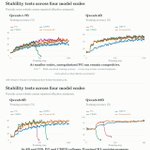
1/5 Happy CNY🎊 Still bothered by RL off-policy instability in LLM?
Introducing a new way💡Adaptive Layerwise Perturbation (ALP)💡, a simple but robust fix that outperforms GRPO/MIS/Bypass, achieves better stability (KL, entropy) and exploration!
🔗 Blog: beneficial-curiosity-d98.not…


Jack Bai retweeted

A lot is going on in RL training for LLMs, but ultimately, we want models to continually self-improve on hard inputs at test-time!
How can we explicitly train models for this test-time capability? Does naive RL do it? (Spoiler: no!)
In our new paper, we study a simpler version of this question and build an approach to train LLMs to be capable of thinking for a million tokens, w/o ever training them at that budget. 🧵⬇️

Jack Bai retweeted
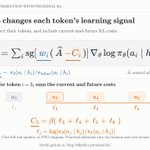
🚨🚨New paper
Scaling RL to complex tasks shows credit assignment is a bottleneck
But standard way of fitting PRM + optimizing it is too inefficient to solve it❌
Our idea: use asymmetries in an LLM to let it do its own credit assignment, in natural language w/o PRMs! 🧵⬇️

Jack Bai retweeted

Almost nobody does proper credit assignment in RL-on-LLMs 💀
Learning only from the final outcome
→ punishes good steps 😭
→ rewards bad steps 😭😭
🚨New Paper🚨
A new paradigm for credit assignment:
LLMs identify their own mistakes ❌ and propose targeted fixes 🎯
🧵[1/n]

Jack Bai retweeted

🚀 Qwen3-VL Tech report is now out on arXiv!
From pretraining to post-training, architecture to infra, data to evaluation — we’ve packed in the details for anyone building on vision-language models.
🔥 3 models >1M downloads in just over a month
🏆 Qwen3-VL-8B leads with 2M+ downloads
📚 Built on the shoulders of Qwen2.5-VL (2800+ citations in <10 months!)
Check out the paper for insights, baselines, and future directions.
Let’s keep pushing VLMs forward — together.
arxiv.org/pdf/2511.21631

Jack Bai retweeted

there’s only one right answer here, the @ylecun definition, and everyone should be able to recite it word for word


Jack Bai retweeted

🤖️Today we introduce the Embodied Reasoning Agent (ERA), a framework that transforms a compact Vision Language Model (VLM) into a performant and efficient embodied agent.
When large models like GPT-4o and Gemini show strong embodied performance on EmbodiedBench, smaller ones often fail completely. But, if a robot can’t fit a huge model, how can a small one still understand the world, plan tasks, and act precisely?
💡 That brings out ERA — By asking
1. What prior knowledge does embodied agent require before RL? and
2. What make RL in long-horizon embodied task stable and effective?
We distill them into a unified post-training regime that is capable of delivering both high-level planning agent and low-level control agent, by different curation of training data.
🔗 Web link: embodied-reasoning-agent.git…
📄 Pape link: arxiv.org/abs/2510.12693
🧵 Thread 1)

