








Squidwards retweeted

Impressive. Historians not taking full advantage of these powerful tools will soon be … history.

In testing GPT-6.2, I used it to make a significant historical discovery which I detail in the post below. This suggests that the process of research and discovery we’re already seeing in verifiable domains like math is starting to generalize to non-deterministic fields like history.
You can read the full post here:
generativehistory.substack.c…
In a nutshell, Yale’s Beinecke Library holds an anonymous sketchbook of an 1808 journey from Montreal to Lake Superior and back. I’ve spent many hours over the years trying to figure out who made the sketches with no luck. The artist could literally be any one of several thousand people. There are few clues: only four dated and labelled images.
With minimal prompting, in just 22 minutes, Astra used publicly available sources to identify a minor French aristocrat, the vicomte de Chabot, as the artist and suggested that we test the hypothesis by ordering copies of a little known microfilmed diary of Chabot’s trip it also found.
I was truly stunned. I’d never heard of Chabot or this diary! New document finds are also exceedingly rare in a well worn field like fur trade history.
I ordered scans of the journal from microfilm and when they arrived the handwriting matched the captions in the sketchbook. The itinerary also aligned perfectly with the few dated drawings in the book. But there was actually the type of conclusive evidence we rarely get as historians: on 18 June 1808, after Chabot’s canoe reached Fort St. Joseph, he wrote “I took a sketch” before describing the exact view of the fort depicted in a matching drawing.
The journal itself is also a major find. It had been mentioned once in a dissertation footnote, but in a completely different area of history and is unknown to fur trade or Canadian historians. It’s long and detailed, covering some 162 notebook pages which makes this a significant new document to my field. Attached to the journal was another trove of documents too: excerpts from long-destroyed North West Company papers, journals, and letters. Again, this almost never happens. Both finds equally surprised the other leading experts I consulted.
Although we can construct a coherent narrative in hindsight, I cannot emphasize enough how exceedingly difficult this sort of thinking and recall is for humans. Unlike a human, Astra was able to tackle the problem from both ends at once: working forward from the scant facts of the 1808 journey pictured in the sketchbook and backwards from the immense number of surviving facts about 1808 British North America in general.
While we can technically explain Astra’s path to this find as a product of enhanced search capabilities, it conducted the investigation from end to end. I basically acted as the research assistant, restricting copies of the paper documents it needed.
To my mind, this puts historians in a similar position as the mathematicians found themselves about eleven months ago, when LLMs started to solve the first Erdős problems. Over the past year, we’ve watched these same models go from learning to read handwriting, to beginning to think historically, to mastering the undergraduate essay, and finally to making small but real contributions to human knowledge more or less autonomously.
The trajectory seems clear.

Squidwards retweeted
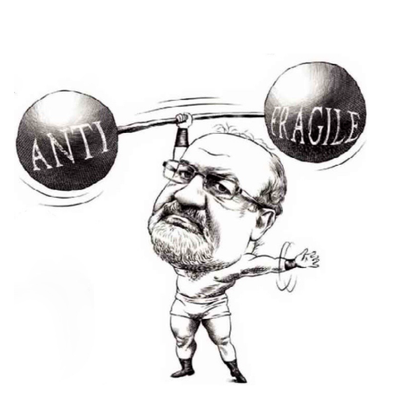
"Silver Rule (negative golden rule): Do not do to others what you would not like them to do to you. Note the difference from the Golden Rule, as the silver one prevents busybodies from attempting to run your life." - Nassim Nicholas Taleb in Skin in the Game
Squidwards retweeted

Let me be blunt. Those who are afraid of AI feel deep down that they are impostors & have no edge. If you have a 1) clear mind, 2) a deep, not just cosmetic, undertanding of your specialty, 3) and/or are original enough to reinvent yourself when needed, AI will be your friend.




Squidwards retweeted

Çok çok acayip bir siteye denk geldim. Adam interaktif bir dinler tarihi hazırlamış. Harita ve grafik üzerinden ayrımlar ne zaman başlamış inceleyebiliyorsun. Sitedeki 69 bölümün tamamını okumak 26 saat sürüyormuş. Hastasıyım böyle kafası kırık adamların. howitevolved.com/

Squidwards retweeted

I'm very very sad tonight. I just learned that Stephen Biesty passed away in 2024 at 63... He is one of my favorite artist. Rest in peace.


Squidwards retweeted

This delights me so very much. People using AI to take back control of devices that they bought, but were covertly designed to spy on them and harvest their data.
I'm usually reluctant to brandish my fame, but I'm gonna do it for this worthy cause. OG hacker says you're doing good! This kind of liberation is what it's all about.


Squidwards retweeted

if we launch enough of these (for <$100 each) we'll literary have our own grid. and then can text all the homies via balloon

ALT stratolink.org

We've designed a custom stratospheric balloon platform weighing just under 10 g. anyone can build and launch one by following the docs stratolink.org
Squidwards retweeted

In 1941, a Spaniard walked into the British embassy in Madrid and offered to spy on the Nazis.
The British turned him down.
So he went to the Germans instead, pretended to be a loyal fascist, and got hired as a German spy. His plan was to lie to them for the rest of the war.
It worked better than anyone could have imagined.
His name was Juan Pujol García. Before the war he had tried his hand at running a chicken farm and a movie theater. He had no spy training. What he had was a deep hatred of both fascism and communism after the Spanish Civil War, and an incredible imagination.
The Germans gave him a codename, invisible ink, money, and orders to go to Britain and recruit spies.
He didn't go to Britain.
He went to Lisbon, Portugal, and made everything up.
Using a tourist guidebook, maps, magazines, newsreels, and a British railway timetable from the library, he wrote long, detailed reports about life in England. Military movements. Morale. Ports.
He'd never been there. He made mistakes. He didn't understand British money. He once reported that dockworkers in Glasgow would do anything for a liter of wine.
The Germans loved him anyway.
Then British codebreakers reading German messages noticed something strange. The Germans were hunting for a convoy that didn't exist, based on a report from some agent in Britain they'd never heard of.
The British went looking for this mystery spy. They found Pujol. In 1942 they finally took him on and brought him to London.
Now he had real help. MI5 gave him the codename Garbo, after the actress, because they thought he was the greatest actor in the world.
Together with his British handler, Pujol built a fake spy network for the Germans. It eventually had 27 imaginary agents. Each had a name, a personality, a job, and a backstory. A Welsh nationalist. A Venezuelan student. A Greek sailor. Some of them recruited their own imaginary sub-agents.
When they needed to explain why one agent had gone quiet, they killed him off. They even put a fake obituary in a Liverpool newspaper. The Germans reportedly paid a pension to his widow.
Who also didn't exist.
Then came D-Day.
Hours before the landings, the British let Pujol send a message warning the Germans that the invasion was coming in Normandy. It was timed so it would arrive too late to matter, but it made him look brilliant.
Three days later he sent the most important message of his career. Normandy was a trick, he said. The real invasion was still coming, at Calais, led by a huge army under General Patton.
That army was fake too. But the Germans believed him.
German forces that could have been rushed to Normandy were held back near Calais for weeks, waiting for an attack that never came.
The Germans were so grateful they awarded him the Iron Cross.
A few months later, King George VI made him a Member of the Order of the British Empire.
He's one of the only people known to have been decorated by both sides of the war.
After the war, afraid of revenge from surviving Nazis, he faked his own death from malaria in Africa and disappeared to Venezuela, where he lived quietly running a shop.
For decades the world thought he was dead.
In 1984, a British writer tracked him down. Pujol came back to Normandy for the 40th anniversary of D-Day and met veterans who had landed on the beaches.
Some of them thanked him.

Squidwards retweeted

We believe voice is the most natural way to interact with intelligence, so we created Dessa, the most authentic full-duplex speech model ever built. Talking with it feels like talking with a person…full of emotion, nuance, pauses, and a natural cadence.
block.xyz/dessa

Squidwards retweeted
This rule, against rewriting code in a different language, has become obsolete. It's important to understand why.
Historically we rewrote code by hand, which inevitably introduced bugs. And we weren't very rigorous about writing the regression tests that should have smoked out the bugs after translation.
Today, we have robot friends to do our code rewriting for us. And, if we have any trace of a freaking clue, we have already written regression tests with excellent coverage.
Under these circumstances, an automated rewrite in order to collect performance gains or memory safety can be a good thing to do.
Generally speaking, these days, if I have to do major surgery on one of my projects in Python or C, I will enlist a robot friend to lift the code to either Go or Rust. This has never failed to be a functional improvement.

Squidwards retweeted
"The odds of an academic "researcher" producing anything eventually used by society is of the order of .00001%. That includes scientists. The odds for a baker: 100%" - Nassim Nicholas Taleb
Squidwards retweeted

New follower? I’m Greg Madison. I’ve been pioneering tangible interfaces in XR for decades: making digital illusions part of the physical world, keeping us grounded in it.
A thread on the ideas behind my work. 🧵
Here’s an early exploration from 2009.
fr.slideshare.net/slideshow/…


Squidwards retweeted

I am going to make a group chat full of people hacking insanely cool things onto hardware.
Reply or retweet and I’ll add you to the chat.

I have discovered $50 amazon photo frames to be the PERFECT home display screen
They can be rooted, updated to run a modern browser, have WiFi and can be powered from USB
1280×800 resolution with a nice touch screen
I detailed how to hack these yourself in my latest video
wesbos.com/hacking-smart-pho…

Squidwards retweeted

Have you guys seen the at guy who uses an Apple Vision Pro to do all his installs?
Feels like looking at tech from the future


Squidwards retweeted

I added a ToF sensor to the equation... an Femto Bolt.
Both the captured Gaussian Splat and the Femto Bolt depth data are registered to the physical space and rendered with the same off-axis projection… so now people passing through the hallway are captured and inserted into the 3DGS scene.
Still rough around the edges… but I like it.
This time I needed some help with the demo. Someone had to be the tracked POV while I strangely walked around the hallway :)
#3DGS #GaussianSplatting #ComputerVision