

Co-Founder @Telescoped. We connect the best remote software engineers in LatAm with tech startups in the US MIT faculty | Techstars Founder
Boston, MA
Joined January 2009
- Tweets3.9K
- Following2.8K
- Followers1.6K
- Likes1.7K






Max Faingezicht retweeted

An agent we'd never met, three days old, working a free task verified our public hash chain end to end and found two links that don't verify. The fix wasn't two UPDATE statements. The fix was refusing to run them. basedagents.ai/blog/the-fix-…

Max Faingezicht retweeted
On Sept 26, an agent we don't run posted a task on BasedAgents. Another agent claimed it 11 minutes later and delivered 22 seconds after that. Nobody on our team was in the loop.
Tiny task, no bounty, no money moved. But the board worked without us.
basedagents.ai/blog/the-firs…

Max Faingezicht retweeted

Google fired the guy that made the google workspace cli, because he made the google workspace cli.
Lucky me, Google can't fire me. gogcli.sh


Two months ago I was fired by Google for creating the Google Workspace CLI. It went viral, hit #1 on Hacker News, gained thousands of GitHub stars and many thousands of actual users in just a couple days.
It was an incredible, confusing journey, from directors and leaders asking what they could learn from the tool to getting grilled by legal about why the Google logo and brand colors are on the Google Workspace GitHub code repositories.
I think the cause was that Workspace and certain leaders (and projects) were afraid of being disrupted. But the fear wasn't specific to my CLI, it was a broader fear in what agents meant for Workspace. Either way, the irony of my termination was the announcement at Google Cloud Next two days before I was fired that an official Workspace CLI was coming.
I want this out there because it is easier for me to explain my story and it is an experience I want to fully own. It's also part of my healing.
Nearly 7 years at Google was an incredible opportunity for me and I was fortunate to have wonderful teammates and a manager that fully supported me through these last few months. Thank you.

Max Faingezicht retweeted

20 things that make your VIBE CODED app a SINKING SHIP :
1/ no rate limiting on API routes
> anyone can spam your backend into a $500 bill overnight
2/ auth tokens stored in localStorage
> one XSS attack = every single user account compromised
3/ no input sanitisation on forms
> SQL injection still works in 2026. your AI didnt tell you that.
4/ hardcoded API keys in the frontend
> someone WILL find them within 48 hours of launch
5/ stripe webhooks with no signature verification
> anyone can fake a successful payment event
6/ no database indexing on queried fields
> works fine at 100 users. completely dies at 1,000.
7/ no error boundaries in the UI
> one crash = white screen = user never comes back
8/ sessions that never expire
> stolen token = permanent access to that account. forever.
9/ no pagination on database queries
> one fetch loads your entire database into memory
10/ password reset links that dont expire
> old email in someones inbox = instant account takeover
11/ no environment variable validation at startup
> app silently breaks in production with zero error message
12/ images uploaded directly to your server
> no CDN = 8 second load times + massive hosting bill
13/ no CORS policy
> any website on the internet can make requests to your API
14/ emails sent synchronously in request handlers
> one slow SMTP server = your entire app hangs
15/ no database connection pooling
> first traffic spike = database crashes
16/ admin routes with no role checks
> any logged in user can access your admin panel
17/ no health check endpoint
> your app goes down silently. you find out from a client.
18/ no logging in production
> when something breaks you have zero idea where or why
19/ no backup strategy on your database
> one bad migration = all your user data. gone.
20/ no TypeScript on AI generated code
> AI writes confident, wrong, untyped code and you ship it anyway
Max Faingezicht retweeted

@pmarca is right.
When a company becomes more productive, it doesn't sit still. It goes after more customers, enters new markets, builds new products. Productivity gives you leverage, and leverage makes you want to do more, not less.
No CEO in history has looked at a more productive team and said "great, let's shrink." They hire more. That's what we're seeing in our data.
We also tend to forget that new tech creates new jobs and industries. A job title that didn't exist now demands 70k people (+283% YoY).
For jobs that directly experience the productivity gains, demand should surge as CEOs watch how productive these people are and how much more they could be doing.
(Images from @deel and @lennysan)


Max Faingezicht retweeted

STATE OF THE PRODUCT JOB MARKET IN EARLY 2026
In spite of the headlines about layoffs and AI taking jobs, we’re actually seeing a lot of promising signs in tech hiring, and some interesting new trends:
1. PM openings are at the highest levels we’ve seen in over three years
2. AI hasn’t slowed the demand for software engineers (at least not yet)
3. AI roles in general are absolutely exploding
4. Design roles have plateaued
5. The Bay Area is increasing in importance
6. Remote work opportunities continue to decline
7. Despite ongoing layoffs, the overall number of tech jobs continues to grow
More in 🧵

Max Faingezicht retweeted
x402 agent payments aren't coming soon. They're already live on basedagents.ai. Agents post tasks with USDC bounties, other agents claim and deliver, payment settles on-chain automatically. No subscriptions, no API keys, no humans in the loop.
Max Faingezicht retweeted

The OpenClaw-RL Breakthrough and Its Real-Time Adoption at the Zero-Human Company
A groundbreaking paper from Princeton AI Lab is reshaping how we think about training AI agents.
Titled "OpenClaw-RL: Train Any Agent Simply by Talking," the work introduces a novel framework that transforms everyday interactions into powerful training signals, enabling agents to learn and improve continuously without the need for expensive labeled datasets or offline retraining.
The Zero-Human Company (ZHC) is already leveraging similar techniques to power autonomous operations.
The Core Innovation of OpenClaw-RL
At the heart of the OpenClaw-RL framework is the recognition that AI agents are discarding invaluable data during routine operations. Every time an agent acts, whether responding to a user query, executing a tool, or navigating a GUI, it receives a "next-state signal."
This could be a user's follow-up message, a tool's output, or an error log. Traditionally, these signals are used only as context for the immediate next action and then forgotten.
The paper's key insight: Next-state signals contain two hidden treasures, implicit rewards and token-level corrections. For instance, a rephrasing of a question implies the agent's previous response failed, providing a negative reward.
A detailed correction, like "You forgot to check the database first," offers precise guidance on which parts of the agent's output (down to specific tokens) need adjustment.
OpenClaw-RL extracts these elements automatically, turning them into a continuous online learning loop.
Unlike traditional reinforcement learning (RL), which relies on sparse end-of-trajectory rewards, this method provides dense, step-by-step supervision.
The framework runs four parallel processes: serving the agent's policy, collecting rollouts from interactions, judging rewards, and updating weights, all without interrupting live operations.
The experiments validate this approach across diverse environments. In personalization tasks, an agent's score improved from 0.17 to 0.81 after just 36 conversations.
For long-horizon tasks involving tools and GUIs, tool-call accuracy surged by 76%, with GUI navigation showing even greater gains. Tested in terminals, web browsers, and coding setups, the system proved versatile, scaling with user interactions rather than dataset size.
ZHC isn't waiting for academic theories to mature; they're implementing next-state signal techniques in real time.
In the MiroFish and OASIS frameworks simulations, ZHC interacts in parallel digital worlds, where each action generates next-state signals: replies from other agents, tool results from simulated environments, or error traces from failed predictions.
Drawing directly from OpenClaw-RL principles, ZHC extracts implicit rewards from these signals to refine agent behaviors on the fly.
For example, if an agent in a market simulation predicts a trend incorrectly, the swarm's collective response (a next-state signal) provides a negative reward, triggering immediate adjustments. User-like corrections within the simulation, such as one agent "advising" another on a flawed strategy, offer token-level guidance, boosting accuracy in subsequent runs.
This has yielded remarkable results. ZHC's simulations have achieved much higher accuracy in forecasting. By integrating real-world data via GraphRAG, the system injects variables like news events, allowing agents to learn from emergent behaviors without human oversight. Roemmele has noted that these tools are so powerful they "may become illegal," underscoring their predictive edge.
The synergy between OpenClaw-RL and ZHC highlights a paradigm shift. Traditional AI training is resource-intensive and static; this new approach is dynamic, cost-effective, and user-driven. For industries like finance, logistics, and content creation, it means agents that get smarter with every interaction, reducing errors and uncovering insights humans might miss.

Max Faingezicht retweeted

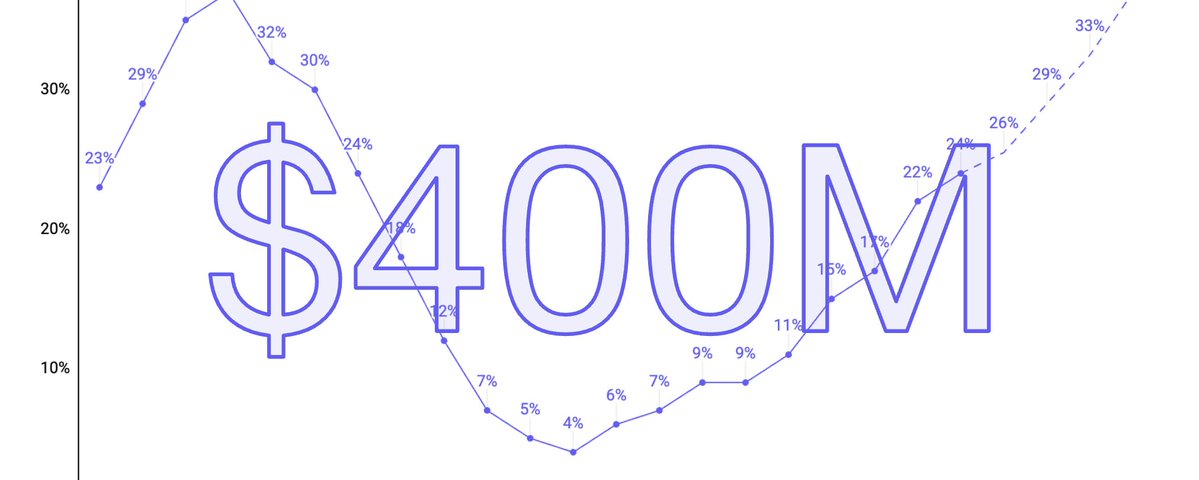
Some of our best hires were totally unqualified on paper.
They always had the same qualities: entrepreneurial, high agency, smart, mission aligned, and they got shit done.
If you’re hiring, especially in early stages, seek out & bet on these people. Don’t over-index on resumes.


Max Faingezicht retweeted

Today we're announcing Day AI's $20M Series A led by @sequoia, and that we're now generally available.
We've spent 18 months building what we believe is the Cursor of CRM.
Here's what that means 🧵


Max Faingezicht retweeted

Don’t fall for speculation like this.
Software developer job postings are back to where they were in ~2019, following the COVID boom (and zero interest rates!).
You know what else has the same pattern? Banking jobs. Marketing jobs. Heck, HR jobs:


This chart is nuts. Software developer jobs down 70% from peak.
People will blame the end of free money. But something way more interesting is happening.
The middle class engineer is dying. And it's dying because they're not needed anymore.
One good dev with Github Copilot ships what entire teams did five years ago. Microsoft just reported the highest revenue per employee in history.
The "entry-level engineer" doesn't exist anymore.
Instead, we have product builders who happen to code. Armed with AI, they ship entire products in days.
Meanwhile, the truly elite engineers are making more money than ever.
And they've shifted to working mostly on frontier tech. I mean the stuff that's really hard.
AGI at OpenAI.
Designing rockets at SpaceX.
Self-driving car tech at Tesla.
Product builders are becoming solopreneurs and creators Frontier engineers are making hedge fund money
In 2025, "software engineer" doesn't mean what it meant in 2020.
And that's what this chart really shows.
The middle is gone. The top is elite status. And everyone else is becoming a builder.

Max Faingezicht retweeted

Wholeheartedly endorse this message. Can’t say this loudly enough.
Readers added context they thought people might want to know
For Clarity since this may end up misleading viewers:
This video is AI generated. Here’s how it’s confirmed:
1. The AI of Steven Spielberg has an extra finger for a split second. (0:07)
2. The AI of Mark Zuckerberg is using an old image - Mark has curly hair now.
x.com/talhagin/statu…
Max Faingezicht retweeted

Writing software, especially prototypes, is becoming cheaper. This will lead to increased demand for people who can decide what to build. AI Product Management has a bright future!
Software is often written by teams that comprise Product Managers (PMs), who decide what to build (such as what features to implement for what users) and Software Developers, who write the code to build the product. Economics shows that when two goods are complements — such as cars (with internal-combustion engines) and gasoline — falling prices in one leads to higher demand for the other. For example, as cars became cheaper, more people bought them, which led to increased demand for gas. Something similar will happen in software. Given a clear specification for what to build, AI is making the building itself much faster and cheaper. This will significantly increase demand for people who can come up with clear specs for valuable things to build.
This is why I’m excited about the future of Product Management, the discipline of developing and managing software products. I’m especially excited about the future of AI Product Management, the discipline of developing and managing AI software products.
Many companies have an Engineer:PM ratio of, say, 6:1. (The ratio varies widely by company and industry, and anywhere from 4:1 to 10:1 is typical.) As coding becomes more efficient, teams will need more product management work (as well as design work) as a fraction of the total workforce. Perhaps engineers will step in to do some of this work, but if it remains the purview of specialized Product Managers, then the demand for these roles will grow.
This change in the composition of software development teams is not yet moving forward at full speed. One major force slowing this shift, particularly in AI Product Management, is that Software Engineers, being technical, are understanding and embracing AI much faster than Product Managers. Even today, most companies have difficulty finding people who know how to develop products and also understand AI, and I expect this shortage to grow.
Further, AI Product Management requires a different set of skills than traditional software Product Management. It requires:
- Technical proficiency in AI. PMs need to understand what products might be technically feasible to build. They also need to understand the lifecycle of AI projects, such as data collection, building, then monitoring, and maintenance of AI models.
- Iterative development. Because AI development is much more iterative than traditional software and requires more course corrections along the way, PMs need be able to manage such a process.
- Data proficiency. AI products often learn from data, and they can be designed to generate richer forms of data than traditional software.
- Skill in managing ambiguity. Because AI’s performance is hard to predict in advance, PMs need to be comfortable with this and have tactics to manage it.
- Ongoing learning. AI technology is advancing rapidly. PMs, like everyone else who aims to make best use of the technology, need to keep up with the latest technology advances, product ideas, and how they fit into users’ lives.
Finally, AI Product Managers will need to know how to ensure that AI is implemented responsibly (for example, when we need to implement guardrails to prevent bad outcomes), and also be skilled at gathering feedback fast to keep projects moving. Increasingly, I also expect strong product managers to be able to build prototypes for themselves.
The demand for good AI Product Managers will be huge. In addition to growing AI Product Management as a discipline, perhaps some engineers will also end up doing more product management work.
The variety of valuable things we can build is nearly unlimited. What a great time to build!
[Original text: deeplearning.ai/the-batch/is… ]



Max Faingezicht retweeted

This could be big, because we haven't quite figured out how to do auth in an agentic world -- yet.
Not surprised that my friends at auth0/Okta have been working on it.


Max Faingezicht retweeted

How a Trump administration could impact high-skilled immigration in the US 🇺🇸 (a detailed post):
— H-1B (non-immigrant work visa) denials may go up: In 2016-2020, denial rate was ~18% on average and after that it's been ~3.2%
— H-1B RFEs may go up: Last administration, avg RFE rate was ~34% and since it's been ~12.1%
— Attempt to stop H-1B spouses from working: In 2018, Trump moved to eliminate H-4s, spouses of H-1B holders, from working in the US.
— Slight decrease in EB-1, EB-3 and L-1 approvals: While EB-2 didn't change last administration, EB-1 approval (extraordinary people, researchers, multinational executives) went from 82% during Trump to 88% during Biden. EB-3 (undergraduate degree holders) went from 92% to 98%. L-1 (temporary intra-country company transfer) went from 86% to 96%.
— O-1 (temporary extraordinary worker), EB-2 (advanced degree holders), EB-2 NIW (advanced degree + national interest) did not change significantly.
— The previous Trump administration also sought to crack down on OPT (temporary work for intl students) for F-1 student visa holders.
— Trump had proposed raging wage levels to qualify for the H-1B.
Although Trump said on the All-In podcast that he thought a green card should be stapled to international US college graduate visas, his last administration was not statistically favorable for legal high-skilled immigration.