

Catholicism, Anarcho-capitalism, Maximalism https://xitter.gq/t.co/kts3tv9aCV https://xitter.gq/t.co/FX3FF84bHv Conselheiro do @ILCristao
Joined November 2021
- Tweets2.4K
- Following173
- Followers364
- Likes5.3K






Manuel Ogando retweeted

This is all silly. Hoppe doesn't deny Hitler's evil. See mises.org/power-market/hoppe… the section "Hoppe the Nazi".
See his book A Theory of Socialism and Capitalism, the first few chapters, analyzing the evil of various forms of socialism, including Hitler's. Chapter 5 (“The Socialism of Conservatism”) treats National Socialism (and Italian fascism to a lesser degree) as a form of conservative-socialist movement, not capitalism. Hoppe argues both were nationalist movements “devoted to war and conquest.”
In The Great Fiction, in the essay criticizing Steven Pinker’s progressive history, Hoppe writes of “World War II with all its atrocities” and explicitly calls Hitler (grouped with Churchill, Roosevelt, and Stalin) one of the “mass-murdering monsters that we know them to have been.” He argues that a highly centralized state is what enables such individuals to commit evils on that scale; without it, they might have been limited to something like a Jack the Ripper. This directly affirms the atrocious, mass-murdering character of the crimes associated with Hitler and the Nazi regime. That's why he has described Hitler as a “deranged individual” whose capacity for evil was amplified by the state.
All this carping is so pathetic and dishonest. Not sure if they are just jealous of Hans, hate Germans, or are trying to please their establishment minders.
hanshoppe.com/publications/

Manuel Ogando retweeted

A recente atribuição do Prémio Nobel da Economia a Robert E. Hall e Michael Woodford mostra que o paradigma keynesiano continua de boa saúde.
mises.pt/premio-nobel-para-e…

Manuel Ogando retweeted
So says the IP fascist and opponent of just war theory, warning that “Islamic totalitarian states pose a severe threat to the security of the United States,” adding that a way to defeat these regimes “is to kill up to hundreds of thousands of their supporters.” This, he said, would “shrink popular support for extremist ideas to a small minority of the population,” instead of the 40% which he claims supports such regimes now ... stephankinsella.com/2007/12/…

Manuel Ogando retweeted

This is a very weak article. The objections made to Argumentation Ethics were refuted either by Hoppe, by Kinsella, or even by myself (cf. propertyandfreedom.org/2016/…, stephankinsella.com/publicat…, propertyandfreedom.org/2026/…). The whole "very few people accept it" argument is an ad populum.
Besides, it mistakingly assumes that Hoppe's cultural views must have its foundations in Argumentation Ethics, when that's clearly not the case. Hoppe is mearly stating how members of libertarian communities should behave in order to preserve them in the long term. It is obvious that a community with a majority of democrats and communists won't remain anarchist for long. He's not advocating agressive violence, merely the excercise of property rights and defensing violence.
Hoppe is a) a consistent libertarian who takes libertarian political philosophy to its ultimate consequences, and b) a realist libertarian who knows what is required to preserve a libertarian order in the long term.


Manuel Ogando retweeted

Yep, you're one of them.
"Libertarianism does not set out to remold human nature. One of socialism’s major goals is to create, which in practice means by totalitarian methods, a New Socialist Man, an individual whose major goal will be to work diligently and altruistically for the collective.
Libertarianism is a political philosophy which says: Given any existent human nature, liberty is the only moral and the most effective political system.
Obviously, libertarianism — as well as any other social system — will work better the more individuals are peaceful and the less they are criminal or aggressive. And libertarians, along with most other people, would like to attain a world where more individuals are “good” and fewer are criminals. But this is not the doctrine of libertarianism per se, which says that whatever the mix of man’s nature may be at any given time, liberty is best."
— Murray Rothbard
Manuel Ogando retweeted

A Chinese company uses civil unrest in France as an ad to promote the durability of its glass.
Manuel Ogando retweeted
oh ffs this stupid crap again stephankinsella.com/2022/09/…


Manuel Ogando retweeted
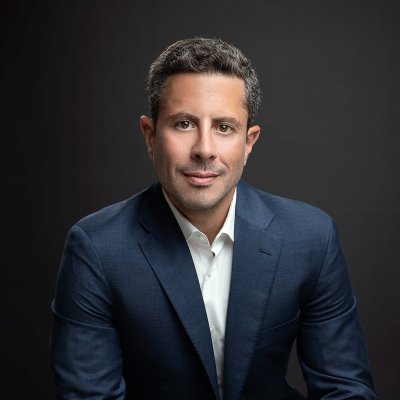
Many thanks to @dimitria1337 for producing and gifting me this wonderful piece of art:
The Washing Machine.

Manuel Ogando retweeted

"There is still private property in name, but in practice private property owners have been almost completely expropriated"
mises.org/library/what-must-…


Manuel Ogando retweeted
"Centrally enforced nationalism cannot but lead to the discreditation of the idea of a nation. In contrast, capitalist nationalism is grassroots nationalism"
hanshoppe.com/2025/08/from-n…


Manuel Ogando retweeted

Inspirado nas ideias liberais de Adam Smith a Ludwig von Mises, Edmund Opitz identificou no liberalismo clássico a projeção secular da filosofia cristão.
"O liberalismo clássico pressupõe uma filosofia religiosa que considera o homem como um ser criado que tem uma relação única com Deus, sendo formado à Sua imagem — significando que o homem possui livre-arbítrio e a capacidade de iniciar e comandar suas próprias ações.
"Este ser livre está sob a lei moral estabelecida na constituição original das coisas, responsável por descobrir esta lei e obedecê-la. Ele recebe domínio sobre a terra. Ele é ordenado a trabalhar para que possa comer; ele é o administrador dos escassos recursos da terra e responsabilizado por seu uso econômico".


Manuel Ogando retweeted

While exiled in Switzerland, Bl. Emperor Karl was approached by a group of freemasons.
They offered to restore him to power, on the condition that he legalize freemasonry.
His response?
"As a Catholic Prince, I will never accept from Satan what has been given to me by God."


Manuel Ogando retweeted
Great insight by Jörg Guido Hülsmann on the distinction between microeconomics and macroeconomics:
"Modern macroeconomics began with Böhm-Bawerk’s seminal Capital and Interest. The epithet “modern” is shorthand for “post-Ricardian” and refers most notably to the application of methodological individualism in explanations of phenomena such as the production structure, capital, and money interest. Böhm-Bawerk showed that and how these phenomena, which affect more or less all members of society (“the economy as a whole”), result from individual human action and interaction. Menger had pioneered this method. He had shown how prices on individual markets spring from the acting person’s evaluation of marginal quantities of economic goods. Böhm-Bawerk did nothing but extend the application of this method to explain how the various markets interrelate, what costs are, and how and why interest comes into existence. Later, Mises applied the very same method to explain the impact of money on the economy, and to analyze the business cycle. With Mises’s 1912 treatise on money, Austrian economics had come full circle, giving a coherent and encompassing explanation of all economic phenomena (see Mises 1980).
It is therefore of little surprise that the early Austrian economists did not distinguish between microeconomics and macroeconomics. There was in their eyes only one type of economic analysis, which was based on certain invariable facts of human action—such as “only individual persons act,” “acting involves choosing,” “choice refers to marginal units of economic goods”— and which was able to give a satisfactory explanation of all economic phenomena. From this point of view, one might call certain phenomena “macroeconomic” because they are virtually immune from the choices of any given person, but result from the combined effect of the choices of great masses of people; and one might call other phenomena “microeconomic” because here the impact of individuals is perceptible and important. But this distinction is entirely nominal—it is an artificial convention without foundation in real differences. The fact is that all economic phenomena result from individual choices; hence, Menger’s method can be applied universally; and ultimately there can be only one unified economic science, just as there is only one real world that this science describes."
Manuel Ogando retweeted

The Useful Idiot: A Natural History
Specimen: Western, educated, well-meaning.
Habitat: universities, NGOs, quality newspapers, dinner parties where the wine is good and the opinions are better.
Status: abundant.
The useful idiot is not exactly stupid. This is the first and most important thing to understand. Stupidity would be a defense. The more precise diagnosis is what we in Poland call pół-inteligent – the half-wit. Not the bottom of the intelligence distribution, which is too obviously lost to be useful. Not the genuine top, which tends to develop the inconvenient habit of following arguments wherever they actually lead. The sweet spot: smart enough to absorb a complex ideological framework, to deploy its vocabulary with confidence, to feel the social rewards of appearing sophisticated – but not quite sharp enough to interrogate the framework itself. Enough horsepower to run the program. Not enough to question who wrote it. The pół-inteligent is the useful idiot’s technical specification. And the specimen is typically convinced – this is crucial – that it is among the most independent thinkers in the room. The delusion is important. Remove it and the whole architecture collapses.
The species emerges in conditions of comfort and safety, which is why it proliferates in precisely the societies it works to undermine. It requires a baseline of security – enough that the consequences of being wrong about power remain abstract, theoretical, someone else’s problem. Eastern Europeans, who paid in flesh and decades for the privilege of understanding what the useful idiot enables, are able to see this as naivety so profound it becomes a moral failure. Not innocence. Culpable ignorance dressed as virtue.
Observe the specimen in its natural habitat. It discovers The Cause sometime between the ages of 18 and 24, usually at an institution of higher education, usually through social contagion rather than solitary reasoning. The Cause varies by generation – Soviet sympathies, third-worldism, postcolonial theory, current-year identity grievance – but the structure is invariant: a clean division of the world into oppressors and oppressed, a designated villain class, and a role for the specimen as enlightened ally. The emotional reward is immediate and substantial. Belonging. The claim of moral clarity. The warm superiority of the awake among the sleeping.
What the specimen does not perceive – what it is structurally prevented from perceiving – is that it is being used. Lenin coined the phrase, and he meant it with cold precision. The useful idiot is not a partner in the project. It is infrastructure. It provides legitimacy laundering: translating raw power-seeking into the language of justice, making the predatory appear compassionate, and doing so with enough genuine conviction to be convincing. The cynics who run the operation cannot do this themselves – cynicism is legible. True believers are required. The useful idiot’s sincerity is its primary value to those who deploy them. And so Lenin used them – and so does Islam now.
The specimen’s lifecycle has a melancholy third act that it rarely anticipates. When the project advances far enough – when the institutions are captured, when the Overton window has moved sufficiently – the useful idiot becomes inconvenient. It knows too much about the earlier, more honest phase. It has friendships across the new fault lines. It retains, sometimes, inconvenient principles from when principles were the point. The revolution, as it industrializes, prefers newer models: fully formed apparatchiks with no memory of idealism to complicate their loyalty. The useful idiot is retired, marginalized, occasionally denounced by the very movement it spent decades building. It dies puzzled. It never quite understands what happened.
We've all seen the very surprised lady in Paris...
History is littered with these figures. Western intellectuals who defended the Soviet project through the show trials, the Holodomor, the Gulag – and who spent the rest of their lives in various stages of retrospective rationalization. Fellow travelers who called Solidarity troublemakers, who thought the dissidents were exaggerating, who trusted the official version over the testimony of people who had lived it. Their names are recorded. Their counterparts today are producing content, signing letters, and occupying endowed chairs.
The useful idiot is not the enemy. It is the weapon. Understanding the difference matters – because the weapon can, in principle, be disarmed. It requires only one thing: contact with reality at sufficient intensity and duration to override the social rewards of the delusion. This happens. Some recover. Eastern European experience – the unignorable, undeniable, lived reality of what the project actually produces – has cured more than a few.
The cure is not pleasant. It requires admitting that one’s most cherished moral identity was constructed by people who found it useful. That the independence one prided oneself on was curated. That the dinner party consensus was not wisdom but a lie. Most cannot make this admission. The identity investment is too great. They double down instead – find new framings, new rationalisations, new ways to explain why this time is different, why the critics are the real problem.
They remain, to the end, useful.


The look of someone discovering reality.
This young woman stood in front of a smashed shop window in Paris last night and said the smashing and looting are not what the cause is about. She still believes the people who broke the glass share her cause. They don’t. They have their own.
This is not how she imagined it. It has a name: cognitive dissonance – the pain of watching reality contradict what you were told to believe.
She learned it last night, in pain. Millions of others will learn it in the coming months – the same way. Because reality doesn’t need the media. It comes through the window.
We were right all along.👇🏻
And they were wrong.
So will they admit it now, and let go of their delusions? Or will they double down?
In 1954, an American psychologist infiltrated a small cult that had predicted the end of the world on a precise date. The date came. Nothing happened. Did the believers give up? The most committed did the opposite: they started preaching harder than ever.
That is what most true believers will do. Admitting the error would cost them their friends, their careers and their image of themselves. So they will blame the police, the "far right," the economy, the weather – anything but the idea.
For them to change their minds, their whole system will have to collapse – the salaries, the institutions, the friends who all think alike. Belief survives as long as the group survives. We have seen it before: in 1989, when the system fell, Poland’s communists woke up one morning as social democrats – and a good number of them as businessmen.
But the believers are not the audience. The people watching are. Reality rarely converts the priests. It converts the congregation – one broken window at a time.
And yesterday was much more than a broken window. A day like that must have opened the eyes of millions. Events like that change history.
The priests will keep preaching. The congregation has already started to leave.

Manuel Ogando retweeted
Walter Block's latest at "Epoch Times": "Is a New Jewish Defense League Needed?: Anti-Semitic outrages are a serious and disproportionate problem."
This is really odd. He writes:
"How well have the Jews in New York City been faring under their new mayor? Not too well.
Zohran Mamdani’s continual criticism of Israel—if not actual incitement to do harm to Jewish citizens—might well at least amount to instigation. He has characterized Israel’s campaign in Gaza as a “genocide.” This is an open sesame for Jew haters to get out from under the slimy rocks they have been hiding under."
Weird that he thinks that the NY Mayor's criticism of Israel counts as harm to Americans (Jews) in NYC. Uh, WTF? This would be like me saying the anti-France comments of X are harming Cajuns in Louisiana."
Also odd that he blames Mamdani for "instigation," when Block has written many pieces arguing "incitement" is not a crime. Curious volte-face. See my article stephankinsella.com/2024/05/…, the section on "incitement"
theepochtimes.com/opinion/is…
nb @jeffreytucker @propfreedom
