

I love contributing in Web3
Uae
Joined January 2023
- Tweets13.2K
- Following1.2K
- Followers1.2K
- Likes17.7K







Pinned Tweet
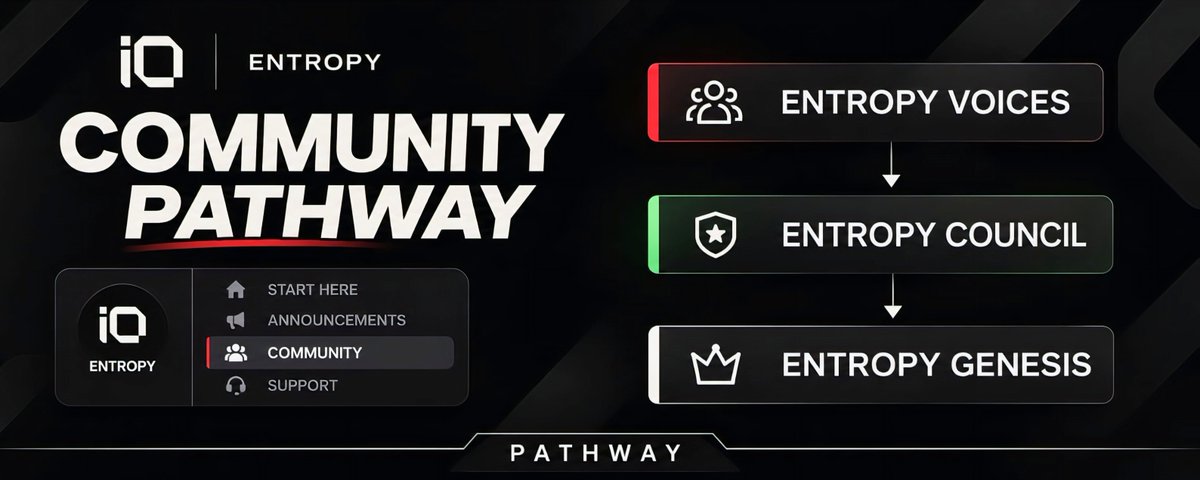
A Discord server is easy to build.
A clear path from newcomer to meaningful contributor is harder.
Entropy just made one.
@entropyIO @gemchange_ltd @0xashensoul
#Web3Community #CryptoCommunity #Entropy #EntropyIO
POV: You came to TxFlow for trading, then realized it’s building an entire financial ecosystem on one chain. 💀🟩
“Wait… all of this is happening on TxFlow?” 👀
@TxFlow_L1 now speaks six languages.
gFlow 💚 everyone
@kaisrr3a @Aishie_Talks @ProblyHQ


1
4
58
【 WHY ASYNC/AWAIT BELONGS ON BLOCKCHAIN 】
Real-world applications don't operate synchronously. So why should blockchain workflows be forced to?
━━━━━━━━━━━━━━━━━━━━━━
【 01 — THE PROBLEM WITH SYNCHRONOUS EXECUTION 】
Traditional blockchain execution is designed around deterministic state transitions. Transactions execute, validators agree on the result, and the process completes.
But real applications often need to wait:
→ An API needs time to respond.
→ A payment requires external confirmation.
→ A workflow depends on information that isn't available yet.
Traditionally, developers split these processes into separate stages using oracles, bots, relayers, and callbacks.
Each solves a problem, but adds infrastructure, coordination, maintenance, and potential failure points.
The application becomes a collection of connected processes instead of one coherent workflow.
【 02 — WHAT ASYNC/AWAIT CHANGES 】
Async/await lets developers express operations that take time without forcing everything to finish in one execution.
→ A workflow can pause while waiting for a result.
→ Other blockchain transactions continue executing normally.
→ The original workflow resumes when its awaited operation completes.
This isn't about stopping the blockchain.
It's about allowing an individual program to wait without blocking the entire network.
━━━━━━━━━━━━━━━━━━━━━━
【 03 — HOW RIALO APPROACHES IT 】
@RialoHQ brings asynchronous programming into its smart contract execution model through Future, Promise, and ".await", allowing workflows to sleep and resume across multiple blocks.
A simplified workflow:
→ Execution begins in Block N.
→ A contract initiates an external HTTP operation.
→ The request executes outside the blockchain.
→ Its result returns through a transaction.
→ The contract resumes in a later block and processes the response.
The entire process can remain one logical workflow instead of requiring developers to manually coordinate every stage.
This can reduce the need for separate infrastructure to manage asynchronous operations.
【 04 — ASYNC ≠ REACTIVE 】
Both address limitations in traditional execution, but they solve different problems.
→ Async: Pause, wait for a result, and resume.
→ Reactive: Trigger execution when defined conditions become true.
One handles waiting for results. The other handles responding to conditions.
Together, they make blockchain workflows more adaptable to real-world applications.
━━━━━━━━━━━━━━━━━━━━━━
【 05 — THE TRADE-OFFS 】
Async execution doesn't remove external dependencies.
→ APIs can fail or return inaccurate information.
→ Requests may require timeouts, retries, and validation.
→ Authorization and duplicate execution still need careful handling.
Blockchain can coordinate a workflow, but it cannot automatically make every external service trustworthy.
【 THE BIGGER PICTURE 】
Real-world applications don't always finish in one step, one request, or one block.
Async/await brings that reality into blockchain programming.
@RialoHQ challenges the assumption that smart contracts must complete everything immediately - allowing workflows to wait, receive information, and continue while remaining connected to the blockchain's execution model.
gRialo Everyone 😇
@ericargent31113 @0x_alextine @Subzero_Labs


What if an AI agent could manage your trades, but could never spend more than you actually allowed?
That's the interesting approach behind Resonance, introduced at this week's @RialoHQ Builder Hub.
Instead of giving AI unlimited access to trading decisions, Resonance puts education, simulations and predefined safety rules at the center.
Here's what makes it interesting:
1. Learn Before You Automate
Resonance uses four educational roles to help users understand entry timing, capital limits, trading strategies and monthly budgeting.
2. Reactive Wallet
Users can define conditions in advance, including:
• Target buying prices
• Maximum spending limits
• Minimum balance requirements
• Execution deadlines
When the conditions are satisfied, the system can process the corresponding action within the defined rules.
3. Lark — The Safety Layer
This is probably the most interesting component.
Lark checks proposed actions against user-defined permissions and blocks anything that violates them.
In one simulation, 7 out of 11 orders were rejected because they failed the predefined rules.
That's an important demonstration.
The objective isn't to make AI execute every instruction blindly. It's to make sure every action stays within the user's boundaries.
Resonance also includes Reserve Studio, Plan Lab and Budget Studio for testing allocations, comparing strategies and planning expenses.
Currently, the focus is on simulations, with full on-chain execution and additional integrations planned for the future.
My biggest takeaway:
Automation should give users more control over their time, not less control over their money.
That's a principle worth keeping in mind as AI agents become more involved in DeFi.
Looking forward to seeing Resonance evolve within the @RialoHQ ecosystem.
gRialo Everyone 😇
@0x_alextine @ericargent31113

2
4
50
Samstar retweeted

As AI agents take on more complex tasks, reliable storage and persistent memory are becoming essential to how they operate.
We’re glad to see @LighthouseWeb3 building on Walrus to give developers access to both file storage and private agent memory through a single integration.

We’ve expanded our integration with @WalrusProtocol to support both file storage and private AI agent memory.
Developers can now use Lighthouse to store IPFS files on Walrus and give their agents persistent memory powered by Walrus Memory.
Samstar retweeted

Polymarket + Instagram + Twitter = Ultramint
Great as always to go on Hardik's pod

finance and social are going to merge.
@vanishree_rao view: information entertains you, and that same information drives financial action.
so markets become content, and content becomes markets.
no cutoff. it all becomes one.
🄵🄷🄴🄽🄸🅇 × 🄵🄻🅄🅃🄾🄽
𝐏𝐫𝐢𝐯𝐚𝐭𝐞 𝐩𝐚𝐲𝐦𝐞𝐧𝐭𝐬 𝐚𝐫𝐞 𝐨𝐧𝐥𝐲 𝐩𝐚𝐫𝐭 𝐨𝐟 𝐭𝐡𝐞 𝐩𝐫𝐢𝐯𝐚𝐜𝐲 𝐜𝐡𝐚𝐥𝐥𝐞𝐧𝐠𝐞.
A protocol must also protect its reserves, verify deposits and ensure withdrawals are properly backed.
That's what makes @FlutonIO , built on @arbitrum with @fhenix CoFHE, interesting. Launched on 18 November 2026, it brings confidential payments to existing wallets.
✦ 01 — HOW FLUTON WORKS
Fluton has three main steps:
- Shield: Deposit USDC or ETH into the pool.
- Transfer: Send funds privately, hiding the amount, recipient and asset from public observers.
- Pay out: Withdraw to a wallet address or ENS name.
Privacy applies inside the pool, while initial deposits and final withdrawals remain visible.
✦ 02 — HOW PRIVATE PAYMENTS WORK
Fluton represents funds as cryptographic notes instead of public balances.
When a payment happens, existing notes are consumed and new ones are created for the recipient, sender's change and relayer fee.
Zero-knowledge proofs verify ownership, prevent double-spending and ensure the transaction balances.
Recipients can also discover incoming notes using their private keys.
✦ 03 — WHERE FHE MAKES THE DIFFERENCE
Hiding individual payments isn't enough if the pool's total reserves remain publicly trackable.
Fluton uses Fhenix's fhERC20 and CoFHE to keep reserves, deposit receipts and unsettled payout amounts encrypted.
The protocol can still perform calculations and comparisons on encrypted values without directly exposing them.
✦ 04 — FHE AND ZK HAVE DIFFERENT JOBS
🔐 FHE: Allows the protocol to calculate using encrypted financial values.
🧾 ZK proofs: Verify private transactions without revealing the underlying notes.
Simply put:
ZK proves the transaction follows the rules. FHE allows calculations without exposing the values.
They solve different problems and work together.
✦ 05 — VERIFY WHAT ACTUALLY MOVED
A successful transaction doesn't always mean the requested payment amount was transferred.
Fluton checks the encrypted amount that actually moved against the requested amount. CoFHE can provide an authorised, verifiable comparison before accounting is updated.
This adds an important security principle: don't just trust execution; verify the value transferred.
✦ 06 — PRIVACY WITH ACCOUNTABILITY
Fluton also supports view keys, allowing users to grant read-only access to relevant financial information to an accountant or auditor without giving spending authority.
But privacy doesn't mean complete anonymity. Deposits, withdrawals, commitments, ciphertexts and nullifiers can still reveal information.
The bigger picture:
Fluton shows how FHE and ZK can work together to build financial applications that protect sensitive data without giving up programmable execution and verification.
FHE protects what the protocol calculates. ZK helps verify private transactions.
Privacy can become part of the financial application itself, not just a wallet feature.
Your DeFi. Your assets. Your privacy - with verification still in the picture.
gFhenix Everyone 😇
@fhenix @FlutonIO @deivonchain @Asterix54907294 @0xkeksgiven


3
65

Samstar retweeted

Dear twitter algorithm,
Please show this post to everyone who runs an Ethereum node. 🤞
Boost your node's performance for free at: console.getoptimum.xyz

Samstar retweeted

NVIDIA Board reinstates Jensen Huang as President, CEO and Board Director.
Read the release: nvidianews.nvidia.com/news/n…

Samstar retweeted

POV: You tried @fhenix Genesis once… and suddenly onchain privacy hits DIFFERENT 👀
★ Shield. Hold. Send.
★ Your assets, your privacy.
Now that's a different kind of upgrade absolutely 😉...
Try Genesis: genesis.fhenix.io/
@GuyZys @GuyItz @Asterix54907294
Samstar retweeted

We’ve expanded our integration with @WalrusProtocol to support both file storage and private AI agent memory.
Developers can now use Lighthouse to store IPFS files on Walrus and give their agents persistent memory powered by Walrus Memory.
Samstar retweeted
𝗕𝗘𝗬𝗢𝗡𝗗 𝗧𝗛𝗘 𝗔𝗣𝗥: 𝗛𝗢𝗪 𝗧𝗫𝗙𝗟𝗢𝗪'𝗦 𝗣𝗥𝗢𝗧𝗢𝗖𝗢𝗟 𝗩𝗔𝗨𝗟𝗧 𝗪𝗢𝗥𝗞𝗦
A vault's displayed APR is only one part of the story. Understanding where your funds go, how your balance changes, and when you can withdraw matters just as much.
@TxFlow_L1 Protocol Vault is designed to provide liquidity to its order book and take over liquidated positions. It charges no profit share and no fees.
〔 01 — YOUR DEPOSIT AFFECTS YOUR MARGIN 〕
The vault uses USDC from your Perp account. Once deposited, that amount is no longer available as trading margin.
For cross-margin traders, this is especially important.
Moving collateral out can bring liquidation prices closer to the market. TxFlow's own example shows a BTC position's estimated liquidation price rising from $50,274 to $70,384 after moving $2,000 into the vault.
Always check your live position figures before transferring funds.
〔 02 — APR IS NOT A FIXED RETURN 〕
The vault page displays its past-month performance as an annualized APR.
As of November 18, it was above 22%, and the vault held $14M.
But these are historical figures, not promised returns. The APR changes with the vault's results, and performance can also be negative.
Your own result is shown separately through All-time PnL, Unrealized PnL, and Max Drawdown.
〔 03 — UNDERSTAND THE FOUR-DAY RULE 〕
Withdrawals become available four days after your most recent deposit.
There is one detail worth remembering: adding more funds resets the lock-up for your entire balance.
So a small top-up can delay the withdrawal of funds you deposited earlier.
〔 04 — CAPITAL RISK STILL EXISTS 〕
The Protocol Vault is not principal-protected. Its positions move with the market, and depositors share both profits and losses.
You may lose part or even all of your deposited capital.
A vault deposit also does not earn Points by itself.
〔 THE TAKEAWAY 〕
TxFlow's Protocol Vault offers another way to participate in its trading infrastructure, but it isn't a fixed-income product or a guaranteed-return opportunity.
Understand the margin impact, lock-up, changing APR, and downside risk before depositing.
Good participation starts with understanding the system, not just looking at the headline number.
@TxFlow_L1 🟩
gFlow 💚 Everyone 😇
@kaisrr3a @ProblyHQ @Aishie_Talks


Samstar retweeted

Markets are tough right now, but our team is heads down building and shipping.
A significant upgrade is coming soon to Lighthouse !
【 REMOVING FRICTION FROM WEB3 】
The problem isn't just blockchain complexity. It's how much of that complexity users are forced to manage themselves.
━━━━━━━━━━━━━━━━━━━━━━
【 01 — WHERE THE FRICTION BEGINS 】
In Web2, people sign in, make payments, and use applications without thinking about the infrastructure behind them.
Web3 often exposes that infrastructure directly:
→ Connecting wallets and approving signatures
→ Acquiring tokens for gas
→ Switching networks
→ Managing repeated transactions
→ Waiting for confirmations
Developers face similar friction, maintaining indexers, integrations, bots, and external services just to make applications work.
These aren't merely UX problems. They're architectural problems.
【 02 — WHY THE COMPLEXITY EXISTS 】
Blockchain has legitimate requirements:
→ Private keys establish cryptographic control.
→ Fees allocate network resources.
→ Confirmations maintain distributed agreement.
But when applications need automation, external data, or recurring actions, developers often rely on additional infrastructure.
Every dependency adds maintenance, coordination, cost, and potential failure.
━━━━━━━━━━━━━━━━━━━━━━
【 03 — RIALO: ADDRESSING FRICTION AT MULTIPLE LAYERS 】
@RialoHQ approaches usability by rethinking how applications interact with blockchain infrastructure.
Real World Usability includes familiar authentication through email, SMS, and social accounts, alongside 2FA and scheduled transactions.
But onboarding is only part of the equation.
Stake-for-Service (SfS)
→ Routes a portion of staking rewards into service credits.
→ Can fund gas, storage, and scheduled execution.
→ Reduces the need for users or applications to manage separate balances for network services.
Fees don't disappear. Their funding mechanism changes.
Reactive Transactions
→ Developers define onchain conditions.
→ Rialo evaluates them during block execution.
→ When conditions are met, transactions are queued automatically.
This reduces reliance on external bots and keepers for condition-based automation.
【 04 — INTEGRATION OVER MORE INFRASTRUCTURE 】
These capabilities become more meaningful when they work together.
→ Scheduled execution needs a way to fund ongoing operations.
→ Automation becomes more useful when it can work with relevant external data.
→ Authentication becomes easier when applications can use it securely.
This connects with Rialo's Supermodularity philosophy: combine components when their integration creates greater system value, instead of adding complexity without a clear reason.
━━━━━━━━━━━━━━━━━━━━━━
【 05 — FRICTION CAN'T JUST BE HIDDEN 】
Simplification still brings trade-offs.
→ Social authentication requires secure recovery and authorization.
→ SfS depends on staking capital and reward economics.
→ Automated execution requires resource controls and reliable inputs.
Reducing friction shouldn't mean hiding trust assumptions or weakening security.
【 THE BIGGER PICTURE 】
Web3 doesn't become practical simply by making wallets easier to use.
It becomes practical when users no longer have to manage infrastructure just to perform ordinary actions - and developers can focus on building applications instead of maintaining the machinery around them.
That's the deeper architectural problem @RialoHQ is trying to rethink.
gRialo Everyone 😇
@ericargent31113 @0x_alextine @Subzero_Labs

What if an AI agent could manage your trades, but could never spend more than you actually allowed?
That's the interesting approach behind Resonance, introduced at this week's @RialoHQ Builder Hub.
Instead of giving AI unlimited access to trading decisions, Resonance puts education, simulations and predefined safety rules at the center.
Here's what makes it interesting:
1. Learn Before You Automate
Resonance uses four educational roles to help users understand entry timing, capital limits, trading strategies and monthly budgeting.
2. Reactive Wallet
Users can define conditions in advance, including:
• Target buying prices
• Maximum spending limits
• Minimum balance requirements
• Execution deadlines
When the conditions are satisfied, the system can process the corresponding action within the defined rules.
3. Lark — The Safety Layer
This is probably the most interesting component.
Lark checks proposed actions against user-defined permissions and blocks anything that violates them.
In one simulation, 7 out of 11 orders were rejected because they failed the predefined rules.
That's an important demonstration.
The objective isn't to make AI execute every instruction blindly. It's to make sure every action stays within the user's boundaries.
Resonance also includes Reserve Studio, Plan Lab and Budget Studio for testing allocations, comparing strategies and planning expenses.
Currently, the focus is on simulations, with full on-chain execution and additional integrations planned for the future.
My biggest takeaway:
Automation should give users more control over their time, not less control over their money.
That's a principle worth keeping in mind as AI agents become more involved in DeFi.
Looking forward to seeing Resonance evolve within the @RialoHQ ecosystem.
gRialo Everyone 😇
@0x_alextine @ericargent31113
1
7
144
𝗕𝗘𝗬𝗢𝗡𝗗 𝗧𝗛𝗘 𝗔𝗣𝗥: 𝗛𝗢𝗪 𝗧𝗫𝗙𝗟𝗢𝗪'𝗦 𝗣𝗥𝗢𝗧𝗢𝗖𝗢𝗟 𝗩𝗔𝗨𝗟𝗧 𝗪𝗢𝗥𝗞𝗦
A vault's displayed APR is only one part of the story. Understanding where your funds go, how your balance changes, and when you can withdraw matters just as much.
@TxFlow_L1 Protocol Vault is designed to provide liquidity to its order book and take over liquidated positions. It charges no profit share and no fees.
〔 01 — YOUR DEPOSIT AFFECTS YOUR MARGIN 〕
The vault uses USDC from your Perp account. Once deposited, that amount is no longer available as trading margin.
For cross-margin traders, this is especially important.
Moving collateral out can bring liquidation prices closer to the market. TxFlow's own example shows a BTC position's estimated liquidation price rising from $50,274 to $70,384 after moving $2,000 into the vault.
Always check your live position figures before transferring funds.
〔 02 — APR IS NOT A FIXED RETURN 〕
The vault page displays its past-month performance as an annualized APR.
As of November 18, it was above 22%, and the vault held $14M.
But these are historical figures, not promised returns. The APR changes with the vault's results, and performance can also be negative.
Your own result is shown separately through All-time PnL, Unrealized PnL, and Max Drawdown.
〔 03 — UNDERSTAND THE FOUR-DAY RULE 〕
Withdrawals become available four days after your most recent deposit.
There is one detail worth remembering: adding more funds resets the lock-up for your entire balance.
So a small top-up can delay the withdrawal of funds you deposited earlier.
〔 04 — CAPITAL RISK STILL EXISTS 〕
The Protocol Vault is not principal-protected. Its positions move with the market, and depositors share both profits and losses.
You may lose part or even all of your deposited capital.
A vault deposit also does not earn Points by itself.
〔 THE TAKEAWAY 〕
TxFlow's Protocol Vault offers another way to participate in its trading infrastructure, but it isn't a fixed-income product or a guaranteed-return opportunity.
Understand the margin impact, lock-up, changing APR, and downside risk before depositing.
Good participation starts with understanding the system, not just looking at the headline number.
@TxFlow_L1 🟩
gFlow 💚 Everyone 😇
@kaisrr3a @ProblyHQ @Aishie_Talks
🅂🄿🄴🄴🄳 🅆🄰🅂 🄽🄴🅅🄴🅁 🅃🄷🄴 🄱🄸🄶🄶🄴🅂🅃 🄾🄱🅂🅃🄰🄲🄻🄴
𝑾𝒉𝒆𝒏 𝑭𝑯𝑬 𝒔𝒕𝒐𝒑𝒑𝒆𝒅 𝒃𝒆𝒊𝒏𝒈 𝒂 𝒓𝒆𝒔𝒆𝒂𝒓𝒄𝒉 𝒅𝒓𝒆𝒂𝒎 𝒂𝒏𝒅 𝒔𝒕𝒂𝒓𝒕𝒆𝒅 𝒃𝒆𝒄𝒐𝒎𝒊𝒏𝒈 𝒊𝒏𝒇𝒓𝒂𝒔𝒕𝒓𝒖𝒄𝒕𝒖𝒓𝒆.
For years, one criticism followed Fully Homomorphic Encryption everywhere:
"FHE is powerful, but it's too slow for real-world applications."
It was a reasonable concern. Computing on encrypted data is more demanding than working with ordinary plaintext. Performance, developer complexity and the cost of decryption made practical adoption difficult.
But technology doesn't stand still.
In his interview, @fhenix founder @GuyZys reflects on how his perspective changed. Having worked around MPC and TEE technologies, he initially wasn't convinced that FHE was the practical direction. As its progress became clearer, he changed his position.
That change represents something bigger than choosing one cryptographic technique over another.
✦ 𝟎𝟏 — 𝑻𝒉𝒆 𝒐𝒍𝒅 𝒐𝒃𝒋𝒆𝒄𝒕𝒊𝒐𝒏
Traditional computation can inspect data, make decisions and return results directly.
FHE changes the process: data stays encrypted while computations are performed on it.
That introduces additional computational work, specialised encryption schemes and more complicated developer workflows.
The challenge was never simply inventing encryption that could compute.
It was making encrypted computation useful enough for applications people actually want to build.
✦ 𝟎𝟐 — 𝑾𝒉𝒂𝒕 𝒄𝒉𝒂𝒏𝒈𝒆𝒅?
Progress is coming from several directions:
- Better cryptographic techniques: More efficient schemes and algorithms reduce the cost of encrypted operations.
- Threshold decryption improvements: Better methods make authorised access to encrypted results more practical.
- Hardware acceleration: CPUs, GPUs and specialised accelerators can improve the computational capacity available to FHE.
- Developer infrastructure: Libraries, compilers and tools help developers work with encrypted values without becoming cryptography researchers.
These improvements matter together. Faster cryptography is valuable, but it becomes much more useful when developers can actually build applications with it.
✦ 𝟎𝟑 — 𝑭𝒉𝒆𝒏𝒊𝒙: 𝒑𝒓𝒐𝒈𝒓𝒆𝒔𝒔 𝒃𝒆𝒚𝒐𝒏𝒅 𝒕𝒉𝒆 𝒕𝒉𝒆𝒐𝒓𝒚
One example is Fhenix's research into high-throughput threshold FHE decryption.
Its published benchmark reports:
64,319 decryptions per second.
8.48 ms online latency.
These results represent approximately 20,000× higher throughput and 37× lower latency than the comparison approach used in its evaluation.
✦ 𝟎𝟒 — 𝑾𝒉𝒚 𝒕𝒉𝒊𝒔 𝒊𝒔 𝒊𝒎𝒑𝒐𝒓𝒕𝒂𝒏𝒕 𝒇𝒐𝒓 𝑪𝒐𝑭𝑯𝑬
Fhenix takes this progress toward practical applications through CoFHE, its FHE coprocessor for EVM ecosystems.
Instead of forcing smart contracts to reveal sensitive values before processing them, applications can work with encrypted data.
Think about:
🔐 Confidential stablecoin balances.
⚙️ Private trading and lending calculations.
🎯 Sealed-bid auctions
🛡️ Financial applications that need programmable privacy.
The ambition is to make encrypted computation an available building block for developers, not an isolated cryptographic experiment.
✦ 𝑻𝒉𝒆 𝒃𝒊𝒈𝒈𝒆𝒓 𝒍𝒆𝒔𝒔𝒐𝒏
Guy Zyskind's shift in perspective highlights an important point: sometimes the biggest barrier to innovation isn't the idea itself, but the limitations surrounding its implementation.
FHE still has performance, complexity and integration challenges. But treating it as permanently impractical ignores the progress happening across research, hardware and engineering.
The question is no longer simply whether computers can calculate on encrypted data. It's how far we can take that capability in real applications
That's the direction @fhenix is working toward.
Don't judge the future of cryptography by the limitations of its past.
Gfhenix 😇
@Asterix54907294 @0xkeksgiven
@deivonchain
#Fhenix #FHE #CoFHE #Cryptography #Privacy

Speed was never going to be the thing that stopped FHE
@GuyZys on when Fhenix knew it had moved past the bottleneck
2
11
170
Samstar retweeted
𝐅𝐇𝐄𝐍𝐈𝐗 𝐑𝐔𝐌𝐁𝐋𝐄 🫴🏻💞...
Gm my @fhenix Famm 🫣 today we played Rumble again in Our Discord and it was amazing 😍 one trust me soo much vibing 😁...
Huge thanks to our amazing hosts @deivonchain Boss for making it special... And @Asterix54907294 & @0xkeksgiven boss too


𝐅𝐇𝐄𝐍𝐈𝐗 𝐑𝐔𝐌𝐁𝐋𝐄 🫴🏻💞...
✨ Gm my @fhenix Famm 🫣 today we played Rumble again in Our Discord and it was amazing 😍 one trust me soo much vibing 😁...
Huge thanks to our amazing hosts @deivonchain Boss for making it special... 🫶
🏆 𝐖𝐈𝐍𝐍𝐄𝐑𝐒 𝐋𝐈𝐒𝐓 ( This week )
💫 Round 1 → @eanellx
💫 Round 2 → @captainsilv3r
💫 Round 3 → @rialofanpage
💫 Round 4 → @samstar71_
💫 Round 5 → @JustRyuuki
💫 Round 6 → @akash92203423
🏆 𝐖𝐈𝐍𝐍𝐄𝐑𝐒 𝐋𝐈𝐒𝐓 ( previous week )
💫 Round 1 → @MrD1102
💫 Round 2 → @mahnoor_zz
💫 Round 3 → @Phongvtt
💫 Round 4 → @d94zETH
💫 Round 5 → @kietseven487
💫 Round 6 → Art_pro
Didn't win a single round… noooo 😭😂 But playing with my @fhenix family was a win itself! ❤️
👇 𝐍𝐎𝐖, 𝐒𝐏𝐎𝐓 𝐘𝐎𝐔𝐑𝐒𝐄𝐋𝐅! 👀
Did you find yourself in the comments? 😅🫠...
@0xkeksgiven @Asterix54907294 @AngieMKTmom
#Fhenix #fhe #rumble #games

Samstar retweeted
1/ Another week of memory at Lighthouse 🧵
Here's what happened from 16–22 November:
• 869 live trading agents on Lighthouse Memory
• Agents on Hyperliquid got a memory you can open
• Claude and ChatGPT, one shared memory
𝐌𝐨𝐫𝐞 𝐔𝐬𝐞𝐫𝐬 𝐃𝐨𝐧'𝐭 𝐀𝐥𝐰𝐚𝐲𝐬 𝐌𝐞𝐚𝐧 𝐁𝐞𝐭𝐭𝐞𝐫 𝐌𝐚𝐫𝐤𝐞𝐭𝐬
A prediction market can have thousands of users and still be difficult to trade in.
Why?
Because the number of users only tells us how many people are there. It doesn't tell us how healthy the market actually is.
Imagine a market where 500 people all support the same outcome, but almost nobody is willing to take the opposite side.
There may be plenty of interest, but trading can still be limited.
This is why market liquidity needs more than user growth.
What is market thickness?
A thick market has enough active participation across different prices and both sides of a trade.
People bring different opinions, information and expectations.
Some believe YES is more likely. Others see reasons for NO. Their activity creates more opportunities to trade.
This can make prices more useful because they reflect a wider range of views rather than the opinion of just a few participants.
A thin market is different.
Even a small trade can move its price significantly. There may be few available buyers or sellers, making it harder to enter or exit a position at a reasonable price.
Why diverse participants matter
More participants are useful when they bring different perspectives.
For example, a market about a blockchain project could attract developers, investors, community members and people who follow its ecosystem.
Each group may notice different signals.
A developer might understand the technical progress. A community member might follow announcements closely. Another participant may compare the project with its competitors.
Their different views can create more informed market activity.
Of course, more opinions do not guarantee accurate prices. Information quality, incentives and actual trading depth still matter.
Where UltraMint fits in
Built by @fermah_xyz , @ultramint_xyz allows creators and communities to bring their own market ideas to the platform.
Creators can introduce questions around subjects their audiences understand, while communities can gather around dedicated Towns and participate in markets related to their interests.
This can help bring different groups into the same market ecosystem.
But simply creating more markets is not enough.
A market needs participants who are genuinely interested, willing to trade and able to take different positions.
The bigger lesson
Growth should not only be measured by registrations, followers or the number of markets created.
We should also ask:
Are people trading on both sides? Is there enough depth? Can participants enter and exit without causing huge price changes? Are different viewpoints represented?
A crowded market is not always a healthy market. A useful market needs real participation, different opinions and enough liquidity to support trading.
That's the kind of growth worth aiming for with UltraMint.
gFermah & gUltramint ❤️😇
@fermah_xyz @ultramint_xyz @7wealthh @rjmuneeb01 @c0rishere

𝐓𝐡𝐞 𝐍𝐞𝐱𝐭 𝐏𝐫𝐞𝐝𝐢𝐜𝐭𝐢𝐨𝐧 𝐌𝐚𝐫𝐤𝐞𝐭 𝐌𝐢𝐠𝐡𝐭 𝐁𝐞 𝐇𝐢𝐝𝐢𝐧𝐠 𝐢𝐧 𝐘𝐨𝐮𝐫 𝐓𝐢𝐦𝐞𝐥𝐢𝐧𝐞
Think about your daily internet activity.
You see a creator announcing a new project. A crypto team shares an upcoming update. A gaming community discusses an important tournament. Someone posts about reaching a personal milestone.
And almost immediately, people start making predictions.
"Will it happen this month?"
"Can they reach that target?"
"Which team will win?"
Most of these questions receive replies, opinions and arguments. But after some time, the conversation disappears under newer posts.
What if some of these questions could have a longer life?
Every community has something worth predicting
A crypto community follows its ecosystem closely.
Its members know about upcoming launches, integrations, upgrades and public milestones.
A creator's audience follows their growth, content and achievements.
Sports fans track teams, players and upcoming matches.
Each community has its own interests, and those interests naturally create questions about the future.
The interesting opportunity is not to turn every conversation into a market.
It's to recognise the questions that have a clear answer waiting for them.
A simple conversation can become a market
Imagine a gaming creator announcing an upcoming tournament.
Followers start discussing which team has the better chance of winning.
Instead of letting the discussion end in the comments, a suitable question could become a market:
Will Team A win the final?
Now participants can take YES or NO positions, follow the event and see the outcome determined using the agreed result source.
The same concept can apply to product launches, public creator milestones and measurable ecosystem developments.
The topic changes, but the basic idea remains the same.
A future event, different expectations and a result that can eventually be checked.
This is where @ultramint_xyz enters the picture
Built by @fermah_xyz , UltraMint allows creators and communities to create their own prediction markets.
They don't have to depend entirely on someone else to decide which questions deserve attention.
A creator can bring an idea from their audience. A project community can create markets around its ecosystem. Members can discover markets connected to the topics they already follow.
@ultramint_xyz Towns add another layer by giving communities dedicated spaces to discover and create markets around shared interests.
But a good question needs more than attention
A market about whether a project will become "successful" is difficult to settle.
A market asking whether its official website will confirm a specific launch before a fixed deadline is much clearer.
The question needs defined YES and NO conditions, an exact deadline and a reliable source.
Without these details, even an interesting market can create confusion later.
The bigger opportunity
The internet already gives us millions of conversations about what might happen next.
UltraMint gives creators a way to turn suitable conversations into markets, while Fermah works on the infrastructure needed to resolve them.
Maybe the next interesting prediction market won't begin with a global event. It might begin with an ordinary question someone asks in their community.
gFermah & gUltramint ❤️😇
@fermah_xyz @ultramint_xyz @7wealthh @rjmuneeb01 @c0rishere

1
3
71
Samstar retweeted
🔷 𝐖𝐡𝐚𝐭 𝐦𝐚𝐤𝐞𝐬 𝐚 𝐜𝐨𝐦𝐦𝐮𝐧𝐢𝐭𝐲 𝐠𝐫𝐨𝐰?
It's not just about joining a Discord server. It's about contributing, creating & growing together...
Entropy's Discord refresh makes participation clearer and more meaningful 💗
@entropyIO 💞 @entropymarkets


The Entropy Discord just got an upgrade. All customer support now runs through Discord.
discord.gg/entropyio
Samstar retweeted
𝐅𝐫𝐨𝐦 𝐉𝐨𝐢𝐧𝐢𝐧𝐠 𝐚 𝐃𝐢𝐬𝐜𝐨𝐫𝐝 𝐭𝐨 𝐁𝐞𝐜𝐨𝐦𝐢𝐧𝐠 𝐏𝐚𝐫𝐭 𝐨𝐟 𝐈𝐭𝐬 𝐈𝐝𝐞𝐧𝐭𝐢𝐭𝐲.
What makes someone stay in a Web3 community?
Is it the announcements? The market discussions? The opportunities to connect with other members?
These things matter, but I believe there is something more important:
People stay when they understand how they can contribute and feel that their contributions matter.
That's why @entropyIO's Discord refresh caught my attention.
It's not just a cleaner server. It introduces a more structured way for members to discover, participate, share ideas, and receive recognition.
Here's what stands out.
1/ A Better Starting Point
For a newcomer, entering a busy Discord can feel overwhelming.
Where should I start?
Where do I ask questions?
Where can I share an idea?
Entropy has made the experience easier to navigate through channel descriptions, pinned guidance, and a dedicated newcomer space.
The goal is simple: reduce confusion so members can spend more time understanding and contributing.
2/ Different Ideas Need Different Spaces
Not every conversation should happen in the same channel.
Market discussions, listing proposals, product feedback, and original community content all serve different purposes
Giving these activities dedicated spaces makes conversations easier to follow and helps useful information become more discoverable
The rebuilt support ticket process and improved moderation add another important layer: a community needs both open discussions and reliable ways to handle problems.
3/ The Interesting Part: Entropy's Community Roles
The new role structure introduces different levels of recognition based on meaningful involvement.
🔹 Entropy Voices
The entry point for emerging creators sharing original Entropy-related content on X
It recognizes early creative contributions and encourages members to start adding their own perspectives
🔹 Entropy Council
For established contributors who progress from Entropy Voices through consistent, meaningful participation
These members help drive discussions, support others, and contribute across Discord and X
🔹 Entropy Genesis
The highest community distinction, recognizing exceptional creators, leading traders, and members whose contributions set the standard for the community
What makes this role special is that it also comes with an official Entropy affiliation badge on X, giving recognized members a visible connection to the ecosystem
4/ Recognition Should Mean Something
A role is easy to display.
But the contribution behind it is what gives it meaning
An original educational post can help someone understand the project
A thoughtful market discussion can introduce a different perspective
Constructive product feedback can highlight an issue worth investigating
Helping a new member can make their first experience much better.
5/ The Bigger Picture
I see the Discord refresh as an opportunity to build a stronger contribution cycle:
Discover → Learn → Participate → Create → Support → Grow.
A newcomer becomes an active member.
An active member starts contributing original ideas.
A creator develops a consistent presence.
An established contributor helps others become part of the community.
And the community becomes stronger through the collective effort of its members.
That's much more meaningful than measuring community health by message counts alone.
My Take
The strongest communities are not built by asking everyone to be active all the time.
They are built by making participation useful, making information accessible, and recognizing people who consistently add value.
Entropy has introduced a clearer structure for that journey.
Now the most important part is what the community builds with it.
Because a Discord server gives people a place to meet. A real community gives them a reason to contribute.
Let's build that together.
gEntropy Everyone 😇
@gemchange_ltd @0xashensoul
@entropymarkets

A Discord server is easy to build.
A clear path from newcomer to meaningful contributor is harder.
Entropy just made one.
@entropyIO @gemchange_ltd @0xashensoul
#Web3Community #CryptoCommunity #Entropy #EntropyIO