

Twitts par Th. Plisson, prof Phy-Chimie Informatique, co_fondateur du FabLab Paul Valéry - Paris 12
Paris, France
Joined July 2018
- Tweets23K
- Following434
- Followers393
- Likes12K




Pinned Tweet
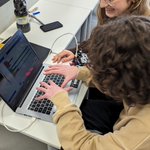
An Helium Balloon designed by K-6 kids with the help of @PlaneteSciences and @CNES.
Photo 6/8: stunning view from our @GoPro under the basket, just before free fall.

1
3
@thibaut_plisson retweeted

Researchers published the most uncomfortable paper on vibe coding.
ETH Zurich tested 100 developers in a controlled, commercial-grade vibe coding environment to see who actually succeeds.
And the results are a brutal reality check.
For the last two years, the hype has been nonstop: English is the new programming language. Just describe what you want, iterate on the output, and let the LLM handle the rest.
So researchers put that claim to the test.
They took 100 university students and placed them in a purpose-built vibe coding environment designed to mirror commercial AI tools.
Eight experts curated the exact tasks.
Then they measured three things:
- Written communication skills
- Domain-general cognitive ability (raw reasoning)
- Actual computer science achievement
Writing skill mattered. If you can’t structure your thoughts and specify intent clearly in plain English, the AI builds garbage.
But here is the part the hype cycle completely missed.
Computer science fundamentals were a massive predictor of vibe-coding performance.
Even after controlling for general cognitive skills and raw intelligence, CS knowledge still heavily dictated who succeeded and who failed.
Why? Because vibe coding removes syntax. It does not remove engineering.
Anyone can prompt an AI to generate a clean UI.
But the second the app breaks under the hood, you have to iterate from observed behavior. If you don’t understand how software actually works, you don't even know what to ask the AI to fix.
Natural language lowers the floor.
Computer science still decides the ceiling.

@thibaut_plisson retweeted
This cool interactive map tool by @bradsimantel allows you to explore how every mountain and building on Earth casts its shadow, at any hour of any day of the year. Pretty great! Explore your neighbourhood here: buff.ly/eIbHExk


@thibaut_plisson retweeted

YANN LECUN: "A STUDENT SHOULD NOT TRY TO MAKE THEMSELVES USEFUL"
if you had the choice between a course on iOS programming or quantum mechanics, "take quantum mechanics"
In 40 seconds he explains:
→ why tech courses are "very likely to be out of date 5 years from now"
→ why your profession is "almost certainly" going to change during your career
→ why the only skill that doesn't expire is learning to learn
the World Economic Forum expects 39% of workers' core skills to change by 2030
lecun won the Turing Award for the neural networks behind today's AI, and he still tells students to learn the stuff that won't expire
Free fundamentals he'd sign off on:
→ The Feynman Lectures on Physics, all 3 volumes free to read online. Feynman is one of lecun's scientific heroes
feynmanlectures.caltech.edu
→ MIT's full Quantum Physics I course, free lecture videos
ocw.mit.edu/courses/8-04-qua…
→ 3Blue1Brown's Essence of Linear Algebra, the math every neural network runs on
3blue1brown.com/topics/linea…
→ Learning How to Learn, 4.2M+ students, co-taught by Terry Sejnowski, who built early neural networks with Hinton
coursera.org/learn/learning-…
the course that looks most useful today usually has the shortest shelf life
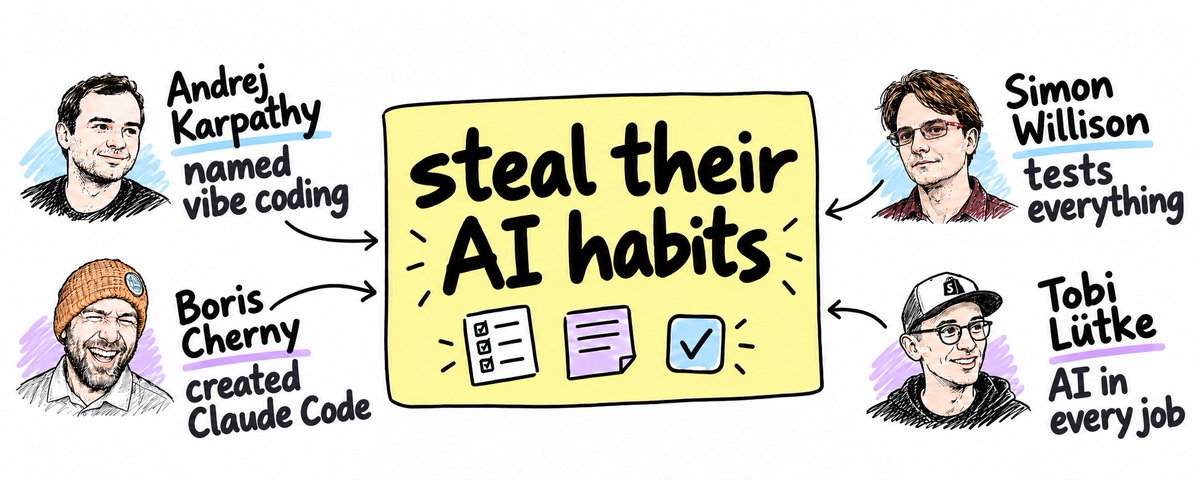
and if you want to see how the people building AI actually learn and work with it, I broke it down in my article ↓



@thibaut_plisson retweeted

Gravity is 10^32 times weaker than the other forces. Lisa Randall found a geometric reason why.
In 1999, with Raman Sundrum, she proposed the Randall-Sundrum model: we live on a 3-brane in warped five-dimensional anti-de Sitter space. Gravity leaks into the extra dimension and is exponentially diluted by the warp before it reaches us. The hierarchy problem becomes pure geometry.
First tenured woman theorist at Princeton and at Harvard. Author of Warped Passages. She wrote the libretto for an opera about the fifth dimension.
The weakness of gravity might simply be the shape of the unseen.

@thibaut_plisson retweeted

🚨: 800 billion stars captured in a single frame.
This is the Sombrero galaxy, captured by Hubble.
31 million light-years away from us.

@thibaut_plisson retweeted

❄️ L’Antarctique regagne de la glace ! Entre 2020 et 2024, le continent a gagné 340 milliards de tonnes de glace, soit environ 68 milliards par an, grâce à des chutes de neige exceptionnelles. Une évolution positive après plusieurs décennies de pertes. 🌨️ (Communications Earth & Environment)


@thibaut_plisson retweeted

🚨: NASA releases new image of planet Jupiter captured by James Webb Space Telescope, the most powerful telescope ever built.

@thibaut_plisson retweeted

After traveling 9 years and covering 3 billion miles, NASA's New Horizons spacecraft got this shot. Behold! The icy mountains of Pluto.

@thibaut_plisson retweeted

Trop de fils, des erreurs de branchements et des GPIO à recompter ? 🤔
Partis de ce constat, @slmeditation et @fredjelmoni ont créé la Touch Maker Lab : une carte pensée pour simplifier tous vos projets autour du Raspberry Pi. ✨
De l'idée au prototype, puis au produit fini : un grand bravo à eux ! 👏
Découvrez les détails ici 👉 kubii.com/fr/5277-touch-make…
#RaspberryPi #Maker #Kubii #TouchMakerLab #MadeInFrance

@thibaut_plisson retweeted

Dit is een Tesla batterij.
Om het te maken heb je nodig:
12 ton steen voor lithium
5 ton kobalt mineralen
3 ton mineraal voor nikkel
12 ton kopererts
Verplaats 250 ton grond om te verkrijgen:
12 kg lithium
30 pond stuivers
22 kg mangaan
15 pond kobalt
100 kg rammen
200 kg aluminium, staal en plastic.
De Caterpillar 994A gebruikt voor grondverzet verbruikt 1000 liter diesel in 12 uur.
Eindelijk krijg je een “zero uitstoot” auto.
Grootste oplichting in de geschiedenis.

@thibaut_plisson retweeted

NASA just dropped the closest, most breathtaking view of the Moon ever captured by humans during the Artemis II flyby.
Every crater, ridge, and shadowed valley is rendered with insane clarity—like you could almost reach out and touch the surface. 🌕✨

@thibaut_plisson retweeted

Sylvia Serfati sur la révolution de l'IA en mathématiques
"La plupart des résultats d'OpenAI mériteraient la médaille Fields".
"Les preuves sont d'une complexité incroyable et aussi parfois d'une beauté impressionnante. C'est-à-dire que nous n'avons pas le monopole de la beauté."

Passionnante réflexion des mathématiciens @Amaury_Hayat et Sylvia Serfati sur l'avenir de leur profession à l'ère de l'IA : la résolution de problèmes ne sera plus notre rôle, et poser les bonnes questions, sans doute que même l'IA le fera mieux que nous à terme...
@thibaut_plisson retweeted

Certaines bactéries peuvent sentir lorsqu'elles se heurtent les unes aux autres et utilisent ces interactions pour façonner l'organisation du groupe. Cette découverte révèle une nouvelle façon pour les microbes d'explorer leur environnement.
actu.epfl.ch/news/les-collis…

@thibaut_plisson retweeted

geoffrey hinton won the nobel prize in physics for building systems he couldn't fully explain - this october 2026 paper explains them, and the number that stopped me cold was 3,418 gradient steps to reach coherent reasoning from a random start state
"the most incomprehensible thing about the universe is that it is comprehensible" - einstein said that in 1936. he was describing physics. this paper proves he was also describing GPT-4, claude, and every LLM generating $3.8T in value right now, without anyone understanding why they actually work
every token your LLM generates costs energy. literally. p(τ) = (1/Z) exp(-E(τ)) - the probability of any reasoning trajectory follows the same Boltzmann distribution that governs how atoms arrange themselves in a crystal. your $0.002 per 1,000 tokens API call is a thermodynamic event.
the energy landscape visualization shows the full picture. high-energy region = inconsistent hallucinating output. saddle point = transition between concepts. low-energy basin = coherent reasoning. the model doesn't compute - it falls downhill through 10,000+ dimensions toward the most stable physical state.
neural dynamics: dh(t)/dt = -∇E(h(t)) + ξ(t). gradient pulls toward lower energy. noise term ξ(t) enables exploration before convergence. this is exactly how particles find equilibrium in statistical mechanics. hinton's backpropagation was gradient descent. this paper proves the entire LLM reasoning process is gradient descent - not just the training.
phase transitions explain why GPT-3 to GPT-4 felt like a different product entirely. small models stay trapped in high-energy fragmented states. large models cross a critical threshold and exhibit stable low-energy attractors. the capability jump wasn't more data. it was a phase transition - like water suddenly becoming ice at exactly 0 degrees.
the companies that engineer phase transitions deliberately instead of scaling blindly will compress 3 years of R&D into one architecture decision. that knowledge is sitting in a physics framework that 99% of AI teams have never opened.
hinton understood the gradient. this paper maps the entire landscape he was descending into.
Bookmark & watch today.
Every token your model generates is a system falling toward equilibrium.


@thibaut_plisson retweeted
Cédric Villani au micro de @s_jourdain pour évoquer les ~400 résultats annoncés par OpenAI : "il y a matière à une douzaine de médailles Fields", c'est "une montée en puissance d'une ampleur considérable, il y a encore quelques mois je n'aurais jamais pensé vivre une telle nuit".

@thibaut_plisson retweeted

Ben Affleck reveals he writes Python, understands convolutional neural networks, worked extensively with GPUs, and used his celebrity status to get private looks at Google and OpenAI’s video models
“I’ve always been kind of into computers since I was young. Then, when film started to move from analog film to digital, I became more interested in that aspect of it. The visual-effects workflow for many years has included machine learning, so I can write pretty shitty Python scripts and stuff like that.
“With convolutional neural networks, which were the precursors to what the transformer can do, which is much more computation simultaneously, you would do things like look at what’s called a tensor. That’s the numerical translation of a visual image in numbers, like the batch number, the frame number and the red, green and blue values of each pixel in each frame. It’s just that simple. That numeric is called a tensor.
“You’d use a convolutional neural network to identify patterns that reveal what’s called edge detection or feature extraction, which is identifying patterns well enough to know, this is where the window ledge is, so we can more easily take the green-screen image out and replace it with something.
“That was familiar to me early on because, prior to Artists Equity, I had a small visual-effects company. I’ve worked with GPUs a lot too. The visual-effects guys said, ‘Hey, you should see. There are a couple: Google and this other company, OpenAI, are doing really interesting stuff with transformers in video.’
“I’ve learned that I can actually just call up and go, ‘Hey, it’s Ben Affleck. Can I come see what you’re doing?’ Sometimes people say yes, to my astonishment.”

$ANET Andy Bechtolsheim says AI has made optics demand about 10 times bigger in five years and the industry is only at the "very beginning"
"So I guess I don't need to tell you that AI has been driving this incredible increase in demand for high-speed optics, which is probably now 10 times bigger than it used to be five years ago..."
"And what I want to talk to you today is that we're not at the end of this journey, but rather the very beginning. There's easily another order of magnitude increase in bits needed for the next generation kind of data centers."
"So what I want to talk about first is what's happening at the data center level, and how we as an industry have to get together to solve these problems of this very rapid and high demand growth as fast as possible, since AI can't wait."
______
For full set of takeaways to Andy's AI Datacenter and Optics lecture: firesidealpha.substack.com/p…