
20 years combined tech and asset management. Learning and sharing about entrepreneurship and business building. https://xitter.cf/t.co/hB3DddxTQA. NFA
Joined June 2024
- Tweets5.4K
- Following831
- Followers1.1K
- Likes2.1K


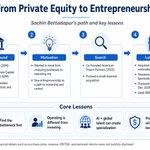

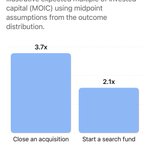
Great thread.
If you were diligencing manufacturing facilities are there 2-3 key metrics you use to quickly assess how well they run?
Yield ? Input = output ? Defects? Other ?
Thank you
This assumes the humans get it right more often than not and size the winners enough to offset the losers.
Consistently. Which they do not.
At least not in aggregate.

This is an interesting take. I have observed mean reverting answers as much as consensus answers. By the way, both are the types of mistakes inexperienced analysts and pre GFC value investors make. One just doesn’t have experience to shape the context and the other has a bias. Which one applies to AI? Which one is easier to improve through RL and RSI?
Yes.
These revolutions or innovations stack and compound based on driving key input costs lower.
The dot com boom and bust paved the way for SaaS and mobile; shale helped drive midstream and AI.
Now the question is which new use cases AI driven cost reductions in intelligence/data cost create?

Got it thank you.
That sort of role seems like one of the most attractive spots to be in as far as private investing goes.
Can affect multiple deals at once so you have the leverage that comes with scale + you bring a unique toolkit that your median banker trained associate can’t offer.
Thank you
By operating partner you mean someone with industry (chemicals , plastics) experience that works on a port co, not one of the deal makers ?
Tempted to guess…there aren’t THAT many large PE shops with focused vertical in plastics / chems.
Also the career optionality from PE seems much higher than for public market investors.
The required depth and transactional nature of PE is more immediately transferable to other operating roles in corp finance or even sales.
Because so much of public equity investing is about navigating the market itself - risk, positioning, sentiment - rather than running or knowing the actual business - the skill level is limited once that context is removed.
What keeps most IB/PE folks from making the leap to be a good CFO?
What’s the biggest gap?
Thank you
Feels rewarding knowing that I follow each of them already

some of my favorite founders from the manufacturing world
- @jimbelosic
- @PalmerLuckey
- @OSHBuilt
- @2112Power
- @aphysicist
- @MatthewChang
there's like 100 more great ones. but i got to work and don't have time to @ them.
Great post.
Rhymes a little with Hamilton Helmer’s “7 Powers” thesis.
I recall not too long ago on X the consensus view that “distribution and taste” were the only moats left.
And while AI has surely shifted the importance of distribution and taste, they are ultimately as susceptible to competition or substitution by AI as any other perceived edge.
Framing offered here is arguably more durable.
Ultimately everything comes down to threat of competitive substitution.

Moats! Does anyone have one anymore?
Yes. Yes, they do.
But only a small subset of what people call moats create real long-term value and defensibility.
Not actually a moat:
1. Distribution: This does matter more than ever. Building products has gotten easier, but getting them to customers has not. Distribution, however, does not create durable defensibility. It helps create the raw ingredients for one, but it is not itself a moat.
2. Execution: Yes, speed is critical for startups. But a company that has to sprint forever is not a good business. Ultimately, it will misstep, slow down, and competition will catch up. Speed gives a company more shots on goal as it tries to build a great product and a great business, but it must eventually find something more durable.
3. Brand: The idea is that when everyone is building the same thing, the most resonant brand will win. But for startups, brand works more like customer acquisition spend: Put money in, get growth out. It’s not something that will effectively keep others from competing long-term. Brand can become a true moat over time (as with Coke or Nike or Apple), but it just takes too long to really matter for most startups.
What you're looking for is compounding advantages: a self-reinforcing flywheel that gets stronger and stronger over time, ultimately making a company very hard to compete with long-term.
There are only four compounding advantages that really matter. Every major tech company has at least one:
1. Switching costs: The more deeply embedded a product is in the way a customer works, the harder it is for that customer to switch. This increases retention and revenue per customer, which can be reinvested into the product.
2. Network effects: The more users a product has, the better it gets for everyone. This increases engagement and attracts more users.
3. Scale economies: The more volume a company has, the larger and more efficient its operations can be. This lowers unit costs, funding lower prices or a better product at the same price, further driving up volume.
4. Data effects: The more usage a product has, the more data it generates. This data can be used to improve the product and increase usage.
If you can’t see the potential for any in the startup you’re considering joining, that’s a red flag.
In today’s incredible post, @danhockenmaier shares a simple framework you can run in about an hour after getting an offer:
1. Identify a startup’s compounding advantage
2. Gauge how strong it could get
3. Measure whether it’s working
Inside: dozens of real company examples, the specific metrics to track, and benchmarks for what good and great look like.
Read it here: lennysnewsletter.com/p/how-t…

Entrepreneurs need writers - a 7,000 to 1 opportunity.
This is an under-appreciated mismatch for SMBs.
Good discussion on 'Starter Story' from July 2025 with Cardinal Mason on the opportunity in copywriting.
> "Surprising how many businesses don't have copywriting"
> AI as threat: AI is a great tool but can't think about what to write
> 35M small businesses in the US and only 4,000-5,000 copywriters
> Only need 5-6 good clients to make 6 figures. Ultimately top out at $400k as freelancer—have to build agency to be bigger.
Operating is the unlock to buying more.
You can afford to pay more if need be, and can extract more value more quickly.
People assume financing and operating are totally different disciplines and in some ways this is fair.
But they are highly synergistic and if anything we are approaching the time when operating and scaling becomes far more valuable than financial engineering.