

Interests: Data. Python. Economics. Social Policy. Politics. Australia. Caveats: Not financial advice. Opinions my own. Likes ≠ endorsement.
Canberra, Australia
Joined March 2012
- Tweets9.9K
- Following2.7K
- Followers5.9K
- Likes5K

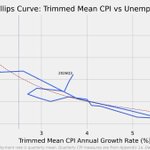


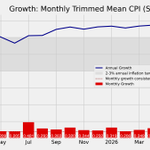

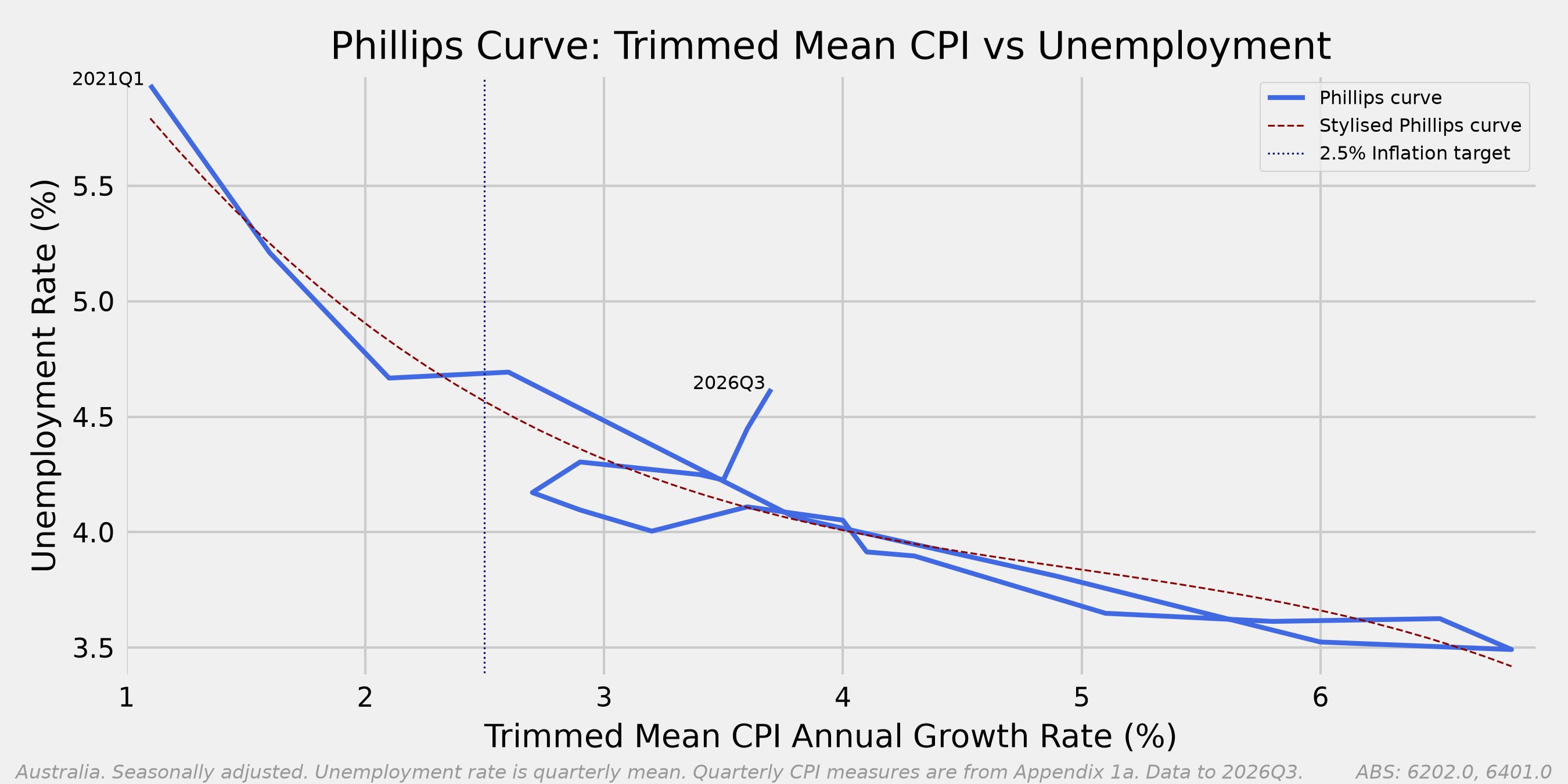
I often see people who argue that Austrlia is in stagflation. Yes there are issues at the moment. But they are nothing like the 1970s to 80s Stagflation period.



Mark 🇦🇺 retweeted

There are some signs of slowing in new dwelling price rises (its getting harder for builders to raise prices), but there are still more CPI items with inflation above 3%yoy and the trimmed mean inflation rate (which strips out big rises like petrol) seems stuck well above target.


Mark 🇦🇺 retweeted

CPI rose 4.3% in the year to September 2026
Find out more abs.gov.au/media-centre/medi…

Lowering immigration reduces both sides of the ledger (supply and demand). Reducing NDIS spending, let's see if it is achieved.
Mark 🇦🇺 retweeted

We actually covered the S-1 filing announcement and what's in the filing here: xitter.cf/AGTPinsights/status/21…

Anthropic just made its S-1 public today. Here's what you need to know.
The filing went to the SEC on Oct 26 and Anthropic announced it on X. It plans to list on the Nasdaq Global Select Market under the ticker ANT. Goldman Sachs, Morgan Stanley and J.P. Morgan lead the deal. The price range and share count are not disclosed yet. The registration statement has not become effective, so no shares can be sold yet.
The financials are now public. H1 2026 revenue was $16.3B, up from about $1.1B a year ago. The net loss was $80.7B, but most of that came from accounting charges. The filing also shows a $974M operating profit and $131.7B in cash.
The compute bill is huge. Anthropic agreed to spend up to $120.5B with SpaceX's AI unit for access to Nvidia chips. Once all capacity is delivered, expected in December 2026, it pays about $3.1B a month. The deals run into 2029.
The filing also covers customers and control. Roughly one-fifth of revenue came from two customers. Founders keep 50.1% of the voting power through a founders' company. About 80 of the 261 pages are risk factors, including a warning that AI could pose catastrophic or existential risks to humanity.
Key numbers:
- ~250 customers pay over $10M a year
- 1,900 customers pay over $1M a year
- 11,900 customers pay over $100K a year
- $6.6M revenue per employee, per one investor's read
- $2.08 of revenue per $1 of compute, up from $0.40 in Q1 2025
Reports point to a listing in mid-November, with a possible valuation near $2T.

Mark 🇦🇺 retweeted

Q3 trimmed mean CPI
Last: 0.8pc
Mkt f/c: 1pc
Range: 0.9pc to 1pc
Core inflation expected to hold at around 3.6pc in the 12 months to September
Q4 headline inflation could well be lofty again with fuel costs leading the way; disinflationary pulse forecast to kick in only in CY2027
RBA has hiked 4 times already this year, but has openly flagged a further hike as likely…the path of least regret
Mark 🇦🇺 retweeted

The endless cost of living discussion is always selective and mostly focussed on elect/gas/petrol. Rarely discussed is how cheap some categories are eg kids tshirt $2.25!

Productivity tells you how much wage inflation can sit above prices inflation. US inflation is in large part because monetary policy there is too loose.
We may be edging towards stagflation, but today’s mix is nothing like the real thing. The 1970s brought inflation in the teens. The early 80s combined double-digit inflation with unemployment near 10%. The early 90s pushed unemployment past 10%. We have inflation a little above the band, unemployment edging up (but still low hisyorically), and we had a recent per-capita recession. That’s uncomfortable, not a crisis. The RBA has room. The real fix for sticky wage-driven inflation is productivity, and that sits with governments.
Why is inflation sticky and domestically driven? With zero productivity growth since 2019, wages can only rise about 2.5% a year without pushing up costs. Private wages are rising 3.1%.
That gap (about half a point) has been there since 2022. It has narrowed from about 1.5 points in late 2023, but not closed. Wages are rising faster than 2.5% inflation plus what productivity can absorb.
It's the same with public sector pay included (3.2%), but private wages are the better signal: they track the labour market far more closely than public pay.
The fix isn't necessarily slower wages growth. A return to even 1% productivity growth would lift the benchmark to 3.5%, and today's wage growth would sit below it.
[Note: corrects an earlier tweet from me, since deleted].


Actually, not true. The biggest inflation impact from raising interest rates is theough the exchange rate channel. Raising taxes doesn’t have that effect.
That is a question for the Government, not the RBA. The RBA is responsible for monetary policy, within the framework given to it by the government. Fiscal policy is not the concern of the RBA. Their job does not require the RBA to model fiscal policy impacts on the economy. It is a policy setting they must work within. If you think the fiscal policy settings are hurting, take it up with the government, and don’t expect the RBA to take it up.
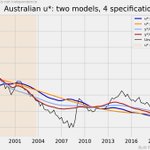
The RBA needs u > u• for a period to push inflation down - and the government’s estimate of u• at 4.25% has been thoroughly debunked. U• is likely much closer to 5 per cent - and the RBA needs higher still to squash inflation.
When a government spends more than it raises in taxes, this stimulates the economy. Perhaps this is what you are getting at?
Mark 🇦🇺 retweeted
There are obviously people struggling in Australia financially but 1/3 households struggling to put food on the table as these articles suggest is nonsense.

'Lucky country has become the hungry country': Foodbank Australia ift.tt/9HMYg18
