Cutting-edge research, news, commentary, and visuals from the Science family of journals. Follow @NewsfromScience for stories from our News team.

Washington, DC & Cambridge, UK
Joined April 2009
Researchers have developed an AI-based approach to help physicians with real-life clinical workups, starting with the patient’s chief complaint, systematically asking questions and deciding what laboratory and imaging tests to order, and then continuing the evaluation on the basis of the answers received. Learn more this week in Science: scim.ag/3U8xn94
21
76
7
312
31,376
A @ScienceTM analysis of trial data from stem cell transplant recipients shows how immune suppression with either cyclophosphamide or tacrolimus shapes T cell reconstitution—and has opposing effects on the risk of graft-versus-host disease or infection post-transplant. scim.ag/47xj5BT
2
1
9
4,971
"For years, I worked hard to hide my history of homelessness. Now, I am more neutral—it was a challenging and sometimes unpleasant chapter, like puberty, or, more recently, learning Bayesian statistics. I am committed to not letting my history define me. But I also don’t want my colleagues to assume no scientist could have a past like mine." #ScienceWorkingLife scim.ag/4jAvtZd
1
5
2
28
9,488
New in @SciRobotics: The Ultra Mobility Vehicle bicycle robot leverages its own inertia and momentum to perform jumps, track stands, wheelies and other athletic moves. scim.ag/4yyunAT
6
1
15
9,024
Science is publishing an Erratum to replace the July 2026 Editorial Expression of Concern for the February 2026 Research Article “Hafnium oxide interface stabilization for efficient, photothermally stable perovskite solar cells.” scim.ag/4z1WcT5
1
11
10,096
How does the #glycome of gamma-delta T cells affect their activation toward an autoimmune state? Learn more in Science #Immunology about these important sugar molecules and their impact on inflammatory disease. scim.ag/47UlTJn
3
10
49
13,280
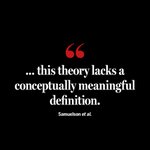
Does generative AI dilute markets for human-created work? In a new #SciencePolicyForum, researchers discuss how market dilution theory, which could affect AI use in science, requires conceptual clarity and empirical evidence: scim.ag/4eDnln9
7
5
20
11,705
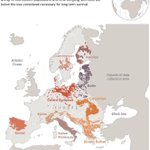
Wolves have made a spectacular comeback in Europe. But attacks on livestock and humans have caused a heated debate about the limits of coexistence. Learn more: scim.ag/4oNnWa4
23
164
20
637
74,901
People who lived 5500 years ago on the shores of Siberia’s Lake Baikal survived by hunting deer and game and catching fish. At times, marmots were on the menu, too—a decision with deadly consequences. Learn more: scim.ag/4sdUV9f
27
53
6
236
51,810
In the 1950s, scientists tried to define "normal" humans. The problem? They couldn't find any. The Normals, a #SciencePodcast🎙️ series that explores this story, has won Silver in the Science & Education: Limited Series and Specials category at the @signalawards! Check out the award-winning series: scim.ag/4bWMKr9
2
10
2
66
19,556
Researchers in Science report that many birds use vertical winds or gradual changes in wind speed or direction (wind shear) to soar, thereby reducing their cost of transport by switching from costly flapping flight to gliding flight. 📄: scim.ag/4dJr0Qc #SciencePerspective: scim.ag/4yVNzth
13
27
3
155
20,827
🐟 How many times have fish evolved suction cups? Research led by Scripps PhD student Emily McFarland found that suction cups evolved at least 3 times independently in nearly 1,000 fish species! Dive into the study featured in @ScienceMagazine. ⤵️ science.org/content/article/…
3
11
8,991
Science Magazine retweeted
We didn't know about the role of alternative RNA splicing for response to cancer immunotherapy. Discovery of STAT2 introns that influence non-small cell lung cancer response and survival (PSI=percent spliced in) @ScienceMagazine science.org/doi/10.1126/scie…
14
32
2
123
27,622
Using genome editing to trace cell lineages, researchers have captured the early history of the mouse embryo in unprecedented detail. Learn more: scim.ag/4z5PhIP @NewsfromScience
5
38
5
169
23,412
A new device can detect scents and transmit them between people across distances, with the potential for long-range transmission. It marks another stage in the development of human-machine interfaces: enabling the sharing of smell. Learn more in @ScienceAdvances: scim.ag/47z6fTL
14
21
2
125
24,779
Researchers in Science have developed an AI-based approach to help physicians with real-life clinical workups. The system shows promise in supplementing a physician’s workflow. Learn more: scim.ag/4sfzsfP
7
19
2
74
16,266
Science Magazine retweeted
Imagine a system for people with diabetes that could continuously monitor glucose and keep its level steady and under control without drugs. Oh, here it is, at least one that works well in mice @ScienceMagazine science.org/doi/10.1126/scie…
14
66
9
302
32,738
A new slate of #optogenetic tools enables scientists to finely control G protein signaling in excitable cells—providing a flexible method that might also be used therapeutically for disorders that disrupt the excitability of cells. @SciSignal scim.ag/4eImxxk
6
29
1
161
17,590
Science Magazine retweeted
Just published @ScienceMagazine Higher medical accuracy at lower cost A 3-agent AI for sequential diagnosis nearly doubled accuracy compared with physicians for >300 @NEJM CPC cases and >300 ER cases AND substantially lowered cost, also exceeded performance of many AI models, physicians plus AI @HarshaNori @erichorvitz @Dominic1King @mustafasuleyman
41
128
19
494
60,509
Science is publishing an Erratum to replace the June 2026 Editorial Expression of Concern for the September 2024 Research Article “Durably reducing conspiracy beliefs through dialogues with AI.” scim.ag/4dPOWRT
3
3
1
29
22,297