
I acquire e-commerce brands, and I’m using AI to automate as much of the business as I can - read about it at https://xitter.gq/t.co/ewQMybAoTG
San Diego, CA
Joined October 2009
- Tweets2.5K
- Following1.8K
- Followers395
- Likes23.5K




Pinned Tweet
I have started a S*bst*ck, in which I catalogue my work to hand off the operations of my business to AI. I acquire and operate small e-commerce brands, and this post is about how I've distilled my analysis of prospective acquisitions into one giant prompt.

2
6
1,165
Asked Opus to have a Fable subagent review something for me. This was the last line. Even Claude doesn't want to hear obnoxious flattery from Claude.

28

I just saw this video and assumed it was AI but no Stephen A Smith actually interviewed Donald Trump about Jensen Huang
It’s tough that AI video is becoming indistinguishable from the real thing right when reality has gone completely off the rails

President Trump reveals Jensen Huang called him yesterday 'going through hell,' and says Huang should only have stepped down if the woman was a spy
Stephen A. Smith: “Before I let you get on out of here, shifting, Jensen Huang.”
Trump: “Yeah.”
Stephen A. Smith: “Nvidia, resigned as CEO.”
Trump: “Sad.”
Stephen A. Smith: “Your feelings about that?”
Trump: “Well, he’s a tremendous talent. He did something that nobody else, you know, you have China and these people, they copy. They pirate so much. Here’s a chip that’s so complex, so brilliant that you can’t copy it. I mean, it’s beyond copying because of their level of genius. What he’s done is incredible. He built an incredible, Nvidia is unbelievable.”
Stephen A. Smith: “Should he have stepped down?”
Trump: “Well, the big thing is, was the woman a spy? And I don’t know if that’s been determined yet. But if the woman was a spy, yes. If the woman was not a spy, perhaps it would be different. But I can tell you this, somehow, he’ll end up in his feet. I mean, I know him. I know him pretty well. I always thought of him as a fine man."
"I spoke to him yesterday. He’s going through hell. What he feels most badly about is his wife and family. That’s what he is really, that’s what he told me. And in, strongest, he called me as the president. I’m president, and he called me. And he said, what I’ve done to my wife and family is, that’s what he talked about.”
1
1
94
This week's post is about using Claude to get answers to thorny business questions. Armed with sufficient information, it's great at sorting through a hundred different factors to figure out which ones matter.
theautomatedoperator.substac…

40
Used a Claude reset yesterday despite my weekly quota resetting at 9am today. I’ve managed to use 75% of an Ultra plan in a day, but I still hate to let some prepaid AGI go to waste…

1
1
92
In light of Dario’s pronouncements that AI will solve mental illness, I’d like to go on record that my bet is we start diagnosing AIs with mental illnesses before that happens.
21
Alex retweeted

So, I’ve kinda been fucking with this lately. I’m not technical. Ive never written a line of code but I’m just neurodivergent enough to become obsessed with shit, and just smart enough to get pretty decent at it. I have three degrees, all of which involve the use of language (rhetoric, Spanish and law).
I got legal AI for work. It had a Claude plugin, so I started fucking around with it, and relized Claude’s interface was much better than the legal AI (which had a front end that looked like it was from the 90’s). Then I realized that Claude was wayyyyyy better at remembering context and that without proper context, the legal AI was just a minimally better version of the legal software that attorneys have been using for decades.
So, I convinced my CEO to let me get us a Claude teams package, so I could have the data security to actually run the legal software through its paces, using Claude as the go-between.
I built a context base pretty quickly, and started having Claude share the relevant bits with the Legal AI software when it was prompting. Results got better. Then, I realized I could train Claude on more than my (and my company’s) context. So, I started having it learn everything possible about prompting legal AI software.
Then, I realized I could loop it with a goal. The way I do legal research is finding a position I want to defend (basically, a win condition), and obsessively digging out case law, until I find the exact sentence of precedent that I need. Well, that’s a loop with a verifiable result. Perfect for Claude.
Then, I realized that I was wasting a bunch of useful information. If Claude had 5 runs searching for the law I wanted, it meant that he’d read 15-25 pages of legal research from the legal AI, without absorbing any of it. So, I had it create a knowledge base. The legal AI output became raw files. Those were put into a wiki, and the wiki was indexed to be an issue spotting map— just like a real attorney thinks. Just like I think.
Then, I started having it build that knowledge base while I slept. I’d be asleep, and it’d be learning from my legal AI, indexing it, and creating an issue-spotting partner for me. It covers my blind spots on areas of law that relate to my work, but I don’t personally practice.
Finally, I hit the point of thinking I’d gotten the most out of it, and couldn’t push it any further. At this point, it could issue-spot almost as well as me, and it had more baseline knowledge in some areas of law than I did.
But it still couldn’t write for shit.
Until I realized that I could pull out another one of my degrees. I’d been training it like a lawyer. But, I write like a rhetorician. So, I gave it some demand letters and correspondence, and asked it to do a breakdown of the letters according to a moral alignment rhetorical framework. Basically, that’s a fancy way of saying that a piece of writing identifies the parties; frames one as the bad guy, and one as the good guy; it presents a problem, a cause to the problem (usually, the bad guy). Then, it passes moral judgement on the bad guy.
At this point, the lawyers may be jumping in the room, because that’s the same basic framework as a demand letter or a complaint.
More importantly: it created a verifiable goal for “good enough” for legal writing: the law is right, and you present the facts/parties within a moral alignment rhetorical framework.
There’s your harness.
I’m still fucking with it, but it’s 100x better than any legal AI tool I’ve ever used.

LLM's weren't great at writing code either until they were put in a harness.
Software Engineers don't know how to build a writing harness because they aren't good writers.
Writers don't know how to build a writing harness because they aren't good software engineers.
Writing isn't magic. It's going to be reducible to a collection of rules and loops like code. With the added need to reflect the zeitgeist, rooted in an opinionated point of view.
This is beyond feasible.
A very good idea that isn’t limited to game dev. Put feedback inside all your internal applications!

Ai gamedev protip.
Add an in-game feedback system that allows you to prompt from inside your game.
"Add an in-game feedback system with these features:
- Press N to give feedback: Pause the game and open a feedback window. Closing it restores the previous gameplay state.
- Make feedback quick: Allow an optional written note, and selectable feedback options. Include useful choices such as “Something broke,” “Unclear what to do,” “Too hard,” “Too easy,” “Controls feel off,” and “Performance issue.”
- Capture context automatically: Attach real-world and in-game timestamps, a screenshot taken before the window appears, and relevant metadata such as level, player position/state, game version, and recent errors.
- Track notes persistently: Store feedback somewhere you can access, with unique IDs, open/in-progress/resolved statuses, and brief resolution summaries.
- Automatically act on submissions: Connect new notes to a working trigger that starts processing all unresolved feedback. Use subagents for independent tasks, prevent duplicate or conflicting work, and mark notes resolved only after verifying the changes.
- Fit the interface to the game’s existing style and keep feedback submission fast and unobtrusive."

40
Claude goes through all of the charges on my business card and allocates them to the different brands that entity holds. Most of them it can figure out through context (e.g. check the advertising accounts for each brand and match the amounts of the charges), but some are ambiguous and require my input.
It found one of those today (the annual fee for the card), and it came up with the exact two options I would've considered for how to allocate it.
That's not remotely impressive these days, and yet it's crazy that that's just a normal thing that a computer can do now.
35
CNBC featured me in an article on small business owners with no employees, just AI: cnbc.com/2026/11/07/americas…
Thanks @bjbooth2 @CNBC

2
1
41
And of course if you'd like to learn more about what I'm doing with AI, check out theautomatedoperator.substac…
15
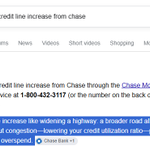
Just needed to know how to request a credit line increase on a card, and I get the sense Gemini does not think highly of me...

37
Alex retweeted

It's August 18th. Two oncologists look at my CT. My primary and a specialist at one of the top cancer centers in the country.
Same verdict. "Looks like progression. Your oral pill isn't working. We recommend adding chemo."
Chemo. Poison that destroys you. And after I'd been on the new pill for less than a month? Fuck me.
But something bugged me. The scan they compared it to was from June 15th, back when my old pill was already failing. I didn't start the new med until July 20th.
So how much of that growth happened on the old drug, before the new one was even in my body?
So I put AI to work.
I gave it my scans, the tumor measurements, and the start and stop dates for every med. I had it estimate growth rates and back-calculate doubling times, then run thousands of Monte Carlo simulations across the measurement error to see when that growth most likely happened. Then I had it update the odds that the drug was working, Bayesian style.
The answer jumped off the screen.
There was a high likelihood that the growth happened in the ~5 weeks my old med was failing, not after I started the new med.
I took that to my oncologist and explained my reasoning. I wanted to wait another month and scan again.
If I was wrong, I probably wasn't going six feet under too much sooner. The risk was worth it to me because after this new med fails, there's not a lot of treatment options left (other than chemo, yuck). He was comfortable with the month wait and scanning again.
September 22nd rolled around...time for a CT and the moment of truth.
NO. FUCKING. PROGRESSION.
The new med was working. I'd have started chemo for nothing.
My care team is incredible. But they get 15 minutes with me. I get every waking hour to look into my own health and try to delay death. I show up armed, we argue probabilities/outcomes, and decide together.
That's how patients should use AI. Not to replace your doctor. To walk in with better questions.
But I'm a fella with a lot of agency. As I've said, I'm borrowing @sytses's playbook and going founder mode on this shit. Not everyone will.
The real next step is to pair physicians with AI so they have these probabilities sitting on their screen as they walk into the appointment.

Realized my weekly limit was going to reset in an hour while I'm only at 70% usage. Told Claude to finish any open work it can and let me know anything else that it thinks might be useful to do. It really took my instructions to heart, never seen this before. (Though also I just added more RAM to my computer, 20 agents would have crashed it before.)

2
1
101
This is your regularly scheduled reminder that Claude is terrible at search and will claim confidently that APIs are unable to do things that they absolutely can do. If you're searching for things, always use ChatGPT.


59
Alex retweeted

Practicing physician here. Have thought about this a lot and would to love to hear how we end up in such different spots.
I'm a dermatologist, I do a lot of teaching to other dermatologists and consulting for pharma. Was in charge of teaching dermatology at The Ohio State University for 10 years. My specialty is figuring out the diagnosis on cases other dermatologists haven't been able to figure out. Been doing it for 20 years.
Until about a year ago, AI was completely useless for me professionally.
Then I saw a commercial for @doctronic, thought it sounded like such a cheesy name that it might a parity, but obviously would be terrible. So I went to their website to get a laugh, maybe something I could joke about on my podcast.
Chatbot interface. Great, I'll pretend to be a patient, show it what it's really like - that the patients don't read the textbook.
I pick a diagnosis. My area of expertise, adult onset atopic dermatitis, that is very similar to several other forms of dermatitis that are difficult to tell apart. Pretend to be a patient and give vague, incomplete, misleading answers.
Damn thing gives me a perfect differential diagnosis and plan.
Holy fuck.
I try it with a bunch of esoteric dermatologic diseases - autoimmune, malignant, infectious - pretend to be a real patient, give vague and incomplete answers.
Time after time it gives differential diagnoses and plans that I'd have been satisfied with from someone who just finished residency.
I have other academic derm friends try it. Same goal - pretending to be a real patient seeing how it does.
Same result as me - gets it about as right as you'd expect from a graduating resident.
This thing can do IT. I'm pretending to be the most challenging patients I see, the poor historians, answering the way I believe they'd answer. And it gets the right answer.
Have spent the last year building harnesses via project instructions, doing lots of pushing to see where Claude's limits are. It was good in early 2026 and has gotten dramatically better by late 2027.
In all honesty, given the choice between a Claude Ultra subscription with some instructions on how to use it and a reasonable harness to start vs. having to get answers from the traditional healthcare system through normal channels - making appointments, calling and messaging normal offices, etc?
I'd recommend the vast majority of people go with Claude. Sure, it's going to make some mistakes, but it'll be fewer mistakes that are more likely to be caught and rectified than will happen in the existing system.
That's why I think AI should be given prescribing authority now. Establish the equivalent of board certification and systems that can meet the requirements for that certification can prescribe and write orders like a human doctor doing telemedicine visits.
Build in oversight, of course: some percentage of cases get randomly selected for review by humans, all cases are reviewed by multiple adversarial AIs based on different lab's frontier models and if the AIs can't agree on a plan, they escalate to a human.
My wife is preparing a presentation for an interview for a scientist position. She gave it to ChatGPT and asked for feedback, but its responses were generic and unhelpful.
I wrote up a much longer query, including a link to the position, the name of each reviewer and all of the instructions she'd been given with regard to the presentation. I also asked it to look for any information it could find about what makes a successful presentation in this specific kind of interview setting. I then gave that prompt to ChatGPT and asked it to improve it.
ChatGPT suggested adding more detail in my request, like slide by slide feedback and a point by point analysis of each criterion she'd been given and how well the presentation fit.
I started a new chat with ChatGPT set to Pro and gave it the presentation and prompt. It ran for several minutes and came back with at least ten pages of feedback, which my wife read and found surprisingly harsh.
Once she got to the slide by slide feedback section, she was extremely confused about some of what it was saying and how it was relevant. She checked the deck I uploaded. It was the wrong deck. Oops.
I started a new chat and ran it again with the right deck. Excellent, detailed, actionable feedback in the response.
Two lessons:
- Prompting is still a skill. I think what used to be called prompt engineering is less valuable as the models get better and take more initiative, but it's still true that the better a job you do of scoping your request and providing context, the better results you get. Also, before you fire off a long-running query on Pro mode, there is basically a 100% chance that running it by ChatGPT first will yield improvements.
- Even the most advanced models available to us still lack a certain degree of common sense, or at least a Pro query is limited by its inability to stop after a small number of tokens and question the prompt instead of producing a long report. It was somewhat obvious that this was the wrong presentation - the content was somewhat related, but there was plenty in there that indicated it was not intended for a job interview. If my wife had asked a human scientist to review, they would've figured it out.
1
65
Started doing this in everything a while ago. I can’t spare the seconds it takes me to change windows to the console and describe the thing that needs to be changed to Claude!


I'm now building an "improvements" feature into all of my personal vibecoded applications: a freeform text input that's hooked up to an agent that yolo implements whatever is submitted.
It's an interesting experience -- the activation energy barrier to sanding any rough edge or implementing any new feature becomes extremely low. Someone else who uses one of the applications I created has already implemented 150 improvements over the course of a few days. This pattern feels like a new kind of tool -- liquid software? -- and every application that doesn't have this feature now has a slightly rigid and anachronistic flavor. Why can't I just tell it how I want it to be different?
Now, it's not obvious to me how this pattern can or should scale. Does it become unmaintainable after a while? (Maybe model intelligence improvement outstrips my feature appetite such that it's fine?) How does collaborative software work in this model? Can software designed this way be secure and reliable?
Whatever the larger questions about broader deployment, it definitely works great in a personal context. It reminds me a little of the visions of Lisp/Lisp machines, Smalltalk, and HyperCard -- systems that the user can take control of and modify. Those visions never quite worked, though: the vast majority of software today is not end-user modifiable in any useful way. So, while this "liquid" affordance is a very small touch, the way it changes one's relation to the software feels a bit transgressive and empowering in a Lickliderian and Engelbartian way.

32
