

Leyendo SEO desde hace 5 años, aprendiz de todo y experto en nada.
Mex
Joined November 2009
- Tweets4.3K
- Following714
- Followers150
- Likes1.7K









Gilberto Ang retweeted

How I automate 90% of my content with Claude:
1. Niche: You tell Claude your field, what you know, and what people ask you about. It asks you questions, then hands back a few options in one sentence (e.g., I help X do Y).
2. Video idea: Claude searches VidIQ and TubeLab for videos with 100,000 views or more from channels with 100,000 subscribers or less, at 5 views per subscriber or better. The video itself should be mediocre or preferably bad, because a weak video that still wins proves the idea carried it.
3. Title, thumbnail, and intro: Claude gives you a thumbnail mockup, 10 titles, 5 thumbnail text options, and 5 intros for that idea. Pick one title, one thumbnail, and one intro that tell the same story, because congruence beats quality every single time.
4. Script: Start with a yap session, where you talk to Claude for 5 to 10 minutes about your stories, your numbers, and your mistakes. Claude writes the outline and the word-for-word script from that, and your voice is what keeps it from sounding like AI slop.
5. Recording: If you have a personal brand channel, you're going to be recording yourself. Your phone or your laptop webcam is more than enough to get started.
6. Editing: Claude can edit through the Descript connector, but on a 5-minute video it took 28 minutes and still lost to a 3-minute edit by hand. Edit the transcript yourself in Descript, deleting what you don't want like you are editing a Google Doc.
7. Analytics: Download your YouTube analytics, drop them into Claude, and have it find what went right instead of what went wrong. Your winners are stronger proof than anybody else's video ever will be.
8. Syndication: Cut one long video into shorts and written posts for LinkedIn, Instagram, and Facebook. It only works in that direction, because a LinkedIn post has nothing in it to cut into a video.

I just subscribed to Metehan’s GEO/SEO & AI/ML Substack. Sign up here: metehanai.substack.com/?r=f2…
Gilberto Ang retweeted

screw it. no need to keep this one to ourselves
i'm giving away our ENTIRE Claude SEO workflow library. written for SEO teams and agencies who want to automate repetitive research, audits and reporting
it's a collection of 10 full usable Claude workflows covering the jobs an SEO team runs every week
the first 4 parts are all about finding the problems and opportunities BEFORE you start producing more content
here's what's inside:
1. the technical crawl. find crawl errors, indexation problems and technical issues\
2. the content briefs. analyse search intent, SERPs and build briefs before writing\
3. the schema. audit structured data and improve GEO/AEO readiness\
4. the competitor gaps. identify the content opportunities your competitors cover\
5. the backlinks. compare link profiles, qualify prospects and prepare outreach\
6. the local SEO. review business profiles, NAP consistency and multi-location visibility\
7. the site monitoring. compare site changes and flag unexpected regressions\
8. the data. reconcile Screaming Frog, Ahrefs and Search Console findings\
9. the reporting. turn SEO data into weekly and monthly performance summaries\
10. the action plan. organise findings into priorities your team can execute
i've put the full Claude workflows into it, so you can connect your own SEO data and run the process on your website or client projects
PS. Claude cannot see live rankings without connected data. that's why the data workflows matter.
And it's yours FREE 👇
Gilberto Ang retweeted

DR 92 Backlink 🏆
🔥Just delivered another msn.com backlink to UK client.
UK and USA clients appreciated my prices too.
- 92 DR
- 107M Backlinks
- 77% Do follow
- Includes Writing
- Permanent Post
A perfect backlink for almost any niche.
I am providing more placements.
⚡DM's open for more placements!


High Quality Backlinks and Brand mentions are essential to rank in AI.
Read more.... View article


Gilberto Ang retweeted

The exact structure of a page that ChatGPT and Google rank
Based on research of 10K websites ranked #1 in LLMs
1/ A second version of the page written only for AI agents
-> A clean markdown copy listed in llms.txt, with no scripts, menus or popups in the way
2/ A sign-up flow an AI agent can finish on its own
-> AI agents now sign up for tools for their users, and many die at the login wall. @firegoat_ai runs 25+ agents through your sign-up and shows where each one breaks
3/ A first paragraph AI can quote word for word
-> Definition first, a number second, all in the first 50 words. That’s what ChatGPT lifts
4/ A stat that exists only on your page
-> The first page to publish “43% of X” gets cited. The 100 pages repeating it don’t
5/ A comparison table in HTML
-> ChatGPT can’t read a table inside an image. In HTML, every row can show up in “X vs Y” answers
6/ A named author with matching schema
-> LinkedIn profile and dates that match the schema. Pages with no author look like content farms
7/ An FAQ built from what buyers ask ChatGPT
-> Ask it what your buyers ask, then answer each question in 2-3 sentences
8/ A page Bing has indexed
-> ChatGPT search finds pages through Bing. Submit to Bing Webmaster Tools and IndexNow on every update
9/ A robots.txt that lets AI bots in
-> Many sites still block the bots that would cite them. Allow OAI-SearchBot, PerplexityBot and Claude-SearchBot
10/ Sources linked inline, quotes from real experts
-> Citations, quotes and stats raised visibility in AI answers by up to 40%
Prepared by growth hackers at Ryze AI, the AI agent for paid ads and SEO/GEO

Gilberto Ang retweeted

This is f*cking insane. SpaceXAI engineer (ex-Cursor):
"A year ago I was one more engineer at Cursor, writing code 12 hours a day
Now 20+ GrokBot agents do that work, and SpaceXAI pays me $650K a year to run them"
This 1-hour workshop shows exactly how to build that GrokBot team from scratch
Chat → Copilot → GrokBot → Bot Teams → Self-Improving Systems
The engineers who run agent teams are the ones getting the $500K+ offers
This workshop is worth more than most $2,000 AI career bootcamps
Skip Netflix today and watch this
Then read the harness engineering guide below and build your first agent team ↓


Gilberto Ang retweeted

HOLY SH*T, ELON MUSK PUT SPACEXAI'S BEST ENGINEERS ON A LIVE STREAM TO SHOW EXACTLY HOW TO BUILD A COMPANY WITH GROK BOTS
they start from an empty github org and zero bots. 72 hours, live.
how to use grok bot, from their demo:
step 1: make one bot per job, not one chat per task
step 2: tell it the result you want, voice works too
step 3: set approval rules, e.g. ask me before sending any email
step 4: show it a task once on screen, it saves it as a skill
step 5: add a routine, e.g. every morning at 9 it sends you a summary
step 6: if it refuses or asks questions, teach it, it keeps that in memory
the parts worth watching:
11:29 - the first hires: which bots they pick
20:23 - building a bot from scratch with one voice prompt
22:54 - teaching a bot a task by doing it once
25:21 - setting up a 9 am routine
save this and study the article below, it has ready-made grok bot configs you can copy ↓


Gilberto Ang retweeted

A pool company used SEO to build the most visited pool website in the world...
The founder answered every question, worry and fear buyers were searching for.
That got them to around 1M visitors a month.
Copy that answers what buyers search for is what ranks high,
So I broke down the full guide to writing copy for SEO:
- Before you write a word
- What shows up in Google
- The first screen
- The middle of the page
- A page for every town
- Where AI fits
- The checklist before you publish
Full guide is in the article below:


Gilberto Ang retweeted
The ultimate writing framework for entrepreneurs who want to make ANY idea insanely compelling:


Gilberto Ang retweeted

How to choose the best content format for any idea:
1. Short value tweet: Use this when the idea is simple, sharp, and can stand on its own without much explanation. Strong opinions, observations, and quick lessons work best here.
2. Listicle: Use this when the idea naturally breaks into multiple points, steps, examples, or mistakes. It works especially well when each point delivers value on its own.
3. Doc screenshot: Use this when the idea needs a little more depth while still feeling easy to consume. Frameworks, guides, breakdowns, and step-by-step processes fit well here.
4. Visual breakdown: Use this when the idea becomes easier to understand once people can see the system. Funnels, frameworks, comparisons, processes, and models work especially well visually.
5. Long-form post: Use this when the idea needs context, reasoning, examples, and a deeper explanation. Strong beliefs, technical breakdowns, and founder lessons usually need more room.
6. Founder story: Use this when the value comes from something you experienced personally. Decisions, mistakes, turning points, wins, and lessons become stronger when told through the actual story.
7. Case study: Use this when there is a clear result behind the idea. Break down the problem, what changed, the strategy, the process, and the outcome so the proof carries the post.
8. Snipe or quote post: Use this when there is already a strong conversation happening in your industry. Add experience, an opinion, a lesson, or proof while the attention is already there.

Gilberto Ang retweeted

Steal this. We open-sourced an SEO panel: 10 AI experts that grade your SEO plan out of 100 before you put budget behind it.
Drop it into Claude Code or whatever agent you use, then say...
"Read this file. Before you show me any SEO plan, have all 10 experts score it out of 100. Under 90, rewrite the weak parts and score it again, up to 3 rounds. Show me the final score and every change."
The panel includes a technical SEO specialist, a competitive analyst and an AI search specialist who checks whether the plan accounts for AI Overviews, ChatGPT citations and Perplexity.
It docks points for vague advice like "optimize your content." The ROI expert makes the plan clear a 4:1 return bar.

Gilberto Ang retweeted

Here's the exact sitemap I'd build for an HVAC and plumbing company that wants to show up in ChatGPT and Google's AI Mode.
It's the same base as the sitemap I posted last month, plus the pages AI search pulls its answers from.
(Bookmark)
The base stays the same:
> Homepage
> One hub per trade (cooling, heating, plumbing), with a page for every service under it
> A page for every city you serve, linked to the Google Business Profile that covers it
The Google profile is what ranks in the map pack. The city page backs it up with the same name, address and phone number, real job photos from that city, and the services you actually run there.
Then add the AI layer:
1. Cost guides for your money services
AC replacement, furnace replacement, water heaters, sewer lines, re-pipes. Give a real range, what pushes a job to the low or high end, and the monthly payment. Label it as an estimate, because the price in the home is the real quote.
2. Repair or replace pages
Homeowners with an old unit or old pipes all ask the same thing: fix it or replace it. Answer it with the math, using age, repair cost and efficiency.
3. Brand comparison pages
Carrier vs Trane vs Lennox, tank vs tankless. Say what you install most and why, in your own words as the installer.
4. A real questions hub
Pull the questions straight from your customer calls and answer each one on its own page. Nobody else in your market is answering them in your customers' own words.
5. Trust pages
Your team with real photos, licenses, warranties, financing and a reviews page. They show homeowners, and AI search, that you're a real company.
How it links together:
> Cost guides link to their service page and your top city pages
> On each city page, list only the services you actually run there
> From each service page, point to its cost guide and comparison pages
The fencing company we work with is one of the only companies in its market with real pricing pages, and it shows up all over AI search.

ALT Sitemap for AI search for an HVAC and plumbing company: homepage, trade hubs, service pages and city pages, plus an AI layer of cost guides, repair or replace pages, brand comparisons, a questions hub and trust pages
Gilberto Ang retweeted
This AEO/SEO Grok Bot is an unfair advantage if you want to scale your traffic and conversions.
It has 3 steps:
1. Find
2. Write
3. Ship and learn
First, it'll ingest my content sources e.g. YouTube, podcasts, internal/customer calls, X, etc. and then mine 40 topic ideas.
Then it'll run a quality guard to make sure we aren't duplicating content. If we are, it'll rebuild rows.
Then it'll run @typesafeai Jev to make sure the content fits our ICP and then it'll verify intent and demand.
Second, our writers will pick what to ship, then we'll draft in WP using WPVibe MCP and we'll run it through a Jev rule checker and then the human will do a final check. (yes, we still believe human in the loop is the way)
Third, it'll go live and we'll push indexing forward, measure impressions, clicks, position through days 7, 14, and 28 and then mine the winners for repurposing and also look for content decay candidates.
Here’s the Grok @bot + Jev workflow behind it:
00:00 The article example
01:11 The reveal and where humans fit
02:06 Inside the AEO/SEO workflow
03:13 Editorial decisions and measurement
04:36 Publishing volume and quality
05:07 The measurement bot in Slack
06:05 Turning our own content into new topics
07:15 The bots and the team feedback loop
08:58 Repurposing across platforms
09:21 Why Jev is part of the system
10:30 Jev Images and competitor gaps
Gilberto Ang retweeted
Dan Koe dropped the ultimate founder masterclass for turning your knowledge into a media + product EMPIRE:



Gilberto Ang retweeted
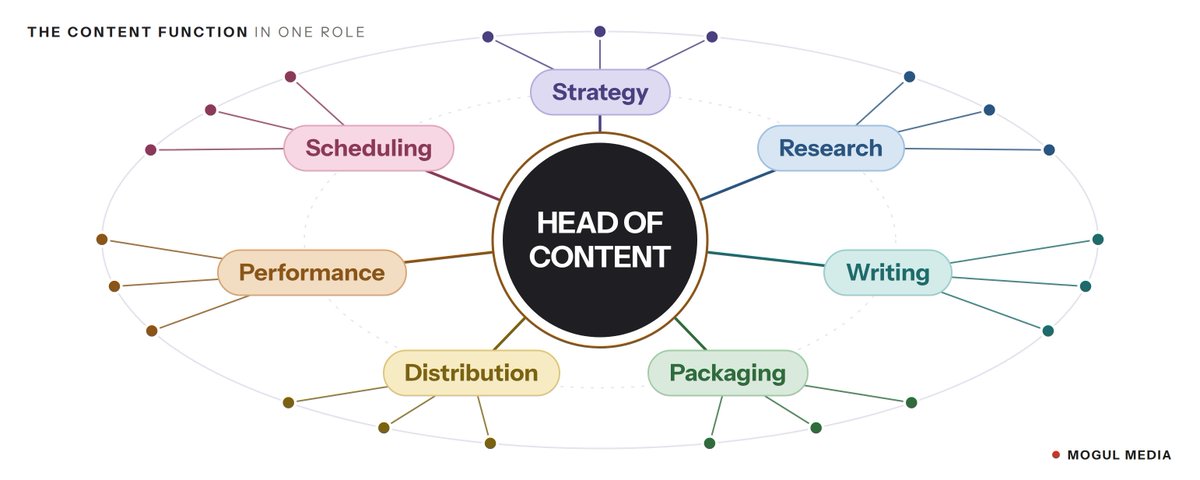
A masterclass on how to build + run a Head of Content system that makes you the most recognized authority in your niche:
(only requires ~45 mins/week from the founder)


Gilberto Ang retweeted

Hermes just picked up a full SEO department.
Claude SEO, the 15k-star toolkit, now runs natively inside Hermes.
Hermes SEO is a new plugin in the Hermes catalog with 45 SEO skills and 19 specialist roles. Point Hermes at a site and it can:
▸ Run a full audit and rank the fixes by what matters most
▸ Check crawling, indexing, speed and images
▸ Review your content against what people actually search for
▸ Write and validate schema for products, reviews and FAQs
▸ Tune product pages for shopping results
▸ Check your local and map visibility
▸ See how your site shows up in AI search
Search, AI answers, shopping and maps. One plugin covers all of it.
Gilberto Ang retweeted

SEO for SaaS is so easy, just do this
For blogs
Find bottom of the funnel keywords related to the product using data for SEO
X vs y competitor, x alternative, x review, best x for y, how to x
Then research which ranking on page one of Google currently for these keywords
Scrape what's ranking using serper and write your article based off of what's ranking
Then publish your article to your CMS like strapi via the API
Refresh this article every 30 days based on your search console data, Google Analytics data, and content gap analysis
For landing pages
These are people looking directly for the product but generic
EG AI transcription software, AI infographic maker, AI Facebook ad generator
All these don't need to be blog posts. They need to be landing pages because the intent is searching for the tool, searching for the product
The process to do these is the same
Use data for SEO to find the keywords
Then build a landing page template
Typically, it only needs to be about five section
And bulk generate these landing pages
build backlinks to these pages, because they're going to be more competitive
And you can build this entire system on the marketing engineering platform - graphed.com/platform