

Neuroscientist - attention - decision-making - large-scale interactions
Hamburg, Deutschland
Joined January 2017
- Tweets1.3K
- Following374
- Followers224
- Likes3.8K





Pinned Tweet
New paper alert 📣 #Neuroscience
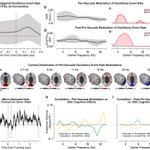
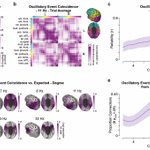
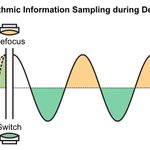
"Rhythmic sampling of multiple decision alternatives in the human brain" @NatureComms
together with Y. Cao, M. Tohidi, @donner_lab & @k_tsetsos
nature.com/articles/s41467-0… 🧵1/

Marcus Siems retweeted

1/ We discovered something totally unexpected about the neural structure of consciousness that overturns decades of thinking on its biological basis and brings us significantly closer to the recipe for generating conscious awareness.
New preprint: biorxiv.org/content/10.64898… (led by @HesseJanis, with @FrankLanfranchi, @_conor_mcgrory, @Yuelin_Shi, and @EngelTatiana)

Marcus Siems retweeted

A cautionary comment when applying frequency analyses to single-trial decoding outputs: doi.org/10.1111/ejn.70725

Marcus Siems retweeted

This paper changed my life: A first glimpse into the ‘middle’ of brain processing
thetransmitter.org/this-pape…
#neuroscience
Neuronal power spectra can be described by 3 parameters: intercept, oscillations & aperiodic slope.
Intercept (tDCS) & oscillations (tACS) have been modulated with non-invasive electrical stimulation - but what happens when you try modulate the aperiodic slope?
Q. van Engen, @justinmriddle & B. Voytek find that you can improve working memory performance by steepening the aperiodic slope with tES
Transcranial Random Aperiodic Stimulation Improves Working Memory Precision biorxiv.org/content/10.64898…

Marcus Siems retweeted

The most important briefings of the day.
Karl Deisseroth, professor of bioengineering and of psychiatry and behavioral sciences, shares the news of his Nobel Prize with his kids.
Marcus Siems retweeted

Thanks to everyone sharing in this moment!
I’m so grateful to my trainees & collaborators…
dlab.stanford.edu/group-memb…
(pic: optogenetics conference chairs, Tuscany)
Reading for all those asking:
for technical details: dlab.stanford.edu
for everyone: deisseroth.org/projections

Marcus Siems retweeted
My lab’s microbial-opsin work (and by far most of the field also) is pure basic science, but it was intriguing to review the community's clinical progress– both direct translation as in retinal degeneration, and indirect translation not involving gene therapy– with a wonderful and broad international team of co-authors…
nature.com/articles/s41593-0…
& to adapt a long-ago figure from PMID:28912215 (2017) on the inner workings of light-gated ion channels with my long-time collaborator Peter Hegemann; photo is a memory from that year.

Marcus Siems retweeted

BREAKING NEWS
The 2026 #NobelPrize in Physiology or Medicine has been awarded to Karl Deisseroth, Peter Hegemann and Georg Nagel “for their discoveries concerning light-gated ion channels and optogenetics.”

Marcus Siems retweeted

netneurotools: a trainee-oriented approach to network neuroscience | doi.org/10.1038/s41596-026-0…
Our lab’s internal toolkit for accomplishing everyday tasks in brain imaging @NatureProtocols ⤵️

Marcus Siems retweeted

The New York Times ha finalizado su lista de las mejores series del siglo.
Breaking Bad tomó el primer puesto.

Marcus Siems retweeted

The ITRUSST Practical Guide on Transcranial Ultrasonic Stimulation (TUS) for neuromodulation is finally out, endorsed by the International Federation of Clinical Neurophysiology (IFCN). This is quite the “opus magnum” with 23 beautiful educational figures.
buff.ly/40WtIvy
Marcus Siems retweeted

New paper - Improved detection and spatiotemporal spectral analysis of neural traveling waves biorxiv.org/content/10.64898…
Marcus Siems retweeted

Large-scale neural activity data across wakefulness, sleep, and anesthesia are now open. Includes EEG/EMG, brain states, Ca²⁺ traces, and spikes. Please download and play with the data!
Cell Reports: doi.org/10.1016/j.celrep.202…
Scientific Data: doi.org/10.1038/s41597-026-0…

Marcus Siems retweeted
The brain does not turn up the volume on important sounds. It sharpens their timing. By synchronizing neurons to a shared rhythm, attention to a location makes the signal cleaner, not louder.
biorxiv.org/content/10.64898…
#neuroscience

Marcus Siems retweeted
New paper! Decision-making isn't just picking winners via more neural firing, the brain reorganizing activity patterns into different subspaces, shifting from "one option vs. another" to "chosen vs. rejected"
doi.org/10.1016/j.isci.2026.…
#neuroscience
@MIT_Picower @mitbrainandcog

Marcus Siems retweeted

🌍🧠 OHBM 2029 is headed to Rotterdam!
Mark your calendars for June 24–28, 2029
Discover the story behind OHBM 2029, from the meeting logo to why Rotterdam is the perfect host city.
👉 Read the blog: ohbm-com.com/blog/ohbm-2029-…

Marcus Siems retweeted

🚨 8 months later, this paper found its home at @ScienceMagazine. We came up with a generative brain network model based on game theory and found that the human brain is suboptimal both in terms of wiring cost and communication efficiency. Here's why:
science.org/doi/10.1126/scia…


🚨first postdoc preprint alert 🚨
We use game theory and reservoir computing to show the brain is not optimally wired for communication or wiring economy because of a third pressure in the trade-off: computational reliability.
biorxiv.org/content/10.64898…


Marcus Siems retweeted
The prefrontal cortex sends a theta rhythm signal down to visual cortex to boost relevant stimulus. Suppression of irrelevant stimuli happens visual cortex using its own rhythms to gate when those neurons are allowed to fire.
biorxiv.org/content/10.64898…
#neuroscience
Marcus Siems retweeted
We have 15 open positions at Astera Neuro! We're hiring experimental and computational neuroscientists and engineers to build a large-scale research effort aimed at understanding consciousness = the brain's internal model of world and self.
astera.org/careers/#box=neur…
We're looking for:
• Experimental Neuroscientists
• Computational Neuroscientists
• Optical Engineers
• Hardware Engineers
• Software Engineers
• Probe Engineers
• and more!
I'll share much more about our scientific vision soon. For now: I know we could never have built this in academia. The confluence of talent across different domains, the purposive design of the org structure and open science approach, and the deep, long-term support, all aimed at cracking the brain's internal model, is unprecedented.
If you want to understand consciousness, if you sense a huge gap between our internal experience of the world and our scientific understanding of it, if you believe systems neuroscience needs a fundamentally different, collaborative, and scaled up approach, we are building the ideal research environment for you.
I've never been more excited in my life. Across Astera Neuro, Astera AI, and Astera Simplex, we're creating a whole new discipline around one question: how does the brain build a world model: a symbolic system that perceives the real world from flickering sensory input streams and can think, plan, and experience? Everyone here is converging on this question from a different direction. The degree of conceptual focus combined with tactical breadth is thrilling.
If this sounds like you, come join us.
astera.org/careers/#box=neur…