

Notas sobre o equilíbrio nas conexões entre pessoas e instituições no ambiente digital… — conta encerrada — estou no fediverso — https://xitter.gq/t.co/8OSx5OpcJT
no céu que construímos
Joined March 2007
- Tweets24.7K
- Following3K
- Followers3.5K
- Likes44K








Ecologia Digital retweeted

“Como o Lula virou?”
Nem a direita aguenta mais o bolsonarismo. Celso Portiolli faz desabafo sobre o boicote promovido por bolsonaristas ao Teleton. Já disse e repito: o antibolsonarismo hoje é maior que o antipetismo, mesmo com menos tempo de vida.
Ecologia Digital retweeted

Here's a link to the transcript. After he tried to label me as a "pathological liar" for stating that he, not just his husband, had migrated from supporting far left PSOL to center left PDT, PSOL's MES issued a statement confirming my claim. mronline.org/2022/01/29/braz…

Ecologia Digital retweeted

EL PAPÁ LEON XIV, EL VERDADERO GOAT 🐐
“La economía peronista es el sistema de economía que pone al capital al servicio de la economía y la economía al servicio del hombre” Perón, 1954
El Papá León XIV dió una cátedra de peronismo y justicia social en la mismísima cara humillada e inflamada por la medicación psiquiátrica de Milei. Y esto hasta tal punto fue así que Milei se tuvo que retirar en la mitad de la oratoria papal, sin despedirse ni saludar, notablemente incómodo frente a las verdades que escuchaba acerca de la basura de su gobierno, haciendo el ridículo una vez más, para variar.
Ecologia Digital retweeted

Não vá dormir, antes de assistir este vídeo do Reinaldo Azevedo, tenho certeza que a tua noite será muito mais tranquila!
NÃO PASSE SEM ASSISTIR!!!
🚨🚨🚨🚨🚨🚨🚨🚨🚨🚨🚨🚨🚨🚨
A verdade dói, mas precisa ser dita: enquanto alguns jogam contra o próprio país, o Presidente Lula roda o mundo como um verdadeiro embaixador do Brasil! 🇧🇷✨
Mesmo com crise e tarifaço, as exportações bateram recorde e a agroindústria cresceu.
O Brasil voltou a ser respeitado e a lucrar! 📈💚
Sensacional @reinaldoazevedo 🙏🏽❤️🇧🇷
#LulaNaCop31 #ForaEdinhoSilva
Ecologia Digital retweeted

Enfrentar as Big Techs, sumir com as Bets e não adotar o ajuste fiscal do Mercado e da mídia.
O discurso da vitória deste último domingo teve muitos assuntos, mas creio que três resumem os principais eixos de seu próximo governo.
Enfrentar as Big Techs é essencial para manter o Brasil no campo da democracia.
O que fez essa malta digital foi uma intervenção inaceitável numa disputa eleitoral.
Todas — sim, todas — operaram para restringir qualquer mensagem com a menor referência ao presidente Lula.
Não há outro caminho, e o governo deve enviar projeto enquadrando esse agrupamento digital para manter a neutralidade das redes.
Há muitas ideias interessantes para enfrentar essa malta, e uma delas deve neutralizar esses algoritmos por meio dos quais elas manipulam — como, por exemplo, só receber mensagem de quem o usuário quiser seguir.
O direito de escolha do usuário deve estar acima do poder de manipulação dos algoritmos administrado pelas empresas.
Há também que enfrentar as mensagens fakes tão usadas, criadas e incentivadas pelas plataformas.
Ideias existem; precisa o governo agir como essa turma agiu, e fez bem o presidente Lula de reafirmar sua disposição de lutar contra esses manipuladores.
Outro ponto relevante é o fim das bets, que o governo já encaminhou, e esperamos que o ministro relator do STF não queira arrastar uma discussão com "audiências públicas" como se fosse um parlamento, e vote rapidamente a matéria.
O STF não pode ser uma frente de bloqueio a essa mudança tão importante para a sociedade.
Outro destaque é não aceitar o programa de ajuste fiscal derrotado nas urnas e que objetiva cortar gastos com os pobres.
A Faria Lima e os Mercados perderam e não vão impor suas ideias rejeitadas pelos eleitores, e terão que conviver com um governo que pensa diferente.
O economista André Lara Resende, principal cabeça do Plano Real, está reduzindo a pó os dogmas e mitos em que vive a Faria Lima, e repetidos a exaustão por economista e jornalista a tropa de juros altos.
Ele deveria ser ouvido para desespero dos " juristas" da Faria Lima


Ecologia Digital retweeted

I’ll admit my first reaction was skepticism. My view is that inflation is the easiest way to reduce public debt. Prices go up, nominal GDP grows, and debt becomes smaller relative to the economy. That's what was done after World War II.
But then I thought about it again and I must admit @gave_vincent has a point. We’ve seen it before: in the late 1990s and 2000s, China’s exports made manufactured goods cheaper around the world. Inflation stayed low, interest rates fell, and Western economies kept growing. For a while, US public debt even fell as a share of GDP.
History also shows us when inflation really helps reduce debt: only when it comes with financial repression. After 1945, the US and the UK capped interest rates, restricted the movement of capital, and forced banks and pension funds to buy government bonds—all made possible because we had the Bretton Woods system. Inflation was higher than the interest paid to savers. As a result, the debt fell year after year.
But that toolkit is gone today. Central banks are independent and aim for 2% inflation. Bond markets react to inflation right away. Much of the debt also has to be refinanced quickly or is linked to inflation. So when inflation rises without financial repression, interest rates rise too. We saw that in 2022.
That leaves us with two options if we want to rein into national debts:
1️⃣ Bring back financial repression and use inflation to reduce the debt.
2️⃣ Import more from China, keep inflation and interest rates low, and let economic growth reduce the debt burden.
The second option looks much easier. Voters hate inflation far more than they hate Chinese imports. And it fits the way the global economy works today.
Trying to inflate your way out of debt while China floods the world with cheap goods means fighting against China's export model. Buying those goods means taking advantage of it.
Finance ministries will eventually do the math.
(Oh, and I also think that the AI boom will stop at some point, and make more capital available to the US government.)
Cc @Geo_papic

Very thought-provoking argument by Louis-Vincent Gave @gave_vincent, co-founder and CEO of Gavekal (one of the most respected macro research firms on China).
His argument - which is correct - is that one of the The biggest problem for Western governments today (be it France, the UK, the US) is the rapidly rising cost of funding their debt.
He says that governments have 3 broad ways to get it under control:
1) Austerity, cutting spending massively, which basically no politician wants to do because it makes you massively unpopular
2) Specific to the US, they could dramatically reduce AI data center spending, which soaks up a huge share of the world’s capital and pushes up borrowing costs for everyone, governments included. Not good either since it kills the AI boom.
3) Or, they can go back to embracing China, which he calls "the one deflationary force in the world today." He says it's by far the easiest path, and policymakers always take the easiest path.
Louis-Vincent argues that's exactly what Mark Carney (“the least dumb of the western leaders today,” in Gave’s words) did when he opened Canada to Chinese cars: it's a cheap and easy way to fight inflation, and to reduce the cost of funding Canada’s debt in the process.
It's fairly ironic when you think about it: you can actually find plenty of quotes by Western officials castigating China for "exporting deflation" (like Klaas Knot from the European Central Bank here: en.protothema.gr/2024/12/30/…). Louis-Vincent’s argument is basically that, sooner or later, folks in Western finance ministries are going to look at bond yields, then at the inflation numbers, then at all those speeches about China exporting deflation, and go like: "wait a minute..." 😏
Full video of Louis-Vincent’s interview here: youtube.com/watch?v=kT_cV_Wa…
Ecologia Digital retweeted

Milei ni siquiera conoce o fue asesorado con las formas o protocol que debe seguir ante una visita oficial En el Palacio Libertad, después de los discursos, Milei se bajó del escenario sin saludar a nadie. Ni siquiera a Villarruel, que esperaba al pie de la escalera.
Quien sí se detuvo unos segundos para saludarla fue el Papa León XIV.
Eso es lo que quedó registrado. Un gesto frío e institucionalmente torpe en un acto de Estado con el Sumo Pontífice de visita oficial. El protocolo de anfitrión no se improvisa así.
Hay prácticas claras de ceremonial de Estado cuando el Presidente es anfitrión de un Jefe de Estado (el Papa lo es también como jefe de la Ciudad del Vaticano):
El anfitrión suele permanecer en el escenario o acompañar al invitado en la salida hasta que el acto formal termina o se inicia el traslado. Se espera un saludo formal de cierre o, al menos, no abandonar abruptamente al invitado principal y a las autoridades presentes de alto rango.El trato es sobrio, formal y respetuoso: apretón de manos, leve inclinación de cabeza si se es católico, y seguir el ritmo que marca el protocolo acordado previamente entre la Santa Sede y el Gobierno anfitrión. No se improvisan salidas ni se dejan “colgados” a otros altos funcionarios del propio país.
Lo que reportaron los medios (Infobae y La Nación) es que Milei se retiró del escenario tras el aplauso final sin saludar a Villarruel, y que el Papa sí lo hizo. Ese contraste es lo que se señaló como un “desplante”. Es más un gesto de frialdad.
En resumen: el protocolo espera que el anfitrión gestione la despedida o salida con orden y respeto hacia el invitado de honor y las autoridades presentes. Lo que se vio en Palacio Libertad se interpretó como un incumplimiento de esa cortesía básica de Estado. Qué vergüenza que da
Ecologia Digital retweeted

Having just spent the week in San Francisco, I feel like I've truly internalized the insanity of this situation for the first time. I think anyone who has seen me in the last few days can attest that I look like I've seen a ghost.
The leading AI companies are planning to massively accelerate AI research in 2027, which would knowingly endanger everyone on earth. This plan is unacceptable, and we must reject it.
Borrowing from one advocate I spoke to, even granting that it's a competitive, crazy situation, I do not believe any company has even truly tried to do what I think are the morally required duties of people taking such risks in extreme situations. These include:
(1) Trying hard to get out of the competitive situation;
(2) Seeking the informed consent of the public;
(3) Honest deliberation about the risks.
They have obviously not truly tried to solve the coordination problems that push towards this acceleration, either via finding legal ways to coordinate or advocating for effective policy.
I would be shocked to learn that getting off this insane runaway train is a top-few Q4 priority for Dario or Sam (let alone the other CEOs), which seems like the bare minimum. There are indeed some hard technical and policy problems in coordinating without policy intervention, but I simply do not believe that the companies are prioritizing this nearly as much as massively less important matters.
Meanwhile, the companies' track records on policy advocacy range from mediocre to disgraceful, and it is pretty clearly not the top priority of the policy team at any company to advocate for regulation that would enable the government or the companies to avert racing off the cliff.
They have obviously not truly tried to seek informed consent from the public. Whatever your KPIs might be for "informed consent from the public," these KPIs are abysmal. The public clearly does not expect 100 years of AI progress in 2027, and they would not accept it if they did. What they do know about AI development, they dislike and distrust.
I've heard arguments like "informing the public would mean informing China, and maybe they'd steal the weights." I'm sorry, but if you think you have model weights such that China stealing them would constitute a catastrophe on par with human extinction, and your plan is security by obscurity, that is a bad plan.
I also think the companies and their employees suffer from a significant failure of imagination of what kinds of coordination could be possible if the public were aware.
Finally, I don't think they're deliberating honestly, either. For one, I think it is insane to think that any company can truly evaluate its own ability to keep the process of recursive self-improvement under control. The biases towards "yes" are overwhelming.
It's a step forward that the companies have expressed or demonstrated openness to external auditors, but based on METR's reports so far, it seems likely that auditor reports will be heavily redacted (and that the auditors will not have sufficient time by default). The public and broader scientific community are not able to scrutinize their arguments for safety.
Given the strong default (in my view) that bringing a massive number of minds massively faster and smarter than humans would result in our disempowerment, and the serious danger that this would result in mass death, it is unacceptable to subject arguments for safety only to the scrutiny of biased, busy, and scarce company insiders and a handful of external evaluators.
My pleas for the companies follow from the above:
1) Actually fucking try to get the world out of this race;
2) Actually fucking try to alert and inform the public;
3) Actually fucking try to scrutinize your own arguments for the justifiability of this plan, which includes subjecting them to way more external scrutiny than anyone has currently done.
My pleas for policymakers: use your legal levers to get much more information about these plans into the public view. Make it the top priority -- not only of the next Congress, but of this Congress and the White House -- to understand the situation in its full strategic complexity, and work with technical and policy experts to advance regulation that gets us out of this bind. Domestic coordination must be the first priority, but we need to then quickly develop an international framework with our adversaries.
My pleas for the public: do not accept the current plan. Learn about this issue. Call or email your political leaders. Get involved with organizations like @DONOTACCEPTai, @HumansInControl, and @WhoDecidesAI.
And finally: believe in ourselves that we can stop this. It is never time to "panic" -- to make rash, unproductive decisions or to feel paralyzed by fear. It is time for us to feel the urgency and the stakes, to demand better, and to meet the moment. Let's do this. 🫡 ✊

AI companies admit what they’re building might kill everyone. We don't have to agree to this.
Add your name at donotaccept.ai to say: we do not accept your terms.
Ecologia Digital retweeted

Pope Leo XIV has delivered a challenge to Argentina's President Javier Milei that deserves to be heard far beyond Argentina. But it is not quite the attack on free-market economics that some might wish it to be.
Addressing Milei and Argentina's political leaders in Buenos Aires yesterday, Leo offered something considerably more demanding than a partisan economic programme. He reminded those exercising political authority that power has limits, that economic growth must serve the common good, and that the dignity of the human person cannot be subordinated to the demands of either the market or the state.
This is a distinction worth recovering. Catholic social teaching has never regarded economic freedom as an end in itself, but neither has it treated private enterprise, property or individual initiative as inherently suspect. The Church recognises their legitimate contribution to human flourishing while insisting that economic arrangements must be judged by their consequences for actual human beings, particularly those who are poor, vulnerable or unable to compete on equal terms.
The fundamental question is not simply whether an economy grows, but whether that growth serves the whole human person. A society may become wealthier while remaining profoundly unjust if prosperity is purchased at the expense of those least able to defend themselves. Equally, a state that claims to act in the interests of the vulnerable does not thereby acquire unlimited authority over families, communities or economic life.
What makes Leo's intervention particularly significant is that he refuses to separate economic justice from the wider Catholic understanding of human dignity. His concern for the disadvantaged belongs to the same moral vision as his defence of unborn children, the elderly, the sick and those living with disabilities. These are not competing political priorities from which Catholics may select according to their ideological preferences. They arise from the same conviction: that every human life possesses an intrinsic worth which neither governments nor markets have the authority to confer or withdraw.
There is a temptation, especially in our increasingly polarised political culture, to read every papal intervention as an endorsement of one political faction and a rebuke to another. Yet Catholic social doctrine is not a convenient collection of arguments with which to reinforce positions we already hold. It is a challenge to examine those positions against principles that precede and transcend our political loyalties.
Leo did not prescribe a particular tax regime, spending programme or economic model. Nor did he suggest that political leaders can escape moral responsibility simply by appealing to market forces. He reminded them that political authority is a form of service, economic activity has a moral purpose, and human dignity must remain the measure of both.
The Church's task is not to baptise the political Right or the political Left, but to insist upon truths that both are capable of forgetting.
That is why Leo's address matters. It is not merely a message for Javier Milei or Argentina. It is a reminder to every Catholic tempted to make political ideology the standard by which the Church's teaching is judged, rather than allowing the Church's teaching to challenge political ideology.

Ecologia Digital retweeted

Netflix is quietly hoping you never type a number into your browser.
I did.
There are thousands of genre and subgenre pages the homepage will never show you: 90-minute movies, noir thrillers, cult sci-fi, tearjerkers, gentle British reality TV, deep sea horror, gritty courtroom dramas. Each one has a code, and the codes have been around since the days when Netflix mailed DVDs.
The homepage shows you rows built from what you already watched. The codes skip that and open the category directly. Nothing extra gets unlocked, because every title is already in your plan. You’ve just never been shown the shelf.
Go to netflix.com/browse/genre/ in a web browser, add a code at the end, and press Enter.
You’ve been scrolling for 20 minutes saying “there’s nothing to watch” while sitting on a library organized into categories Netflix never put on the front screen.
A former streaming content tagger someone who spent years watching movies and labeling them by genre, mood, and theme so the recommendation engine could sort them walked me through it. She said: “People think the homepage is the catalog. It’s not. It’s a guess about you. The categories are how the catalog is actually organized, and most people have never seen a single one.”
Here’s how to use them, and the 10 codes most worth bookmarking 🧵
Ecologia Digital retweeted

To understand what's at stake, take a look at this brilliant diagram (h/t Bloomberg) with Nvidia at the dead heart of the AI bubble. I wrote this exactly a year ago when only @GaryMarcus & @edzitron aside from niche business press were talking about it


Ecologia Digital retweeted

Very thought-provoking argument by Louis-Vincent Gave @gave_vincent, co-founder and CEO of Gavekal (one of the most respected macro research firms on China).
His argument - which is correct - is that one of the The biggest problem for Western governments today (be it France, the UK, the US) is the rapidly rising cost of funding their debt.
He says that governments have 3 broad ways to get it under control:
1) Austerity, cutting spending massively, which basically no politician wants to do because it makes you massively unpopular
2) Specific to the US, they could dramatically reduce AI data center spending, which soaks up a huge share of the world’s capital and pushes up borrowing costs for everyone, governments included. Not good either since it kills the AI boom.
3) Or, they can go back to embracing China, which he calls "the one deflationary force in the world today." He says it's by far the easiest path, and policymakers always take the easiest path.
Louis-Vincent argues that's exactly what Mark Carney (“the least dumb of the western leaders today,” in Gave’s words) did when he opened Canada to Chinese cars: it's a cheap and easy way to fight inflation, and to reduce the cost of funding Canada’s debt in the process.
It's fairly ironic when you think about it: you can actually find plenty of quotes by Western officials castigating China for "exporting deflation" (like Klaas Knot from the European Central Bank here: en.protothema.gr/2024/12/30/…). Louis-Vincent’s argument is basically that, sooner or later, folks in Western finance ministries are going to look at bond yields, then at the inflation numbers, then at all those speeches about China exporting deflation, and go like: "wait a minute..." 😏
Full video of Louis-Vincent’s interview here: youtube.com/watch?v=kT_cV_Wa…
Ecologia Digital retweeted
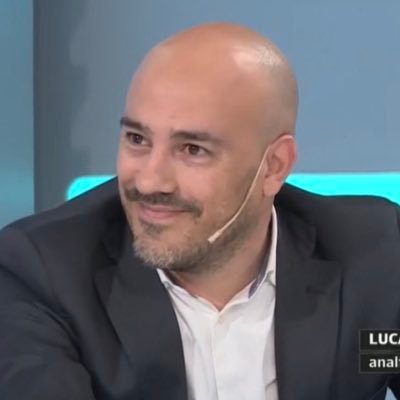
El gesto inocultablemente buscado del Papa de ir a saludar a Villarruel (con Milei dejándolo atrás), después de todo el esfuerzo que hizo el Gobierno para NO invitarla, es de una altura y una sabiduría para espetarle lecciones al Gobierno, digna de un heredero de Francisco.
Ecologia Digital retweeted

‼️VERGÜENZA HISTÓRICA
El Sumo Pontícife le dijo de todo a Milei en la cara y como la gorda no se la bancó se fue enojado sin saludarlo, que hizo León XIV? Se fue a saludar a Villarruel, rompiendo el protocolo.
Milei es un maleducado que no soporta la realidad.
Ecologia Digital retweeted

O economista e ex-ministro da Fazenda Luiz Carlos Bresser-Pereira desconstrói um dos maiores consensos do debate econômico: o medo de que o Estado quebre por endividamento na própria moeda. Assista à entrevista completa no YouTube.
#Meio #DialogosComAInteligencia #Economia
Ecologia Digital retweeted

250,000 people filled Amsterdam demanding an end to the arming of genocide.
The Dutch government's response?
"It's not my place," said the Prime Minister—who marched a year ago as opposition leader but now refuses to even call it genocide.
Look at the material ledger: €163 million in Israeli weapons purchased in the first half of 2026. A Dutch company just signed a deal to manufacture Israeli-designed rifles in Tilburg. A Dutch-flagged ship suspected of carrying bomb casings to Haifa went dark.
The coalition includes a pro-Israel party. The arms flow is too profitable to stop. The legal loopholes are too convenient to close.
250,000 people are not the fringe. They are the majority the state refuses to represent.
The power's silence is not neutrality. It is complicity.

