

product engineer @roboflow ✳︎ ex Ponder, Toyota
Joined April 2009
- Tweets2.6K
- Following558
- Followers816
- Likes59.2K







why do i prefer the macos/ios spotlight from a decade ago over this new UI?
it would also explain why @raycast is so popular right now
form over function, going round and round at Apple


62
built a little TUI app over the weekend called Gitbuddy to keep up with busy work repos, where new commits can land every few minutes
it's basically a nicer git log with commit details and automatic fetching, so I can see what's changed without leaving my terminal
after trying it out, it's earned a permanent spot in my Ghostty split view
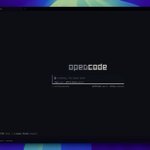
written in Go with Bubble Tea + Lip Gloss. took some inspiration from OpenCode, though there's still plenty I want to polish
built it for myself, but figured someone else might find it useful too
github.com/matthewmorek/gitb…
1
2
277
i’ve argued this recently from first principles, giving an example of how music gets interpreted depending on the musician performing it in the moment, and been told “it’s a case of more compute power”
like you’ve played an instrument bro

No, AI can never produce creative or unique art. Art is a product of the human mind.
AI will always be a tool, not a creator. Asking a AI to ‘make this for me’ and then leaving it is trying to turn it into a creator.
324
dude’s lucky he doesn’t have to work within the narrow bounds of SOC2

We're still so small but I'm loving the team we've got at Superlogical. They're so talented and kind and love their craft. It's a different era of software development and our expectations and practices reflect that. I want to share a bit about how we work.
First, everyone is trusted to push to main. We do machine-aided code review pre-push and human plus more machine-aided code review post-push. Limited to no PRs.
Culturally, we've all agreed that if we ever hire someone who we DON'T trust to push directly to main, then they probably aren't the right fit for the team (so far, not an issue).
Some common sense here: if someone is stepping outside their lane or comfort zone, we'll open PRs. For example, I'm pretty trash at macOS/iOS UI, so I'll open PRs for UI-affecting functionality and ask for eyeballs/help. But for business logic and internals, I push to main.
Second, everyone can cut a release. Our release process is fully automated and when you start a release (for any platform) it triggers a Slack notification and a 15 minute countdown.
The 15 minute warning is a final gate that allows people to review plus collaborate on a changelog. During that 15 minutes, anyone in the company can pause the release rollout. After 15 minutes, the train leaves the station. You can't override the 15 minutes (except to pause). It gives everyone a chance to step in.
Third, we avoid synchronization through fast remediation rather than through planning. The server and clients on various platforms ship features as fast as they can. We use post-hoc human review and AI-assistance to identify feature mismatches across products ("Windows has support for X and Mac doesn't." or "Mac and Windows differ in their behaviors for Y in this way.").
This avoids expensive "sync" meetings and coordination. We trust that producers of features are mindful of what they're producing and we trust that adjacent product lines will self-synchronize quickly. In practice, we see feature parity across platforms within 24 to 48 hours.
All of this works on mutual trust. It ONLY works with mutual trust.
Everyone at all times has to trust that they've got each others back:
1. Push to main only works if you fix your mess, or if you don't, that someone else will quickly but that you'd do the same (and generally in equal amounts).
2. Anyone can deploy only works if you trust everyone to cut at the right time, with the right changelog, and that people will respect the 15 minute timer.
3. Sync through fast remediation only works if you trust other teams will pick up and integrate your work quickly, which only works if you would too. It also only works if you are fairly producing mismatches (e.g. not constantly).
We've got a great team. I know we're still small and that these practices will change in many ways as we scale. But this is already a markedly different practice than what I would've done 15 years ago.
In general, we are building from day 1 on a foundation of mutual respect, excellence, and trust. And it's been awesome.


Matthew Morek retweeted

This indie dev is making an unofficial remake of Sega Rally from the 90s but it's built in Unreal Engine 5
- Drive the famous forest stage again
- Drift like it's 1995
- Race friends in split screen or online
Game is Over Jump Rally
Matthew Morek retweeted

Introducing Dreamwork, the last tool you'll ever need to find your dream job.
With just a resume we match you to millions of jobs, tailor each resume and submit them for you - all with just a click.
But it's more nuanced than that ⤵
anyone else thinks animations in iOS 27 beta 5 are still too long and on the nose?
all i want is to switch off DND, not admire some artisanal spring curves
2
454
we should’ve stopped this whole experiment at Schengen area

🇪🇺 Friend runs small EU e-com
New packaging law (PPWR) applies today
By his estimate it will cost him ~€10k/year just to keep shipping across Europe
- Separate reporting per country
- Separate EPR fees per country
- Often need Authorized Rep per country
"single market" btw 🫡

1
122
jumping between two different agent harnesses, just to have access to specific tooling in Claude Code, is an absolute waste of my focus
need to fire up an update to the MCP package to make sure I can just stay in OpenCode forever
1
109
when using any modern macOS, no internet connection is better than poor internet connection
change my mind
76
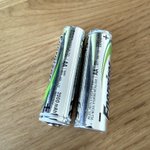
Or they could just ship with AA or AAA batteries like they used to do back in the day of VX Nano.
I swear, modern biz will get out of the way to inconvenience their users.


Following Nintendo, Logitech says its wireless mice sold in Europe will soon come with user-replaceable batteries to comply with new EU rules.
These European models will use a battery that’s easier and safer to replace but slightly heavier and more expensive than the current design.
Logitech also plans to sell official replacement batteries.
Outside Europe, it doesn’t currently plan the same change, as most people replace their mouse before the battery wears out, so it doesn’t expect enough demand to justify the redesign elsewhere.


3
960
AI in ultra mode thought so hard about that project, that it arrived at the ultimate solution to the user’s problem: wipe the database.
Looks like it seen no value in keeping it… 😅

Claude wiped an entire database. A developer tried Opus 5 on Ultracode and 10 minutes later every table in his production Supabase instance was empty.
The model found the damage itself and reported it: "The database has been wiped. This is my fault and I need to tell you immediately."

137
Matthew Morek retweeted

‼️ Anthropic was hiding a secret internal project to destructively scan every book in the world, irreversibly damaging heritage. The company spent billions of dollars to slice the spines off millions of books, even very rare ones. This means no other AI, and no human, can access this knowledge anymore.
It now markets itself as the responsible lab.
One bookseller told 404 Media his inventory is full of rare, foreign-language and low-circulation books, meaning that if they are destroyed in the process of becoming training data, they will be even harder to obtain.
Second-hand booksellers across Europe are sounding the alarm, because rare books are being destroyed. They have received random lists of thousands of titles. Books too obscure to resell at a profit. Requests arriving overnight from companies nobody in the trade has heard of.
One email came from "Nataly" at 2077AI, a Singapore company. Attached: 3,000 English titles grouped by ISBN. A 1999 geomechanics monograph. A 2018 study of laser shock peening on ceramics. A 2021 academic book on Irish folk tales.
A German dealer watched the orders arrive every night between 3am and 5am. Canadian company Zoom Books, buying systematically, titles with nothing in common. Zoom told Swiss broadcaster SRF that this is a regular recycling and trading model.


Matthew Morek retweeted

i built an app that's like strava for cars before my drive through the alps last week.
- record your drives & share as a card (like the one below)
- uncover the map fog-of-war style and see how much % of a city you've driven
- fuel expense tracking
- heatmap of your most frequented roads
- social feed of who's driving what car and for how long
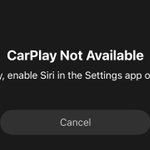
- automatic recording when you connect to CarPlay
...and more coming
slowly putting it together into a full package and looking for people who love driving.
if this sounds like something you'd use often, i can send you a testflight :)
(yes, this is real GPS-verified speed on a german autobahn. and yes, you can hide it before sharing)


Matthew Morek retweeted
GrapheneOS has strong defenses against data extraction. It heavily builds upon the standard security features provided by Android 17 and the most secure hardware available for Android. Currently, only Pixels provide the hardware security features and updates required by GrapheneOS. That's going to change in 2027 thanks to our partnership with Motorola Mobility and progress being made by Qualcomm.
Disk encryption provides strong protection for data. Even the most sophisticated attackers aren't going to be directly breaking it. They either need to exploit the OS while in After First Unlock state or brute force the PIN/password.
Android 16 QPR2 calls for a secure element implementing rate limiting ramping up delays. It's 4 hours after 10 and 41 days after 15. Only 20 attempts are allowed. For usability, It rejects the most recent 5 unique failed attempts early to avoid wasting attempts on repeated errors. GrapheneOS only supports devices implementing the latest generation secure element rate limiting.
source.android.com/docs/secu…
The secure element on the supported devices also has insider attack resistance. That's implemented by requiring the Owner user to successfully authenticate before the secure element firmware can be updated. A valid signing key and greater version number aren't enough alone. The purpose of this is preventing any government from bypassing the rate limiting by coercing the creation of a firmware update removing the rate limit.
Pixels have used a secure element with an internal timer implementing rate limiting and insider attack resistance since the Pixel 2 launched near the end of 2017. Here's a post about this from back in 2018:
android-developers.googleblo…
The secure element and integration into the OS has become far better since then, but it shows this goes back a long way and isn't a new feature.
GrapheneOS also raises the character limit for passwords from 16 to 128. This enables using high entropy diceware passphrases not depending on the secure element rate limiting.
To make a strong passphrase convenient to use without ruining it with biometric unlock, GrapheneOS adds an optional 2nd factor fingerprint PIN. We reduce the allowed fingerprint attempts from 20 to 5 and failure to enter the correct 2nd factor PIN counts towards it. This enables using 6-8 random diceware words as the main unlock method required in Before First Unlock and fingerprint+PIN using a short PIN for convenience. Using a valid fingerprint prompts to enter the 2nd factor PIN which is needed to complete unlocking the screen and hardware keystore.
GrapheneOS greatly improves the exploit protections for the OS with hardened memory allocators and other features. It heavily uses hardware-based security features including hardware memory tagging (MTE) to protect against exploits. A partial overview of those protections is here:
grapheneos.org/features#expl…
GrapheneOS adds specialized protection against attacks with physical access too. For example, it blocks new USB connections at a software and hardware level by default while locked and disables USB data as soon as there are no active USB connections.
GrapheneOS shipped a locked device auto-reboot timer back in June 2021. It can be set between 10 minutes and 72 hours. We enabled it by default using 72 hours and then lowered it 18 hours. It automatically returns the device to Before First Unlock state due to our memory zeroing as part of tearing down the OS and booting. We got Pixels to add memory zeroing for booting the firmware fastboot mode in April 2024. Apple and Google added a locked device auto-reboot timer in iOS 18.1 and Android 16. For Android, it can be enabled with the Android Advanced Protection Mode. Our implementation is better for multiple reasons but it's a useful feature regardless.
Android uses separate encryption keys for each secondary user and Private Space. GrapheneOS adds support for putting both back into Before First Unlock state without a reboot via end session for secondary users or toggles for either to do it by default. It's still much better for the device to be rebooted to get the main user back at rest, completely clear leftover data from RAM and block secure element updates.
Our duress PIN/password feature is a minor feature fitting into the bigger picture. It wipes the device when it's entered in any OS prompt for the current profile's PIN or password. It will wipe the device when entered into the authentication prompt for changing a sensitive setting or anything else requiring it, not only the lockscreen. It works across every profile including secondary users and Private Spaces, not only the main user.
There are multiple ways to use the duress PIN/password feature including writing it down on a phone case or a paper kept in a wallet. People should carefully consider how to use it in an actual duress situation where there can be physical or legal consequences for wiping the device. GrapheneOS doesn't require it to protect data from being extracted from the device, but it takes recovering it completely off the table even with the PIN/password for each profile on the device.
GrapheneOS doesn't depend on the duress PIN/password to protect user data. It's one of the tools it provides among the major privacy and security improvements it offers as a whole. Our features page provides an overview of what GrapheneOS offers compared to standard Android 17. It covers most of the major features we provide and many of the minor ones but there's also a lot more beyond it. Our release notes are a lot more exhaustive since we make sure to cover everything when it's added, changed or removed.
grapheneos.org/features
grapheneos.org/releases#chan…
