

The worse part about censorship is X-X-X-X As a hypocrite, I am opposed to hypocrisy. Science demands scientific rigor -Dr. Rosenblatt
430 N Mch Ave, LL Chi IL
Joined September 2014
- Tweets94.6K
- Following2.6K
- Followers1.8K
- Likes386K


Downtown Scott Brown retweeted

A timely reminder downtown Chicago is going to be insanely packed tonight (City Xmas tree lighting) and again for the Mag Mile holiday parade tomorrow.
Allow extra time if you have non-holiday drinking or dining plans downtown on either night.

Let’s light up the night, Chicago! 🌟 Join us before or after the Magnificent Mile #LightsFest tomorrow evening for a night to remember. 🚗 Please note: street closures will impact parking and traffic in the area. See you there!
📸: joehurt312


Downtown Scott Brown retweeted
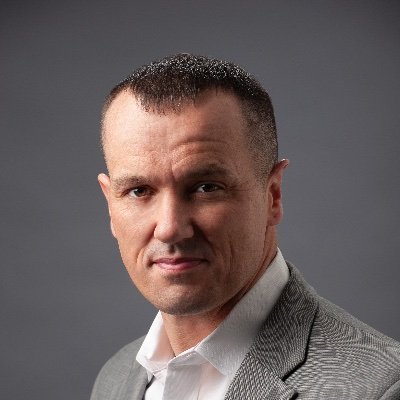
Ukraine’s drone chief was an art dealer. A former US general [my old boss] says the Army should take note. @starsandstripes
stripes.com/theaters/europe/…
The decision to establish a separate Ukrainian drone command led by Maj. Robert “Magyar” Brovdi serves as an example of the risk the Army faces of falling behind in the race to adapt, retired Army Lt. Gen. Curtis Buzzard argues in a new assessment.
Among the developments that caught his attention was the installation of Brovdi and the creation of an elite drone unit known as the 414th Separate Unmanned Systems Brigade. More commonly called Magyar’s Birds, the force has carried out a series of trailblazing operations that have taken the war beyond Ukraine and deep into Russian territory.
Brovdi joined the military around the time of Russia’s full-scale invasion of Ukraine in 2022. Before that, he was involved in Ukraine’s grain trade and had an art business.

Downtown Scott Brown retweeted

Elon Musk pulled his five sons out of one of the most expensive private schools in Los Angeles and built a secret school inside SpaceX headquarters. There were no grades. No grade levels. And the first problem the students solved was how to design a rocket engine.
In 2014, Elon looked at the curriculum his kids were being taught at their elite Bel-Air school and decided it was useless. The school separated students by age, taught subjects in isolation, and tested them on memorization. Elon thought all of it was wrong.
So he hired one of the school's best teachers, a man named Joshua Dahn, and gave him a room inside SpaceX headquarters. The school was called Ad Astra, which is Latin for "to the stars." It had no grades, no standardized tests, and students of different ages worked together.
Instead of learning physics from a textbook, students were given real engineering problems. One group was asked to design a heating system. Another was told to figure out the most efficient way to distribute water on Mars. The problems were real. The constraints were real. And the students were between seven and fourteen years old.
Dahn described Elon sitting in on a class where ten year olds were debating the ethics of artificial intelligence. Elon didn't interrupt. He just listened. When asked later what he thought, he said: "They're asking better questions than most adults I know."
The man who is trying to put humans on Mars started by rebuilding how we teach children to think. Because he understood that the future isn't built by people who memorize answers. It's built by people who learn to ask questions that don't have answers yet.
Downtown Scott Brown retweeted

In 1953, surviving American prisoners walked out of North Korea carrying a wooden cross carved by a Jewish Marine.
It was made from firewood for a priest with no weapon who stayed behind when everyone else was told to run.
His name was Emil Kapaun.
He was a 34 year old Catholic priest from Kansas serving with the 8th Cavalry Regiment.
On November 2, 1950, Chinese forces surrounded his battalion near Unsan, and every soldier who could walk was ordered to break out south.
Wounded men who could not move lay trapped in the mud as enemy troops closed in.
Kapaun stayed behind.
Knowing capture was certain, he crawled through mortar fire and dragged injured men into a muddy dugout.
Nearby, Sergeant Herbert Miller lay in a ditch with a shattered ankle as an enemy soldier aimed a rifle at his head.
Seconds before the shot, Kapaun walked through gunfire, pushed the barrel aside, and lifted Miller onto his back.
He carried him for miles on a freezing march north to Prison Camp 5 at Pyoktong.
That winter, hunger, subzero cold, and dysentery killed hundreds of prisoners.
Every night, Kapaun snuck past armed guards to steal corn, millet, and salt from supply sheds to keep his men alive.
He hammered scrap metal into pots to boil water and washed the soiled clothes of dying soldiers with frostbitten hands.
On Easter morning in 1951, defying the guards, he stood among the bombed huts and held a sunrise service.
Then in May, a blood clot formed in his leg and pneumonia set in.
Guards ordered him taken to a freezing shack where sick men were left without food or water to die.
Weeping American prisoners were forced at gunpoint to carry his stretcher while Kapaun comforted them and asked them to forgive the guards.
He died in that shack on May 23, 1951, at age 35, and was buried in an unmarked grave.
His men never forgot him.
Inside that camp, a Jewish Marine officer named Gerald Fink carved that wooden cross four feet tall to honor him.
In 2013, Kapaun received the Medal of Honor while Herbert Miller, the wounded sergeant from the ditch, watched from the front row.
In 2021, 70 years after his death, scientists identified his bones in Hawaii and brought him home to Kansas.
Exhausted, freezing, and pushing an enemy rifle barrel aside, a Kansas priest gave his men a rule they kept for life: if your friend cannot walk, you stay and carry him.

Downtown Scott Brown retweeted

Happy 92nd Birthday to the Goat of Goat's
Billy Goat Tavern
@Cheezborger

Downtown Scott Brown retweeted

To the unknown whistleblowers of Deutsche Bank @DeutscheBank:
No one knows your names. I know your future, because I have lived it.
You just did the bravest and loneliest thing a person inside a bank can do. You told the truth about where the money goes. You took no payment and you set no conditions.
My name is Everett Stern. In 2010 I was a compliance officer at @HSBC in New Castle, Delaware. I watched money move to drug cartels, terrorist organizations, and sanctioned regimes, and I took what I saw to the @FBI and the @CIA.
I also saw something investigators need to hear today. While I was at HSBC, I saw Deutsche Bank move money through HSBC’s correspondent banking division. Correspondent banking is how one bank moves dollars through another, and it is where the trail of who really owns the money can go cold.
I do not believe Deutsche Bank moved this money alone. No bank moves money across borders alone. I believe HSBC, one of the largest correspondent banks in the world, probably carried some of it, and I believe other banks did as well. That is my belief, based on what I saw with my own eyes. The correspondent banking trail needs to be investigated, bank by bank.
To my fellow Americans, here is why these 15 million files matter to you.
Sanctions are how America confronts hostile regimes without sending our sons and daughters to war. They only work if banks enforce them. According to this week’s reporting, in 2020 Deutsche Bank approved a transfer of 1.1 billion euros that its own investigators suspected was for the benefit of a Russian oligarch already under U.S. sanctions. The same files reportedly show $582 million in suspicious payments linked to Jeffrey Epstein, a convicted sex offender.
According to that reporting, the warnings were written down and the money kept moving. When a bank that moves American dollars looks away, a sanction is no longer a wall. It is a suggestion.
Now, to the two of you. Here is what comes next, because nobody told me.
The bank is already saying this is all in the past. HSBC said the same thing.
If your names ever come out, expect the bank to do everything in its power to discredit you. Your motives, your record and your character will all be questioned. That is the playbook. It is aimed at you because the files cannot be discredited.
Then the headlines will move on. The quiet afterward is when you will ask yourself whether it was worth it.
Here is my answer. Blowing the whistle cost me my banking career, and I would do it again. I rebuilt my life. Fourteen years ago I founded Tactical Rabbit, a private intelligence agency, and it is still standing today.
I have always pictured the whistleblower standing at the edge of a swift, raging river. There is no bridge and no way around. The way to the other side is not over. It is through.
It is going to get hard, and it is going to get dark. But there is always hope. The good guys do win in the end.
What matters is your honor and your integrity, and you have both. No one can take them from you, no matter how hard they attack your credibility.
You do not have to cross alone. Tactical Rabbit offers whistleblower support, and we are here for you. I also serve on the board of Whistleblowers of America, and they can help you as well. That offer stands for every whistleblower reading this, and for everyone thinking about becoming one.
To @TheJusticeDept and @SecScottBessent: these two people handed you the evidence. Protect them. Pay them, because the reward program Congress created has yet to pay a single whistleblower. Follow the correspondent banking trail. And prosecute people. Deutsche Bank has reportedly paid more than 20 billion euros in fines and settlements since 2000. HSBC paid $1.92 billion in 2012 and no one went to prison. Fines do not work.
To the two of you: you have already done the hard part. Keep going.
Sincerely,
Everett A. Stern
HSBC Whistleblower
Founder and Intelligence Director, Tactical Rabbit
Downtown Scott Brown retweeted

Today is going to be a FANTASTIC day!
There is no better way to start it than the opening of John Coltrane's "A Love Supreme."
Good morning, Chicago!

Downtown Scott Brown retweeted

Landfill contents can either go up in filthy smelly smoke, or down to contaminate ground water. In Florida we incinerate garbage which also creates energy - which is another reason why the Florida economy is booming.

Downtown Scott Brown retweeted
I've shared several versions of the "50% of Canada live below this line" map before. I really like this animated version. Why do most Canadians live so close to the US border? Geography! Southern Canada offers a milder climate, fertile farmland, navigable waterways and access to the Great Lakes. These advantages attracted early settlers, cities, industries and infrastructure. The vast, colder north never stood a chance.
Downtown Scott Brown retweeted

Jensen Huang and Nvidia Should Be Subjects of the DOJ’s Criminal Investigation — it’s not a spying scandal; it’s a scandal about scheming to illegally export advanced chips to China … nationalreview.com/corner/je…

Downtown Scott Brown retweeted

True Story:
In the skies over Vietnam, U.S. Navy fighter pilot Captain Charlie Plumb was at the top of his game. He had flown 74 successful combat missions off the deck of the aircraft carrier USS Kitty Hawk.
But on his 75th mission, the unthinkable happened. His F-4 Phantom was blown out of the sky by a communist surface-to-air missile. Plumb ejected, survived the terrifying fall, and was immediately captured. He spent 2,103 agonizing days—nearly six years—surviving brutal torture as a Prisoner of War. By the grace of God and his own unbreakable American spirit, he survived, returned home, and rebuilt his life.
Years later, Charlie was sitting at a quiet diner in Kansas City with his wife when a man from a couple of tables over kept looking at him. Finally, the man approached his booth.
"You're Plumb!" the man said. "You flew jet fighters in Vietnam from the aircraft carrier Kitty Hawk. You were shot down!"
Charlie was stunned. "How in the world did you know all that?"
The man smiled gently and said, "I packed your parachute."
Charlie's heart stopped. He stood up, grabbed the man's hand, and shook it with tears in his eyes. The man simply smiled and said, "I guess it worked!"
Charlie replied, "It sure did. If your chute hadn't worked, I wouldn't be here today."
That night, Charlie tossed and turned. He couldn't sleep. He kept thinking about that sailor. He wondered how many times he had walked past him in the cramped halls of the aircraft carrier without even saying "good morning" or "how are you?" Charlie was a hotshot officer and a fighter pilot; the other man was just an ordinary, enlisted sailor.
He thought of the countless hours that sailor spent at a long wooden table deep in the sweaty, noisy bowels of the ship. He pictured the man carefully weaving the shrouds and painstakingly folding the silks of each chute, holding the lives of men he didn't even know in his calloused hands, day after day, without ever asking for a medal or a round of applause.
Every single day, we rely on the hard work of ordinary, decent, blue-collar Americans to keep our country and our families safe. The truckers, the farmers, the mechanics, the police officers, the line workers, the tradesmen. They don't get the glory, the fame, or the Hollywood movies. But they hold our lives, and the heartbeat of this nation, in their hands.
Take a moment to ask yourself today: Who is packing your parachute?
Hug your family, thank God for your blessings, and take a second to thank the hardworking, everyday people in your life who do the heavy lifting behind the scenes. We are nothing without them.
God bless the working men and women of this country

Downtown Scott Brown retweeted

Join us this morning at 8:00 AM ET on @NTLiveMedia for the Morning Gap macro show
SPECIAL GUEST: @GasBuddyGuy at 8:30 AM ET
Link: youtube.com/live/wud6SO2nKNY

Downtown Scott Brown retweeted

Denali National Park could not get a helicopter in the air until 6 a.m., and the Japanese climber with a split head did not have until 6 a.m.
He was lying at the foot of the Mooses Tooth, a 10,300-foot wall of granite in Alaska.
On April 20, 2012, he and two friends were coming down a route with a James Bond name: Shaken, Not Stirred.
Their rappel anchor was a sling around a horn of rock. The rock came loose.
Yudai Sato, 24, fell first. The rope between them yanked Suguru Takayanagi off his ledge.
He fell about 150 feet and hit his head on the rock.
His partners and two other climbing teams gave him first aid. One of them called for help on a satellite phone.
The call reached the 11th Air Force Rescue Coordination Center at 2:20 a.m.
"We immediately conference called the National Park Service dispatch," said Capt. Gregg Laird.
The Park Service could not launch until 6.
So the Alaska Air National Guard went.
An HH-60 Pave Hawk helicopter lifted off from Joint Base Elmendorf-Richardson. An HC-130 "King" plane followed it north, 120 miles.
"We knew that he was out all night though and he needed our help," said Staff Sgt. Nate Greene, a pararescueman, "so with that information we went ahead and launched."
"Once we hit the mountains, the weather was a lot different."
Clouds rolled across the glacier, and they could not see. They circled back and waited.
Fifteen minutes later, a gap opened. The Pave Hawk dropped onto a glacier landing strip climbers call the Root Canal.
"We were flying slow orbits over the area, when we spotted a group of people by a tent on a tiny knoll," Greene said.
Four pararescuemen jumped out: Greene, Senior Master Sgt. Jonathan Davis, and two Air Force Reserve PJs from Florida.
"They kicked us out and we started to drag the litter," Greene said.
The snow was knee deep. The patient was still 100 meters away.
Then they saw it. The other climbers had already dug them a trail.
"His right eye was swollen shut, and a lot of coagulated blood was under his hat," Greene said.
He was shaking with cold. They slid him onto a spinal board, then into a litter with a hypothermia bag and a vinyl cover the PJs call "the diaper."
At 6:55 a.m., he was in the helicopter. At 7:55 a.m., he was at Providence Hospital in Anchorage.
"I'm just thankful we were able to get to him as quickly as we did," Greene said.
The climber later said he had no memory of the fall.
Back at base, the three rescue squadrons were credited with one save.

Downtown Scott Brown retweeted

Shelby Foote was born on this day in 1916 in Greenville, Mississippi.
Before becoming one of the best-known Civil War writers, Foote served in the Army during WWII. He was an artillery officer before losing his commission over an unauthorized trip. He was deployed to Ireland but never saw combat. He later joined the Marine Corps as a private in 1945, but was discharged that November.
He originally set out to write a short history of the Civil War. That project turned into a 20-year undertaking and eventually became The Civil War: A Narrative, a three-volume work published between 1958 and 1974. It runs nearly 3,000 pages and remains one of the most recognized works on the war.
Foote described himself as a "novelist-historian" who employed "the historian's standards without his paraphernalia" and "employed the novelist's methods without his license." He intentionally didn’t use footnotes because he said that it "totally shattered what I was doing. I didn't want people glancing down at the bottom of the page every other sentence."
A lot of Americans became familiar with Foote through Ken Burns’s 1990 Civil War documentary, where he became one of the most recognizable voices in the series. He brought his own Southern perspective on the war.
Foote died in Memphis in 2005 and is buried at Elmwood Cemetery. His grave is next to the family plot of Nathan Bedford Forrest.

Downtown Scott Brown retweeted


Halfway through #COP31, where do things stand?
As negotiations continue in Antalya, IISD President and CEO @FullerPatriciaM joins our colleague Valentina Romoli to discuss the progress so far and what needs to happen in the second week to advance implementation.
Downtown Scott Brown retweeted
In order to believe that, "Global emissions could be at the verge of a peak" is like believing human productivity can go no further. This kind of thinking is insane, as these people enjoy the latest advances in human inventions, technology, and yes - even fossil fuel industries.

"Global emissions could be at the verge of a peak", says
@niklashoehne; "but the brutal truth is that these positive developments have not yet added up to bend the curve fast enough." #COP31
Downtown Scott Brown retweeted
Who has asked 80%-89% of the world population?
Answer: nobody.
This epitomises the utterly absurd nonsense which has characterised so much that has been spouted for 31 years from COP1 to COP31.

"80 to 89 % of the people around the world want their government to take stronger climate action." - @markhertsgaard, @CoveringClimate
At COP31, he highlights the silent majority that wants to see change.
📹 Watch more from @turkiyecop31: @Wedonthavetime
Downtown Scott Brown retweeted

Marty Feldman made millions laugh with those unforgettable eyes. But the words on his gravestone tell a much more personal story.
Born in London in 1934, Feldman became one of Britain’s most distinctive comedy talents before finding international fame in Hollywood.
His bulging eyes, caused by thyroid disease, were instantly recognizable. But it was his extraordinary timing, facial expressions, and wonderfully absurd humor that made him a star.
And who could forget Igor in Mel Brooks’ Young Frankenstein (1974)?
When Gene Wilder asked about the hump on his back, Feldman delivered one of the film’s funniest lines:
“What hump?”
He even moved the hump from one side to the other between scenes, turning it into a running joke.
Feldman also directed and starred in The Last Remake of Beau Geste (1977) and In God We Tru$t (1980).
Tragically, he died of a heart attack on December 2, 1982, while filming Yellowbeard in Mexico City. He was only 48.
But his gravestone at Forest Lawn in Los Angeles carries a beautiful message from his wife, Lauretta:
“HE MADE US LAUGH
HE TOOK MY PAIN AWAY
I LOVE YOU
LAURETTA”
Marty and Lauretta had been married since 1959.
Behind those unforgettable eyes was a gifted comedian, a devoted husband, and a man who left us far too soon.
Nearly 44 years later, his comedy still makes us laugh.
Who remembers Marty Feldman as Igor in Young Frankenstein?
