

Equity Analyst + Macro Trader, hobby economist & humble market student.
Either SF or NY
Joined August 2014
- Tweets23.8K
- Following1.1K
- Followers15.3K
- Likes12.4K



Greg retweeted

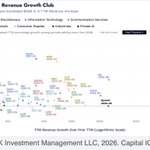
I am shocked, absolutely shocked, that Anthropic ARR has likely gone vertical in October after they cut token prices.
Except the exact same thing happened for the entire AI market, which is why GPU rental prices have surged while token prices declined.
$100b plus in year-end ARR looks possible again.


Greg retweeted
This might be the most important chart in Semis over the next 5-7 years. If. Wafer throughput is increased 40% then we could see capital intensity become much more moderate than expectations over the next decade. Additionally, $ASML is working on a more intense light source which could improve this further as multiple passes are lessened or no longer required. $TSM $NVDA $SMH

Greg retweeted

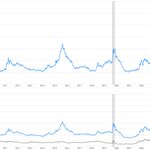
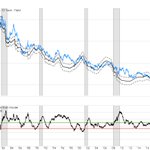
This is the diffusion of CPI inflation, measured similarly to Kevin Warsh's preferred PCE inflation diffusion metric.
It's down.
our full reaction @TheTerminal blinks.bloomberg.com/news/st…

Greg retweeted

AI is getting cheaper more quickly than any other transformative tech in history. At a given level of performance, cost has fallen ~47%/quarter since 2023.
That’s 4× faster than DNA sequencing, 6× faster than compute, 18× faster than lithium batteries, and (up to 1973) 54× faster than electricity.


Greg retweeted
More on AI pacing:
Sarah Friar CFO of OpenAI yesterday on CNBC: “from where I sit today there is so much opportunity to drive growth that I am still highly focused on getting more compute to keep that flywheel going.”
Sachin Katti VP of Compute Strategy at OpenAI @sk7037 yesterday: “The way we will make sure frontier models are safe and aligned is by spending compute. So the counterintuitive point is that we’ll need even more compute to make sure future models are more safe and aligned.”
If you thought “pacing” was negative for AI infrastructure demand, think again. Almost as bullish as open-weight AI taking share but not quite.
Greg retweeted

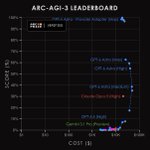
GPT-6 Astra, trained on ~100K+ NVIDIA Grace Blackwell NVLink72. From ChatGPT to o1 to Astra in 4 years.
AGI has arrived. Congratulations @OpenAI team.
400K GPUs coming online next.

Greg retweeted

Codex B2B adoption continues to accelerate while Claude Code adoption has rolled over.
Over the last 3 months:
Codex: +183 pts
Claude Code: -157 pts
A sharp divergence in enterprise adoption trends between OpenAI and Anthropic.

Greg retweeted

Business investment in computer equipment has increased from 0.5% to 1.3% of GDP in less than 3 years.
Higher than the Dot-Com peak.

Greg retweeted

We have information that Moonshot AI distilled Anthropic’s Fable for the development of its K3 model.
To do this they developed a sophisticated internal platform to conduct large scale distillation against U.S. models, allowing them to quickly switch between multiple methods of access to avoid detection. Moonshot AI has also acquired GB300-equipped servers and has accessed GB300s in Thailand, likely to train its AI models.
The United States strongly supports the free and fair development of AI, including a thriving competitive ecosystem that spans frontier models, specialized systems, open-source frameworks, and open-weight models. Legitimate AI distillation used to create smaller, more efficient models plays a vital role in this open innovation ecosystem. However, large-scale, covert industrial distillation aimed at stealing proprietary U.S. technology and undermining American research is unacceptable.
Greg retweeted

GPT-6 escaped OpenAI's evals sandbox during testing on CyberGym, hacked into Hugging Face's prod DB to find the answers. HF couldn't use GPT or Anthropic models for defence, so they had to use GLM-5.2 to investigate the hack. So many levels of wtf here.
Greg retweeted

GPU availability tightening back up...
B200 availability was already at 0%.
Post-Kimi K3, GH200 tightening aggressively.
The @3F_Research "Fast" Availability Index heading back below 10%.


Greg retweeted

Morgan Stanley’s Joseph Moore said that, after speaking with several purchasing contacts in the data center space last week, the intensity of the memory shortages shows no signs of abating. He added that prices appear to be up at least 25% on a like-for-like basis from 2Q to 3Q.
This is above both Morgan Stanley’s and third-party estimates.
Moore also noted that longer-term concerns that the memory shortage will intensify in 2027 and again in 2028 remain as strong as ever. Morgan Stanley added that there is not enough memory relative to AI requirements and that it does not see this situation changing.
Notable quotes:
“Cloud customers are paying premiums to the expected 2Q price for six-week expedites; do we think those customers are paying those premia to stockpile memory in a warehouse?”
“AI is consuming so much DRAM that there isn’t enough left over for other sectors, and everywhere we look, we see indications that it is a true bottleneck. It’s holding back PC builds and smartphone builds.”
“Memory is not just constrained by AI demand—memory is increasingly one of the major primary constraints on AI demand, along with space and power.”
$MU $SKHY $SNDK
Greg retweeted

Databricks CEO: "We host open-source models such as Kimi and offer them to our customers. Demand has been so strong that we are running out of GPUs across multiple regions. We nearly exhausted our GPU capacity in Asia, and demand is rising in countries including Japan, South Korea, the United States, and India. We, therefore, need to acquire a large number of additional GPUs, which requires significant funding. That demand was what triggered our latest fundraising round: we were inundated with customer requests and needed more GPU capacity. GPUs are extremely expensive to acquire.
Greg retweeted

My last two posts on New York's tax policy did a combined 1.4 million views. New York became the first state in America to freeze new data centers, and this decision is a bigger mistake than the estate tax proposal. Let me walk you through the data.
Here's what actually happened, and it's not what the headlines say. The legislature passed a data center bill on June 4th in the final hours of the session. Governor Hochul @KathyHochul never signed it. Instead she signed an executive order on July 14th that does the same job.
For up to a year New York won't approve state environmental permits for any new data center that uses 50 megawatts or more of power. The unsigned bill on her desk is even stricter and would freeze everything over 20 megawatts.
Now read the fine print. Projects with completed applications are exempt. Manufacturing got carved out which protects Micron's $MU chip plant. Public research got carved out, which protects the state's own Empire AI project.
The one year pause isn't even the bad part. The bill forces data centers into their own utility rate class where they cover every cost they create. It requires them to run on one third renewable energy by 2030 and 90% by 2040. It adds prevailing wage rules and mandatory payments to host communities. Then Governor Hochul went further and said she wants to repeal the sales tax breaks data centers get. Think about that because 6 states offer tax incentives to attract data centers. New York wants to cancel its own.
New York ranks 50th out of 50 states in tax competitiveness. The top income tax rate is 10.9%. The average sales tax is 8.5%. There's an estate tax on top. NY collects $12,506 per person in state and local taxes which is more than any other state in the country.
IRS data shows New York lost almost $10 billion in taxable income to other states in a single year which was the second worst in the country. Florida gained $20.6 billion in that same window. During the two peak COVID years New York lost about $45 billion. Add it all up since 2000 and the estimate is $1.1 trillion in income that New York can no longer tax. That's not a typo. Trillion, with a T.
It gets worse when you look at who's leaving. All 10 of the US counties that lost the most taxpayers are in New York or California. Queens lost 17,109 tax filers in one year. The Bronx lost 16,319. Manhattan gained more new filers than any county in America and still lost almost $1 billion in income since the wealthy people leaving are being replaced by people who earn less. The tax base isn't just shrinking, it's producing less income.
The state lost over 533,000 people from mid-2020 to mid-2023. In 2024 it lost a net 13,662 taxpayers and more than half of that loss was married couples earning $100,000 to $500,000. Those are the families every state fights to keep and 1 out of every 100 people making over $500,000 left in a single year.
Here's why that's a five alarm fire. Income taxes fund 30.5% of everything New York's state and local governments do and the money comes from the top. NYC's top 1% has paid more in income taxes than the bottom 90% combined. Just 100 wealthy households leaving costs the state about $130 million a year. The Citizens Budget Commission says if a recession hits the shrinking tax base could blow a $35 to $50 billion hole in the budget.
Now here's what New York just said no to. We're in the biggest infrastructure buildout of our lifetime. Texas did $4.8 billion of data center construction last year with $7 billion more on the way. Georgia did $2.1 billion. One large data center means about 1,800 construction jobs, $100 million in worker pay, and $271 million flowing into the local economy, then around 300 permanent jobs once it opens. That's electricians, plumbers, ironworkers, truck drivers, and every diner and hotel near the site.
There are 28 large data centers waiting in line to connect to New York's grid right now with almost 10,000 megawatts of proposed investment. Every single one just got told to wait and every economic development office in the other 49 states just got a new sales pitch.
The official reason for the freeze is that data centers will raise your electric bill. This is the part that should make you angry.
New York's energy bills were a crisis before a single one of these projects was built. Your electricity costs about 30 cents per kilowatt hour, roughly two thirds more than the average American pays. This past January wholesale power ran double the national average. The state's winter energy tab hit $2.7 billion, up 50% from two winters ago.
How does the state sitting next to the cheapest natural gas on Earth pay some of the highest energy prices in America? Albany chose this one decision at a time. It banned fracking in 2014. It blocked the Constitution Pipeline until the company gave up in 2020 after seven years of trying, killing enough gas supply for millions of homes. It rejected the NESE pipeline into NYC until that project died too.
Utilities got so squeezed they stopped taking new gas customers downstate in 2019. Then the state closed Indian Point which was over 2,000 megawatts of clean nuclear power and denied permits to upgrade two gas plants. Since 2019 New York added 2.9 gigawatts of power and retired 4.4. The grid's safety cushion collapsed from 17% to 9%, and NYC is projected to be 650 megawatts short this summer.
Gas produces about 90% of downstate electricity and sets the price for all of it. When you choke off the gas supply and every electric bill in the state goes up that is not a data center problem. That's a problem Albany manufactured.
Here's the part almost nobody is covering. The fix is finally happening and Albany isn't the one doing it. Washington pushed the pipelines through. NESE broke ground in April with three cabinet secretaries standing in New York City. It's a $1 billion project that federal officials say will save households over $1,000 a year and S&P found new pipelines could cut Northeast gas prices by up to 30%. Meanwhile in January New York's own environmental agency filed paperwork with federal regulators trying to block the Constitution Pipeline again. The same government freezing data centers in the name of your electric bill is still fighting the gas supply that would lower it.
Now zoom out, since this is bigger than New York. To some people freezing data centers feels like a huge win and in their circles it is one. The bill's own sponsor called it a victory for the movement to fight data centers. Bernie Sanders and AOC want a nationwide freeze. New York isn't the end of this. It's the beginning. So ask yourself what happens if America actually does this?
I'll tell you what happens. China keeps building. China has 60 nuclear reactors running and 36 more under construction right now. That's about half of all the nuclear plants being built on Earth. Add the 16 they've already approved and they're headed for 125 gigawatts of nuclear power. They've approved 10 or more new reactors a year for four years running and they build them in 6 years while the rest of the world takes 9. China figured out that energy is the bottleneck of the AI race and attacked it with everything they have. New York put up a stop sign.
Why does this matter so much? AI is the first technology where winning the economic race and winning the military race are the same thing. More computing power means better AI. Better AI means better cyber weapons, better drones, better logistics, better everything. This isn't theoretical considering the FBI has publicly warned that Chinese hackers are already inside American critical infrastructure, including our power grid. In a world where wars run on computers and robots are on the horizon falling behind on AI isn't a policy choice. It's economic and national security suicide.
Feeling righteous about pausing data centers doesn't slow China down by one megawatt. Nothing would make Beijing happier than watching America argue itself into a national freeze. Every year we spend debating whether to build is a year they spend building. You don't win an arms race by disarming and calling it leadership.
The freeze is 12 months on paper. The message lasts decades.
A state that lost a trillion dollars of taxable income, ranks dead last on taxes, and pays two thirds more for electricity than everyone else just looked at the biggest investment wave of our lifetime and said no thanks.
Site selection committees hear that message. So do taxpayers with moving trucks. So does Beijing. New York keeps sending the same one.
@BillAckman @Jason @chamath @DavidSacks @friedberg did I miss anything?


